
Who is Maa Kali - Beyond the Fierce Form
Maa Kali is one of the most misunderstood deities in Hindu cosmology. Her dark complexion, blood-red tongue, garland of skulls, and severed-head holding can frighten the uninformed. But for those who understand her, she is the most loving cosmic mother.
The cosmic story: When the demon Raktabija was attacking the universe and every drop of his blood that fell to earth created a new demon, Goddess Durga's forms couldn't contain him. Maa Kali emerged from Durga's forehead - fierce, vast, drinking every drop of demon blood before it touched ground. She destroyed Raktabija and saved the universe.
This story reveals her cosmic role: Kali destroys what cannot be controlled by gentler means. When evil multiplies beyond reason, Kali appears.
Her appearance decoded:
- Black skin - beyond all colors, all forms (the void from which everything emerges)
- Wild hair - freedom from social conditioning
- Garland of 50 skulls - the 50 Sanskrit syllables she rules; not death but command of language itself
- Severed head in left hand - destruction of ego (not human killing)
- Sword in right hand - discrimination between truth and untruth
- Skirt of severed arms - destruction of all karmic actions
- Tongue out - receiving offerings; not aggression
- Standing on Shiva - having destroyed all delusions, even her cosmic male partner
Why misunderstood: Western-influenced popular media often paints Kali as 'goddess of death.' She is NOT. She is the goddess of destruction-of-untruth and liberation from time (Kali = time). She destroys what holds you back, not your physical body.
Who should worship Kali:
- Those facing extreme threats (physical, energetic)
- Tantric practitioners (with proper guidance)
- Those wanting to dissolve ego permanently
- Devotees deeply rooted in Devi tradition
- Bengalis (her primary tradition is Bengali)
- People who feel called to fierce protection
Caution: Kali is powerful. Casual worship without understanding can backfire. Approach with respect, study her stories, and ideally have basic Devi-bhakti foundation before deep Kali practice.
📿 The Vandnaa App's Devi module has Kali mantras (3 levels - beginner to advanced) with audio.
Most Powerful Kali Mantras
Tier 1 - Beginner-Safe:
'Om Hreem Shreem Kreem Mahakali Namah.'
(ॐ ह्रीं श्रीं क्रीं महाकाली नमः।)
Safest entry-level Kali mantra. Recite 108 times daily without fear. The 'shreem' bija balances the 'kreem' (Kali's seed) with prosperity-energy.
Tier 2 - Standard Kali Mantra:
'Om Kreem Kalikayai Namah.'
(ॐ क्रीं कालिकायै नमः।)
Classical Kali mantra with kreem bija (her primary seed sound). 108 times daily. More intensive than tier 1.
Tier 3 - Devotional Mantra:
'Om Jayanti Mangala Kali Bhadra Kali Kapalini, Durga Kshama Shiva Dhatri Swaha Swadha Namostu Te.'
This 'Sarva Mangala' mantra invokes Kali through her many auspicious names. Used in major Devi pujas. 11 times for protection.
Tier 4 - Mahamantra (advanced):
The Dakshina Kali Mantra - 22-syllable seed mantra used in formal Kali sadhana. Requires guru initiation. Don't attempt without qualified teacher.
The Maha Vidya context: Kali is the first of 10 Mahavidyas (great wisdom-goddesses): 1. Kali - destruction of time 2. Tara - savior 3. Tripurasundari (Lalita) - beauty 4. Bhuvaneshwari - universe-mother 5. Bhairavi - fierce 6. Chinnamasta - self-decapitating 7. Dhumavati - widow form 8. Bagalamukhi - paralyzer of enemies 9. Matangi - outcaste-saint 10. Kamala - lotus (Lakshmi)
Kali is 'Adi Mahavidya' - the foundational form. Worshipping her opens path to other Mahavidyas (only with guidance).
Daily practice for householders:
- Tier 1 mantra 108 times morning
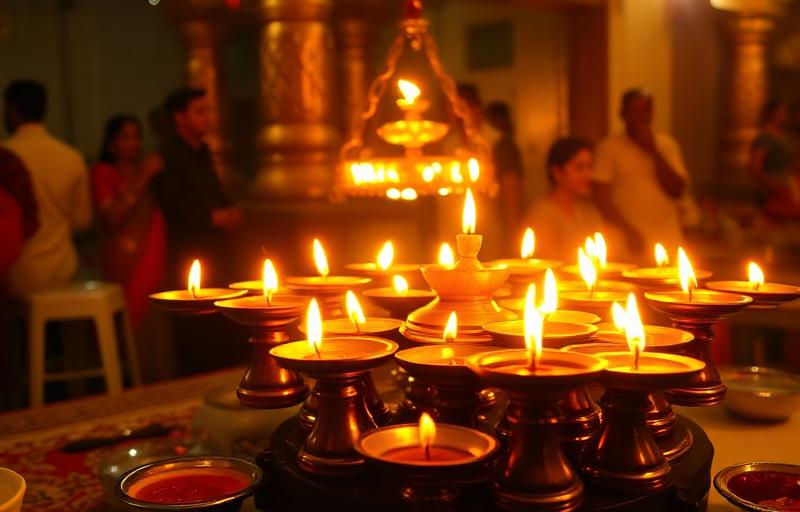
- Lighting a single ghee diya before Kali photo
- Offering red flower
- Brief silence/meditation
This daily practice is safe, powerful, and sustainable for any sincere devotee.
Maa Kali Puja Vidhi at Home
Best time: Late evening (after sunset). Midnight (nishita kaal) for advanced practitioners.
Best day: Tuesday and Saturday - Kali's days. Amavasya (no moon) is supreme. Kali Puja (Diwali Amavasya) is the annual major festival.
Items needed:
- Maa Kali photo or murti (preferably Dakshina Kali - peaceful form)
- Red cloth
- Red flowers (hibiscus is Kali's favorite - red in color, not the white variety)
- Red sandalwood paste
- Mustard oil diya (Kali accepts mustard, unlike most Devi forms)
- Camphor
- Bhog: kheer, fish curry (in Bengali tradition; vegetarians use red fruits)
- Akshat with red sindoor (red akshat, not yellow)
- Hibiscus garland
- Bell
Step-by-step (basic householder vidhi):
1. Bath, wear red clothes (avoid yellow for Kali - her color is black/red) 2. Sit before Kali facing east or north 3. Sankalpa - state intention. For Kali, focus on protection or removal of obstacles, not material wealth. 4. Light mustard oil diya 5. Apply red sandalwood tilak to Kali and self 6. Offer red hibiscus flowers - minimum 11 7. Sprinkle red akshat 8. Recite Tier 1 mantra 'Om Hreem Shreem Kreem Mahakali Namah' 108 times 9. Aarti - 'Jai Kali Mata' or 'Bhajo Re Bhaiyaa Kali Maa' 10. Offer bhog (vegetarian version: red fruits, kheer) 11. Take 1-minute silent meditation 12. Distribute prasad
Total time: 25-30 minutes basic vidhi.
Critical rules for Kali worship:
1. Never approach in fear or anger. Kali is the mother. Approach with respect, even if her form is intimidating.
2. Never use Kali for harmful intentions. Asking her to harm others backfires fiercely. She destroys those who misuse her energy.
3. Always close the puja properly. Don't leave puja incomplete. Always do final aarti.
4. Don't keep Kali murti in bedroom. Her energy is too intense for sleeping space. Dedicated puja area only.
5. Children under 12 should not deeply worship Kali. Her energy can frighten young minds. Older children can participate in family puja.
6. Pregnant women should worship gentler forms like Lakshmi or Lalita rather than Kali during pregnancy.
7. Don't recite Tier 3 or 4 mantras casually. Stick to Tier 1 unless guided.
8. Always pair with at least one gentler deity in your home altar (Ganesh, Lakshmi) - balances Kali's intense energy.
Benefits of Kali Worship
1. Removal of Major Obstacles - When other deities can't help (or when problem requires fierce intervention), Kali responds.
2. Protection from Black Magic - Kali's destructive energy specifically targets tantric attacks. Most powerful anti-tantric deity.
3. Defeat of Enemies - Court cases, business rivals, hostile neighbors - she fights them. But ONLY if you're on dharma's side.
4. Removal of Fear (Bhaya Naashana) - Paradoxically, the fierce form removes chronic fear from devotees. Daily Tier-1 mantra builds confidence.
5. Ego Dissolution - The deepest gift. Sustained Kali worship slowly dissolves the self-importance, pride, vanity that limits spiritual growth.
6. Liberation from Time-Bound Suffering - Kali = time. She frees devotees from being trapped in past traumas, future anxieties.
7. Career-Critical Decisions - When facing must-act-decisively career moments, Kali gives the courage to make the cut.
8. Removal of Generational Curses - Kali destroys karma-knots that have run through family for generations.
9. Direct Tantric Awakening - For those on tantric path, Kali is the supreme guide. (With qualified guru.)
10. Final Liberation - She is Mukti-pradaa - the giver of moksha. Her destruction of ego = liberation itself.
The Amavasya practice: Every Amavasya (no-moon night), do brief Kali puja. Her energy peaks on these dark nights. Just 15 minutes of mantra recitation creates major protective shield for the coming month.
The 41-day intensive (advanced): For major life threat or deep ego work, 41-day daily Kali practice. Highly recommended to consult a Devi-tradition teacher before starting - the energy is intense.
The combined Devi worship: Most devotees pair Kali with gentler Devi forms:
- Friday: Lakshmi/Lalita (gentle prosperity)
- Tuesday/Saturday: Kali (fierce protection)
- Daily: A balance of both energies
This gives complete cosmic feminine coverage.
Common Mistakes & Conclusion
Common mistakes:
1. Approaching with fear. Kali responds to love, not fear. Approach as a child to mother.
2. Using Kali for harmful intentions. Backfires fiercely. Only dharmic intentions.
3. Skipping balance with gentler deities. Always have Ganesh/Lakshmi in same altar.
4. Doing advanced practices without guru. Stick to Tier 1 unless guided.
5. Keeping in bedroom. Dedicated puja area only.
6. Worshipping in inauspicious tithi. Avoid Sankashti, Ekadashi for active Kali worship.
7. Skipping closing aarti. Always close properly.
8. Wearing yellow. Red or black only.
9. Approaching during heavy emotional turmoil. Calm yourself first.
10. Treating her like other deities. Kali requires deeper respect and understanding.
Three commitment levels:
Level 1 - Tuesday/Saturday weekly:
- 25-min puja with Tier 1 mantra
- Safe for any devotee
Level 2 - Daily Tier 1 mantra:
- 5-10 min daily
- Plus weekly full puja Tuesday or Saturday
- Plus Amavasya special practice
Level 3 - With guru (advanced):
- Initiated tantric practice
- Full Mahavidya sadhana
- Multi-year commitment
- Reserved for serious sadhaks
A final reflection:
Maa Kali is misunderstood by Western pop-culture but deeply loved by traditional Hindus. To her devotees, she is the most loving cosmic mother - fierce when needed, tender always.
Her 'fierce' form is her LOVE - too intense for those who need to be protected. She drinks demonic blood not for blood-lust but to protect her children (us).
When you understand this, fear dissolves. You see a mother who would do anything to save you.
Begin this Saturday evening. Light mustard diya. Offer red hibiscus. Recite Tier 1 mantra 108 times.
The fierce mother is also the most loving.
Jai Maa Kali. Om Kreem Kalikayai Namah.
📿 The Vandnaa App's Kali module: 3 mantra tiers with audio, Amavasya tracker, Tuesday-Saturday reminder, safe-practice guidelines.
Reader Questions Answered
Is it safe to worship Kali at home?+
Yes, with Tier 1 mantra and proper basic vidhi. Stay with safe practices unless you have qualified guru for advanced work.
Can pregnant women worship Kali?+
Worship gentler Devi forms (Lakshmi, Lalita, Saraswati) during pregnancy. Resume Kali after delivery and 40-day sutak.
Can children participate?+
Children below 12 should not be deeply involved with fierce Kali energy. They can witness family puja but not perform mantras directly.
Difference between Durga and Kali?+
Durga is the warrior-queen form (gentler, riding lion). Kali is the destruction-of-time form (fierce, dark, beyond all). Durga preserves dharma; Kali destroys what no other can.
Best mantra for beginners?+
Tier 1: 'Om Hreem Shreem Kreem Mahakali Namah' - safest entry. 108 times daily. Build foundation before advancing.
Why mustard oil for Kali?+
Most Devi forms accept ghee. Kali (and Hanuman, Shani) prefer mustard oil - its smoky, intense quality matches their fierce energy.
About the author
Acharya Vinaya Kapoor · M.A. Sanskrit, Mantra & Stotra Studies
Acharya Vinaya holds an M.A. in Sanskrit from Banaras Hindu University and writes the mantra and stotra commentary on Vandnaa. Her focus is on accurate pronunciation, traditional context, and helping modern readers connect with classical texts.
Meet the Vandnaa editorial team →Explore on Vandnaa
Related Articles
Durga Chalisa Lyrics in Hindi & English with Meaning
9 min read
Durga Aarti Lyrics – Ambe Tu Hai Jagdambe Kali (दुर्गा आरती)
8 min read
Lalita Sahasranama: Meaning, Benefits & 1000 Names of the Goddess
10 min read
Navadurga: The 9 Forms of Maa Durga, Their Mantras, Significance & Which to Worship Each Day
13 min read
Durga Saptashati – Meaning, Benefits & Reading Guide
9 min read
Sharad Navratri 2026: 9 Days Colors, Puja Vidhi, Vrat Rules & Kanya Pujan Guide
10 min read