When the Mind Will Not Rest
In a fast and demanding world, stress, worry and racing thoughts have become almost everyday companions. An anxious mind disturbs sleep, health and relationships. Mantra chanting is one of the oldest and gentlest tools to calm the nervous system, slow the breath and turn the mind inward. The steady repetition of a sacred sound gives the restless mind a single, soothing point to rest upon, replacing scattered worry with quiet stillness.
Why Mantras Calm the Mind
Mantras work on two levels. On the physical level, slow, rhythmic chanting deepens the breath, lowers the heartbeat and relaxes the body, much like meditation. On the spiritual level, the sacred vibration connects the mind to something larger than its worries, dissolving fear in trust. The sound Om (Aum) is considered the primordial vibration of the universe, and its gentle hum is deeply settling for an anxious heart.
Mantras for Peace and Calm
Choose any one and chant gently, 108 times or for a few quiet minutes:
The simplest - the sound of Om: Om (Aum), chanted slowly with a long, soft hum.
Shanti mantra for peace: Om Shanti Shanti Shanti
Om Namah Shivaya for stillness and surrender: Om Namah Shivaya
Gayatri mantra for clarity and a luminous mind: Om Bhur Bhuvah Svah, Tat Savitur Varenyam, Bhargo Devasya Dhimahi, Dhiyo Yo Nah Prachodayat
Simple Jap Vidhi for Daily Calm
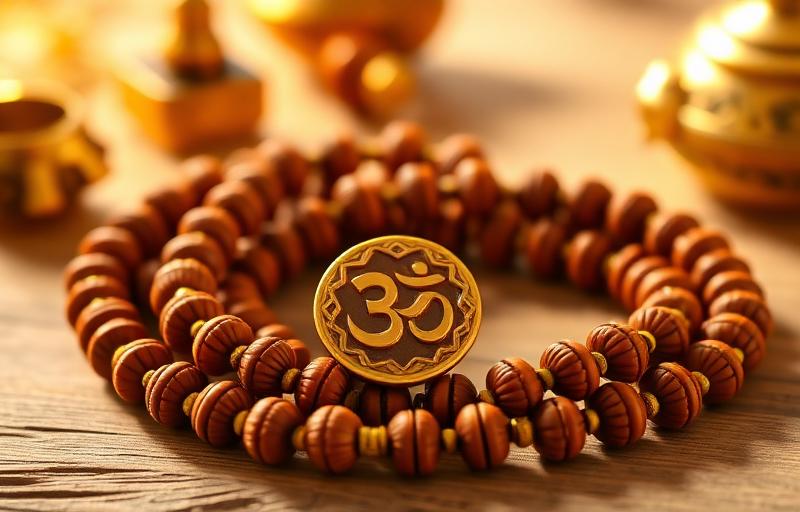
1. Choose a fixed time - early morning or before sleep is ideal - and a quiet, clean corner. 2. Sit comfortably with a straight back, eyes gently closed, and take a few slow breaths. 3. Begin chanting your chosen mantra softly, in rhythm with your breath. 4. Let the sound be the only thing you focus on; when thoughts wander, gently return to the mantra. 5. Chant 108 times on a mala, or simply for 5 to 10 minutes. 6. Sit still for a minute afterward and notice the quiet. Doing this daily, even briefly, gradually builds a calmer baseline for the whole day.
Habits That Deepen Peace
Pair chanting with simple, grounding habits. Reduce screen time before bed, spend a few minutes in fresh air or near a Tulsi plant, and keep a gratitude thought at the start and end of each day. Eat lighter, sattvic food and avoid excess caffeine. Lighting a ghee or oil lamp in your worship corner each evening creates a calming ritual. If anxiety is severe or persistent, please also seek the support of a doctor or counsellor - faith and care work best together.
Returning Home to Stillness
Peace of mind is not the absence of all problems but the steadiness to meet them. With daily chanting, you slowly learn to pause before reacting, to breathe before worrying, and to trust that you are held by a greater grace. Be patient and gentle with yourself; some days will feel calmer than others. Each time you sit and chant, you are returning home to the quiet that always lives within you.
Reader Questions Answered
Which mantra is best for peace of mind and anxiety?+
Chanting 'Om' slowly, or 'Om Shanti Shanti Shanti' and 'Om Namah Shivaya', is deeply calming for an anxious mind. The Gayatri mantra is excellent for clarity and inner peace.
How does chanting reduce stress?+
Slow, rhythmic chanting deepens the breath, lowers the heartbeat and relaxes the body, while the sacred sound gives the mind a single calming focus, replacing scattered worry with stillness.
When is the best time to chant for calm?+
Early morning and just before sleep are ideal, as the mind is naturally quieter then. Even 5 to 10 minutes in a calm, clean corner each day builds a steadier, more peaceful baseline.
Do I need a mala to chant for peace?+
No. A mala helps count 108 repetitions, but you can simply chant for a few quiet minutes. What matters most is gentle focus on the sound and the breath, not a perfect count.
Can mantras replace treatment for serious anxiety?+
No. Mantras are a wonderful support for calm, but if anxiety is severe or persistent, please also consult a doctor or counsellor. Faith and professional care work best together.
What does the sound Om signify?+
Om (Aum) is considered the primordial vibration of the universe and the essence of all mantras. Chanting its long, soft hum settles the breath and the mind and brings a deep sense of peace.
About the author
Acharya Vinaya Kapoor · M.A. Sanskrit, Mantra & Stotra Studies
Acharya Vinaya holds an M.A. in Sanskrit from Banaras Hindu University and writes the mantra and stotra commentary on Vandnaa. Her focus is on accurate pronunciation, traditional context, and helping modern readers connect with classical texts.
Meet the Vandnaa editorial team →Explore on Vandnaa
Related Articles
Gayatri Mantra Meaning, Benefits & How to Chant (गायत्री मंत्र)
12 min read

Om Namah Shivaya Mantra Benefits & Meaning (ॐ नमः शिवाय)
9 min read
Maha Mrityunjaya Mantra: Meaning & Benefits (महा मृत्युंजय मंत्र)
9 min read
Shiv Aarti Lyrics – Om Jai Shiv Omkara (शिव आरती)
13 min read

Mantra for Good Health & Recovery from Illness
9 min read
Mantra for Job & Government Job Success - Jap Vidhi
9 min read