Meenakshi, the Princess Born to Rule
The story at the heart of the Meenakshi Amman Temple begins not with a goddess descending from the heavens in the usual sense, but with a royal birth. According to the legend cherished across Tamil Nadu, the Pandyan king Malayadhwaja and his queen Kanchanamalai performed a yajna seeking a son to continue their line, and from the sacred fire emerged a daughter instead, a child born already three years old, with striking fish-shaped eyes that gave her the name Meenakshi.
Unusually for the story's era, a divine voice is said to have instructed the astonished king to raise this daughter exactly as he would have raised a son, to train her in statecraft and warfare and to crown her his rightful heir. Meenakshi grew up mastering the sixty-four arts and the skills of a warrior, and upon her father's passing, she ascended the Pandyan throne, ruling Madurai as a powerful and capable queen in her own right.
What makes this legend distinctive within Hindu temple mythology is this early portion of the story, entirely independent of her eventual consort. Meenakshi is remembered first as a monarch who expanded her kingdom's reach through successful military campaigns, leading armies and making decisions of state, long before the narrative introduces the figure who would become her husband. Devotees and scholars often point to this as one of the more unusual and empowering goddess origin stories within the broader Hindu tradition, a deity whose sovereignty over a physical kingdom preceded her role as consort.
This grounding in Madurai's own royal history is part of why the city and its people relate to Meenakshi with such intimate civic pride, she is remembered not just as a goddess to be worshipped from a distance but as a queen who once actually governed the land the temple now stands upon.
The Legend of Her Marriage to Shiva
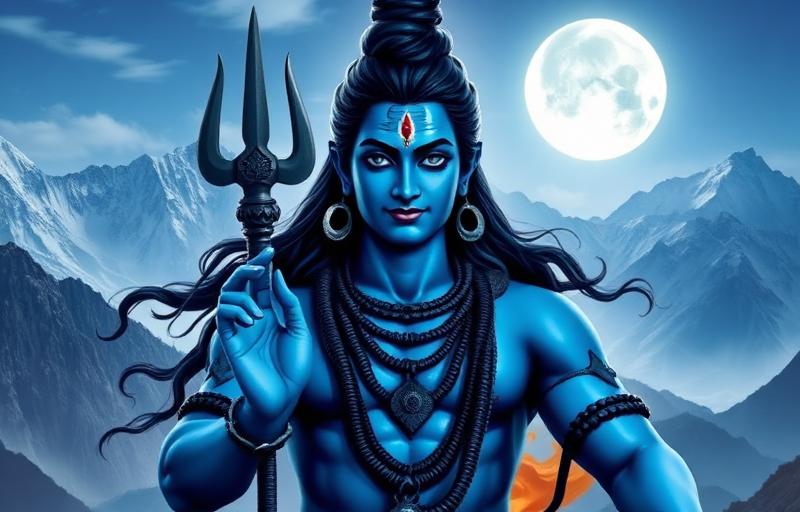
As Meenakshi's military campaigns expanded across neighboring kingdoms, tradition holds that she eventually marched toward Mount Kailash itself, intent on continuing her conquests. There, according to the legend, she encountered Lord Shiva, and the moment their eyes met, a curious and specific detail of her earlier life resolved itself, an extra physical feature she had carried since birth, said to be a sign that would vanish only when she met the man destined to be her husband, disappeared instantly in his presence. In that instant, the warrior queen recognized her own destiny, understanding Shiva as the very consort the divine voice at her birth had long ago foretold.
Shiva agreed to marry her and to accompany her back to Madurai, where their wedding, known as Meenakshi Kalyanam, is said to have been celebrated with extraordinary grandeur, attended by gods, sages and the whole of creation according to popular tellings. Following the marriage, Shiva is worshipped here in his form as Sundareswarar, meaning the beautiful lord, and the temple today is formally dedicated to both deities together, though Meenakshi is unusually given precedence in worship sequence, an arrangement uncommon at most Shiva temples elsewhere in India.
This marriage narrative is far more than backstory for the temple, it is actively reenacted every year during the Chithirai festival, one of Tamil Nadu's grandest religious celebrations, when the celestial wedding is performed anew before enormous crowds. The legend's emotional core, a powerful, independent queen who freely chooses her partner upon recognizing him as her equal, continues to resonate deeply with devotees, offering a portrait of divine partnership grounded in mutual recognition rather than a story where the goddess exists solely in relation to her consort.
The Towering Gopurams: Architecture as Devotion
Long before a visitor reaches the temple's inner sanctums, the Meenakshi Amman Temple announces itself through its gopurams, the towering, pyramid-shaped gateway towers that dominate Madurai's skyline from a considerable distance. The temple complex has multiple gopurams marking its various entrances, with the tallest, the southern tower, rising roughly to the height of a modern seventeen or eighteen-story building, making it one of the most visually striking structures in South Indian temple architecture.
Every inch of these towers is covered in thousands of brightly painted sculptures depicting deities, mythological scenes, celestial beings, animals and guardian figures, an overwhelming visual encyclopedia of Hindu mythology rendered in stucco and stone. These sculptures are traditionally repainted and restored periodically as part of temple maintenance rituals known as kumbhabhishekam, ensuring the vivid colors that greet modern visitors remain close to how pilgrims across generations would have experienced them.
The gopurams are believed to have been developed and expanded significantly during the reign of the Nayak dynasty, particularly under Tirumalai Nayak in the seventeenth century, who is remembered as one of the temple's most significant royal patrons, though the temple's core sanctums and worship traditions trace back considerably further into Tamil Nadu's ancient past.
Beyond their sheer visual impact, the gopurams serve a deeper architectural philosophy common to Dravidian temple design, they function as a visible threshold between the ordinary world outside and the increasingly sacred, quieter spaces within, culminating at the innermost sanctum where, in a deliberate contrast, the architecture becomes markedly simpler and more intimate, focusing attention entirely on the deity rather than ornamentation.
The Thousand Pillar Hall and Temple Tank
Within the temple complex lies the Ayirakkal Mandapam, popularly known as the Thousand Pillar Hall, an extraordinary hall of sculpted stone pillars, each individually carved with remarkable detail, depicting deities, mythical creatures and celestial dancers. While the precise count of pillars is often quoted as one thousand in popular usage, the hall's actual number runs close to that figure, and its significance lies less in an exact tally than in the sheer density and artistry of the carving achieved across the entire hall. Today, portions of this hall also function as a temple art museum, displaying sculptures and artifacts connected to the temple's long history.
Another significant feature within the complex is the Potramarai Kulam, the Golden Lotus Tank, a large stepped temple tank traditionally believed to be a place where the god of literature is said to have tested the merit of Tamil poetic works in ancient times, connecting the temple not just to devotion but to Tamil Nadu's literary heritage as well. Pilgrims often pause at the tank's steps, and it remains a favored spot for quiet reflection amid the temple's otherwise bustling atmosphere.
The broader temple complex also houses shrines to various other deities, subsidiary mandapams used for festival processions, and a functioning temple elephant tradition maintained according to long practice. Together, these features make Meenakshi Amman Temple less a single shrine and more a self-contained sacred city, one that can easily occupy several hours of unhurried exploration for a visiting devotee. Guides stationed near the entrance can help first-time visitors prioritize which of these secondary shrines and halls are worth the time available, especially when the sheer scale of the complex can otherwise feel overwhelming.
Chithirai: When the Whole City Celebrates a Wedding
Each year, typically falling in the Tamil month of Chithirai around April, Madurai transforms as the city comes together to celebrate the Chithirai Thiruvizha, one of the largest and most vibrant temple festivals in all of South India. At its heart lies a reenactment of Meenakshi Kalyanam, the divine wedding of Meenakshi and Sundareswarar, performed with elaborate processions, music and ritual that draw enormous crowds from across Tamil Nadu and beyond.
A particularly distinctive feature of this festival is a companion procession honoring Lord Kallazhagar, a form of Vishnu worshipped at a temple outside the city, who is traditionally believed to travel toward Madurai to attend his sister Meenakshi's wedding. This procession, involving the deity's symbolic journey and a ceremonial crossing of the Vaigai river, adds a rare inter-temple, cross-tradition dimension to the celebration, linking Shaiva and Vaishnava devotional communities within a single shared festival.
Streets throughout Madurai fill with decorated chariots, temple musicians, dance performances and processions of the deities carried through the city on ornately decorated vehicles, transforming the entire urban landscape into an extension of the temple itself for the festival's duration. For many Tamil families, attending Chithirai at least once is considered an important devotional and cultural milestone.
For travelers planning a visit specifically to witness this event, it is worth noting that the city becomes considerably more crowded during the festival period, and accommodation should ideally be arranged well in advance, though the atmosphere of collective celebration makes the additional planning distinctly worthwhile. Even visitors who cannot time their trip to coincide with the festival itself often find that Madurai's temple guides and local shopkeepers are happy to describe its scenes in vivid detail throughout the rest of the year.
Visitor Guide: Timings and How to Reach Madurai
The Meenakshi Amman Temple welcomes an enormous number of devotees and visitors throughout the year, and a little planning around timings and logistics makes for a considerably smoother visit. The temple generally opens early in the morning and closes for a break around midday, reopening in the afternoon and remaining open into the night, though exact hours can shift around festivals, so checking current timings before travel is advisable.
- Dress code: Modest, traditional clothing is expected; many temples in Tamil Nadu are strict about covering shoulders and legs, so carrying a shawl or dupatta is useful
- Photography: Cameras and phones are generally not permitted inside the inner sanctum areas, and belongings including leather items may need to be deposited before entering certain sections
- Best time to visit: Weekday mornings tend to be calmer than weekends and festival periods; the cooler months from November to February are generally more comfortable for exploring the temple at length
- How to reach: Madurai has its own domestic airport connecting it to major Indian cities, along with Madurai Junction, a major railway station on well-connected routes, and an extensive network of state and private buses
- Nearby stay: The temple sits in the heart of old Madurai, with numerous hotels and lodges within easy walking distance of the complex
Many pilgrims combine their Meenakshi darshan with a walk through the surrounding Madurai flower and spice markets, which retain much of the city's old-world commercial charm and sit just steps from the temple's outer walls, making the visit as much a sensory immersion into Tamil culture as a purely religious one.
🛕 Planning a Madurai trip around a festival date or auspicious day is easy with Vandnaa's panchang and temple guides close at hand.
Quick Answers
Who is Meenakshi?+
Meenakshi is a form of the Goddess born as a Pandyan princess who ruled Madurai as a warrior queen before marrying Lord Shiva, worshipped here as Sundareswarar. She is honored as both sovereign and consort.
What is the legend of Meenakshi's marriage to Shiva?+
While conquering kingdoms, Meenakshi reached Mount Kailash and met Shiva, recognizing him instantly as her destined husband. Their wedding, Meenakshi Kalyanam, is celebrated annually during Madurai's Chithirai festival.
How many gopurams does the Meenakshi Amman Temple have?+
The complex has multiple gopurams marking its various entrances, with the tallest southern tower rising to roughly the height of a seventeen or eighteen-story building, richly covered in painted sculptures.
What is Chithirai festival?+
Chithirai is Madurai's grandest annual festival, reenacting the celestial wedding of Meenakshi and Sundareswarar alongside a procession of Lord Kallazhagar, who tradition holds travels to attend his sister's wedding.
What is the best time to visit Meenakshi Amman Temple?+
Weekday mornings are generally calmer, and the cooler months from November to February are comfortable for extended visits. Chithirai festival in April offers a spectacular but considerably more crowded experience.
How do I reach Madurai for the temple visit?+
Madurai has its own domestic airport, a major railway junction called Madurai Junction, and well-connected state and private bus services, making it one of the more accessible major temple towns in South India.
About the author
Pandit Ravindra Sharma · Vedic Rituals & Bhakti, 22+ years
Pandit Ravindra is the Vandnaa editorial team's resident specialist on aarti, chalisa, and daily devotion. He has performed home and temple pujas across Varanasi and Delhi for over two decades and contributes the bhakti-focused articles on this site.
Meet the Vandnaa editorial team →Explore on Vandnaa
Related Articles
Kamakhya Devi Temple: Understanding Assam's Shakti Peetha
7 min read
Rameshwaram Temple and Its Connection to the Ram Setu Story
7 min read
12 Jyotirlingas of Lord Shiva: Complete Guide to Locations, Stories, Mantras & Yatra Order
14 min read
Kashi Vishwanath - Significance, Darshan & Varanasi Yatra Guide
9 min read