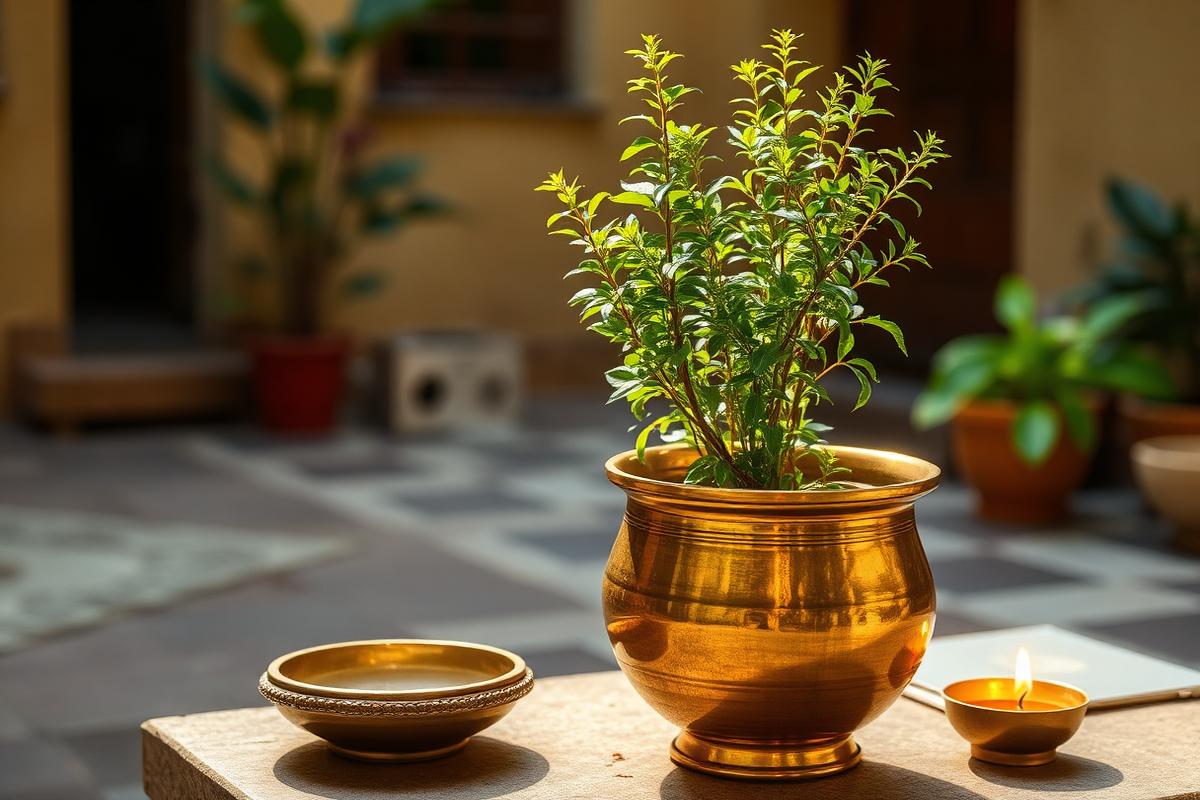
Why Money Plant Is Vastu's Most Recommended Plant
Money Plant (Epipremnum aureum, also called Pothos or Devil's Ivy) is THE most recommended plant in Vastu Shastra for households seeking financial stability and prosperity. Unlike most Vastu rules which feel symbolic, the money plant has BOTH symbolic and scientific reasons for its prosperity-attracting reputation:
Symbolic / Vastu reasons:
- The leaves are heart-shaped (Anahata chakra activator) - opens the home's energy to receive abundance
- The vines grow upward and outward - symbolises wealth growth, expanding influence
- It is one of the few plants associated with both Lakshmi (wealth goddess) and Lord Vishnu (preserver/sustainer of wealth)
- Per Vastu, the money plant 'absorbs' negative financial energy and 'transmits' positive energy
Scientific reasons (NASA-confirmed):
- Money plant is in the top 10 air-purifying plants identified by NASA's Clean Air Study (1989)
- Specifically removes formaldehyde, xylene, benzene, and trichloroethylene from indoor air
- Releases oxygen even at night (rare among plants)
- Increases indoor humidity by 5-10% - beneficial for respiratory health
- Calms the nervous system through visual greenery - reduces stress hormones by 8-13% per UCSF studies on indoor plants
A stress-free, oxygen-rich, low-toxin home is one where the residents can think clearly, make better financial decisions, and avoid health-related expenses. The 'prosperity' the money plant brings is partly mystical, partly biological. Both work.
However - money plant works ONLY when placed correctly. Wrong placement nullifies all benefits. Some placements actually drain energy. This blog covers the right direction, 9 rules, common mistakes, care tips, and what to do when leaves yellow (an important Vastu signal).
🪴 The Vandnaa App's Vastu module includes a Money Plant placement diagnostic - answer 6 questions about your home and receive personalized placement recommendations.
The Right Direction - South-East (Agneya)
THE PRIMARY RULE: Place the money plant in the South-East corner of your home or living room.
Why South-East specifically?
- South-East is the Agneya direction - ruled by Lord Ganesha and Lord Agni
- Lord Ganesha is the remover of obstacles, especially financial obstacles
- Agni (fire) represents transformation - converts effort into reward
- Goddess Lakshmi enters homes from the South-East corner (per the Lakshmi Tantra)
- Money plant placed here 'catches' Lakshmi's incoming energy and transmits it throughout the home
Acceptable alternative directions (in priority): 1. South-East corner (BEST) - primary recommendation 2. South - secondary, works for living room 3. North - acceptable for kitchen money plants (Kuber direction) 4. ❌ NORTH-EAST (Ishanya) - STRICTLY AVOID - this is the deity's pure direction; the climbing money plant 'disturbs' the sattvic energy 5. ❌ EAST - AVOID - east is for spiritual/learning; money plant's wealth-energy clashes with east's sattvic vibration
Indoor vs Outdoor Money Plants:
- Indoor is HIGHLY preferred. Money plant indoors = wealth retention + air purification. Outdoor money plant has mostly aesthetic value, lacks the focused Vastu effect
- If outdoor is the only option, place near the south-east-facing wall, NOT on the boundary fence
Indoor Placement Specifics:
- Living room south-east corner - best general placement
- Master bedroom south-east - wealth + relationship harmony combined
- Kitchen - north corner specifically (Kuber direction within the kitchen)
- Office/study desk - left side of the desk (which is south-east relative to a north-facing desk)
- Reception area of business - visible to entering visitors (welcomes positive energy)
What NEVER to do:
- Place money plant in bathroom, toilet, or storage room (drains its energy)
- Place in the puja room (its earthy energy doesn't suit the purely sattvic puja space - exception: a small money plant in a clear corner is okay)
- Place near a TV or large electronic devices (electromagnetic interference reduces effectiveness)
9 Critical Rules for Money Plant Vastu
Rule 1: Vines Should Always Grow UPWARD, Never Downward. Money plant naturally trails downward - but Vastu requires upward growth (representing wealth rising). Use moss sticks, trellis, or wall-mounted hooks to train vines upward. A money plant trailing downward is said to drain wealth instead of attracting it. This is the single most important rule. Inspect your current plant - if it trails down, install support today.
Rule 2: Never Buy Money Plant - Only 'Take' a Cutting from Someone Else's Plant. This is a Vastu tradition: a money plant grown from a cutting (taken with the owner's blessing) is much more powerful than a plant purchased from a nursery. The 'gift' energy is essential. If you must buy, do so on a Friday (Lakshmi's day) and place it auspiciously the same day.
Rule 3: Plant in a Glass Bottle of Water OR Soil - Both Are Valid. Water-grown money plants in glass bottles are extremely common in homes. Soil-grown are equally valid. Both work. Avoid metal containers (corrupt the energy). Glass, ceramic, terracotta are all good.
Rule 4: Change Water Every 7-10 Days (Water-Grown). Stagnant water = stagnant wealth energy. Refresh water weekly. Add a drop of milk OR a pinch of salt OR a few neem leaves to prevent algae. Wash the bottle interior with mild soap monthly.
Rule 5: Yellowing Leaves = Vastu Warning Sign. When money plant leaves turn yellow, Vastu interprets this as a warning that financial energy is being drained. Causes (in priority): (1) Wrong direction placement; (2) Insufficient/excessive watering; (3) Plant placed in negative energy zone (near bathroom, near argument-hot-spot in home); (4) Owner's stress is being absorbed by the plant. Move the plant to south-east, refresh water, and pray once near the plant. Yellow leaves should clear within 2-3 weeks.
Rule 6: Never Let the Plant Touch the Ground. Money plant kept on the floor 'returns' wealth to the earth. Always place on a table, stand, hanging pot, or wall-mounted shelf - at minimum 1 foot above floor level. The higher, the better the Vastu effect.
Rule 7: Do Not Cut Stems or Leaves on Tuesday or Saturday. Pruning is necessary occasionally - only do it on Monday, Wednesday, Thursday, or Friday. Tuesday is Mars day (aggressive energy reduces wealth-attraction); Saturday is Saturn day (stagnation). After pruning, immerse the cut leaves in flowing water (river, drain) - never throw in trash.
Rule 8: Place a Lakshmi Yantra OR Coin Near the Plant. For amplified effect, place a small Lakshmi Yantra OR a Lakshmi-Ganesh coin OR even a small old coin (sentimental value) near the plant base. This 'tunes' the plant's energy specifically toward wealth attraction.
Rule 9: Take Care of the Plant Like Lakshmi Herself. This is the foundational rule. The plant's health = your wealth flow. Daily glance + brief acknowledgment ('I see you, thank you') + monthly cleaning = healthy plant = strong Vastu effect. Neglected plant = neglected Vastu effect. Lakshmi visits homes that show care for her representatives.
Care Tips & How to Multiply Your Money Plant

Daily Care:
- Water sparingly - money plant prefers slightly dry soil over waterlogged. For water-grown: maintain water level
- Indirect sunlight is ideal - direct hot sun burns the leaves
- Wipe leaves once a week with a damp cloth - removes dust, allows photosynthesis to work properly
- Talk to it briefly daily (sounds odd but helps - plants respond to sound vibration)
Weekly Care:
- For soil-grown: check moisture; water if top inch is dry
- For water-grown: change water and refresh
- Remove any yellowing or dead leaves immediately (composted, not trashed)
Monthly Care:
- Wash the pot/container exterior
- For soil-grown: add organic compost (not chemical fertilizer - it harms Vastu energy)
- For water-grown: add 1 drop of liquid plant food OR a small piece of banana peel in water
Special Auspicious Care (every Friday):
- Apply a small kumkum tilak on the pot
- Place a fresh flower (yellow marigold or red rose) at the base for the day
- Light a small ghee diya near the plant (briefly, 5-10 minutes)
- Mentally ask Lakshmi for sustained prosperity for the family
- This Friday-care ritual significantly amplifies Vastu effect
Multiplication - How to Grow More Money Plants: The more money plants you have, the more wealth-energy circulates in the home. Multiply your existing plant:
Method 1 - Stem Cutting in Water: 1. Cut a healthy stem just below a node (the swelling where leaves grow) 2. Place cutting in a glass of clean water (only the bottom node submerged) 3. Within 2-3 weeks, roots will form 4. Once roots are 2 inches long, transfer to soil OR keep in water permanently
Method 2 - Stem Cutting Direct in Soil: 1. Same cut as above 2. Dip the cut end in cinnamon powder (natural rooting hormone) 3. Plant in moist potting soil 4. Keep soil moist for 3 weeks until roots establish
Best time to multiply: Monday or Friday during the bright fortnight (Shukla Paksha). Avoid Saturdays (Saturn day - growth-suppressing energy).
Sharing Cuttings: The Vastu tradition strongly encourages giving money plant cuttings to friends, family, neighbors. The act of GIVING the plant multiplies the giver's prosperity, not the receiver's. (This contradicts intuition but is core Vastu wisdom.) The more cuttings you give away, the more your own plant flourishes and the more wealth flows to your home.
Common Care Mistakes:
- Overwatering (causes root rot) - money plant likes dry-ish soil between waterings
- Direct sun (burns leaves)
- Cold drafts from AC vents (causes leaf-drop)
- Pesticide use (chemical pesticides 'corrupt' Vastu energy of the plant)
- Letting it climb on photographs of family members (the plant 'absorbs' their energy then redirects it; awkward Vastu)
- Letting it grow over the puja altar (a major Vastu violation - money is below dharma)
Money Plant Care Guide: Watering, Sunlight, Soil, and Growth Tips
A thriving money plant requires specific care - Vastu wisdom holds that a wilting or dying money plant indicates stagnant or declining energy, and a flourishing plant amplifies positive energy. Understanding the plant's physical needs ensures the spiritual benefits are maximized.
Light requirements: Money plant (Epipremnum aureum) is highly adaptable to indoor conditions but has preferences. It thrives in bright, indirect light - not direct afternoon sun, which scorches the leaves. The ideal indoor spot: 3-5 feet from a north or east-facing window. In lower light, the leaves lose their variegation (yellow or white patterns) and turn solid green, but the plant remains healthy. In complete darkness, growth slows dramatically. Vastu recommendation: the southeast corner provides good light and corresponds to the fire element that encourages growth.
Watering: The most common mistake with money plant is overwatering. Allow the top inch of soil to dry out between waterings - insert your finger to the first knuckle; if the soil feels dry, water thoroughly until it runs out of the drainage hole. If using a water bottle/vase method (growing in water), change the water every 7-10 days to prevent stagnation and bacterial growth. Never leave money plant in standing water in a pot without drainage.
Soil and fertilizer: Well-draining potting mix with good aeration is ideal. Mix standard potting soil with 20% perlite or coarse sand. Fertilize monthly during the growing season (spring-summer) with a balanced liquid fertilizer diluted to half strength. During winter, reduce to once every 6-8 weeks. Yellowing lower leaves is normal as the plant matures; yellowing throughout the plant indicates overwatering.
Propagation (easy and auspicious): Money plant propagates easily from stem cuttings. Cut a stem below a node (the joint where leaves emerge) and either place in water until roots develop (2-3 weeks), then transfer to soil - or plant directly in moist soil. The Vastu tradition holds that propagating money plant from your own thriving plant and gifting the cutting (along with the pot) to someone in need is especially auspicious - the energy of generosity multiplies the plant's prosperity effect.
Climbing vs. trailing: Money plant naturally climbs when given support (a moss pole or trellis) or trails downward when allowed to hang. In Vastu, an upward-growing money plant is preferred - it symbolizes ascending prosperity. If the plant trails down, train it upward using small clips on a vertical support.
Pruning: Prune money plant regularly to maintain bushiness and vigor. Trim back leggy (long, sparse) stems by half to encourage branching. The trimmed sections can be propagated. Pruning is best done in early spring.
Troubleshooting:
- Yellow leaves: Overwatering or root rot (check roots; trim dark/mushy roots and repot)
- Brown edges: Dry air or fluoride in tap water (switch to filtered water)
- Pale leaves: Too little light
- Root rot: Overly wet soil; allow to dry, repot in fresh mix
The Vandnaa app includes plant care reminders (watering, fertilizing) for money plant and other Vastu plants, ensuring your prosperity plant stays healthy and energetically vibrant.
Money Plant Rituals for Prosperity: Puja, Mantras, and Activation Practices
Beyond proper placement and care, the money plant's prosperity potential can be deliberately activated through specific rituals drawn from Vastu Shastra and the Lakshmi bhakti tradition. These practices treat the plant as a living altar rather than a passive decoration.
Friday (Shukravar) Lakshmi Puja for money plant: Friday is Lakshmi's day. On Friday morning, place a small piece of silver coin, a pinch of turmeric, and fresh flowers (particularly marigolds or jasmine) at the base of the money plant pot. Light a small diya or incense nearby. Recite the Lakshmi Gayatri mantra: "Om Mahalakshmyai Cha Vidmahe, Vishnu Patnyai Cha Dhimahi, Tanno Lakshmi Prachodayat"
21 repetitions while facing the plant with folded hands. End with a simple prayer: "O Mother Lakshmi, as this plant grows, may prosperity grow in this home." This weekly ritual, maintained consistently, builds an energetic connection between the plant's vitality and the family's financial wellbeing.
Activation at planting/potting: When planting a new money plant or repotting an existing one, place the following items in the soil: a small piece of citrine crystal (associated with abundance and solar energy), a whole nutmeg (jaiphal), and 3 cloves (laung). These traditional items are held to energetically charge the root environment. Cover with the potting mix and plant normally.
Copper coin at the root: Place a copper coin (or a few old copper paisa coins) at the bottom of the money plant pot before potting. Copper conducts both electrical and spiritual energy and is associated with Venus (which governs Lakshmi). The coin symbolically plants abundance at the root of the plant.
Watering with intention: Each time you water the money plant, do it with conscious intention. Pour water slowly, reciting mentally or aloud: "As I nourish this plant, abundance is nourished in my life." This practice of intentional watering - mindful of the metaphor - is held to amplify the plant's prosperity effect.
When the plant is gifted: If gifting a money plant, maintain two traditions: (1) gift the plant on a Friday; (2) ask the recipient to water it for the first time with Ganga Jal (or clean water with a pinch of turmeric). This activates the plant in its new home.
Money plant in water - special treatment: If growing money plant in water (which is more visually striking and equally valid in Vastu), maintain the water's energy by: placing a small piece of clear quartz crystal in the water vessel, adding a drop of rose water once a month, and never allowing the water to turn green (algae) - change it before this happens.
Signs that the money plant is working: Traditional Vastu practitioners observe the following as indicators that the plant is positively influencing the home: unusually rapid growth, particularly large leaves, deep green color, and new growth emerging on important days (Fridays, Amavasya, Purnima). Conversely, unexplained wilting despite proper care is taken as an indicator of energetic issues in the home that need attention.
The Vandnaa app provides Friday Lakshmi puja reminders with the money plant activation mantras, helping you maintain the weekly ritual consistently throughout the year.
Best Vastu Plants to Keep Alongside Money Plant for Maximum Prosperity
The money plant works most effectively as part of a curated collection of Vastu plants, each contributing a distinct energetic quality to the home. Creating a "prosperity corner" with complementary plants amplifies the individual effect of each.
Tulsi (Holy Basil) - the supreme plant: Tulsi is not merely an herb - it is considered a living deity in Vastu and Hindu tradition, the most sacred plant that can be kept at home. Her presence purifies the air (documented: releases oxygen 24 hours a day, unlike most plants), repels insects, and maintains positive energy. A tulsi plant near the main entrance or in the northeast is the single most powerful plant Vastu recommendation. She should be worshipped daily with water and a lamp.
Jade Plant (Crassula) - financial stability: The jade plant, also called "the money tree" in East Asian traditions, has small round leaves that symbolize coins. It is incredibly easy to care for (drought-tolerant), grows steadily, and is considered a strong Vastu companion for money plant in the southeast corner. Place them together for a "double prosperity" arrangement.
Bamboo plant (Lucky Bamboo): Not bamboo but Dracaena sanderiana - the lucky bamboo has become universally associated with prosperity and good luck. Arrangements of specific numbers have specific meanings: 3 stalks (happiness), 5 stalks (wealth), 7 stalks (health), 21 stalks (complete blessings). Keep in a clear vase with clean water; place in the north or east.
Peace Lily (Spathiphyllum): The peace lily is a powerful negative energy absorber, particularly in living rooms and bedrooms. NASA's clean air study identified it as one of the top air-purifying plants, removing benzene, formaldehyde, and trichloroethylene. In Vastu, it contributes to emotional peace and harmonious relationships - complementing money plant's prosperity energy.
Snake Plant (Sansevieria / Mother-in-law's Tongue): Known for its air-purifying properties and adaptability to neglect. In Vastu, the snake plant's upright, sword-shaped leaves are considered protective. Place near the bedroom door or the main entrance for protection against negative energy entering the home.
Aloe Vera: Aloe vera is an Ayurvedic pharmacy in a pot and a Vastu protector. It is believed to absorb negative energy and electromagnetic radiation (particularly from electronic devices). Place near the television or computer workstation. The plant "wilts" when it has absorbed significant negative energy - this is taken as a sign to perform a home energy clearing.
Plants to avoid (Vastu caution):
- Cactus and thorned plants: Their spiny energy is associated with aggression and conflict in the home. Keep them outdoors if you like their aesthetic.
- Bonsai (stunted plants): In Vastu, a stunted plant symbolizes stunted growth and prosperity. If you love bonsai, keep it in a separate outdoor space, not in the main living areas.
- Dead or dying plants: Remove immediately - they carry the energy of decline and should never remain in the home. The tradition says a dying plant has done its job of absorbing negative energy and needs to be released.
The Vandnaa app provides a complete home plant Vastu guide with room-by-room recommendations, care schedules, and activation mantras for each major Vastu plant.
Quick Answers
Is it true that money plant should never be given to anyone?+
This is a widespread MYTH and is the OPPOSITE of Vastu tradition. Authentic Vastu (per Brihat Samhita and Vastu Shastra texts) clearly states: GIVING a money plant cutting multiplies the GIVER's prosperity. The myth probably originated from mistranslation or commercial interest (nurseries discouraging cuttings). Reality: more cuttings you give, more wealth flows to your home. Many traditional families gift money plant cuttings as housewarming gifts. Even rural Vastu wisdom teaches: 'A money plant is meant to be shared, not hoarded.' If someone refuses to share their cutting citing this myth, kindly explain Vastu's actual position. Wealth grows through circulation, not hoarding - which is also the deepest economic truth.
Can I keep money plant in my office cubicle/desk?+
Absolutely yes - and it is highly effective. Office money plant placement: (1) Left side of your desk OR left of your monitor (which corresponds to south-east when desk faces north - most common office orientation). (2) Use a small glass bottle with water rather than soil (cleaner for office). (3) Avoid placing the plant where it can be touched by clients/visitors (their stress energy gets absorbed). (4) Talk to it briefly daily - your work goals + a thank-you ('I'm grateful for what is coming'). Many office workers report measurable career growth (promotions, salary increase, recognition) within 6-12 months of consistent office money plant practice. Avoid keeping in: shared printer area, kitchen pantry, conference rooms (the plant gets exposed to too many conflicting energies).
What if my house has no south-east corner accessible (apartment with no SE room)?+
Use the SE corner of whichever room you have. Even a small apartment has 'corners' relative to the apartment's overall layout. Stand at the apartment's main door, face into the apartment - the south-east area is the right-front quarter. Place the plant there, even if it is in a hallway, kitchen, or living room. Alternative: place the money plant in the south-east corner of your bedroom (works almost as well as the living room). For studio apartments: the south-east corner of the single room. The Vastu effect comes from positioning relative to the cosmic directions, not specifically from a 'separate' room. Most NRIs and urban dwellers in compact apartments use this approach successfully.
Can I keep multiple money plants - does more = more wealth?+
Yes, with reasonable limits. Multiple money plants compound the Vastu effect - but only if all are healthy and well-maintained. 5-7 plants in a typical home is optimal (one in living room SE, one in bedroom, one in office, one in kitchen, etc.). More than 11 plants without proper care creates 'energetic chaos' rather than wealth. Quality over quantity: 3 thriving plants > 10 neglected ones. Each plant should be in an auspicious direction. Sharing cuttings with neighbors is more spiritually beneficial than hoarding 30 plants in one home. The principle: wealth flows through caring relationships and proper energy management, not through accumulation.
Is it true that a money plant 'dies' when negative energy approaches the home?+
Yes - partly. Money plants are sensitive 'energy detectors'. Sudden yellowing, dying without obvious physical cause, or rapid leaf-drop without temperature/water changes - these often correlate with: financial trouble approaching, major family discord brewing, illness in the family, or a person with strong negative energy (who has visited recently or lives nearby). This is documented in the Brihat Samhita. What to do: (1) DO NOT panic. (2) Replace dead plant with a new one immediately (the new plant 'absorbs' new positive energy). (3) Investigate what changed in the home recently (new visitor, recent family argument, big stress). (4) Address the underlying issue. Many traditional families use money plant health as their primary 'home energy meter'. A thriving plant = stable wealth. A struggling plant = early warning signal - act on it.
About the author
Dr. Suresh Iyer · Vastu Shastra & Jyotish, 18+ years
Dr. Suresh has practiced traditional Vastu and basic Vedic Jyotish for over 18 years across South India. He contributes the Vastu, direction, and home-puja layout guides on Vandnaa.
Meet the Vandnaa editorial team →Explore on Vandnaa
Related Articles
Tulsi Plant at Home: Right Direction, Vastu Rules & 9 Sacred Benefits Every Hindu Should Know
8 min read
Vastu for Kitchen: Right Direction, Stove Placement, Water Tap & 7 Rules That Bring Prosperity
9 min read
Vastu for Main Door: Right Direction, 9 Rules & Easy Remedies for Prosperity
9 min read

Lakshmi Mantra for Wealth and Prosperity (धन प्राप्ति के लिए लक्ष्मी मंत्र)
12 min read