Who Is Muniyandi
Muniyandi, worshipped in some regions and temples as Muneeswaran, is one of the most common guardian deities found at crossroads, field edges and village borders across southern Tamil Nadu. Devotees regard him as a fierce yet caring protector, entrusted with watching over the land and the people who depend on it.
He is understood as closely connected to Shiva's protective energy, a guardian who carries out that same watchfulness at ground level, in the fields and pathways that the great temples do not directly cover.
His Legend and Authority
Legends about Muniyandi vary from village to village, but they generally describe a devoted spirit granted authority by Shiva himself to protect a particular stretch of land, a role earned through steadfast service rather than claimed on his own. This grant of authority is what devotees point to when explaining why his guardianship carries real weight.
The variation in his stories across regions is not seen as a contradiction but as evidence of how widely his protective presence has been recognised, each community holding its own memory of how he came to watch over them.
His Form and His Shrine
Muniyandi's shrines are usually simple, often no more than a small platform bearing a trident and a modest image, set exactly at the point his protection is meant to cover, a crossroad, a field boundary, or the edge of a settlement. In some depictions he is shown with a dog as companion, a symbol of vigilance and unwavering loyalty.
The simplicity of his shrines is itself part of the tradition, showing that his worship is rooted in daily, practical trust rather than grandeur, present wherever ordinary life needs watching over.
Worship and Offerings

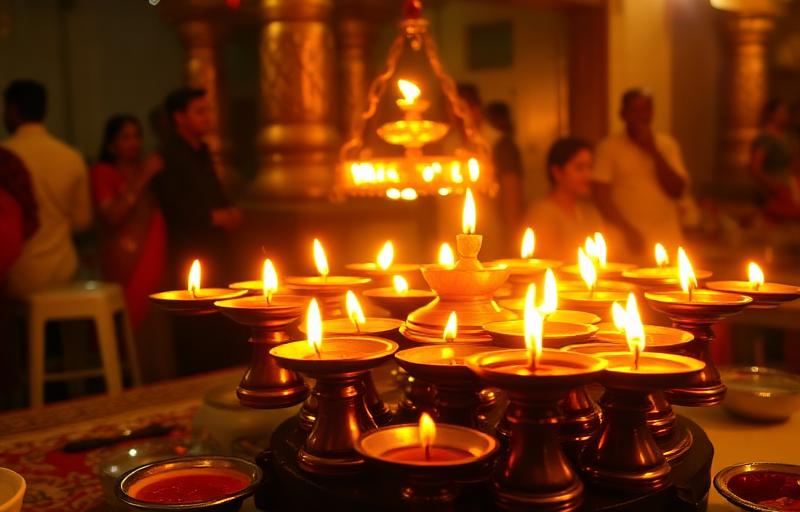
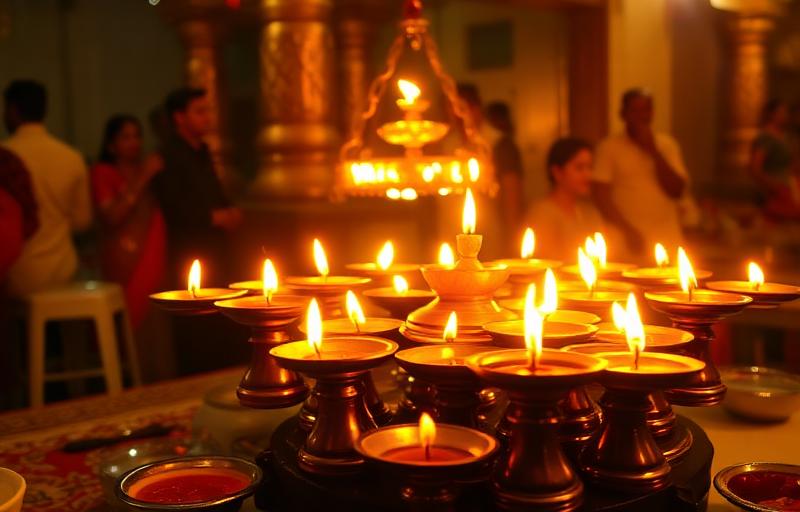
Farmers commonly seek Muniyandi's blessing before entering their fields at dusk or beginning a new season of cultivation, while travellers passing a crossroad shrine may pause briefly to seek safe passage. Offerings are modest, flowers, lit lamps and simple food, given without elaborate ceremony but with sincere respect.
His worship rarely requires a dedicated priesthood in every shrine, and it is common for a local family or elder to tend the site, keeping the practice alive as a quiet, consistent part of daily village life.
Festival and Regional Presence
Many villages hold an annual thanksgiving observance for Muniyandi after the harvest, offering gratitude for a season passed without calamity. Larger Muneeswaran temples in some towns have grown into significant centres of pilgrimage in their own right, drawing devotees from well beyond the immediate area.
Across this range, from the smallest roadside platform to a sizeable temple, the same underlying trust remains constant, that a vigilant guardian watches over the space between the grand temple and the ordinary field.
The Takeaway
Muniyandi's worship teaches that vigilance itself is a sacred quality, and that the divine watches over even the most ordinary corners of daily life, not only the grand sanctum. Pausing at his shrine before a journey or a day's labour is a small, sincere acknowledgement of that constant, quiet protection.
What People Ask Most
Who is Muniyandi?+
Muniyandi, also worshipped as Muneeswaran in some regions, is a guardian village deity of Tamil Nadu, found at crossroads and field edges, entrusted with watching over the land.
Why is a dog sometimes shown with Muniyandi?+
The dog symbolises vigilance and unwavering loyalty, qualities devotees closely associate with Muniyandi's role as a watchful guardian of the land.
What do farmers seek from Muniyandi?+
Farmers commonly seek his blessing before entering fields at dusk or starting a new cultivation season, trusting his protection over the land through the months ahead.
About the author
Pandit Ravindra Sharma · Vedic Rituals & Bhakti, 22+ years
Pandit Ravindra is the Vandnaa editorial team's resident specialist on aarti, chalisa, and daily devotion. He has performed home and temple pujas across Varanasi and Delhi for over two decades and contributes the bhakti-focused articles on this site.
Meet the Vandnaa editorial team →