The 2026 Coincidence Explained
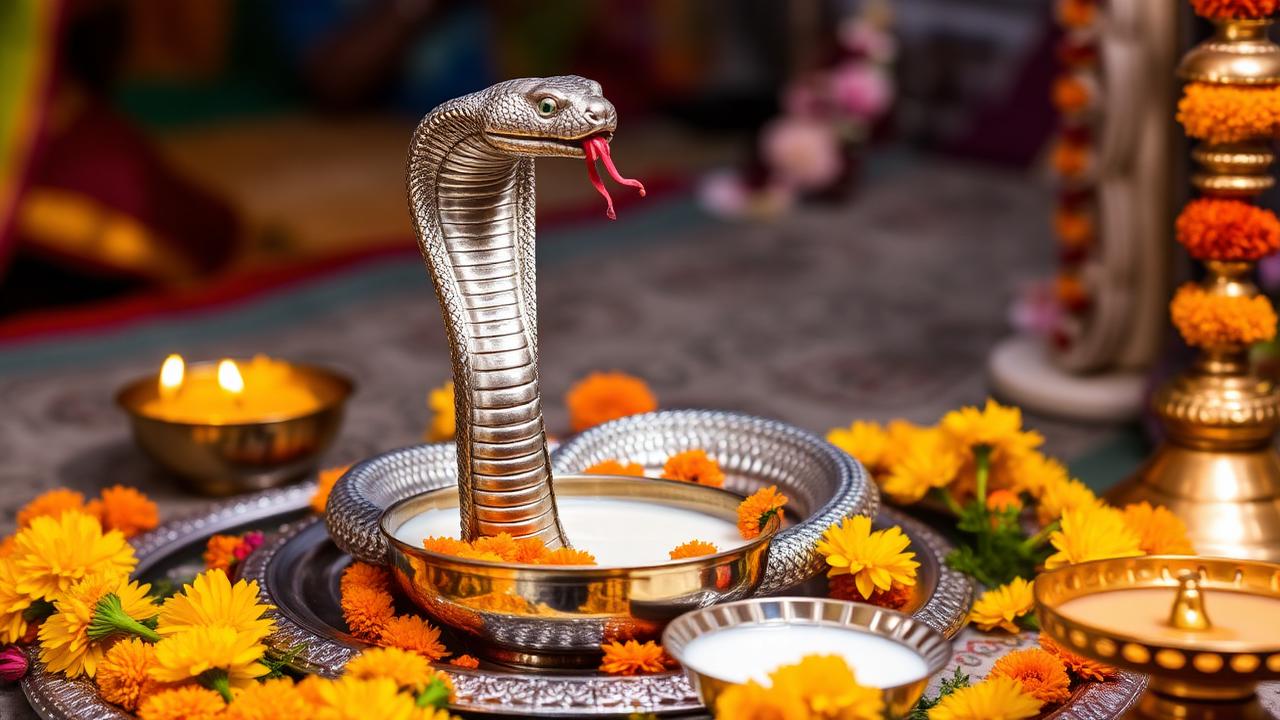
Nag Panchami, dedicated to serpent deities, is fixed to Shravan Shukla Panchami, the fifth day of the bright fortnight in the Sawan month, a Tithi-based date that can fall on any day of the week depending on the year. Sawan Somwar, by contrast, is defined purely by the weekday, every Monday within the Sawan month, regardless of Tithi. In 2026, these two independent systems, one lunar-date-based, one weekday-based, align on Monday, 17 August, which also happens to be the third of the four Sawan Somwars this year.
This is a genuine coincidence in a way the Sawan Purnima-Raksha Bandhan pairing is not. Nag Panchami does not always fall on a Monday; across different years it can land on any day of the week, and it is only in years like 2026, where the lunar Panchami Tithi happens to align with a Monday during Sawan, that devotees encounter this specific overlap.
For most devotees, the practical question this raises is straightforward: do I need to perform two separate pujas, or can one observance cover both occasions? The short answer, explored in the next section, is that both can be honoured within a single, extended puja session, since the two observances do not conflict in their core requirements, fasting, cleanliness and a focus on bhakti, even though they honour different divine forms, Nag Devta and Bhagwan Shiva respectively.
Understanding that this is a calendar coincidence rather than a scriptural instruction to combine the two also matters. There is no ancient text specifically addressing a joint Nag Panchami-Somwar puja; what follows in this guide is practical, commonly followed guidance for handling the overlap sensibly, not a fixed ritual mandated for this specific combination.
Can Both Be Observed Together?
Yes, and in years when this overlap occurs, combining the two into a single extended puja session is the approach most priests and households actually follow, rather than treating them as two separate rituals requiring separate fasts or separate altar setups.
The reasoning behind this is practical as much as theological. Both observances share several core elements: a fast observed with similar dietary restrictions, a puja performed with water, milk and flowers, and a general spirit of devotion and protection-seeking, Nag Devta traditionally invoked for protection from snakebite and for the wellbeing of the household, Shiva invoked for the broader spiritual and family welfare that defines Sawan Somwar.
A combined approach typically looks like this: the fast for the day follows Sawan Somwar's usual phalahar or nirjala pattern, since it is the stricter and more familiar of the two for most devotees. The puja itself can be sequenced, Shiva puja first, since Sawan Somwar's practice is usually the household's daily anchor, followed by the Nag Panchami-specific elements, or the reverse order, depending on family custom and which puja area is set up first in the home.
Some households do maintain two entirely separate, smaller pujas rather than one combined one, particularly if Nag Panchami is observed at a specific snake-idol shrine or anthill, a traditional site for this worship, separate from the home Shivling. Both approaches, combined or separate, are considered valid; there is no requirement that dictates one over the other.
What matters more than the exact sequencing is that both deities receive sincere attention rather than one being rushed through to prioritise the other, since the coincidence, while requiring some extra planning, does not have to mean either observance is shortchanged.
Nag Panchami Rituals to Include
Nag Panchami's specific rituals, layered onto the day's Sawan Somwar practice, typically include the following:
- Nag Devta image or idol worship: A drawing or small idol of a snake, made with cow dung, clay, or drawn with turmeric and vermillion on the wall near the main door or the puja space, is worshipped alongside or after the Shivling puja.
- Milk offering: Milk is traditionally offered to snake images or, in some regions, poured at anthills or known snake habitats near the home, symbolic of nourishment and peace-seeking rather than literal feeding, since snakes do not naturally drink milk.
- Turmeric and vermillion (haldi-kumkum): Applied to the snake image as a mark of respect, similar to the tilak offered to other deities.
- Rice and flowers: Offered alongside the milk, along with a lit diya placed near the image through the puja.
- Avoiding certain activities: Many households avoid digging the earth, ploughing, frying food in hot oil, or using sharp cutting implements on this day, out of respect for snakes and their habitats, a practical, ecologically-minded custom as much as a devotional one.
- Reciting the Nag Panchami Katha: The traditional story explaining the day's origin, commonly involving a devotee's protection from snakebite through sincere worship, is read or listened to as part of the puja.
- Regional temple visits: In some regions, particularly parts of Maharashtra, Karnataka and Rajasthan, visiting a Nag temple or a site with a natural snake presence is a significant part of the day's observance.
These elements are additive rather than replacing anything from the Sawan Somwar puja; they simply extend the day's devotional scope to include Nag Devta specifically.
Sawan Somwar Shiv Puja Elements to Keep
On 17 August, the day's status as the third Sawan Somwar should not be diminished by the Nag Panchami overlap, since for most devotees the Monday vrat to Shiva is the more established, regularly kept practice of the two. The standard elements remain unchanged:
- The day-long fast: Nirjala, phalahar or ekbhukt, following whichever pattern has been kept on the previous two Sawan Mondays this year, for consistency across the month.
- Shivling abhishek: Water, milk, curd, honey and sugar, offered in the usual sequence, accompanied by Om Namah Shivaya japa.
- Bel patra offering: The customary bel leaves, offered with the smooth side facing the Shivling.
- Shiv Chalisa or Rudri path: Whichever recitation is customary for the household's Monday practice.
- Evening aarti: Performed at the usual time, ideally not rushed to accommodate the additional Nag Panchami elements.
Since Nag Devta is, in several Puranic traditions, associated with Shiva himself, most visibly through Vasuki, the serpent Shiva wears coiled around his neck, some households find a natural thematic link between the two observances rather than experiencing them as unrelated add-ons to the day. This connection is sometimes explicitly acknowledged in the day's prayers, with devotees noting that honouring the snake around Shiva's neck is, in a sense, an extension of honouring Shiva himself.
Where a devotee genuinely cannot manage the full scope of both observances due to time constraints, work commitments or health, prioritising the Sawan Somwar puja over the additional Nag Panchami elements is generally considered acceptable, since the Monday vrat is the devotee's own established commitment for the month, while Nag Panchami's specific rituals, though meaningful, are more supplementary for someone not otherwise following that tradition closely.
A Suggested Combined Timeline for 17 August
A practical, sequenced approach to the day, drawn from how many households already manage overlapping observances, can help avoid a rushed or disorganised puja:
- Early morning (before 7 am): Bath, sankalp for the day's combined observance, and the start of the fast.
- Mid-morning: The main Shivling abhishek and Sawan Somwar puja, water, milk, bel patra and Om Namah Shivaya japa, performed with the usual full attention this vrat receives.
- Late morning: Nag Devta puja, either at the home's snake image or drawing, or a visit to a Nag temple or shrine if that is the family's custom, including the milk offering and Nag Panchami Katha.
- Midday: A period of rest and continued fast, observing the day's customary restrictions, no digging, no frying, no use of sharp tools around the house.
- Evening (Pradosh Kaal): The day's main aarti, which can serve both observances if performed at the same puja space, followed by parana once the fast concludes.
- Post-parana: A light phalahar meal, followed by a short period of gratitude prayer acknowledging both Bhagwan Shiva and Nag Devta for the day.
Households with limited time can compress the late-morning Nag Panchami elements into a shorter 10 to 15 minute addition immediately following the main Shiv puja, rather than treating it as a separate outing or ceremony, keeping the day manageable without skipping either observance entirely.
This structure is a suggestion rather than a fixed rule; regional and family customs vary, and adapting the sequence to what already works for a household's usual Monday routine is entirely reasonable.
What Takes Priority If Time Is Genuinely Short
For most devotees, the honest answer is that the third Sawan Somwar takes priority over the additional Nag Panchami elements, for a simple reason: it is the observance already woven into the month's established rhythm, while Nag Panchami's specific rituals are, for many households outside snake-worship traditions or specific regional customs, a once-a-year addition rather than an ongoing practice.
This is not a judgement on Nag Panchami's importance, which carries genuine devotional and ecological significance, particularly its underlying message of respect for snakes and their habitats during the monsoon, when they are most likely to be encountered near homes. It is simply a practical acknowledgement that a devotee juggling limited time on a single day is better served completing one observance properly than rushing through two incompletely.
A workable minimum version, for a devotee with genuinely little time, might look like this: complete the Sawan Somwar fast and a shortened Shiv puja, water abhishek, a few bel patra, a short round of Om Namah Shivaya, and then offer a small amount of milk with a brief prayer to Nag Devta, even without a full separate puja setup, acknowledging the day's dual significance without requiring elaborate ritual for both.
What matters across all of this, whether a devotee manages a full combined puja or the minimum version above, is sincerity over scale. A short, attentive prayer to both Shiva and Nag Devta on this specific Monday tends to be considered more meaningful in practice than an elaborate ritual performed distractedly or resentfully because of time pressure.
🔱 The Vandnaa App's Sawan calendar flags days like 17 August where multiple observances overlap, helping devotees plan which elements to prioritise in advance rather than deciding on the morning itself.
Common Questions From Devotees
Is it rare for Nag Panchami to fall on a Sawan Somwar?+
It does not happen every year. Nag Panchami is fixed to a lunar Tithi while Sawan Somwar depends purely on the weekday, so the two align only in years when the calendar's lunar and weekly cycles happen to coincide, as they do on 17 August 2026.
Do I need to keep two separate fasts on 17 August 2026?+
No, a single day-long fast following the usual Sawan Somwar pattern is sufficient for both observances. There is no requirement for a separate, additional fast specifically for Nag Panchami on this combined day.
Can I offer milk to both the Shivling and a snake image on the same day?+
Yes, this is common practice on days when the two observances overlap. The Shivling abhishek and the milk offering to Nag Devta are performed as separate steps within the same extended puja session.
If I only have time for one, which should I prioritise?+
Most priests suggest prioritising the Sawan Somwar puja, since it is the devotee's established monthly commitment, while adding even a brief milk offering and prayer to Nag Devta rather than skipping the day's dual significance entirely.
What activities are traditionally avoided on Nag Panchami?+
Many households avoid digging the earth, ploughing, frying food in hot oil, and using sharp cutting tools on this day, out of respect for snakes and their habitats during the monsoon season.
About the author
Pandit Mahesh Trivedi · Festival Traditions & Panchang
Pandit Mahesh leads the festival-date and Panchang content on Vandnaa. He cross-references multiple regional panchangs (Drik, Vaishnava, Bengali, Marathi) for every festival date published on the site.
Meet the Vandnaa editorial team →Explore on Vandnaa
Related Articles
Sawan's Fourth Somwar 2026: How to Observe the Final Monday
7 min read
The Last Week of Sawan 2026: What to Prioritize Before the Month Ends
7 min read
Sawan Somwar 2026: Dates, Vrat Vidhi, Shiv Mantras & Why Mondays in Sawan Are So Powerful
10 min read
Mangala Gauri Vrat - Shravan Tuesdays Puja Vidhi, Katha & Benefits
9 min read