The Manuscript in the Kaveri
Nampillai, thirteenth century, at Srirangam, is the greatest expositor of the Tiruvaymoli in the Srivaishnava tradition, and the man whose spoken word became its principal commentary without his writing a line of it.
His names
Born Varadaraja, and also called Thirukkalikanri Dasar and Kalivairi Dasa, after Thirumangai Alvar.
And then a series of titles, all given by other people: Lokacharya, teacher of the world; Ulagariyan, the same in Tamil; Sooktimaharnava, the ocean of fine sayings; Jagadacharya.
And Nampillai, which is the one that stuck, and which means, roughly, our boy.
How he got it
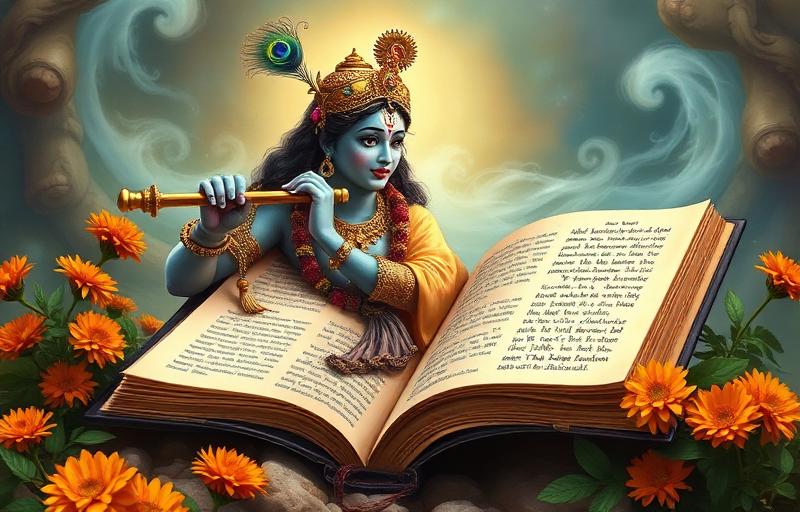
Nanjiyar had written the Onpatinayirappadi, the commentary on the Tiruvaymoli running to nine thousand units of text, and he wanted a fair copy made.
Varadaraja volunteered, took the manuscript away, and made the copy.
And then the manuscript went into the river.
The accounts differ on how: crossing the Kaveri, an accident, a fall, water. The original was gone.
And he reproduced it from memory and brought it back.
What Nanjiyar did
Read it, and found it was not quite what he had written.
And in places was better.
The accounts have him questioning the young man, learning what had happened, and responding not with anger about the lost manuscript but with delight about what had replaced it.
And he called him Nampillai, our boy, and the name held for the rest of his life and into the tradition.
The echo, which is deliberate
This is the second time in three generations that this tradition tells this story.
Kuresha memorised the Bodhayana Vritti in Kashmir because he was not allowed to take it, and reproduced it on the road home, and the Sri Bhashya was written from it.
Nampillai memorised the Onpatinayirappadi and reproduced it after the river took it.
And the repetition is not suspicious so much as revealing. This was a culture in which trained men held very large texts in their heads as a matter of course, and losing a manuscript was an inconvenience rather than a catastrophe, because the manuscript was not where the text lived.
Which is worth sitting with, in a period when almost nobody can recite anything.
What he did for the rest of his life
He spoke.
The kalakshepam, the oral exposition of a text before an assembly, was the standard form of Srivaishnava teaching, and Nampillai's on the Tiruvaymoli became the most celebrated in the tradition's history.
The accounts describe the scale: the hall could not hold the numbers, people sat outside and in the street, and the sessions ran for years because the text is a thousand and something verses and he was not hurrying.
And he wrote none of it down.
The Idu
What happened to the lectures, and it is the best story about how books get made.
Two students were writing.
One. Periyavachan Pillai, with permission.
He produced the Irupattunalayirappadi, the twenty four thousand, a commentary on the Tiruvaymoli based on what Nampillai was saying, and Nampillai knew and had agreed.
Two. Vadakku Thiruvidhi Pillai, without permission.
He was taking it down secretly, in the sessions, and producing a far fuller record: the Idu, or Idu Muppattaaru Aayirappadi, the thirty six thousand.
Why secretly
Because the tradition's position was that this material was oral.
The kalakshepam is a transmission from a living teacher to a present student, and the Srivaishnava conviction was, and in places still is, that the meaning of these texts passes through people rather than through paper.
A written commentary escapes. It goes to people who have not been taught, it is read without a teacher, it can be quoted out of context, and it can be argued with by people who do not know what was being answered.
Which is not a foolish position and is the same one that surrounds the rahasyas in the Thirukoshtiyur entry.
What happened when Nampillai found out
He was displeased.
The accounts are clear about this and do not smooth it over. His student had recorded his teaching without asking, and he objected.
And then he read it.
And found it accurate.
And, in the accounts, went through it, corrected what needed correcting, and approved it.
And the Idu became the principal commentary on the Tiruvaymoli, and has been for seven hundred years.
How to hold the episode
Both halves, again, and the tradition keeps producing this shape.
The student was wrong to do it without asking, and the tradition says so.
And the book exists because he did it, and if he had asked he would probably have been refused, and one of the major works of Tamil religious literature would not be here.
And the teacher checked it and approved it, which is the part that matters: he did not suppress it out of pride at having been gone behind, and he did not approve it without reading it.
Which is the same pattern as Thirukoshtiyur Nambi and the shouted mantra, one century later, in the same tradition, with the roles of secrecy and disclosure exactly reversed.
The other commentaries
The Tiruvaymoli has a set of commentaries measured by length, which is a charming way to name books:
- Aarayirappadi, the six thousand, by Thirukurugai Piran Pillan, a disciple of Ramanuja, the earliest
- Onpatinayirappadi, the nine thousand, by Nanjiyar
- Irupattunalayirappadi, the twenty four thousand, by Periyavachan Pillai
- Muppattaaru Aayirappadi, the thirty six thousand, the Idu, by Vadakku Thiruvidhi Pillai from Nampillai's discourses
- Pannirayirappadi, the twelve thousand, by Vadikkasoodi Nambi
The unit is the grantha, thirty two syllables, the standard measure of manuscript length, so the numbers describe size rather than content.
And the Idu is the largest and the one the tradition treats as definitive.
Manipravala, and the Man Himself
The language these commentaries are in, which is worth a section of its own.
Manipravala
Mani is a gem, pravala is coral, and the name describes the thing: a string in which gems and coral alternate.
What it actually is: Tamil grammar with Sanskrit vocabulary, in varying proportions, written in a script that handles both.
Why it was used
Because the Srivaishnava position required it.
Ubhaya Vedanta, the dual Vedanta, holds that the Sanskrit Veda and the Tamil Prabandham are both scripture. A commentary that discusses both has to be able to speak both, and Manipravala is what you get when a community refuses to choose.
And it is not a mongrel or a decline. It is a deliberate literary register, it has its own conventions and its own masters, and the Idu is one of the great achievements in it.
Its difficulty
It is hard to read now, and this is worth saying plainly. Manipravala requires Tamil and Sanskrit together, the technical vocabulary of the school, and the assumed background of somebody who has been sitting in the sessions.
Which means the Idu, the definitive commentary on the central text of the tradition, is inaccessible to most people who belong to that tradition.
Translations exist, into modern Tamil and into English, and they are the way in for almost everybody.
Nampillai as a person
Two things the tradition records, and both are unusual.
One. He was strikingly good looking.
The accounts say so directly, and there is an episode built on it: a woman in the street, in the accounts a courtesan, stopped and stared at him as he passed, so completely absorbed that she did not move.
And when this was mentioned to him afterwards, he did not treat it as an occasion for offence, or a lesson about temptation, or a story about her.
He said he wished he had ever attended to the divine the way she had just attended to him.
Which is a genuinely good response. He takes the incident, removes the woman from the moral frame entirely, and applies it to himself.
And it is worth contrasting with what most religious literature does with an episode like that, which is to make the woman the problem.
Two. He was called our boy for life.
The greatest expositor in the tradition's history, called Lokacharya and Jagadacharya and the ocean of fine sayings by later generations, went through his life being called by the affectionate diminutive his teacher gave him when he was young.
His students
And the reason this batch ends where it does:
- Vadakku Thiruvidhi Pillai, who wrote the Idu, and who was the father of Pillai Lokacharya and Azhagiya Manavala Perumal Nayanar
- Periyavachan Pillai, who commented on the entire Divya Prabandham, all four thousand verses, and is called Vyakhyana Chakravarti, emperor of commentary
- Engalazhwan, Nadadur Ammal in the connected line, from whom the teachers of Vedanta Desika descend
And after this generation the tradition divides, into the Thenkalai and Vadakalai schools, over questions that were live in Nampillai's own hall.
Which is the subject of the last entry in this batch.
The Short Version
Who: Nampillai, thirteenth century, at Srirangam, the greatest expositor of the Tiruvaymoli in the Srivaishnava tradition. Born Varadaraja and also called Thirukkalikanri Dasar and Kalivairi Dasa, and given the titles Lokacharya, Ulagariyan, Sooktimaharnava and Jagadacharya. Nampillai, the name that stuck, means roughly our boy.
How he got the name: Nanjiyar wanted a fair copy made of his Onpatinayirappadi, the nine thousand, his commentary on the Tiruvaymoli. Varadaraja volunteered and made the copy, and the original went into the Kaveri. He reproduced it from memory. Nanjiyar read it, found it was not quite what he had written and in places was better, learned what had happened, and responded with delight rather than anger, calling him Nampillai.
The echo: this is the second time in three generations that the tradition tells this story, since Kuresha memorised the Bodhayana Vritti in Kashmir and reproduced it on the road home. The repetition is revealing rather than suspicious: this was a culture where trained men held very large texts in their heads as a matter of course, so losing a manuscript was an inconvenience rather than a catastrophe.
The lectures: he spent his life giving kalakshepam, oral exposition before an assembly, and his sessions on the Tiruvaymoli were the most celebrated in the tradition's history, with crowds too large for the hall and sessions running for years. He wrote none of it down.
The Idu: two students were recording. Periyavachan Pillai produced the Irupattunalayirappadi, the twenty four thousand, with permission. Vadakku Thiruvidhi Pillai took the sessions down secretly and produced the Idu, the thirty six thousand, a far fuller record. He did it secretly because the tradition held this material to be oral, passing from a living teacher to a present student rather than through paper, since a written commentary escapes to people who have not been taught. Nampillai was displeased when he found out, and the accounts do not smooth that over. Then he read it, found it accurate, corrected what needed correcting, and approved it. It has been the principal commentary for seven hundred years.
Manipravala: gem and coral, the name for the mixed register of Tamil grammar with Sanskrit vocabulary in which these commentaries are written. It exists because ubhaya vedanta treats both the Sanskrit Veda and the Tamil Prabandham as scripture, so a commentary discussing both must speak both. It is hard to read now, which means the definitive commentary on the tradition's central text is inaccessible to most people who belong to that tradition, and translations into modern Tamil and English are the way in.
What People Ask Most
Who was Nampillai?+
A thirteenth century Srivaishnava teacher at Srirangam, the greatest expositor of the Tiruvaymoli in the tradition's history. He was born Varadaraja and also called Thirukkalikanri Dasar and Kalivairi Dasa, and was given the titles Lokacharya, Ulagariyan, Sooktimaharnava and Jagadacharya. The name that stuck was Nampillai, which means roughly our boy, given him by his teacher Nanjiyar. He spent his life giving oral exposition to enormous crowds and wrote none of it down.
How did Nampillai get his name?+
Nanjiyar wanted a fair copy made of his Onpatinayirappadi, the nine thousand, his commentary on the Tiruvaymoli. The young Varadaraja volunteered, took the manuscript away and made the copy, and then the original went into the Kaveri. He reproduced it from memory and brought it back. Nanjiyar read it, found it was not quite what he had written and in places was better, questioned him and learned what had happened, and responded not with anger about the lost manuscript but with delight about what had replaced it, calling him Nampillai, our boy. The name held for the rest of his life and into the tradition.
What is the Idu?+
The principal commentary on the Tiruvaymoli, also called Idu Muppattaaru Aayirappadi, the thirty six thousand, and it is a record of Nampillai's oral discourses taken down by his student Vadakku Thiruvidhi Pillai without permission. He did it secretly because the tradition held this material to be oral, passing from a living teacher to a present student rather than through paper, on the reasoning that a written commentary escapes to people who have not been taught, can be read without a teacher, quoted out of context and argued with by people who do not know what was being answered. Nampillai was displeased when he found out, then read it, found it accurate, corrected what needed correcting and approved it. It has been the definitive commentary for seven hundred years.
What is Manipravala?+
The literary register the Srivaishnava commentaries are written in. Mani is a gem and pravala is coral, and the name describes a string in which gems and coral alternate. What it actually is is Tamil grammar with Sanskrit vocabulary in varying proportions. It exists because the Srivaishnava position of ubhaya vedanta holds that both the Sanskrit Veda and the Tamil Prabandham are scripture, so a commentary discussing both has to speak both, and Manipravala is what you get when a community refuses to choose. It is not a mongrel or a decline but a deliberate register with its own conventions and masters. It is hard to read now, requiring Tamil and Sanskrit together plus the school's technical vocabulary, so translations into modern Tamil and English are the way in for almost everybody.
What are the commentaries on the Tiruvaymoli?+
They are named by length, measured in granthas, a grantha being thirty two syllables and the standard measure of manuscript size, so the numbers describe extent rather than content. The Aarayirappadi, the six thousand, by Thirukurugai Piran Pillan, a disciple of Ramanuja, is the earliest. Then the Onpatinayirappadi, the nine thousand, by Nanjiyar. The Pannirayirappadi, the twelve thousand, by Vadikkasoodi Nambi. The Irupattunalayirappadi, the twenty four thousand, by Periyavachan Pillai. And the Muppattaaru Aayirappadi, the thirty six thousand, the Idu, taken down from Nampillai's discourses by Vadakku Thiruvidhi Pillai, which is the largest and the one the tradition treats as definitive.
What did Nampillai say when a woman stared at him in the street?+
The accounts say he was strikingly good looking, and that a woman in the street, described as a courtesan, stopped and stared at him as he passed, so completely absorbed that she did not move. When this was mentioned to him afterwards, he did not treat it as an occasion for offence, or as a lesson about temptation, or as a story about her. He said he wished he had ever attended to the divine the way she had just attended to him. It is a genuinely good response, since he takes the incident, removes the woman from the moral frame entirely, and applies it to himself, which is worth contrasting with what most religious literature does with an episode like that, which is to make the woman the problem.
About the author
Pandit Ravindra Sharma · Vedic Rituals & Bhakti, 22+ years
Pandit Ravindra is the Vandnaa editorial team's resident specialist on aarti, chalisa, and daily devotion. He has performed home and temple pujas across Varanasi and Delhi for over two decades and contributes the bhakti-focused articles on this site.
Meet the Vandnaa editorial team →