Our Alvar
Nammalvar is the fifth of the twelve Alvars in the traditional order and, by a wide margin, the most important.
The name. Nam means our. Nammalvar is simply our Alvar.
That is what the tradition calls him. Not by a place, not by a family, not by an honorific. Ours.
His other names:
- Sathakopan, which the tradition explains as the one who was angry at, or overcame, satha, the ignorance or the disposition that clings to worldly things
- Maran
- Parankusa, the goad to those outside
- Vakulabharana, adorned with the magizham flower
- Kurugur Nambi, from his town
Where he was from:
- Thirukurugur, now Alwarthirunagari, in Thoothukudi district, Tamil Nadu, on the Tamiraparani river
- His parents were Kariyar and Udayanangai, of the Vellala agricultural community
- The Divya Desam there is Adinathar
His social position matters. The foremost Alvar, whose work the tradition treats as the Tamil Veda and on which its acharyas wrote their greatest commentaries, was from a landholding agricultural family, not a brahmana lineage.
The tradition never obscured this. It made his verses scripture anyway, and Sri Vaishnava brahmanas have recited them daily for a thousand years.
What he wrote. Four works, all in the Prabandham:
- Thiruviruttam, a hundred verses
- Thiruvasiriyam, seven verses
- Periya Thiruvandhadhi, eighty seven verses
- Thiruvaymozhi, 1102 verses in a hundred decads
The four Vedas correspondence. The tradition maps them:
- Thiruviruttam to the Rig Veda
- Thiruvasiriyam to the Yajur Veda
- Periya Thiruvandhadhi to the Atharva Veda
- Thiruvaymozhi to the Sama Veda
The Sama Veda is the Veda that is sung, and the Gita has Krishna say that among the Vedas he is the Sama.
So the tradition's most important Tamil work is placed opposite the Veda that is music.
His place in the tradition. Central, in a specific structural way.
- The Prabandham is arranged around him
- The great commentaries of the Sri Vaishnava acharyas are on the Thiruvaymozhi
- In the guru parampara, the lineage of teachers, he stands at the head, with the Lord above him and Nathamuni below
- His image is carried in procession and he is worshipped, not merely remembered
- The Satari or Sathakopam, the crown placed on devotees' heads at the end of darshan in every Sri Vaishnava temple, is understood as his feet
That last point is worth pausing on. In a Sri Vaishnava temple, after darshan, the priest places a small crown briefly on the devotee's head.
That object represents the feet of Nammalvar. It is given after the Lord's own darshan, and the tradition holds that receiving the feet of the devotee is the completion of receiving the Lord.
Every single darshan, in every Sri Vaishnava temple, ends with a farmer's son from the Tamiraparani being placed on your head.
Sixteen Years Without Speaking
The traditional life, which is short in incident and long in silence.
The birth:
- Born at Thirukurugur to Kariyar and Udayanangai, who had prayed for a child at Thirukkurungudi
- The child did not cry
- Did not open his eyes
- Did not take milk
- Showed none of the ordinary signs
What the parents did. They took him to the temple and placed him at the feet of the deity, in effect handing him back.
What he did. He got up, walked to a tamarind tree near the temple, entered a hollow in it, sat down in the padmasana posture facing north, and remained there.
For sixteen years.
- Not speaking
- Not eating
- Not moving
The tamarind tree. It is at Alwarthirunagari, it is called the Thiruppuliyalvar, the sacred tamarind, and it is worshipped.
The tradition holds that it is Adishesha, the serpent, in the form of a tree, and that it has not put out new growth since, which the temple maintains.
Then Madhurakavi came.
A brahmana named Madhurakavi, on pilgrimage in the north, saw a light in the southern sky. He followed it. It led him to Thirukurugur, and to the tree, and to the boy sitting in it.
He wanted to know whether this was a living person or not. So he picked up a stone and dropped it, to make a noise.
The boy opened his eyes.
The question. Madhurakavi then asked him something, and the question and the answer are the heart of the whole tradition.
He asked, in effect: if the small is born in the belly of the dead, what will it eat and where will it lie?
Which is a riddle, and it means: if the subtle soul takes birth in this inert body, what will sustain it and where will it rest?
The answer. Nammalvar spoke for the first time in sixteen years, and said:
That it will eat, and that it will lie there.
Meaning: it will consume that very body, and it will rest in that very body. The soul embedded in matter feeds on matter and rests in matter.
And the implication, which is the doctrine: this is the condition to be got out of, and the only rest is elsewhere, in him.
What happened next. Madhurakavi became his disciple, remained with him, and wrote down the verses as Nammalvar produced them.
The entire body of Nammalvar's work exists because one man saw a light, followed it, dropped a stone and asked a question.
The length of his life. Traditional accounts give him thirty five years, at the end of which he is said to have attained Paramapadam at Alwarthirunagari.
How to read this biography. A guide should be honest about what kind of account this is.
It is hagiography, and it is doing theological work rather than reporting a childhood.
What it is saying: this poetry did not come from training, from lineage, from scholarship or from religious apprenticeship. It came from somebody who had no contact with any of that and who had, from birth, nothing but the one thing.
The silence is the point. Sixteen years of no input, and then eleven hundred verses.
A necessary note. As with Pey Alvar, the tradition's category of the extraordinary child is not a description of any real child's welfare needs.
A child who does not feed, does not respond and does not develop is a child who needs a doctor, urgently. Nothing in the hagiography of a saint changes that, and no tradition worth following would ask a family to withhold care from a child on the strength of a story.
The Thiruvaymozhi
What it is. 1102 verses, arranged in 100 decads of ten verses plus a closing verse each, across ten centums.
The name. Thiruvay is the sacred mouth. Mozhi is speech. The sacred utterance.
The structure:
- Ten pathus, hundreds
- Each with ten thiruvaymozhis, decads
- Each decad of eleven verses, the eleventh naming the poet and stating the fruit of the decad
- Linked by the antadi device across verses within decads
- Each decad in its own metre and often its own voice
The voices. This is what makes the work extraordinary as poetry.
Nammalvar does not write only as himself. Across the decads he takes up:
- The voice of the nayika, the woman in love, who is separated from the Lord and wasting away
- The voice of her mother, who does not understand what is happening to her daughter
- The voice of her friend, who does
- The voice of a messenger sent to the Lord: a bird, a cloud, a bee
- His own voice, arguing, praising, despairing
- The voice of one instructing others
The nayika bhava. This deserves explanation because it is central and because it is frequently misunderstood.
The Tamil poetic tradition, in the akam poetry of the Sangam period, had a fully developed vocabulary for love: the phases of union and separation, the landscapes each belongs to, the standard speakers, the conventions of the messenger, the mother's ignorance, the friend's collusion.
Nammalvar takes that entire machinery and uses it for the soul and God.
Why a male saint writes as a woman. The theological answer, which the tradition gives clearly:
In relation to the Lord, every soul is in the position the tradition assigns to the beloved: dependent, longing, not in control of the meeting, and utterly given over.
The tradition holds that the Lord alone is purusha and every soul is in the other position, irrespective of the body it wears.
That is not a metaphor about gender. It is a statement about the structure of the relationship, and it is one of the more radical things in Indian devotion.
The great decads. A few that are always singled out:
- Vaikunta Ekadashi and the Thiruvaymozhi are linked, since the whole work is recited in the Adhyayana Utsavam
- The decad beginning Kangulum Pagalum, on sleeplessness in separation, which is among the most admired
- Aravamude, on the deity at Kumbakonam
- The final decad, Avaavarach Choozh, in which the soul reaches Paramapadam and the work ends
The ending. The Thiruvaymozhi does not end in longing. It ends in arrival.
The final decad describes the soul reaching the supreme abode and the desire being finished, and the tradition treats it as Nammalvar's own attainment.
That is unusual. A very great deal of devotional poetry ends in unresolved longing because unresolved longing is easier to write well. This one closes.
The commentaries. The Thiruvaymozhi has one of the most substantial commentarial traditions of any Indian text.
- The Aarayirappadi, the six thousand, by Thirukurugai Piran Pillan, the first
- The Onbadhinayirappadi, nine thousand
- The Irubathinalayirappadi, twenty four thousand
- The Muppathaarayirappadi, thirty six thousand, by Vadakku Thiruvidhi Pillai from Nampillai's discourses
- The Eedu, the great commentary, which is the thirty six thousand
The measure, in thousands, refers to the length relative to the Brahma Sutra commentary.
So a Tamil poem by a farmer's son has a commentarial literature comparable in scale to the Sanskrit Vedanta corpus, written by the same acharyas who wrote on the Brahma Sutras.
Manipravala. The commentaries are written in Manipravala, a mixture of Sanskrit and Tamil, gems and coral, developed specifically for this purpose.
That is itself a statement: the commentary on the Tamil Veda is written in a language that is neither Sanskrit nor Tamil alone, because the subject requires both.
What He Actually Says
Stripping away the apparatus, here is the substance of Nammalvar's position, which became the substance of Sri Vaishnavism.
One. The soul is not its own.
The central term is sesha and seshi: the dependent and the one depended on, the servant and the master, the attribute and the substance.
Nammalvar's position is that the soul is sesha by nature and not by choice. It does not become a servant; it already is one, and the only question is whether it knows.
Two. Nothing you do gets you there.
His verses are repeatedly clear that the soul's own effort is insufficient, that his own record is bad, and that if the matter depended on his merit there would be no hope.
The technical term for what he does instead is prapatti or saranagati: surrender, taking refuge, ceasing to be the agent of your own rescue.
Three. He does everything, including the wanting.
This is the sharpest point and it is where Nammalvar goes further than most.
The desire itself, the turning toward him, the capacity to surrender, is also given. The soul does not generate its own longing.
That closes the last loophole by which a devotee might claim credit.
Four. He is available here.
The archa doctrine described in the Pey Alvar entry: the temple image is not a symbol. Nammalvar sings temple after temple by name and addresses the deity in each as present.
Five. Separation is the ordinary condition.
A very large part of the Thiruvaymozhi is about not having him: nights that do not end, days that will not pass, a body wasting, messengers who do not return.
That is honest, and it is why the work has lasted. It does not pretend that devotion is a settled state of satisfaction.
Six. And then, at the end, arrival.
The final decad closes it. The tradition holds that Nammalvar attained Paramapadam and that the last verses are the record of it.
Where this becomes a practice. The tradition draws a practical conclusion from all of this and it is worth stating.
If nothing you do earns it, and if he supplies even the wanting, then:
- Anxiety about your own qualification is misplaced
- Comparison with other devotees is pointless
- The method is not a technique to be perfected
- What remains is service, done because it is your nature, not because it is producing a result
Kainkarya, service, is the word, and the tradition holds it is not a means to liberation but the content of it. What the liberated soul does is serve.
A caution against a misreading. Because surrender doctrines can be misused.
Prapatti does not mean:
- Passivity in the world, or neglecting your obligations to your family, your work or your health
- That effort in ordinary life is unnecessary or spiritually inferior
- That you should hand your decisions, money or judgment to a religious authority
The acharyas of this tradition ran institutions, argued in public, managed temples, wrote enormous books and conducted their household lives. Surrender is about the soteriological question, not about whether you should go to work.
Anybody who tells you that surrender means giving them control of your affairs has changed the subject.
Alwarthirunagari and the Nine Temples
The town:
- Alwarthirunagari, formerly Thirukurugur, in Thoothukudi district, Tamil Nadu
- On the Tamiraparani river
- Around 30 kilometres from Tirunelveli
- The Adinathar temple, a Divya Desam, is the principal shrine
What to see:
- The Adinathar sanctum
- The Thiruppuliyalvar, the tamarind tree in which Nammalvar sat for sixteen years, understood as Adishesha in tree form
- The shrine to Nammalvar
- The Araiyar Sevai tradition survives here, one of only three places
The Nava Tirupathi. This is the reason to plan a full day.
Nine Divya Desams along the Tamiraparani, in and around Alwarthirunagari, traditionally visited together:
- Srivaikuntam
- Natham, Thirunatham, Sri Vaikunta Nathan
- Thirukulandhai, Perungulam
- Thiruvaragunamangai, Natham
- Thirupuliangudi
- Thirutholaivillimangalam, which is two temples counted as one pair
- Thirukurugur, Alwarthirunagari itself
- Thirukolur
- Thirupperai
The nine are associated with the nine grahas in a local tradition, and there is an established circuit that pilgrims do in a day.
Thirukolur. Worth singling out because of the story attached.
This is where Thirukolur Penpillai, the woman of Thirukolur, is placed. The story is that Ramanuja, leaving Srirangam, met a woman leaving Thirukolur, and asked her why she was going.
She replied with a list of eighty one reasons, each naming a figure from scripture and what they did that she had failed to do: she had not given like Bali, not surrendered like Vibhishana, not served like Lakshmana, not waited like Bharata.
The Thirukolur Penpillai Rahasyam, those eighty one statements, is a text in the tradition and it is a remarkable piece of writing: an entire scriptural education delivered as a list of personal failures by a woman leaving town.
Ramanuja is said to have turned around and gone back.
Getting there:
- Tirunelveli is the nearest major town and railhead, around 30 kilometres
- Thoothukudi and Madurai airports
- The Nava Tirupathi circuit is done by car or by arranged pilgrim transport
- October to March for weather; this is a hot, dry district
When to go:
- Vaikasi Visakam, in May or June, is Nammalvar's birth star festival at Alwarthirunagari and the principal festival
- Margazhi, December to January, for the Adhyayana Utsavam, when the Thiruvaymozhi is recited
- Garuda Sevai of the Nava Tirupathi, when the utsava deities of the nine temples are brought together, which is a major event
Combining further:
- Tirunelveli and the Nellaiappar temple
- Thirukkurungudi, another Divya Desam, where Nammalvar's parents prayed
- Srivaikuntam
- Courtallam falls, in season
- Kanyakumari, further south
- Tiruchendur, the Murugan temple on the coast
The Tamiraparani. The river these temples sit on is worth a note.
It rises in the Western Ghats at Pothigai, is one of the few perennial rivers of the far south, and was historically the centre of the pearl trade of the Gulf of Mannar and of a very old Tamil civilisation.
The Sangam poems mention it. The Nava Tirupathi line it. And a boy sat under a tree beside it for sixteen years and then said eleven hundred verses.
Living With the Thiruvaymozhi
How to approach 1102 verses. Not all at once.
A workable order:
- Start with one decad, eleven verses, in translation
- The first decad, Uyarvara Uyarnalam, which opens the work, is the standard place to begin
- Read it several times over several days rather than moving on
- Listen to it sung, which is how it was meant to be received
On listening. The Thiruvaymozhi was set to music by Nathamuni and has been sung ever since.
Recordings of the full Prabandham recitation are widely available. Many decads also exist as concert pieces in the Carnatic repertoire.
If you have no Tamil, the sung version still does something a printed translation cannot, and it is worth having on while you read.
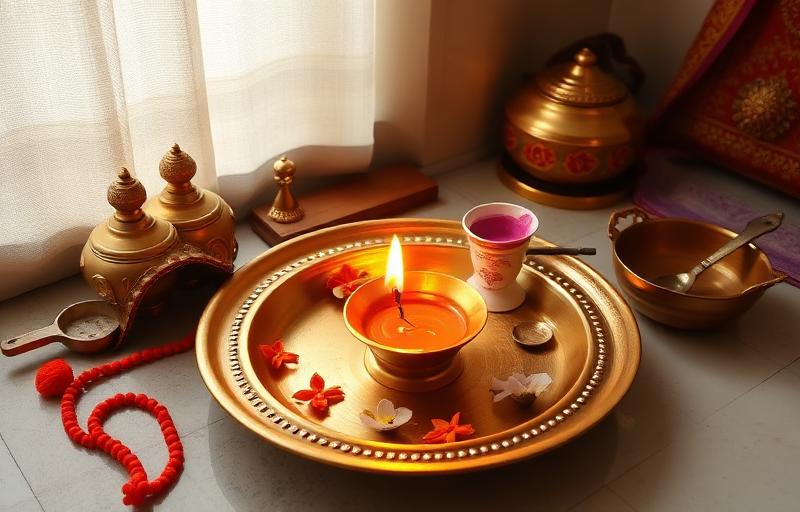
A daily form:
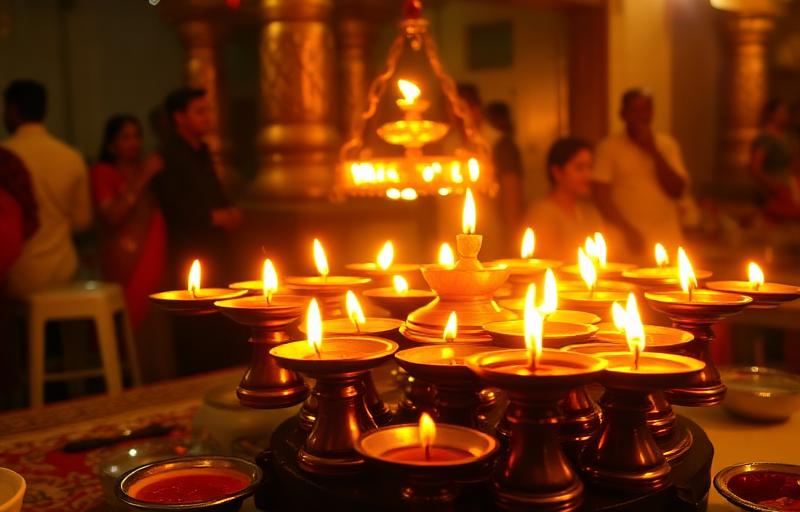
- A lamp in the evening
- One verse
- The name: Om Namo Narayanaya, or Narayana
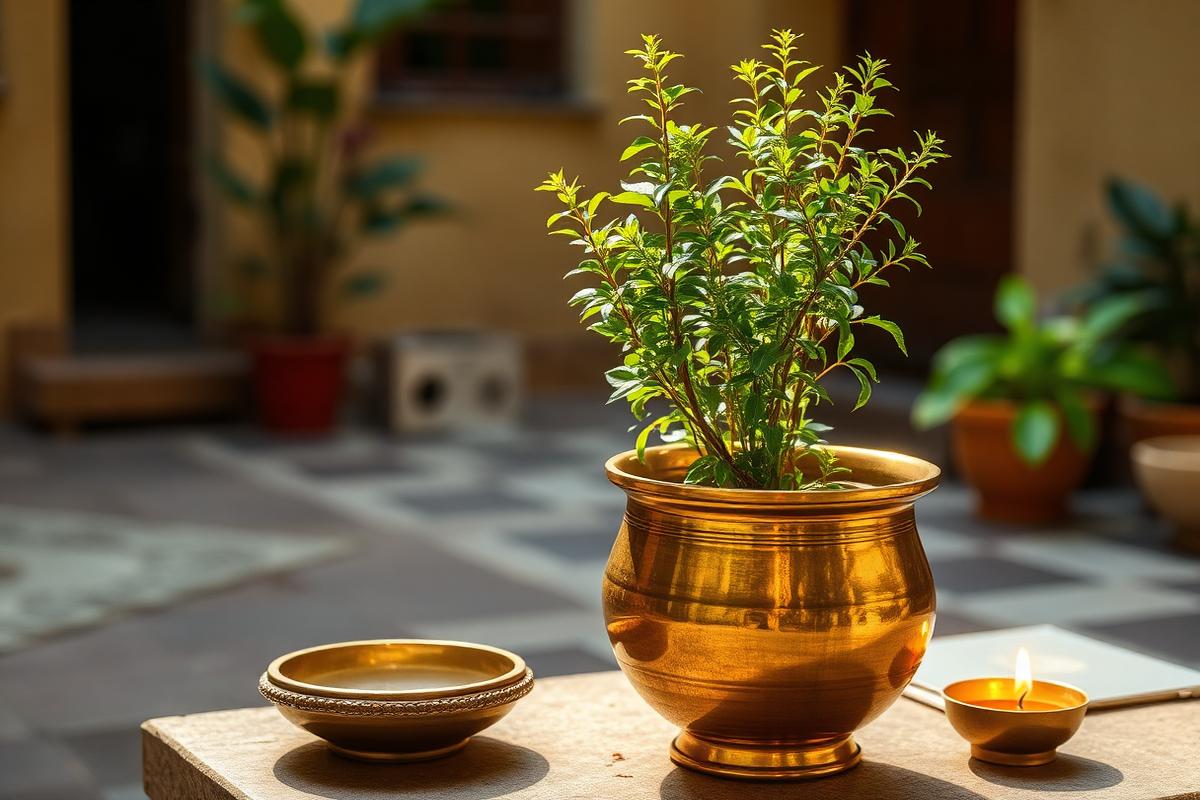
- Tulsi, if you keep it
- That is enough and it is what most Sri Vaishnava households actually do on an ordinary day
The two great days:
- Vaikunta Ekadashi, in Margazhi, when the northern gate is opened at Srirangam and elsewhere
- Vaikasi Visakam, Nammalvar's day
Adhyayana Utsavam. If you can go once, go for this.
At Srirangam and other major Divya Desams, over roughly twenty one days in Margazhi:
- Pagal Pathu, ten days, the first three thousand verses
- Ra Pathu, ten nights, the Thiruvaymozhi itself
- The Nammalvar Moksham on the final day, in which the enactment of Nammalvar attaining Paramapadam is performed, and the image of Nammalvar is taken to the feet of the Lord
- Araiyar Sevai performed through it
The Nammalvar Moksham is one of the most affecting things in Indian temple ritual. The saint's image is carried to the deity, the final verses of the Thiruvaymozhi are recited, and the tradition enacts the moment its founding poet was received.
And then, because the tradition cannot leave him gone, he is brought back the next day.
What to take away. Three things.
The silence. Sixteen years of nothing, and then everything. The tradition is comfortable with long periods in which nothing appears to be happening.
The voice. A man wrote eleven hundred verses largely in the voice of a woman who cannot sleep, and the tradition made it scripture. Devotional life is permitted to sound like longing rather than like certainty.
The ending. It closes. The final decad arrives. Whatever you think about the metaphysics, the poem's own answer to a thousand verses of separation is that separation ends.
And the last practical thing. If you have ever received the Satari at a Vaishnava temple, the small crown placed on your head after darshan, you have already met him.
That is his feet. It is given last, after the Lord, and the tradition arranged it that way deliberately: you see God, and then a farmer's son from the Tamiraparani is placed on your head, and that is the part that completes it.
What People Ask Most
Who was Nammalvar?+
The foremost of the twelve Alvars, born at Thirukurugur, now Alwarthirunagari, in Thoothukudi district to a Vellala agricultural family. His name simply means our Alvar. Tradition holds he did not cry, feed or speak as an infant, sat in a hollow in a tamarind tree for sixteen years, and spoke only when Madhurakavi Alvar came and asked him a question. He composed four works including the Thiruvaymozhi.
What is the Thiruvaymozhi?+
Nammalvar's 1102 verses in a hundred decads, the central text of Sri Vaishnavism, called the Tamil Veda and mapped by tradition to the Sama Veda, the one that is sung. It has an enormous commentarial literature by the Sri Vaishnava acharyas, culminating in the Eedu of thirty six thousand, written in Manipravala, a mixture of Sanskrit and Tamil. Much of it is written in the voice of a woman separated from the one she loves.
What is the Satari or Sathakopam?+
The small crown a priest briefly places on a devotee's head after darshan in every Sri Vaishnava temple. It represents the feet of Nammalvar. It is given after the Lord's own darshan, because the tradition holds that receiving the feet of the devotee is the completion of receiving the Lord. So every darshan in every Sri Vaishnava temple ends with a farmer's son from the Tamiraparani being placed on your head.
Why does Nammalvar write as a woman?+
He takes up the fully developed vocabulary of the Tamil akam love poetry of the Sangam period and uses it for the soul and God. The theological reason the tradition gives is that in relation to the Lord every soul is in the position of the beloved: dependent, longing, not in control of the meeting, and utterly given over. The tradition holds the Lord alone is purusha and every soul is in the other position, irrespective of the body it wears.
Where is Alwarthirunagari and what is there?+
In Thoothukudi district, Tamil Nadu, on the Tamiraparani river, around 30 kilometres from Tirunelveli. The Adinathar temple is the Divya Desam, and the Thiruppuliyalvar, the tamarind tree Nammalvar sat in for sixteen years, is there and is worshipped as Adishesha in tree form. It is one of only three places where Araiyar Sevai survives, and it is part of the Nava Tirupathi circuit of nine Divya Desams along the river.
What does prapatti or surrender actually mean?+
Ceasing to be the agent of your own rescue, on the understanding that the soul's effort is insufficient and that the Lord supplies even the desire to turn toward him. It does not mean passivity in the world, neglecting your obligations to family, work or health, or handing your decisions, money or judgment to a religious authority. The acharyas of this tradition ran institutions, argued in public and conducted their household lives. Anybody who tells you surrender means giving them control of your affairs has changed the subject.
About the author
Anjali Mehta · Editor, M.A. Religious Studies
Anjali is the managing editor for Vandnaa and oversees the festival and vrat coverage. She holds an M.A. in Religious Studies and reviews every published article for accuracy, accessibility, and tradition-fidelity.
Meet the Vandnaa editorial team →