The Search Before the Settling
Thirumazhisai Alvar is the fourth of the twelve Alvars, and his biography is unlike the others.
The traditional account:
- Born at Thirumazhisai, near what is now Chennai, which gives his name
- Said to be the son of the sage Bhargava and Kanakangi
- Born, in the story, as a formless lump and abandoned in a bamboo grove
- Found and raised by a woodcutter and his wife, a couple of the Kannalar community
- Given the name Bhaktisara in Sanskrit, and Mazhisai Piran in Tamil
The abandonment. It is worth stating that the tradition does not present this as a hidden shame.
He was left as an infant and raised by a poor couple who were not his birth parents and who were not of the same community. The tradition keeps that in the biography and honours the woodcutter and his wife within it.
The search. This is what distinguishes him.
By the traditional account he studied, adopted and then rejected in turn:
- The systems of external philosophy of his day
- Jainism
- Buddhism
- Shaivism
- Various forms of yoga and siddha practice
And then arrived at Vishnu and stayed.
How the tradition presents it. Not as a young man's confusion but as a genuine intellectual progress: he engaged with each system seriously, found each insufficient on its own terms, and moved on.
His verses reflect it. He argues in a way the other Alvars generally do not, and his poetry contains explicit refutation of rival positions, which is unusual in the Prabandham.
Why he is useful to the tradition. Because he represents a particular kind of arrival.
Most of the Alvars are presented as having been devotees from the beginning, or as having been seized suddenly. Thirumazhisai got there by elimination, over a long time, having tried the alternatives.
That makes him the Alvar for people who cannot simply believe, and the tradition has always known it.
The Pey Alvar connection. By tradition, it was Pey Alvar who turned him.
The two met, and Pey Alvar spoke to him of what he had seen, and Thirumazhisai, who had argued with everybody, did not argue.
So the Mudhal Alvars connect directly to the fourth, and the tradition treats Pey Alvar as his teacher.
The length of his life. Traditional accounts give him a very long life, in some tellings several hundred years, spanning multiple periods.
That should be read as the tradition's way of saying that his influence and his engagement covered a great deal of ground, not as a datable claim.
The Lord Who Got Up and Lay Down Again
The most famous story about Thirumazhisai Alvar is one of the best in the Alvar corpus, and it is a story about a saint being disrespected.
The setting. Thirukkudanthai, which is Kumbakonam, and the temple of Sarangapani, where Vishnu reclines as Aaravamudhan, the nectar that does not satiate.
The story:
- Thirumazhisai Alvar was at Kumbakonam with his disciple Kanikannan
- Kanikannan served an elderly woman, and by his grace she became young again
- The Chola king heard of it and demanded that Kanikannan make him young too
- Kanikannan refused, saying such things are not done to order
- The king banished him from the kingdom
- Kanikannan went to his teacher and told him
- Thirumazhisai Alvar said he would go too
- And then he turned to the reclining Lord in the temple and told him to come along as well
The verse. What he said is preserved and is the point of the story:
Kanikannan is leaving. I, who make poor verses, am going too. Ranga of the wide sea, roll up your serpent bed and come with us.
And the Lord did. The image is said to have risen and left, and the story goes that the town was in darkness and disorder without him.
The king came out, understood, revoked the banishment and asked them all back.
Thirumazhisai Alvar then addressed the Lord again:
Kanikannan is returning. I am returning. Ranga of the wide sea, spread out your serpent bed and lie down again.
And the Lord did.
The deity's name. Because of this, the deity at Sarangapani is also called Sonna Vannam Seydha Perumal in a related tradition, the Lord who did exactly as he was told, though that title attaches most firmly to the Yathothkari deity at Kanchipuram, where a related story is placed.
Why the story matters. Several things at once.
One, it is about a king overreaching and a saint refusing. Kanikannan will not perform a miracle to order for power, and is punished for it.
Two, the teacher does not petition or negotiate. He simply leaves, and takes God with him.
Three, it is very funny. The verse tells the Lord to roll up his bedding, which is exactly what you would say to somebody who is lying down and needs to move.
The Alvars are frequently informal with the deity in a way that later, more formal devotion is not, and this is the clearest example.
Four, it makes a claim about where God actually is. Not in the temple as a fixture, but with the devotees, and the temple is empty when they go.
How the tradition reads it. As a statement about bhagavata honour: that the Lord regards insult to his devotees as more serious than insult to himself, and will move.
That principle, that the servant is dearer to him than he is to himself, is a standing Sri Vaishnava emphasis and this story is where it is most vividly told.
Kumbakonam. Worth knowing.
- In Thanjavur district, Tamil Nadu
- A town of very many temples, among the densest concentrations in India
- Sarangapani, the Divya Desam of this story, with its chariot shaped sanctum
- Kumbeswarar, the principal Shiva temple
- Nageswaran, a Chola temple with remarkable sculpture
- The Mahamaham tank, and the Mahamaham festival held once every twelve years, which draws enormous crowds
- Darasuram and Gangaikonda Cholapuram, two of the great Chola temples, are close
The Two Works
What he wrote. Two works, both in the Prabandham.
Nanmukan Thiruvandhadhi, ninety six verses:
- Nanmukan is Brahma, the four faced
- An antadi, in the form described in the earlier entries
- Its explicit concern is establishing the supremacy of Vishnu over the other deities
- It argues rather than only praises, which is characteristic of him
Thiruchanda Viruttam, a hundred and twenty verses:
- In the viruttam metre, hence the name
- Chandam refers to the rhythm, and the work is metrically striking
- Its subject is the Lord as the cause and content of everything
- It is dense and philosophical by Alvar standards
The opening of the Nanmukan Thiruvandhadhi. It begins by saying that Brahma, the four faced one, came from the lotus at the navel of the Lord.
That is the first move of the whole work and it sets the argument: the creator himself is derivative, so the question of who is supreme is settled at the outset.
On the supremacy question. It should be handled carefully in a guide, because it can be read badly.
What the tradition is doing:
- Sri Vaishnavism is a theistic tradition with a specific supreme deity, and stating that is what a sampradaya is for
- The Alvars wrote at a time of genuine competition between traditions, with Jain, Buddhist, Shaiva and Vaishnava positions all arguing publicly
- Establishing a position was normal intellectual practice, and the Shaiva Nayanars were doing the same in the other direction
- The arguments were arguments, conducted in verse and in debate
What it is not:
- It is not a licence for present day sectarianism
- Indian religious practice at the household level has always been comfortably plural, with the same family visiting the Shiva temple and the Vishnu temple
- Thirumazhisai Alvar's own biography includes a long Shaiva period, and the tradition kept that in the record rather than hiding it
- The tradition's own great figures repeatedly warned against contempt for other devotees
How to hold it. A sampradaya has a position, and that is what makes it a sampradaya. Holding a position is not the same as disparaging people who hold another.
And the household reality across India has always been that people worship where they are and are not troubled by it.
The Thiruchanda Viruttam. The more admired of the two, poetically.
Its recurring structure is a piling of contrasts: he is the cause and the effect, he is the one and the many, he is in the smallest thing and contains everything, he is beyond knowing and is standing in the temple.
That rhetorical figure, holding two incompatible statements about the divine together without resolving them, is very old in Indian religious poetry and Thirumazhisai uses it with great control.
The philosophical anticipation. Worth noting for those interested.
Several of the positions Ramanuja would later systematise as Vishishtadvaita are present in outline in these verses:
- The world and souls are real, not illusory
- They form the body of the Lord, who is their inner self
- Distinction is preserved: the soul does not become the Lord
- Prapatti, surrender, is the means
Ramanuja's contribution was to give this a rigorous philosophical statement against the Advaita position. The content he was systematising is in the Alvars, and it is most visible in Thirumazhisai because he is the one who argues.
For People Who Have to Be Convinced
This saint's particular usefulness is to a specific kind of person, and it is worth addressing directly.
The situation. Many people who want a devotional life cannot simply have one.
They have questions. They notice contradictions. They find the confident claims of religious people implausible. They are told to have faith and find that they cannot produce it on demand.
The tradition has an answer to this, and Thirumazhisai Alvar is part of it.
What his biography actually says:
- He studied the alternatives seriously, not superficially
- He adopted several of them, not merely read about them
- He left each one when he found it insufficient
- The process took a long time
- The tradition preserved all of this and did not present him as having believed from the start
That is a sanctioned model of arrival by argument, and it is in the canon.
Other figures who fit the pattern:
- Adi Shankara, whose career was substantially one of debate
- Ramanuja, who broke with his own teacher over the interpretation of a text
- Madhva, who argued against the prevailing position of his time
- The whole shastrartha tradition, in which positions were established publicly by argument
- Nachiketa in the Katha Upanishad, who refuses several offers and insists on his question
What the tradition does not say. It does not say that doubt is a moral failure.
The Gita has Arjuna refusing to act and asking for reasons, at length, and the response is eighteen chapters of argument rather than a rebuke.
That is worth holding onto. The central devotional text of the tradition is structured as an answer to somebody's objections.
Practical guidance for somebody in that position:
- Do the practice anyway, at whatever level you can hold honestly. Light the lamp. Say the name. The tradition does not require that you first settle the metaphysics
- Read, if reading is your temperament. There is a very large body of serious philosophical writing in every Indian sampradaya and it is not afraid of questions
- Do not fake conviction. The tradition has no use for it and neither will you
- Find people who can hold a question without being threatened by it. They exist in every tradition and they are the ones worth learning from
- Give it time. Thirumazhisai Alvar's account covers decades
And a warning. Some religious figures respond to questions with pressure, shame or threats, and some monetise doubt by selling certainty.
A teacher who cannot tolerate being asked something is not one worth having. A teacher who charges more when you are more anxious is worse.
The tradition's own great teachers argued in public with people who disagreed with them and wrote down the objections before answering them. That is the standard.
Where Thirumazhisai lands. Having tried everything and settled, he did not become gentle about it. His verses are still argumentative, still establishing, still refuting.
But what he arrived at was not a proof. It was a temple at Kumbakonam and a Lord he addressed as a person, and whom, in the story, he told to roll up his bedding and come along.
That is where a long argument ended: not in a conclusion but in a relationship informal enough to be rude in.
The Places
Thirumazhisai
- A town in Tiruvallur district, on the western edge of the Chennai area
- His birthplace, with a temple to him
- Easily reached from Chennai
Thirukkudanthai, Kumbakonam
- Sarangapani temple, the Divya Desam of the Aaravamudhan story
- The sanctum is built in the form of a chariot, with wheels and horses, which is unusual and worth seeing
- There are two entrances, the northern used in Dakshinayana and the southern in Uttarayana, with the appropriate one opened by season
- In Thanjavur district, around 40 kilometres from Thanjavur and 90 from Tiruchirappalli
Kanchipuram
- The Yathothkari Perumal temple at Thiruvekka, also called Sonna Vannam Seydha Perumal, the Lord who did as told
- This is where a related story of the Lord acting on the Alvar's instruction is placed, and where Poigai Alvar appeared
- Kanchipuram has both the great Shiva temple, Ekambaranathar, and Varadaraja Perumal, and Kamakshi Amman, so the town holds Shaiva, Vaishnava and Shakta principal shrines
Thiruvallikeni, Triplicane, Chennai
- A Divya Desam sung by Thirumazhisai Alvar and others
- Parthasarathy temple, one of the oldest structures in Chennai
- In the city, easily visited
A route: Chennai for Thirumazhisai and Thiruvallikeni, Kanchipuram inland, then south to Kumbakonam, which puts you among the Chola temples.
The Kumbakonam circuit. Since you will be there:
- Sarangapani, Kumbeswarar, Nageswaran, Ramaswamy and Chakrapani temples in the town
- Darasuram, the Airavatesvara temple, a UNESCO listed Chola temple, 4 kilometres away, with sculpture of extraordinary quality
- Gangaikonda Cholapuram, 35 kilometres, the great Chola temple built by Rajendra Chola
- Thanjavur, 40 kilometres, the Brihadisvara temple
- Swamimalai, one of the six abodes of Murugan, close by
- The navagraha temples around Kumbakonam, a set of nine
Darasuram deserves the emphasis. It is less visited than Thanjavur and the carving is finer. The base of the temple carries small panels illustrating the stories of the Nayanars, which connects directly to the Shaiva saint tradition running parallel to the Alvars.
Mahamaham. Once every twelve years, when Jupiter is in Leo, the Mahamaham festival is held at the Mahamaham tank at Kumbakonam.
Enormous numbers bathe. It is one of the largest gatherings in south India and it is worth knowing about because a visitor arriving in a Mahamaham year will find the town completely transformed.
There have been fatal crowd incidents at Mahamaham in the past. If you go in a Mahamaham year, follow police instructions, avoid the peak hour at the tank, and do not take small children into the crush.
On crowd safety generally, since this series covers many festivals: arrive early or late rather than at the peak, keep to the edges, identify exits, agree a meeting point with your group, and leave if the crowd density rises to the point where you cannot move at your own pace. That last one is the single most useful rule.
Taking Something From Him
What to actually do with this saint, set out simply.
One. Permission to have questions.
If you carry the sense that a proper devotee would not wonder about these things, his biography is the correction. He wondered about all of them, for a long time, in public.
Two. Practice does not wait for certainty.
The standing instruction of the whole Alvar tradition is available regardless of what you have settled:
- A lamp in the evening
- The name, in whatever form your household uses
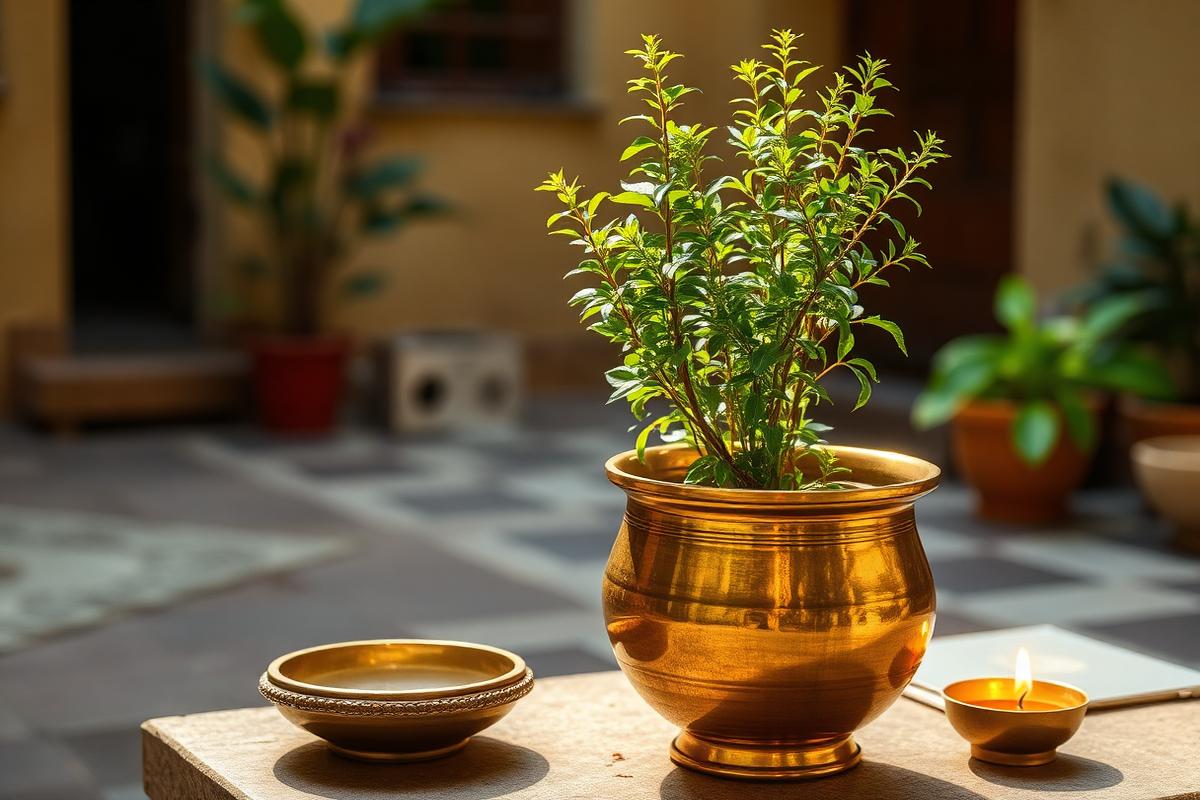
- Tulsi, if you keep it
- A verse, read slowly
- Ekadashi, in a form that suits your health
None of that requires a resolved metaphysics.
Three. Read the argument if arguing is your temperament.
The Nanmukan Thiruvandhadhi argues. So does a great deal of the Indian philosophical tradition. If you are the kind of person who needs the reasoning, the reasoning exists and is available in translation.
Four. Bhagavata honour.
The Kumbakonam story teaches a specific thing and it is worth carrying: how you treat devotees matters more than how you treat the shrine.
The practical form of that is ordinary:
- Do not push past an elderly person in a queue to reach the sanctum faster
- Do not treat temple staff, cleaners or the people who make the food as beneath the ritual
- Do not measure other people's devotion
- The tradition is unambiguous that contempt for a devotee is worse than a ritual lapse
Five. The informality is allowed.
He told the Lord to roll up his bedding.
The Alvars are frequently blunt, familiar, complaining and even scolding in their address to the deity. Later devotion sometimes lost that and became more formal, and something was lost with it.
If your prayer is a complaint, the tradition has an enormous amount of precedent for complaining, and it is in the canon rather than at its edges.
A closing thought. A man was left in a bamboo grove as an infant and raised by a woodcutter. He read everything, joined several traditions and left them.
He ended up sitting in front of a reclining image in a town full of temples, arguing in verse about who was supreme, and then, when a king insulted his student, he stood up and told God to pack up and follow him out of town.
And the tradition, which could have quietly dropped the part about the years of doubt, kept all of it.
Quick Answers
Who was Thirumazhisai Alvar?+
The fourth of the twelve Alvars, born at Thirumazhisai near present day Chennai, abandoned as an infant in a bamboo grove and raised by a woodcutter and his wife. He studied, adopted and then rejected several traditions including Jainism, Buddhism and Shaivism before arriving at Vishnu, by tradition after meeting Pey Alvar. He composed the Nanmukan Thiruvandhadhi and the Thiruchanda Viruttam.
What is the story of the Lord at Kumbakonam?+
His disciple Kanikannan refused to make the Chola king young to order and was banished. Thirumazhisai Alvar said he would go too, and then told the reclining Lord at Sarangapani to roll up his serpent bed and come along. The image is said to have risen and left, the town fell into disorder, and the king revoked the banishment. The Alvar then told the Lord to spread his bed and lie down again, and he did.
What did Thirumazhisai Alvar write?+
Two works in the Prabandham. The Nanmukan Thiruvandhadhi, ninety six verses in the antadi form, named for Brahma the four faced and explicitly concerned with establishing Vishnu's supremacy. And the Thiruchanda Viruttam, a hundred and twenty verses in the viruttam metre, the more admired of the two poetically, built on a piling of contrasts about the Lord being cause and effect, one and many, beyond knowing and standing in the temple.
Is doubt a problem in the devotional tradition?+
The tradition does not treat it as a moral failure. Thirumazhisai Alvar arrived at devotion by elimination over a long period after seriously studying and abandoning several systems, and the tradition preserved all of that rather than presenting him as having believed from the start. The Gita itself is structured as eighteen chapters answering Arjuna's objections rather than rebuking him for having them.
What is the Sarangapani temple?+
The Divya Desam at Kumbakonam in Thanjavur district, where Vishnu reclines as Aaravamudhan, the nectar that does not satiate, and where the story of the Lord getting up at Thirumazhisai Alvar's word is placed. The sanctum is built in the form of a chariot with wheels and horses, which is unusual, and it has two entrances used according to the season. Kumbakonam has many other temples and the great Chola temple at Darasuram is four kilometres away.
What is bhagavata honour?+
The Sri Vaishnava principle that the Lord regards insult to his devotees as more serious than insult to himself, which the Kumbakonam story tells most vividly. Its practical form is ordinary: do not push past an elderly person in a queue, do not treat temple staff or cleaners or cooks as beneath the ritual, and do not measure other people's devotion. The tradition is unambiguous that contempt for a devotee is worse than a ritual lapse.
About the author
Pandit Ravindra Sharma · Vedic Rituals & Bhakti, 22+ years
Pandit Ravindra is the Vandnaa editorial team's resident specialist on aarti, chalisa, and daily devotion. He has performed home and temple pujas across Varanasi and Delhi for over two decades and contributes the bhakti-focused articles on this site.
Meet the Vandnaa editorial team →