The Second of the Three
Bhutham Alvar is the second of the twelve Alvars and the second of the three Mudhal Alvars, the first group.
The account of his appearance:
- At Thirukadalmallai, which is Mahabalipuram on the Coromandel coast
- Not from a womb, like the other two Mudhal Alvars
- In a kurukkathi flower, the madhavi or wild jasmine
- Traditionally dated with the other two to a far earlier period than historians allow
The name. Bhutham in this context does not carry the sense of ghost or spirit that the word can have.
The tradition reads it as bhuta, the elements, or as a form of the Sanskrit meaning what has come into being, and connects him to the great power he manifested.
His other name is Bhutayogi or Malisai, and he is taken as an amsha of the Kaumodaki, Vishnu's mace.
Where he appeared. Mahabalipuram deserves a note because of what it is.
- A port and temple town in Chengalpattu district, Tamil Nadu
- The great Pallava monuments are there: the Shore Temple, the Five Rathas, Arjuna's Penance, the mandapas
- It is a UNESCO World Heritage Site
- The Divya Desam there is Sthalasayana Perumal, Vishnu reclining on the ground rather than on a serpent
Sthalasayana. The deity's name means the one who sleeps on the ground, and the story is worth telling.
A devotee named Pundarika wanted to bathe the Lord in the ocean of milk and set about emptying the sea with his hands, one handful at a time. The Lord, seeing the effort, simply came and lay down there, on the ground, so that the man would not have to finish.
That is the temple at the town where Bhutham Alvar appeared, and it is a story about God not requiring the impossible thing to be completed.
The three together. The Mudhal Alvars are always treated as a set:
- Three antadis of a hundred verses each
- Which are the first three items of the Nalayira Divya Prabandham
- Composed, by tradition, in the corridor at Thirukovalur in a single night
- Poigai, Bhutham, Pey, in that order
And their three opening verses are a sequence, which is the most quoted thing about them and which is set out below.
The Second Lamp
The three opening verses of the three Mudhal Thiruvandhadhis are the most famous passage in the Prabandham, and they are best read as one movement.
Poigai's lamp, the first:
The earth for the lamp, the surrounding ocean for the oil, the burning sun for the flame - lit so that a garland of words could be set at the feet of the Lord of the ocean of pain.
Bhutham's lamp, the second:
Love for the lamp, longing for the oil, the mind melting with joy for the wick - lit with the fire of knowledge, so that Tamil words could be made for the Lord.
Pey's seeing, the third:
I saw the Lady, I saw the golden form, I saw the colour of the rising sun, I saw the shining discus and the conch - I saw them here, in this place.
Why this is a great sequence. It is worth taking apart.
Verse one goes as large as it is possible to go. The poet reaches for the biggest objects available and turns them into equipment. Earth, ocean, sun.
And note what he lights it for: not to see, but to have light to compose by. The universe is the reading lamp.
Verse two turns entirely inward and answers the first. Where Poigai had matter, Bhutham has feeling: love, longing, a mind melting. Where Poigai had the sun, Bhutham has jnana, knowledge, as the fire that lights it.
The implicit argument is that the outer lamp is not the one that shows anything. This one is.
Verse three drops the metaphor entirely. Pey does not make a lamp. He simply reports, four times, that he saw.
And what he saw first was not the Lord but Sri, the Lady, which is a doctrinal point of the first importance in Sri Vaishnavism: you come to him through her.
The structure, then:
- The cosmos as instrument
- The self as instrument
- Neither. Sight
That is a complete account of a devotional path in three verses, arrived at by three poets standing in the dark in a passage too narrow to sit down in.
On whether this happened. A guide should be straightforward.
The three verses exist and they are clearly designed as a set, each answering the last. Whether three men composed them in one night in a corridor at Thirukovalur during a rainstorm is not something history can confirm.
What can be said is that the tradition has read them as a sequence for well over a thousand years, that the sequence works, and that the story about the corridor is a memorable way of holding the relationship between the three.
The Irandam Thiruvandhadhi
His work: the Irandam Thiruvandhadhi, the Second Sacred Antadi, of a hundred verses.
It is the second item of the Prabandham, following Poigai's.
The form. The same antadi chain described in the Poigai entry: the last word of each verse opens the next, and the hundredth returns to the first, closing the ring.
What is in it. The subjects are those of the whole Mudhal group, but Bhutham has recognisable emphases.
The avataras:
- Trivikrama above all, the measuring of the three worlds, which is the single most frequent image in the Mudhal Alvars
- Krishna at Gokula: the butter, the cart, the calf thrown into the wood apple tree, the lifting of Govardhana
- Rama and the crossing of the sea
- Varaha lifting the earth
- Narasimha and the pillar
- Kurma and the churning
Why Trivikrama recurs so much. It is worth explaining because it is a genuine pattern.
The Vamana story is that Vishnu came as a dwarf brahmana to the asura king Bali, asked for three paces of ground, and then grew to cover the earth with one and the sky with the second, with Bali offering his own head for the third.
What the Alvars keep returning to is not the trick. It is the foot.
The foot that measured the sky is the same foot that is placed on the devotee's head. The image lets the poet say in one word that the Lord is immeasurable and is also touching him.
And since thiruvadi, the sacred feet, is the standing object of Alvar devotion, Trivikrama is the avatara that makes the feet cosmic.
The temples. Bhutham names Divya Desams, and the practice of naming temples in verse is part of how the 108 list was formed.
Thirukadalmallai, his own place, appears. So do Venkatam, which is Tirumala, Srirangam, Thirukoshtiyur, Thirumaliruncholai and others.
The tone. Where Poigai is compressed and rapid, Bhutham is somewhat warmer and returns more often to the poet's own condition.
His verses ask what use the tongue is if it does not speak the name, what use the hands if they do not fold, what use the eyes if they do not see him. That rhetorical move, listing the body's parts and assigning each its devotional function, is one he uses repeatedly and it became a standard device in later bhakti poetry across India.
A recurring claim. The Mudhal Alvars are insistent on one point and Bhutham states it plainly: the Lord is already near, and the difficulty is on the devotee's side.
He is in the temple. He is in the heart. He came as the avataras. He measured the world with his foot and put that foot on people's heads.
What is missing is not his presence. It is attention.
That is why the second lamp is made of love rather than of the sun: the problem was never illumination.
Mahabalipuram and the Pallavas

The town where Bhutham Alvar appeared is one of the most remarkable places in India, and it is worth describing since a visitor will be going there anyway.
What Mahabalipuram is:
- A coastal town in Chengalpattu district, around 55 kilometres south of Chennai
- Also called Mamallapuram, after the Pallava king Narasimhavarman I Mamalla
- A Pallava port and workshop of the seventh and eighth centuries
- A UNESCO World Heritage Site
The monuments:
- The Shore Temple, a structural stone temple on the beach, one of the earliest of its kind in south India
- The Pancha Rathas, five monolithic shrines each carved from a single boulder, named for the Pandavas and Draupadi
- Arjuna's Penance or the Descent of the Ganga, an enormous relief on two boulders, among the largest rock reliefs anywhere
- The cave mandapas, including Varaha, Mahishasuramardini, Krishna and Trimurti
- Krishna's Butterball, the balanced boulder
Why it matters architecturally. This is the point most guides miss.
Mahabalipuram is where south Indian temple building changed technique. In one small area you can see:
- Cave temples, cut into rock, which is the older method
- Monolithic rathas, whole shrines carved from single boulders, which is an intermediate step
- Structural temples, built from cut and assembled stone, which is what everything afterward would be
That progression, from excavating to carving to building, is visible in a single walk. It is effectively the transition from one architectural era to the next, preserved in one place.
The Descent of the Ganga. Worth standing in front of.
A relief roughly 30 metres by 15, covering two adjacent boulders with a natural cleft between them, filled with over a hundred figures: gods, sages, animals, a herd of elephants at life size, and an ascetic standing on one leg.
The cleft was used as a watercourse, so water could be made to flow down it, making the carved Ganga descend.
The ascetic is either Arjuna performing tapas for the Pashupata weapon, or Bhagiratha performing tapas to bring the Ganga down, and the debate has never been settled. Both readings work with what is carved.
The cat. There is, in the relief, a cat standing on one leg in the ascetic's posture, with mice gathered round it in apparent worship.
That is a joke from the Panchatantra, about a cat feigning austerity to attract prey, carved into a monumental religious relief in the seventh century by somebody who thought it belonged there.
It is one of the best things in Indian art and most visitors walk past it.
Sthalasayana Perumal. The Divya Desam, in the town.
- Vishnu reclining on the ground, not on Adishesha, which is unusual
- The Pundarika story described above
- Sung by Bhutham Alvar and by Thirumangai Alvar
- Bhutham Alvar's own shrine is here
Visiting:
- Around 55 kilometres from Chennai, an easy day trip or a stop on the East Coast Road
- Chennai airport and rail
- The monuments are ASI managed with tickets; the temple is separate
- October to March for weather
- The Mamallapuram Dance Festival, generally December to February, is performed against the rock reliefs and is worth timing for
Combining: Mahabalipuram, Thirukazhukundram, Dakshinachitra, Kanchipuram further inland, and Pondicherry further south make a good circuit.
And Kanchipuram is where Poigai Alvar appeared, so two of the three Mudhal Alvars can be covered in a single trip along one stretch of coast.
What the Verses Teach
Set out plainly, what a person actually takes from the Irandam Thiruvandhadhi.
One. The instrument is affection, not effort.
Bhutham's lamp is made of love, longing and a melting mind. Not of study, not of austerity, not of ritual correctness.
He does put jnana, knowledge, in the verse, but as the fire that lights the lamp, not as the lamp itself. Knowledge is what makes love burn; it is not the burning.
That ordering, feeling first and knowledge as its igniter, is the Alvar position and it is what distinguishes bhakti from the paths that preceded it.
Two. The body has jobs.
His repeated device, asking what the tongue is for, what the hands are for, what the eyes are for, is not rhetorical decoration. It is a practical instruction.
The tongue is for the name. The hands are for folding and for service. The eyes are for darshan. The head is for bowing. The feet are for walking to the temple.
That is a devotional programme anybody can follow without learning anything first, and it is why bhakti spread as it did.
Three. The Lord is already here.
The verses are not about achieving proximity. They assume it and complain about inattention.
He measured the worlds with a foot that now rests on your head. He lay down on the ground at Mahabalipuram so a devotee would not have to empty the sea. He is in the temple down the road.
The devotional problem is not distance.
Four. The name is enough.
All three Mudhal Alvars come back to naming as the operative act. Speaking it, remembering it, having it in the mouth at the end.
That is the seed of what later becomes the whole nama sankirtana movement across India, and of the Sri Vaishnava emphasis on prapatti, surrender, as against accumulated merit.
Five. Praise is what the world is for.
Poigai turned the cosmos into a lamp so he could compose. Bhutham turned himself into one for the same purpose.
Both verses say the same thing about purpose: things exist so that praise can happen. That is not a small claim and it is stated without argument, which is how poetry states things.
A practical takeaway:
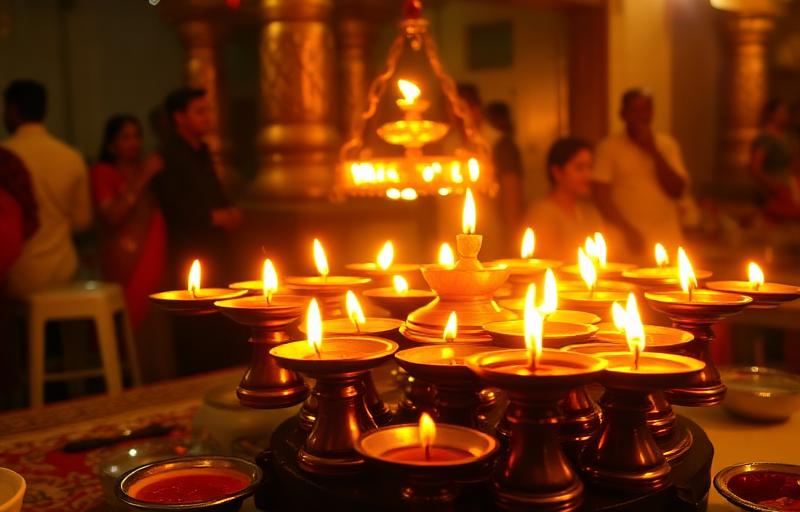
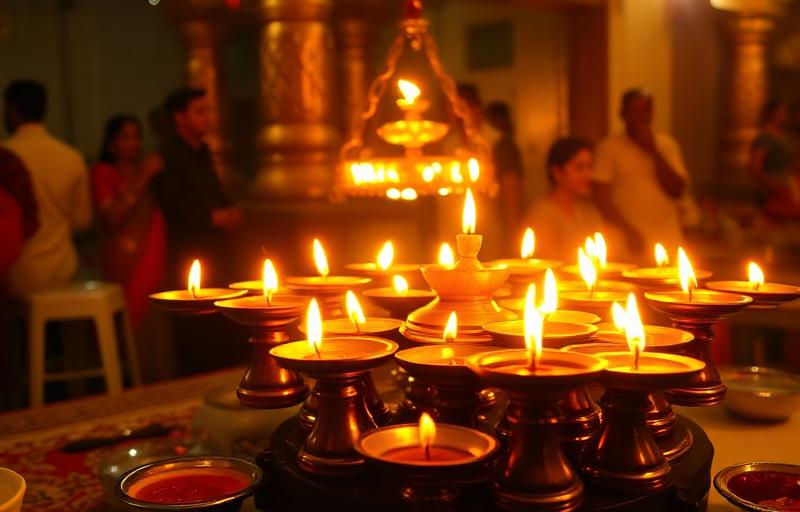
If you want one practice from this saint, it is the lamp itself. Light one in the evening. While it burns, notice that the poem says the oil is longing and the wick is a mind melting with joy.
Then say the name for as long as the flame holds your attention.
That is the entire instruction, and it is available to anybody, in any language, tonight.
Following Bhutham Alvar
The places
Thirukadalmallai, Mahabalipuram:
- The Sthalasayana Perumal temple, the Divya Desam, in the town
- Bhutham Alvar's shrine there
- Around 55 kilometres from Chennai on the East Coast Road
- The Pallava monuments alongside
Thirukovalur:
- In Villupuram district, where the corridor story is placed
- The Trivikrama Divya Desam
- Shrines to all three Mudhal Alvars
- Around 200 kilometres from Chennai
Srirangam:
- The foremost Divya Desam, near Tiruchirappalli
- Where the Prabandham is recited daily
- The Adhyayana Utsavam in Margazhi
Reading the work
- Nalayira Divya Prabandham editions with translation, in print and online
- The Irandam Thiruvandhadhi is the second item, a hundred verses
- Read the first verse first. It is the lamp of love and it is the reason anybody remembers him
- Recitation recordings exist and are worth hearing even without Tamil
A practice
- A lamp in the evening
- Om Namo Narayanaya, or Narayana, or the name your household uses
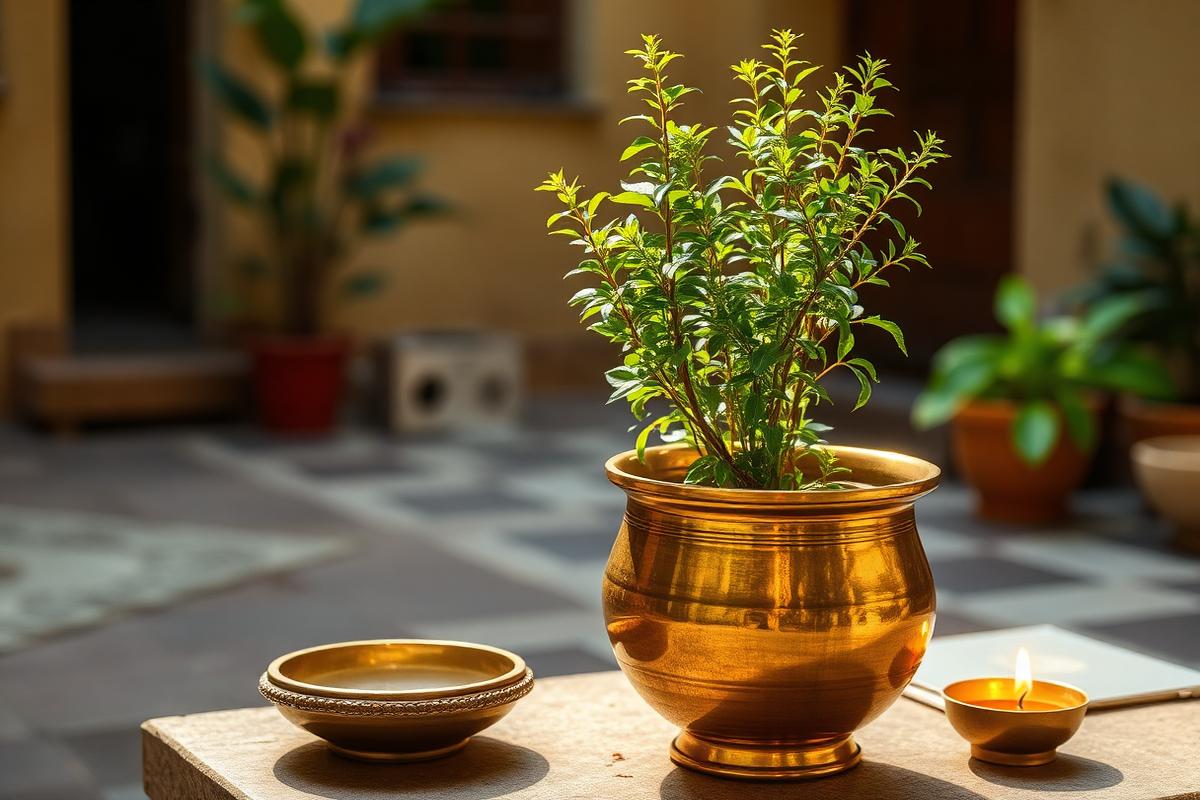
- A tulsi leaf, if you keep the plant
- Ekadashi, twice a month, in whatever form suits your health
- A verse, read slowly
On Ekadashi, since it is the standing Vaishnava observance:
- The eleventh tithi of each fortnight, so roughly twice a month
- Traditionally observed by abstaining from grains and pulses
- Vaikunta Ekadashi, in Margazhi, is the great one, when the northern gate at Srirangam is opened
- As with every fast in this tradition: if you are diabetic, pregnant, breastfeeding, elderly, unwell or on medication needing food, modify it or keep it in name only. The shastras permit substitution and the practice is not improved by damaging your health
Where the three Mudhal Alvars leave you. With three propositions, in order.
The world is available as an instrument of praise. So is your own interior, and it works better. And beyond both there is simply the seeing, which is not something you arrange.
One saint offered the sun. The second offered his longing. The third said only that he had seen.
And all three of them were standing in a corridor in the rain, in the dark, pressed together by somebody they could not see, which is as good a description of devotional life as the tradition has produced.
Common Questions From Devotees
Who was Bhutham Alvar?+
The second of the twelve Alvars and the second of the three Mudhal Alvars along with Poigai and Pey. Tradition holds he appeared not from a womb but in a kurukkathi flower at Thirukadalmallai, which is Mahabalipuram, and he is taken as an amsha of the Kaumodaki, Vishnu's mace. He composed the Irandam Thiruvandhadhi, the second hundred verses of the Nalayira Divya Prabandham.
What is Bhutham Alvar's famous verse?+
His opening verse, the second of the three lamps. Where Poigai made a lamp of the earth with the ocean as oil and the sun as flame, Bhutham made one of love, with longing for the oil and the mind melting with joy for the wick, lit with the fire of knowledge, so that Tamil words could be made for the Lord. It is the inward answer to the first verse's cosmic one.
Why do the Alvars keep mentioning Trivikrama?+
Because of the foot. In the Vamana story Vishnu grew and measured the earth with one pace and the sky with the second, and that same foot is placed on the devotee's head. The image lets a poet say in one word that the Lord is immeasurable and is also touching him. Since the sacred feet, thiruvadi, are the standing object of Alvar devotion, Trivikrama is the avatara that makes the feet cosmic.
What is the Sthalasayana Perumal temple?+
The Divya Desam at Mahabalipuram, where Vishnu reclines on the ground rather than on the serpent Adishesha, which is unusual. The story is that a devotee named Pundarika set about emptying the ocean with his hands so he could bathe the Lord in the ocean of milk, and the Lord simply came and lay down on the ground so the man would not have to finish. Bhutham Alvar's shrine is there.
What else is there at Mahabalipuram?+
The Pallava monuments, a UNESCO World Heritage Site: the Shore Temple, the five monolithic Pancha Rathas, the enormous Descent of the Ganga relief, the cave mandapas and Krishna's Butterball. In one small area you can see cave temples, monolithic shrines and structural temples together, which is the whole transition in south Indian building technique preserved in one place. Look for the cat standing on one leg in the great relief.
What is the simplest practice from this saint?+
The lamp itself. Light one in the evening, and while it burns remember that the verse says the oil is longing and the wick is a mind melting with joy. Then say the name for as long as the flame holds your attention. That is the whole instruction and it needs no language, no training and no equipment beyond the lamp.
About the author
Pandit Ravindra Sharma · Vedic Rituals & Bhakti, 22+ years
Pandit Ravindra is the Vandnaa editorial team's resident specialist on aarti, chalisa, and daily devotion. He has performed home and temple pujas across Varanasi and Delhi for over two decades and contributes the bhakti-focused articles on this site.
Meet the Vandnaa editorial team →