The Garland Maker of Srivilliputhur
Periyalvar is the eighth of the twelve Alvars, and the only one whose title means simply the great Alvar.
Who he was:
- Born Vishnuchittar, at Srivilliputhur, in what is now Virudhunagar district, Tamil Nadu
- A brahmana, but not a scholar by profession
- His service was growing flowers and making garlands for Vatapatrasayi, the deity of Srivilliputhur
- The Nandavanam, the flower garden, was his life's work
- Traditionally dated to around the ninth century, in the Pandya period
What he chose. This is the point the tradition emphasises.
He was qualified to study, to teach, to argue and to perform ritual. What he did instead was grow tulsi and flowers, string them, and take them to the temple every day.
That is kainkarya, service, in its most literal form, and the tradition treats his choice as a deliberate one rather than as a limitation.
The Pandya court. The event that changed his position.
- The Pandya king at Madurai, named in the tradition as Vallabhadeva or Srimara Srivallabha, wanted to settle a question: which is the supreme deity, and what is the means to the highest good
- He hung a purse of gold on a pole in the assembly hall, to be claimed by whoever established the answer
- Scholars came and argued and none could take it down
- Vishnuchittar, who had no scholarly reputation and had not intended to come, was directed to go, by the Lord in a dream
- He went, argued the case from the scriptures, and the purse came down of itself
What he argued. The tradition preserves it as the Vishnuchittiyam, his statement of the case, which is not extant as a text but whose substance is recorded.
His position: that Narayana is the supreme, that the means is surrender, and that the scriptural evidence supports it.
The honour. The king had him seated on an elephant and taken in procession through Madurai.
And then the thing happened.
Thiruppallandu
What happened on the elephant.
As Vishnuchittar was carried through the streets of Madurai in honour, the Lord, pleased, appeared in the sky above him, on Garuda, with Lakshmi.
And the man on the elephant looked up and was frightened.
Why. Because the ordinary human reaction to seeing somebody you love exposed in a public place is not admiration. It is worry.
He saw the beauty of the form, and his immediate thought was that something might happen to it. That some harm, some evil eye, some misfortune might reach it.
So he did what any elder in a Tamil household does when a child is looking too lovely: he performed pallandu, the wishing of long life, and warded off the evil eye.
He blessed God.
The verses. He sang the Thiruppallandu, twelve verses.
The opening, in substance:
Many years, many years, many thousands of years, many crores of hundred thousands of years - to your beautiful feet, and to the red hand that holds the discus, and to the conch, may there be long life.
Why this is the tradition's central act. Three reasons.
One. The reversal. In every ordinary religious act, the deity blesses the devotee. Here the devotee blesses the deity.
The tradition does not treat that as impertinence. It treats it as the highest thing an Alvar did, and it named him Periyalvar, the great Alvar, for it.
Two. It is disinterested. He asks for nothing. The verses contain no petition at all. They are entirely concerned with the welfare of somebody else.
The tradition holds that this is what devotion becomes at its limit: not asking, not even thanking, but simply worrying about the wellbeing of the one you love.
Three. It is a parent's response. He responds to the Lord the way a parent responds to a child, and this becomes his whole mode.
Where Thiruppallandu sits:
- It is the first item in the Nalayira Divya Prabandham, in the recitation order
- Every Prabandham recitation begins with it
- It is sung at the beginning of temple rituals, weddings, and household observances across the Sri Vaishnava world
- It is sung at the end of Prabandham recitation as well, returning to it
- It is among the very first things a child learns
A note on nazar. The practice of warding off the evil eye is present across India and across communities, and it appears here in the canon.
The Thiruppallandu is, in its origin, an act of protection against drishti, and the tradition placed it first in its scripture.
That is worth knowing when somebody dismisses evil eye practices as folk superstition outside proper religion. The most important Vaishnava canon in Tamil opens with one.
What Periyalvar's mode became. This one moment set the pattern for everything else he wrote.
The Mother of Krishna
Periya Thirumozhi is Thirumangai Alvar's work. Periyalvar's larger work is the Periyalvar Thirumozhi, of 461 verses, and almost all of it is written in one voice.
The voice of Yashoda.
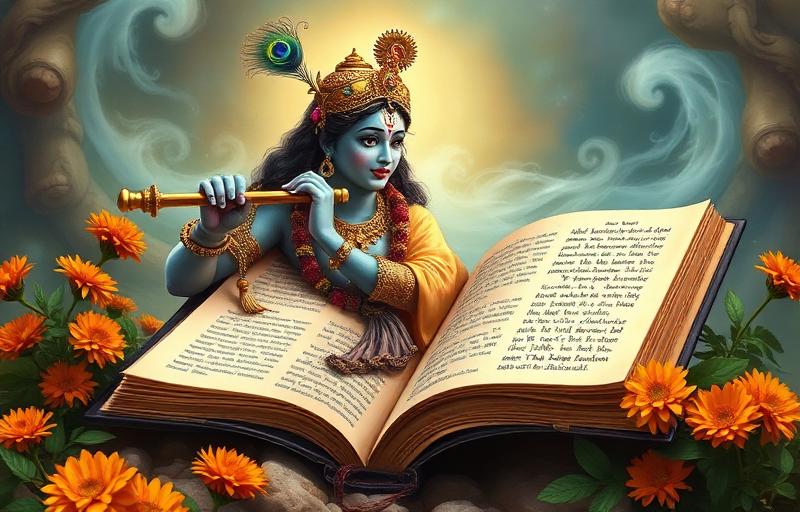
What that means. He writes as Krishna's mother, going through the child's life day by day, in the small domestic detail of it.
The subjects of the decads:
- The birth and the neighbours coming to see
- Rocking the cradle
- The naming
- Putting the child to sleep
- Teaching him to clap
- Calling him to come on his little feet
- Calling him for the moon, the famous ambuli decad, where she calls the moon to come and play with her child
- Telling him to eat
- The butter stealing, and the neighbours' complaints
- Bathing him
- Teaching him to speak
- Calling him in from play in the evening
- Sending him with the cows
- The complaints of the gopis
- Wanting to see him dance
The ambuli decad. The best known. Yashoda calls the moon:
Come, moon, come and play with my child. He is calling you. Do not delay. Come running.
Every Indian household with a small child does a version of this, calling the moon down, feeding the child by pointing at it. Periyalvar wrote it as scripture.
What vatsalya bhava is. The technical term.
The tradition recognises several bhavas, moods, in which a devotee can relate to the Lord:
- Shanta, peaceful, the mood of contemplation
- Dasya, the servant's mood
- Sakhya, the friend's mood
- Vatsalya, the parent's mood
- Madhurya, the lover's mood
Vatsalya is Periyalvar's. And it has a specific quality the others do not: the parent is superior in the relationship, is responsible for the child, worries about him, tells him off, and does not stand in awe.
That is a very unusual thing to do to God, and the tradition put it in the canon.
What it makes possible for a devotee:
- Affection without fear
- Familiarity without disrespect
- The right to worry about him rather than only to petition
- A relationship in which the ordinary details of domestic life are the material of devotion
Why this matters practically. Most people's actual religious experience is not awe. It is something more domestic: a picture on a shelf, a lamp lit at the same time each evening, a habit.
Periyalvar's mode says that this is not a lesser register. It is the mode the tradition placed at the front of its canon.
The comparison with other traditions. The vatsalya mode is not unique to him.
- Surdas, in Braj, writes extensively as Yashoda
- The Bhagavata's tenth canto is the source for much of it
- Ramprasad Sen in Bengal reverses it and addresses Kali as his mother, which is the other direction
- The bala Krishna and bala Rama images across India, and the practice of dressing and feeding a small deity at home, are this mode in ritual form
If you keep a small Krishna or Rama at home and dress it, feed it, and put it to sleep, you are doing what Periyalvar wrote 461 verses about, and the tradition regards that as a complete devotional practice rather than as a childish version of one.
The Daughter He Found
The other reason Periyalvar matters is that he found a child in his garden.
The account:
- While working in his Nandavanam, the flower garden at Srivilliputhur, under a tulsi plant, he found a girl child
- He took her home and raised her
- He named her Kodhai, which means the garland, or the one with beautiful hair
- She is Andal, the only woman among the twelve Alvars
- She composed the Thiruppavai, thirty verses, and the Nachiyar Thirumozhi
What she did with the garlands. The story that follows is one of the most told in the Tamil country.
- Kodhai, growing up, would take the garlands her father had made for the deity and wear them herself first, looking at her reflection, before returning them to the basket
- One day Periyalvar saw her do it
- He was horrified. A garland already worn is not fit to offer
- He made a fresh garland and took that instead
- That night the Lord appeared to him and asked why he had not brought the usual garland, the one that carried the fragrance of the girl who had worn it
Her name from it. She is called Soodikkodutha Sudarkodi, the bright creeper who gave what she had worn.
What the story establishes. That what would ordinarily be a ritual disqualification became, in her case, the thing that made the offering acceptable.
The tradition uses it to say something about the priority of bhava over vidhi, of the interior state over the procedural rule, and it is one of the sharper statements of that priority in the canon.
Andal's own story ends with her marriage to Ranganatha at Srirangam, into which the tradition holds she merged.
Her verses, the Thiruppavai, are recited through the month of Margazhi in households across Tamil Nadu, by very large numbers of people, many of whom recite nothing else all year.
Srivilliputhur. Their town.
- In Virudhunagar district, Tamil Nadu, around 75 kilometres from Madurai
- The Vatapatrasayi temple, a Divya Desam, with the Andal shrine
- The temple's gopuram, at around 59 metres, is the tallest in the region and is the emblem on the Government of Tamil Nadu state emblem
- The Nandavanam where Andal was found
- Adi Pooram, in July or August, is Andal's birth star festival and the principal festival
- Margazhi, when Thiruppavai is recited daily
The state emblem point is worth noting. The gopuram of a temple where a girl was found under a tulsi plant and grew up to write thirty verses is on the official emblem of Tamil Nadu.
Srivilliputhur palkova. The town is also known for a milk sweet, and the geographical indication is registered. That is not a devotional fact but it is a true one and visitors ask.
Periyalvar and Andal together. The pairing is worth stating.
A man who chose to make garlands rather than to be a scholar found a child in the garden where he grew the flowers, raised her, and she became the only woman in the canon and the author of the verses most widely recited in the Tamil country.
And the first thing he himself ever composed was a wish that God should stay safe.
The two of them are the household register of the entire tradition: a father worrying, a daughter in love, and a garden.
Service as the Whole Practice
Periyalvar's life is the tradition's clearest statement that kainkarya, service, is not a preliminary to devotion but is devotion.
What he actually did, daily:
- Grew tulsi and flowers
- Watered and tended the garden
- Picked and strung garlands
- Carried them to the temple
- Repeated this for a lifetime
That is the whole practice. Not meditation, not scriptural study as a profession, not austerity. Gardening and stringing.
Why the tradition rates it so highly:
- It is daily, and requires showing up regardless of mood
- It is physical, and the body does it
- It produces something the deity uses
- It is anonymous in the sense that the garland is seen, not the maker
- It cannot be done once and completed
The forms of kainkarya in the tradition. The temple has always run on service and it is worth listing what that looks like:
- Nandavanam service, growing flowers, which is Periyalvar's
- Tulsi cultivation specifically
- Garland making
- Cooking for the deity and for the prasadam distribution
- Cleaning, which is regarded as high service and not low
- Lighting and maintaining lamps
- Recitation, the Adhyapaka service
- Music, and the temple's musicians
- Carrying the deity in procession
- Feeding pilgrims
- Maintaining the tank
- Looking after cows
On cleaning specifically. The tradition is explicit that sweeping and cleaning a temple is among the highest services and not menial.
That matters, because the actual social treatment of people who clean has frequently been the opposite of what the tradition says, and the gap between the two is one of the real failures in the history of Indian religious institutions.
A person who wants to honour Periyalvar's mode can begin by treating the people who clean their temple with the respect the texts require.
A practical version for a household:
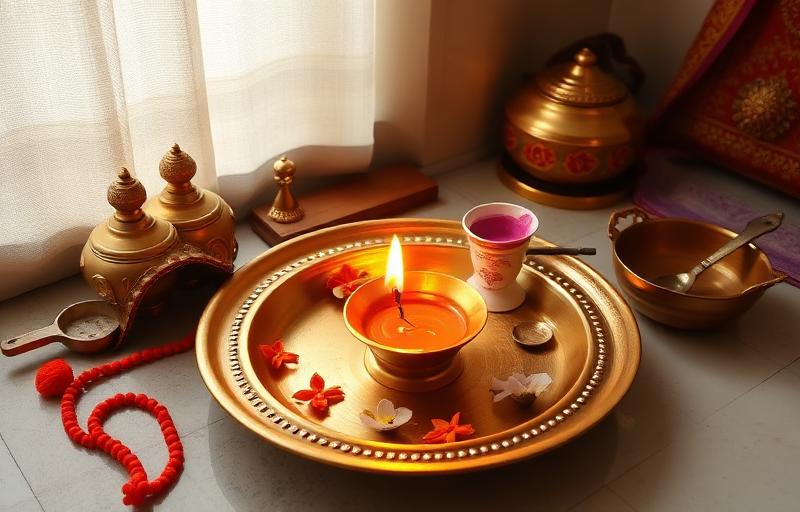
- Keep a tulsi plant, and water it yourself
- Make your own garland occasionally, rather than buying one
- Clean the puja space yourself rather than delegating it
- Do the same thing at the same time each day
- Do it whether or not you feel devotional that day
That last point is Periyalvar's whole teaching. He did not go to the garden on the days he felt moved. He went every day, because the deity needed a garland every day.
On tulsi. Since it is central here.
- The plant is treated as a deity, not merely as a sacred plant
- It is grown in a tulsi vrindavan in the courtyard in many households
- Watered daily, generally in the morning
- Leaves are offered to Vishnu and are not plucked on Ekadashi, Dwadashi or at night in most traditions
- The plant is not cut with metal in some observances
- Tulsi Vivaha, in Kartika, marks its ceremonial marriage to Vishnu
If you keep one, water it. That is the practice. A dying tulsi in a house that talks about devotion is the exact opposite of what Periyalvar's life is about.
Beginning With Thiruppallandu
Why this is the right place for a beginner to start. The whole tradition starts here, and it does so deliberately.
Thiruppallandu:
- Twelve verses
- The first item of the Prabandham in recitation order
- Sung at the beginning of everything: temple ritual, recitation, weddings, household observances
- Also sung at the end, so the whole canon is enclosed by it
- Widely available with text, transliteration, translation and recordings
Learn the first verse. It is the many years verse and it is four lines.
Where to hear it:
- Any Sri Vaishnava temple, at the start of the day's recitation
- At the beginning of Prabandham recordings
- At Srivilliputhur and Srirangam
- At Sri Vaishnava weddings, where it is standard
The Periyalvar Thirumozhi, if you want more:
- 461 verses, mostly in Yashoda's voice
- Try the ambuli decad, where she calls the moon
- Or the decad on the butter and the neighbours' complaints
- They are domestic, funny and immediately accessible in a way much devotional verse is not
Places
Srivilliputhur:
- Virudhunagar district, around 75 kilometres from Madurai
- The Vatapatrasayi temple, a Divya Desam, with the Andal shrine and the 59 metre gopuram that appears on the Tamil Nadu state emblem
- The Nandavanam
- Adi Pooram in July or August, Andal's festival
- Margazhi, for the daily Thiruppavai
Madurai:
- Where the debate and the elephant procession happened
- Koodal Azhagar temple, a Divya Desam
- Meenakshi Amman temple, the great Shaiva temple
- Around 75 kilometres from Srivilliputhur, so the two go together
Srirangam:
- Where Andal is held to have merged with Ranganatha
- The Andal connection makes it part of this circuit
A practice from Periyalvar
- A tulsi plant, watered by you, every morning
- Thiruppallandu, or its first verse, at the start of whatever you do devotionally
- A garland you made, occasionally
- Cleaning your own puja space
- The same thing at the same time, whether or not you feel like it
And the register. This is what to take.
Periyalvar's contribution is that devotion can sound like a household. Worry, fondness, small daily tasks, a wish that somebody stays safe.
It does not have to sound like philosophy or like ecstasy. Most people's actual religious life is a lamp lit at the same time each evening by somebody who is tired, and the tradition put a man who grew flowers at the front of its scripture to say that this counts.
A closing thought. He was carried through Madurai on an elephant, having beaten every scholar in the Pandya kingdom, at the peak of any career he could have had.
He looked up, saw God in the sky, and his first thought was: somebody is going to give him the evil eye.
So he sang for his protection instead of his own. And four thousand verses of Tamil scripture begin with those twelve.
Frequently Asked Questions
Who was Periyalvar?+
The eighth of the twelve Alvars, born Vishnuchittar at Srivilliputhur in what is now Virudhunagar district, Tamil Nadu. He was a brahmana who chose to grow flowers and make garlands for the deity Vatapatrasayi rather than take up scholarship. He won a debate at the Pandya court at Madurai on the supreme deity, and is the foster father of Andal, whom he found as an infant under a tulsi plant in his flower garden.
Why is Thiruppallandu the first thing recited?+
Because it is a blessing given to God rather than a petition made to him. When Periyalvar was carried in procession on an elephant after winning the debate at Madurai, the Lord appeared in the sky on Garuda with Lakshmi, and Periyalvar's first reaction was fear that harm or the evil eye might reach that beauty. So he sang twelve verses wishing him long life. The tradition named him the great Alvar for it and placed those verses first.
What is vatsalya bhava?+
The parental mood, one of the five bhavas in which a devotee can relate to the Lord alongside shanta the peaceful, dasya the servant's, sakhya the friend's and madhurya the lover's. Periyalvar's 461 verse Periyalvar Thirumozhi is written almost entirely in the voice of Yashoda, going through Krishna's childhood day by day. It permits affection without fear, familiarity without disrespect, and the right to worry about him rather than only to petition.
How did Periyalvar find Andal?+
While working in his Nandavanam, the flower garden at Srivilliputhur, he found a girl child under a tulsi plant. He took her home, raised her and named her Kodhai. She became Andal, the only woman among the twelve Alvars, and composed the Thiruppavai and the Nachiyar Thirumozhi. The story of her wearing the garlands before they were offered, and the Lord asking for those very garlands, is one of the most told stories in the Tamil country.
What is kainkarya?+
Service, and in Periyalvar's case it is the whole practice rather than a preliminary to one. He grew tulsi and flowers, tended the garden, strung garlands and carried them to the temple, every day, for a lifetime. The tradition rates it highly because it is daily, physical, produces something the deity uses, is anonymous, and cannot be done once and completed. Temple service in all its forms, including cleaning, is regarded as high rather than menial.
What should I see at Srivilliputhur?+
The Vatapatrasayi temple, a Divya Desam, with the Andal shrine and the Nandavanam where she was found. Its gopuram, at around 59 metres, is the tallest in the region and appears on the Tamil Nadu state emblem. Adi Pooram in July or August is Andal's birth star festival and the principal one, and Margazhi is when the Thiruppavai is recited daily. The town is around 75 kilometres from Madurai, so the two combine well.
About the author
Pandit Ravindra Sharma · Vedic Rituals & Bhakti, 22+ years
Pandit Ravindra is the Vandnaa editorial team's resident specialist on aarti, chalisa, and daily devotion. He has performed home and temple pujas across Varanasi and Delhi for over two decades and contributes the bhakti-focused articles on this site.
Meet the Vandnaa editorial team →