What Is the Navagraha Temple Circuit?
In the fertile plains around Kumbakonam in Tamil Nadu's Thanjavur district lies one of Hindu tradition's most distinctive pilgrimages, a circuit of nine ancient temples, each dedicated to one of the Navagraha, the nine celestial deities described in the Puranas. These deities are Surya (Sun), Chandra (Moon), Angaraka (Mars), Budha (Mercury), Guru (Jupiter), Shukra (Venus), Shani (Saturn), Rahu and Ketu.
Unlike a single grand shrine, this circuit is made up of nine separate temples spread across villages a short distance from one another, each built around a presiding form of Lord Shiva or Vishnu, with a dedicated shrine for the navagraha deity within the same premises. Devotees consider the entire circuit, rather than any one temple alone, as the complete pilgrimage.
Families, individuals and groups undertake this journey together, moving from temple to temple in a single day, offering prayers to each celestial deity in turn as an expression of reverence for the cosmic order described in scripture.
Origin and the Chola Legacy
The temples of this circuit are believed to date back many centuries, with several of them bearing the architectural signature of the Chola dynasty, renowned patrons of temple building across the Kaveri delta. According to tradition, the grouping of nine celestial deities into a single worship system goes back to the Puranas, where the Navagraha are described as presiding over time, direction and the rhythms of the cosmos.
Local tradition holds that sages and devotees of the region gradually developed the custom of visiting each of the nine shrines together, giving rise over generations to the fixed circuit that pilgrims follow today. Each temple, though independently ancient, came to be woven into this shared devotional map.
The temples remain active centers of worship to this day, with local priestly families continuing rituals that are said to have been observed for many generations.
Significance of the Nine Celestial Deities
In Hindu tradition, the Navagraha are revered as divine forces that preside over the passage of time and the natural order of the universe. Each of the nine has its own form, vahana (vehicle) and mythology, from Surya riding his chariot of seven horses to Rahu and Ketu, born from the severed body of the demon Svarbhanu during the churning of the ocean, as described in the Puranas.
Devotees approach these deities not with fear but with reverence, seeking harmony, peace of mind and wellbeing through devotion. Worship here is understood purely as an expression of faith in the cosmic order that scripture describes, a way of honoring the forces believed to govern time itself, rather than any transactional exchange.
Many devotees visit as a family tradition passed down through generations, treating the circuit as a meaningful pilgrimage rather than a routine errand.
How Devotees Undertake the Pilgrimage
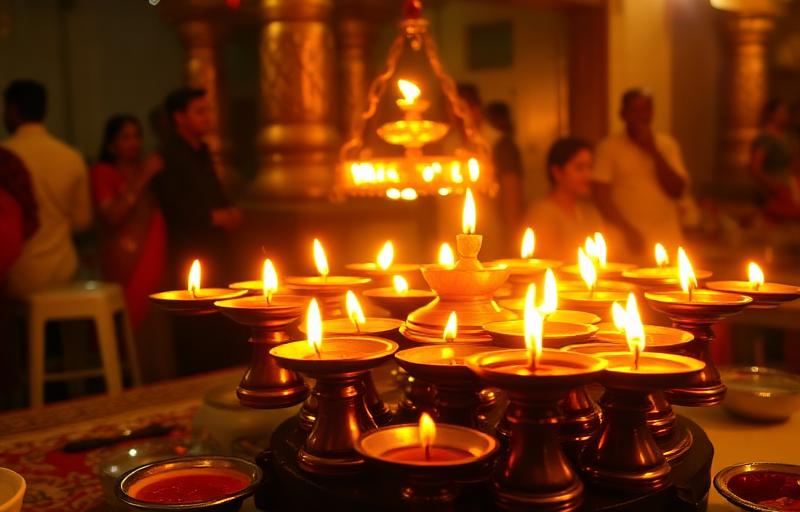
Most pilgrims begin the circuit at Suryanar Kovil, the temple of the Sun god, considered the natural starting point, before proceeding through the temples of Chandra, Angaraka, Budha, Guru, Shukra, Shani, Rahu and finally Ketu. Since the nine temples lie within a compact area around Kumbakonam, many devotees complete the entire circuit in a single day, though some prefer to take it more slowly over two days.
- Devotees typically offer simple items at each shrine such as flowers, and specific offerings associated with each deity, following the guidance of local priests
- Many choose to wear simple, modest attire suited to temple visits
- Chanting the name of each deity at its shrine is considered an important part of the devotion, along with a brief prayer for peace and wellbeing
- Local guides and priests at each temple can explain the specific customs of that shrine
Planning the Visit
Kumbakonam, the base town for this circuit, is well connected by rail and road, with Kumbakonam Railway Station serving as the most convenient point of arrival for most pilgrims. The nearest airport is at Tiruchirappalli, from where taxis and buses connect onward to Kumbakonam.
Many devotees hire a local taxi for the day to cover all nine temples comfortably, since they are spread across a modest radius from Kumbakonam. Mornings tend to be less crowded, and devotees are advised to check current temple timings locally, as these can vary by season and day of the week.
Kumbakonam itself is home to several other revered temples, and many pilgrims extend their trip to include these alongside the Navagraha circuit.
A Devotee's Takeaway
Walking this circuit, from the golden glow associated with Surya to the shadowy mystery of Rahu and Ketu, devotees often describe a sense of having honored the full sweep of the cosmos in a single day. The journey is as much about the shared experience of moving from temple to temple as it is about any single shrine.
As with all pilgrimage, visiting the Navagraha temples is best approached as an act of faith and love, not a transaction, an offering of reverence to the celestial order that scripture describes, and a reminder that devotion itself is the true reward of the journey.
Common Questions From Devotees
Where are the Navagraha temples located?+
All nine Navagraha temples lie within a compact area around Kumbakonam in Tamil Nadu's Thanjavur district, making it possible for devotees to visit all nine shrines within a single day.
In what order should the Navagraha temples be visited?+
Tradition suggests beginning at Suryanar Kovil, the temple of Surya, and proceeding through Chandra, Angaraka, Budha, Guru, Shukra, Shani, Rahu and Ketu, though devotees may also consult local priests for guidance on the customary order.
Can the Navagraha circuit be completed in one day?+
Yes, since the nine temples are located close to one another near Kumbakonam, most devotees hire a local taxi and complete the entire circuit in a single day, though some choose a more relaxed two-day visit.
About the author
Pandit Ravindra Sharma · Vedic Rituals & Bhakti, 22+ years
Pandit Ravindra is the Vandnaa editorial team's resident specialist on aarti, chalisa, and daily devotion. He has performed home and temple pujas across Varanasi and Delhi for over two decades and contributes the bhakti-focused articles on this site.
Meet the Vandnaa editorial team →