Radha Raman: One of Vrindavan's Original Seven Temples
Radha Raman Temple is one of the seven principal temples of Vrindavan, known together as the Sapta Devalaya, established by the great saints of the Gaudiya Vaishnava tradition in the centuries following Chaitanya Mahaprabhu's visit to Braj. The temple enshrines Thakur Radha Raman Ji, a form of Krishna, as its central deity.
What sets this temple apart is that there is no separate murti of Radha here. Instead, a small crown, believed to represent Radha, is placed beside Krishna, since Radha Raman himself is understood by devotees to embody both Radha and Krishna in a single form.
The Legend of the Self-Manifested Deity
Tradition holds that the deity of Radha Raman appeared on his own from a shaligram shila, a sacred stone associated with Vishnu, which was in the possession of Gopal Bhatt Goswami, one of the Six Goswamis of Vrindavan who systematised worship and scripture in the town. It is said that the form of Krishna emerged from the shila itself, without being carved by human hands, which is why the deity is regarded as swayambhu, or self-manifested.
Gopal Bhatt Goswami's descendants, known as Goswamis, continue the temple's worship and daily seva to this day, maintaining rituals said to have continued in unbroken tradition since the deity's appearance.
Why Radha Raman Holds a Special Place
For devotees of the Gaudiya Vaishnava tradition especially, Radha Raman Temple holds a place of deep reverence as a living link to the Six Goswamis and their era of devotion in Vrindavan.
- Devotees believe that worshipping the combined form of Radha Raman fulfils devotion to both Radha and Krishna at once
- The temple's unbroken chain of worship since its establishment is seen as a mark of sanctity by pilgrims
- Many devotees visit specifically to see the daily elaborate decoration and shringar of the deity, prepared fresh each day
- The temple is regarded as one of the most important living centres of Gaudiya Vaishnava practice in Vrindavan
Darshan Guide: Timings and Festivals

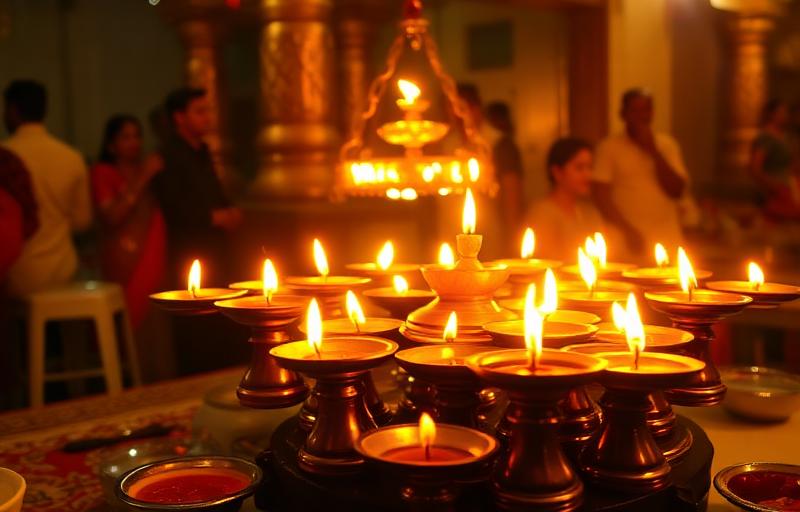
Like most traditional Vrindavan temples, Radha Raman follows a schedule of several darshans through the day, opening early morning and closing for a midday rest before reopening in the afternoon through evening aarti. The deity's shringar, or daily adornment, changes with the seasons and is considered an art form in itself.
Janmashtami and Radhashtami are celebrated with particular grandeur here, along with the temple's own establishment day observances, when devotees gather in large numbers for special darshan and kirtan.
How to Reach Radha Raman Temple
Radha Raman Temple is located in the heart of old Vrindavan, within walking distance of other major temples such as Radha Vallabh and Shahji Temple. Vrindavan town is well connected by road to Mathura, about ten kilometres away, with Mathura Junction as the nearest railway station and Agra as the nearest airport. Once in Vrindavan, most of the old town's temples, including this one, are best explored on foot or by cycle rickshaw through its narrow lanes.
A Simple Prayer and the Takeaway
Devotees before Radha Raman often chant Om Shri Radha Ramanaya Namah ('salutations to Radha Raman'), honouring the deity who is believed to embody both Radha and Krishna as one.
Radha Raman's story reminds devotees that the divine can reveal itself in unexpected ways, not only where it is carved or built, but where faith recognises it. Worship here, as everywhere, is an act of devotion and trust, not a transaction.
Common Questions From Devotees
Why is Radha Raman's deity called self-manifested?+
Tradition holds that the deity appeared on its own from a sacred shaligram shila in the possession of Gopal Bhatt Goswami, without being carved by human hands.
Why is there no separate Radha idol at this temple?+
Devotees believe Radha Raman himself embodies both Radha and Krishna in a single form, so a small crown beside the deity represents Radha's presence instead of a separate murti.
Who conducts worship at Radha Raman Temple today?+
The temple's worship is carried on by the Goswami descendants of Gopal Bhatt Goswami, continuing rituals said to have remained unbroken since the deity's appearance.
About the author
Pandit Ravindra Sharma · Vedic Rituals & Bhakti, 22+ years
Pandit Ravindra is the Vandnaa editorial team's resident specialist on aarti, chalisa, and daily devotion. He has performed home and temple pujas across Varanasi and Delhi for over two decades and contributes the bhakti-focused articles on this site.
Meet the Vandnaa editorial team →