The Accountant
Ramprasad Sen, roughly 1718 to 1775, is the poet who made Kali a figure people talk to.
Where: Halisahar, also called Kumarhatta, in North 24 Parganas district, West Bengal, on the Ganga north of Kolkata.
His family: Vaidya, the physician community. His father Ramram Sen was an Ayurvedic practitioner and the family expected him to continue in it.
He did not. He learned Sanskrit, Persian and Bengali, showed no interest in medicine, and the family, needing income, arranged something else.
He married Sarvani and had children, including a daughter, Jagadishwari, who appears in one of the stories.
The job
He was sent to Kolkata to work as an accountant, a clerk keeping the books, in the household of a zamindar named Durga Charan Mitra.
What he did with the job: he wrote songs.
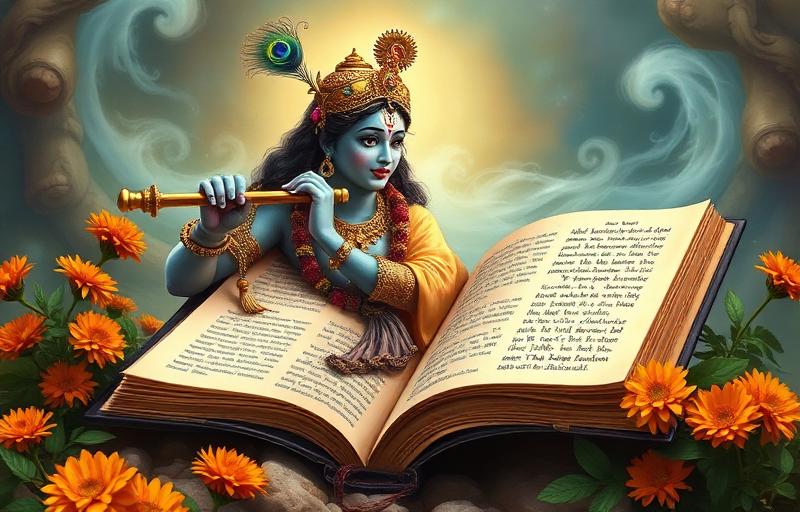
Instead of entering the accounts he filled the ledger with poems to Kali.
What happened when it was discovered
This is the part that makes the story.
The accounts were checked. The ledger came to Durga Charan Mitra, who opened it and found, in place of columns of figures, a book of poems addressed to the goddess.
And instead of dismissing him, he read them.
One of the songs in the ledger, and this is the famous one, uses the language of the job directly. Its refrain is a version of:
Amay dey ma tabildari. Ami nimak haram noi.
Give me the treasurership, mother. I am not the sort who cheats.
He asks the goddess for a job. He offers his services as her accountant, promises he will not embezzle, points out that he has been faithful in his previous employment, and asks her to take him on.
Written in a real accounts book, on his employer's time, by a man who was supposed to be entering figures.
What Durga Charan Mitra did: sent him home to Halisahar, with a stipend, and told him to write.
That is one of the most generous acts in the history of Indian literature and it is worth naming the man who did it.
Krishnachandra
Later, Maharaja Krishnachandra Roy of Krishnanagar, the major Bengali patron of the period, took him up, gave him the title Kaviranjan, and granted him land.
He lived at Halisahar for the rest of his life, composing.
Shyama Sangeet
What he created
Shyama Sangeet: songs to Shyama, the dark one, which is Kali. It is one of the major genres of Bengali music and Ramprasad is its founding figure.
His own style has a name: Ramprasadi, and it refers both to a way of composing and to specific tunes.
The characteristics:
- Bengali, in plain speech, with household idiom and rural vocabulary
- Short, generally a refrain and three or four verses
- The refrain is argued with through the song rather than repeated decoratively
- Addressed to Kali as mother, in the second person, throughout
- Frequently in the voice of the mind, which he talks to as a separate person
What is unusual about them
He complains.
Not in a formal or decorous way. The songs contain sustained accusations, and the tone is a son who considers himself badly treated by his mother and is saying so.
The recurring grievances:
- Other people's mothers look after them and mine does not
- I have been calling and you have not come
- You gave me this world and then left me in it
- Everybody says you are compassionate and I have not seen it
- I am not asking for much
- You have made me poor. Was that necessary
And more sharply: several songs suggest that if she will not come, he will stop calling, or will go elsewhere, or will tell people what she is like.
Why this is not blasphemy
Because of what the relationship is.
A child can say things to a mother that nobody else can say to anybody. The entire register of the Shyama Sangeet depends on that, and it is the same permission that lets Syama Sastri in Telugu say whom else do I have, mother, and lets Akka Mahadevi in Kannada accuse Shiva of neglect.
And the tradition treats the complaints as evidence of the closeness, not against it. A person who is being polite is not close.
The other subjects
One. The mind, addressed directly.
A very large group of his songs begin mon re, my mind, and then instruct or scold it.
The most famous: Mind, you do not know how to farm. This human birth is a field. If you cultivate it properly it will yield gold. Fence it in with the name of Kali, because death is a thief and he will come.
It is an agricultural song, using the vocabulary of enclosure, sowing, weeding and harvest, and it is sung across rural Bengal.
Two. Diving.
Dive, my mind, dive, saying Kali. The sea of this world is deep. Go all the way down. You will not find the jewel at the surface.
Three. Ownership.
Whose are you? Who is yours? You came alone and you will go alone. This world is a marketplace and everybody in it is a stranger you are travelling with.
Four. Kali herself.
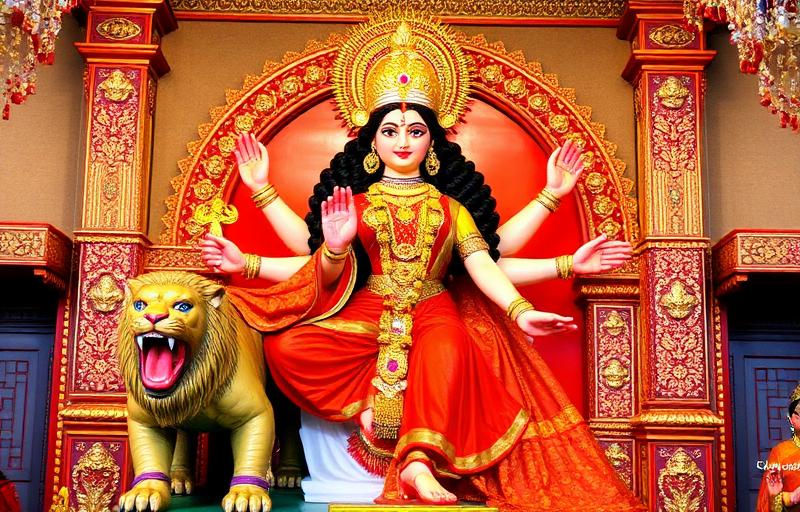
He describes her constantly: the dark colour, the loose hair, the garland, the burning ground, the tongue, the feet.
And he is entirely unafraid of the terrifying iconography. The songs treat the cremation ground imagery as ordinary and the mother as approachable, which is the whole Bengali Shakta position.
How many survive: several hundred are attributed. The corpus has the usual attribution problems, since Ramprasadi became a genre and later poets composed in it.
The Fence, and the End
The fence
The best loved story about him.
He was repairing the fence of his house, which in rural Bengal means tying bamboo or reeds together, and it is a two person job: one holds the section in place while the other ties.
His daughter Jagadishwari was helping him, passing the ties.
She went inside, or was called away.
And a girl came and took over. She handed him the ties, held the sections, and worked with him for some time.
When the fence was done he turned to thank her and she was not there.
And his daughter, coming back out, said she had not been there at all.
Why the story is loved. Because of what she was doing.
Not appearing in a vision. Not granting anything. Holding one end of a fence while a poor man tied it, for as long as the job took, and then leaving without being thanked.
The song he is said to have made about it asks her why she came in that form and whether he was supposed to have recognised her, and answers itself: she comes as whatever is needed and does not stay to be identified.
Siraj ud Daulah
Another episode, and it is a good one whatever its historicity.
Siraj ud Daulah, the last independent Nawab of Bengal, is said to have been on the river and to have heard singing from the bank, or from a boat.
He had the singer brought. It was Ramprasad.
He asked what the song was about, having no Bengali or not enough, and had it explained, and was affected by it.
Whether it happened: unverifiable, and the story has grown in the telling. It sits in the standard biography and is worth knowing as part of the tradition.
His end
On Kali Puja, at the Deepanwita Amavasya, in 1775.
What is said to have happened: after the puja, the image was taken to the Ganga at Halisahar for immersion, as it is everywhere in Bengal at the end of Kali Puja.
He went into the water with it, singing, and continued walking, and did not come back.
How to state this properly
What the tradition holds: that he went consciously, that he had said in his songs that he was ready, and that the goddess took him.
What it describes, in plain terms: a man walked into a river singing and drowned.
Both of those are the same event and the tradition holds the first.
And what must be said:
- This is a hagiographic account of a saint's death in 1775, and it is not a model for anybody
- No tradition asks anybody to do this
- If reading it raises any thought about your own life, that is a reason to talk to somebody. Tele MANAS 14416 in India is free, 24 hours, in many languages, and is answered by people trained for exactly that conversation
- The songs, including the ones about being tired of the world, were written by a man who kept writing them for decades, which is to say he kept going
Bengali Shakta Devotion

What Ramprasad established, and what came after.
The Bengali Shakta position
Kali is, in the iconography, terrifying: dark, naked or in a garland of severed heads and a skirt of arms, standing on Shiva, tongue out, in the cremation ground.
And Bengal calls her Ma.
That is the whole move, and Ramprasad is the one who completed it in the popular imagination. The imagery is not softened; it is simply not experienced as a reason to keep away.
The philosophical position underneath:
- The terrifying and the tender are the same thing seen from different distances
- Time and death are her, and they are also the mother
- Anything that can destroy you can also be asked for help, and it is the same anything
- The cremation ground is not the opposite of the household; it is where the household ends up
Who came after him
- Kamalakanta Bhattacharya, roughly a generation later, the other great Shyama Sangeet poet, treated in his own entry
- Nilkantha Mukhopadhyay, Dashrathi Ray and the nineteenth century Shyama Sangeet composers
- Bamakhepa of Tarapith, the mad devotee, treated in his own entry
- Sri Ramakrishna, who is the most important link
Ramakrishna
Sri Ramakrishna Paramahamsa, at Dakshineswar, sang Ramprasad's songs constantly.
The Kathamrita, the record of his conversations, is full of them. He would sing a Ramprasad song in the middle of a conversation, often break down while singing it, and use the songs as the primary way of communicating what he meant about the Mother.
Which means: an eighteenth century accountant's songs became the working vocabulary of the most influential religious figure of nineteenth century India, and through him reached Vivekananda, the Ramakrishna Mission, and the whole modern presentation of Hinduism.
Where the songs live now
- Kali Puja, in Bengal, in Kartika, on the new moon night, generally October or November
- The Bengali music repertoire. Shyama Sangeet is a recognised genre with a continuous performance tradition
- Recordings by major Bengali singers, including Pannalal Bhattacharya, whose renditions are the standard for most listeners, and Dhananjay Bhattacharya, Anup Ghoshal and others
- Halisahar, where his house and the site of his practice are shown
- Tarapith, Kalighat, Dakshineswar and the Shakta pithas of Bengal generally
Pannalal Bhattacharya is worth naming specifically. His recordings of Ramprasad and Kamalakanta are how most people in Bengal know these songs, and they are freely available.
What to Take From Him
One. He wrote in the ledger.
A man employed to keep accounts filled the accounts book with poems, and his employer read them and paid him to go home and write more.
Two things worth taking from that.
The first: the work he was actually for came out anyway, in the wrong place, on somebody else's paper, because it was going to come out somewhere.
The second, and this is the one people skip: Durga Charan Mitra. Somebody opened a ruined ledger and made a decision about what he was looking at. Most people in that position sack the clerk.
Two. You are allowed to complain.
The entire Shyama Sangeet corpus is a man telling his mother she has not been looking after him properly.
And the tradition treats that as devotion, not as its failure. The songs are sung at Kali Puja by everybody, and nobody has ever suggested they are disrespectful.
If your practice has become polite, that is worth noticing. Politeness is a distance.
Three. Mon re: address the mind as somebody else.
His method in a very large number of songs is to talk to his own mind: instructing it, arguing with it, warning it, and telling it what it is doing wrong.
That is a genuinely useful technique and it is much older than him. It puts a small gap between you and the thing that is agitated, which is most of what is needed.
Four. The field.
Mind, you do not know how to farm. This human birth is a field. Fence it with the name.
It is a practical song, and it says three things: the life is a limited resource, what you get out depends entirely on what you put in, and the fence matters as much as the crop.
Five. She held the fence.
The most loved story about him has the goddess turning up not in a vision, not in a temple, and not with anything to give, but to hold one end of a bamboo fence while a poor man tied it, and then leaving before she could be thanked.
That is Bengal's picture of what help is like, and it is worth keeping over the more dramatic ones.
A daily practice from this entry:
- Kali Kali or Jai Ma, or Om Krim Kalikayai Namah if you have that
- One Shyama Sangeet, listened to. The Pannalal Bhattacharya recordings are the standard
- On Kali Puja, in Kartika, the new moon of October or November
- And, on a bad day, the permission he took: say what is actually the matter, in the words you would use, to somebody you assume is listening
A closing thought
A physician's son who would not learn medicine was sent to Kolkata to be somebody's accountant, and instead of writing down what came in and what went out he wrote songs in the ledger asking the goddess to hire him as her treasurer and promising he would not steal.
His employer read the whole book and sent him home on a salary to keep writing.
He spent the next thirty years telling Kali that other people's mothers looked after them and she did not, and that he was tired, and that he would stop calling her if she did not come.
And once, when he was mending his fence and his daughter had gone inside, a girl came and held the other end for him until the job was finished, and then was not there.
The Short Version
Who: Ramprasad Sen, roughly 1718 to 1775, of Halisahar, also Kumarhatta, in North 24 Parganas, West Bengal. A Vaidya physician's son who would not practise medicine, and the founding poet of Shyama Sangeet, the Bengali genre of songs to Kali.
The ledger: sent to Kolkata to work as an accountant for the zamindar Durga Charan Mitra, he filled the account book with songs to the goddess instead of figures. The most famous of them asks her to hire him as her treasurer and promises he will not embezzle, using the vocabulary of the job. His employer read the ledger and sent him home to Halisahar on a stipend to keep writing. Maharaja Krishnachandra Roy of Krishnanagar later gave him the title Kaviranjan and land.
What his songs do: complain. Sustained accusations addressed to Kali as mother, in the second person: other people's mothers look after them, I have been calling and you have not come, everybody says you are compassionate and I have not seen it. The tradition treats the complaints as evidence of closeness rather than against it.
His other subjects: a very large group addressed to his own mind, mon re, including the famous farming song in which this human birth is a field to be fenced with the name; the diving song; and songs on whose you are and who is yours.
The fence story: while he was tying a bamboo fence and his daughter Jagadishwari had gone inside, a girl came and held the other end until the job was done, and then was not there.
His end: on Kali Puja in 1775, he walked into the Ganga at Halisahar with the immersion procession, singing, and did not come back. It is a hagiographic account and not a model. Tele MANAS 14416.
Where he leads: Sri Ramakrishna sang his songs constantly at Dakshineswar and the Kathamrita is full of them, so an eighteenth century accountant's songs became the working vocabulary of the most influential religious figure of nineteenth century India.
What People Ask Most
Who was Ramprasad Sen?+
A Bengali poet of Halisahar in North 24 Parganas, roughly 1718 to 1775, and the founding figure of Shyama Sangeet, the genre of Bengali songs addressed to Kali. He was born into a Vaidya physician family and refused to practise medicine, was sent to Kolkata to work as an accountant, and filled the ledger with songs to the goddess instead of accounts. His own style is called Ramprasadi and several hundred songs are attributed to him.
What is the story of the ledger?+
He was employed as an accountant in the household of a zamindar named Durga Charan Mitra in Kolkata, and instead of entering the accounts he filled the ledger with poems to Kali. The most famous of them uses the vocabulary of the job directly: give me the treasurership, mother, I am not the sort who cheats. When the accounts were checked the ledger reached his employer, who read the poems and, instead of dismissing him, sent him home to Halisahar on a stipend and told him to write.
Why do Ramprasad's songs complain to Kali?+
Because the relationship is that of a child to a mother, and a child can say things to a mother that nobody else can say to anybody. The songs contain sustained accusations: other people's mothers look after them and mine does not, I have been calling and you have not come, everybody says you are compassionate and I have not seen it, and in several he threatens to stop calling. The tradition treats these as evidence of closeness rather than as disrespect, on the reasoning that a person who is being polite is not close.
What is the story of the fence?+
He was repairing the bamboo fence of his house, which is a two person job, and his daughter Jagadishwari was handing him the ties. She went inside, and a girl came and took over, holding the sections and passing the ties for as long as the work took. When the fence was finished he turned to thank her and she was not there, and his daughter said she had never been there at all. The story is loved because of what she was doing: not appearing in a vision and not granting anything, but holding one end of a fence while a poor man tied it, and then leaving without being thanked.
What is the connection between Ramprasad and Ramakrishna?+
Sri Ramakrishna Paramahamsa at Dakshineswar sang Ramprasad's songs constantly, and the Kathamrita, the record of his conversations, is full of them. He would sing one in the middle of a conversation, often break down while singing, and use the songs as his primary way of communicating what he meant about the Mother. Through him they reached Vivekananda, the Ramakrishna Mission and the whole modern presentation of Hinduism, so an eighteenth century accountant's songs became the working vocabulary of the most influential religious figure of nineteenth century India.
Where can I hear Shyama Sangeet?+
Recordings by Pannalal Bhattacharya are how most people in Bengal know these songs and they are freely available, along with Dhananjay Bhattacharya, Anup Ghoshal and others. Shyama Sangeet is a recognised genre in Bengali music with a continuous performance tradition, and the songs are sung everywhere at Kali Puja, in Kartika on the new moon night, generally October or November. Halisahar, where his house and the site of his practice are shown, and Kalighat, Dakshineswar and Tarapith are the associated places.
About the author
Pandit Ravindra Sharma · Vedic Rituals & Bhakti, 22+ years
Pandit Ravindra is the Vandnaa editorial team's resident specialist on aarti, chalisa, and daily devotion. He has performed home and temple pujas across Varanasi and Delhi for over two decades and contributes the bhakti-focused articles on this site.
Meet the Vandnaa editorial team →