Who Are the Saptamatrikas
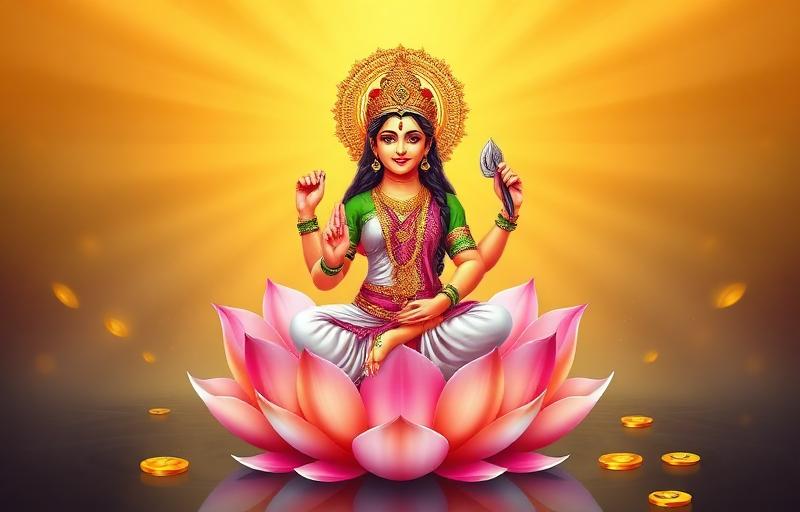
The Saptamatrika, meaning the seven mothers, are a group of seven goddesses who represent the shakti, or divine energy, of seven major gods of the Hindu pantheon. Their names are Brahmani, Vaishnavi, Maheshwari, Indrani (also called Aindri), Kaumari, Varahi, and Narasimhi. Each matrika carries the same weapon, vahana and general form as the god whose energy she personifies, so that Brahmani rides a hamsa like Brahma and Vaishnavi carries the conch and discus of Vishnu.
Together the Saptamatrikas are one of the oldest and most widespread groups of goddesses in Hindu temple art, found carved in a row on the walls of shakti shrines across the country, from Ellora in Maharashtra to Aihole in Karnataka. Devotees regard them as fierce, protective mother figures who guard the temple and the devotee alike.
Origin in the Devi Mahatmya
The story of the Saptamatrikas is told in the Devi Mahatmya, the scripture at the heart of Durga Puja and Navratri worship. When the demon Shumbha sent his general Raktabija into battle, a warrior whose every fallen drop of blood gave rise to a new demon, the goddess Chandika called upon the gods for help. Tradition says that from the bodies of Brahma, Vishnu, Shiva, Indra, Kartikeya and the Varaha and Narasimha forms of Vishnu emerged their own shaktis, ready to fight at her side.
Each matrika stepped forward bearing the weapon of her source deity, and it was this combined army of mother goddesses, led by Chandika herself, that finally overpowered Raktabija by drinking his blood before it could touch the ground and multiply the demon army further.
Significance and Iconography
The Saptamatrikas carry a simple but profound teaching: even the mightiest gods are powerless without their shakti, their feminine energy and creative force. As per tradition, this is why each matrika mirrors her source deity so closely in form, yet acts independently and decisively on the battlefield.
Devotees also see the Saptamatrikas as guardian figures. In many old temples, their sculpted panel is placed near the entrance or the garbhagriha, believed to protect the sanctum and the worshipper from negative influences. Some traditions add an eighth goddess, Chamunda, who emerges later from Chandika's own forehead, making the group the Ashtamatrika, or eight mothers, in certain regions.
How Devotees Worship the Saptamatrikas

Saptamatrika worship is rarely done as isolated individual shrines; instead devotees honour them as part of the larger worship of Devi during Navratri and Durga Puja, when the Durga Saptashati (Devi Mahatmya) is recited in full. Reciting the chapter that describes the matrikas' emergence is considered especially auspicious on the days dedicated to Devi's fiercer forms.
In many Shakti temples, a small panel or set of murtis of the seven mothers is kept along the boundary wall, and devotees offer a simple pradakshina and a prayer of protection while passing, saying a short invocation such as Jaya Brahmani, Jaya Maheshwari, Jaya Kaumari, Jaya Vaishnavi, namostute as a mark of respect.
Where They Are Found
Some of the most striking Saptamatrika and Ashtamatrika panels survive in the rock-cut caves of Ellora and Elephanta in Maharashtra, in the temples of Aihole and Badami in Karnataka, and in numerous Chalukya and Chola era shakti shrines across South India. In Odisha and Madhya Pradesh, the matrikas are closely linked to the tantric 64 Yogini temples, where they are sometimes considered the mothers or leaders of the sixty-four yoginis.
While few standalone Saptamatrika temples exist today, their presence on temple walls across the subcontinent shows how deeply this group of seven mothers has been woven into everyday Devi worship for centuries.
The Devotional Takeaway
The Saptamatrikas remind devotees that shakti, divine feminine energy, is not a secondary force but the very power that allows creation, preservation and even the gods themselves to act. Invoking the seven mothers during Navratri or before any undertaking is, as per tradition, a way of asking for protection and strength drawn from every corner of the divine pantheon.
Worship of the Saptamatrikas, like all devotion to Devi, is ultimately an act of faith and love, not a transaction. Their sculpted forms on ancient temple walls continue to remind pilgrims that the mother's protection surrounds every sacred space.
Frequently Asked Questions
How many Saptamatrikas are there and what are their names?+
There are seven Saptamatrikas: Brahmani, Vaishnavi, Maheshwari, Indrani (Aindri), Kaumari, Varahi and Narasimhi. Some traditions add an eighth, Chamunda, calling the group Ashtamatrika.
Are the Saptamatrikas different from the Navadurga?+
Yes. The Navadurga are the nine forms of Durga worshipped through the nine nights of Navratri, while the Saptamatrikas are seven goddesses who embody the shakti of seven gods and appear together in the Devi Mahatmya's battle narrative.
Why do Saptamatrika panels appear on old temple walls?+
As per tradition, the Saptamatrikas are considered protective guardian goddesses, so their sculpted panel is often placed near a temple's entrance or sanctum to safeguard the shrine and its devotees.
About the author
Anjali Mehta · Editor, M.A. Religious Studies
Anjali is the managing editor for Vandnaa and oversees the festival and vrat coverage. She holds an M.A. in Religious Studies and reviews every published article for accuracy, accessibility, and tradition-fidelity.
Meet the Vandnaa editorial team →