The Saraswati of the Rigveda
Among the rivers praised in the Rigveda, one of the oldest surviving texts of Hindu tradition, Saraswati is described in glowing terms as a mighty, life-giving river, at times called the greatest of rivers. Hymns speak of her as a nourishing, purifying presence that sustained the communities living along her banks.
Over time, as per tradition, the physical river is believed to have diminished and eventually disappeared from view, giving rise to her description in later texts as a hidden or lost river, one that continues to flow unseen rather than having vanished entirely from devotion.
From a Sacred River to a Goddess of Knowledge
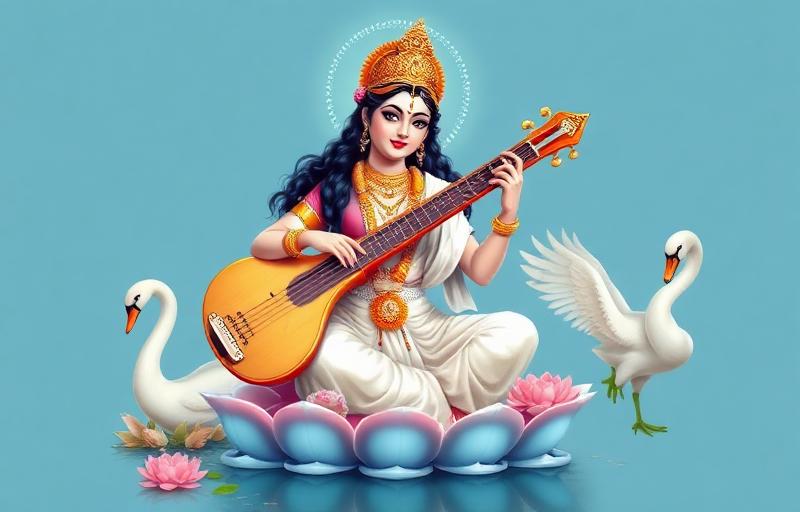
Devotees understand the transition from river to goddess as a natural one within Hindu thought, where forces of nature are honored as divine presences. A river that nourished land, cattle and people gradually came to be revered as a nurturing feminine force, and this nurturing quality extended naturally into the realms of speech, learning and creative expression.
Just as the river's waters flowed and purified, the goddess who carries her name is believed to make speech flow clearly and thought remain pure, a symbolic bridge between the physical sustenance of a river and the inner sustenance of wisdom.
The Hidden Saraswati at Triveni Sangam
At Prayagraj, devotees believe that the Ganga and Yamuna rivers are joined by a third, invisible river, Saraswati, together forming the sacred confluence known as the Triveni Sangam. Pilgrims bathing here during Kumbh and Magh Mela consider themselves blessed by all three rivers, even though only two are visible.
This belief reflects how deeply devotion to the Saraswati has continued, even without a visible river to point to, a testament to faith persisting beyond what can be physically seen.
Why the Goddess of Knowledge Carries the River's Name

Devotees find deep meaning in the fact that the goddess of knowledge and the sacred river share one name. Flowing water, like flowing wisdom, cannot be held still or possessed, it moves, nourishes and purifies wherever it reaches. Just as the river was said to sustain entire communities without asking anything in return, knowledge too is regarded as something to be shared freely rather than hoarded.
The river's disappearance from physical sight, while devotion to her endures, mirrors how devotees understand true wisdom: it may not always be visible or provable, yet its presence continues to be felt and honored by those who seek it with sincerity.
How Devotees Understand This Connection Today
Small shrines and ghats along the believed ancient course of the river, including sites near Kurukshetra and Pushkar, continue to draw devotees who honor the Saraswati as both a geographical memory and a living goddess. Most devotees hold this connection as a matter of faith and reverence rather than a settled historical claim, focusing instead on what it teaches: that purity and wisdom flow together.
Whether approached as river or goddess, Saraswati remains a reminder that some of the most valuable things, clarity, learning and truth, often move quietly beneath the surface.
A Devotional Takeaway
The bond between the Saraswati river and the goddess of knowledge teaches devotees that reverence need not depend on visible proof. Faith, like the hidden river at Triveni Sangam, continues to nourish those who seek it, quietly and steadily, across generations.
What People Ask Most
Why is the Saraswati river called a hidden or lost river?+
As per tradition, the once-mighty river praised in the Rigveda is believed to have diminished and disappeared from physical view over time, though devotion to her as a sacred presence has continued.
What is the connection between the Saraswati river and Triveni Sangam?+
Devotees believe the invisible Saraswati joins the visible Ganga and Yamuna at Prayagraj, together forming the sacred Triveni Sangam honored during Kumbh and Magh Mela.
Is the goddess Saraswati the same as the river Saraswati?+
Devotional tradition sees a close bond between the two, the sacred river's nourishing, purifying qualities are understood to have shaped the reverence later offered to the goddess of the same name.
About the author
Anjali Mehta · Editor, M.A. Religious Studies
Anjali is the managing editor for Vandnaa and oversees the festival and vrat coverage. She holds an M.A. in Religious Studies and reviews every published article for accuracy, accessibility, and tradition-fidelity.
Meet the Vandnaa editorial team →