Sawan 2026: The Complete Snapshot
Sawan, known formally as Shravan, is the fifth month of the Hindu lunar calendar and the single most sacred stretch of the year for anyone devoted to Lord Shiva. In 2026 it begins on Thursday, 30 July and closes on Friday, 28 August, a 30-day window that ends, fittingly, on Shravan Purnima - the same day as Raksha Bandhan.
The reason this entire month belongs to Shiva traces back to the Samudra Manthan, the churning of the cosmic ocean by devas and asuras in their search for amrit. Among everything that rose from those waters was Halahala, a poison so lethal it threatened to unmake creation itself. Shiva swallowed it to protect the universe and held it in his throat rather than letting it travel further, which is how he came to be called Neelkanth, the blue-throated one. To soothe the burning this caused him, the devas are said to have poured water over his head without pause - a gesture devotees still repeat every Sawan through jal and milk abhishek.
This calendar exists to be the one page you actually need this month. Rather than flipping between a panchang, a temple noticeboard and half-remembered dates from last year, every vrat and festival that falls inside these 30 days is listed below with its confirmed 2026 date attached, so you can plan fasting, leave from work, and travel around Kanwar Yatra crowds well in advance.
2026 at a glance:
- Sawan begins: Thursday, 30 July 2026
- Sawan ends: Friday, 28 August 2026 (Shravan Purnima / Raksha Bandhan)
- Sawan Somwar (Mondays): 4 in total
- Mangala Gauri Vrat (Tuesdays): 4 in total
- Sawan Shivratri: 1, falling mid-month
- Nag Panchami: falls in the second half of the month, on the same day as the 3rd Sawan Somwar
Keep scrolling for the exact date of each.
The Four Sawan Somwar Dates in 2026
Sawan Somwar, the Mondays that fall within this month, are considered the most powerful fasting days of the entire Hindu calendar for Shiva worship. In 2026, there are exactly four:
- 1st Sawan Somwar - Monday, 3 August 2026
- 2nd Sawan Somwar - Monday, 10 August 2026
- 3rd Sawan Somwar - Monday, 17 August 2026
- 4th Sawan Somwar - Monday, 24 August 2026
Each of these Mondays is treated as a complete ritual unit: a sunrise bath, clean white or saffron clothing, an abhishek of water and milk on the Shivling, an offering of bel patra, and a single evening meal of falahar after the puja is done. Devotees who cannot manage all four are still encouraged to prioritise the first and the last Somwar, since these are widely considered to bookend the month's merit most strongly.
A practical note worth building your calendar around: the 3rd Somwar (17 August) falls on the very same day as Nag Panchami this year, and six days after Sawan Shivratri (11 August), so that stretch of the month carries an unusually dense cluster of ritual activity - many devotees treat it as the spiritual peak of the month. The 4th Somwar (24 August) is the last Monday before the month closes on Purnima, which makes it the customary date for those completing a Solah Somwar (16 Mondays) vrat cycle to plan their udyapan, or for anyone doing a single-month vrat to mark their final fast.
If you are new to this practice, you do not need to commit to all four at once - even one sincerely observed Sawan Somwar is considered meaningful. What matters more than the count is consistency in intention and cleanliness in ritual.
Sawan Shivratri and Nag Panchami 2026
Two of the month's most distinct observances fall in quick succession in mid-August, and they are easy to confuse with the regular Somwar vrat if you are new to Sawan.
Sawan Shivratri - Tuesday, 11 August 2026. This is the Krishna Paksha Chaturdashi of Shravan month, and many traditions hold it to be even more potent than Mahashivratri itself, precisely because it falls inside Shiva's own month. The puja is traditionally spread across the four prahars of the night rather than compressed into a single morning ritual, with devotees performing a fresh abhishek at the start of each prahar. Temples like Kashi Vishwanath and Mahakaleshwar hold elaborate night-long ceremonies on this date, and many householders choose to keep a nirjala (waterless) fast if their health permits. This year, 11 August is also the 2nd Mangala Gauri Tuesday, so households observing both fall into a single combined ritual day.
Nag Panchami - Monday, 17 August 2026. Falling on the fifth day of Shravan Shukla Paksha, this is a separate festival dedicated to serpent deities (Nag Devta), who are closely tied to Shiva since he wears the serpent Vasuki around his neck. Devotees offer milk at snake idols or anthills, avoid digging the earth on this day out of respect for the creatures believed to reside within it, and pray for protection from snakebite and family harmony. In many households, especially in North and West India, it is observed with a fast and a visit to a Shiva temple, since Shiva and Nag worship are so closely linked. This year, Nag Panchami falls on exactly the same day as the 3rd Sawan Somwar, so devotees observing both combine them into a single day's ritual.
Because these two dates sit six days apart this year, the 11-17 August stretch is the busiest ritual period of the entire month. Plan travel, temple visits and leave from work accordingly.
Mangala Gauri Vrat: The Four Tuesdays of Sawan
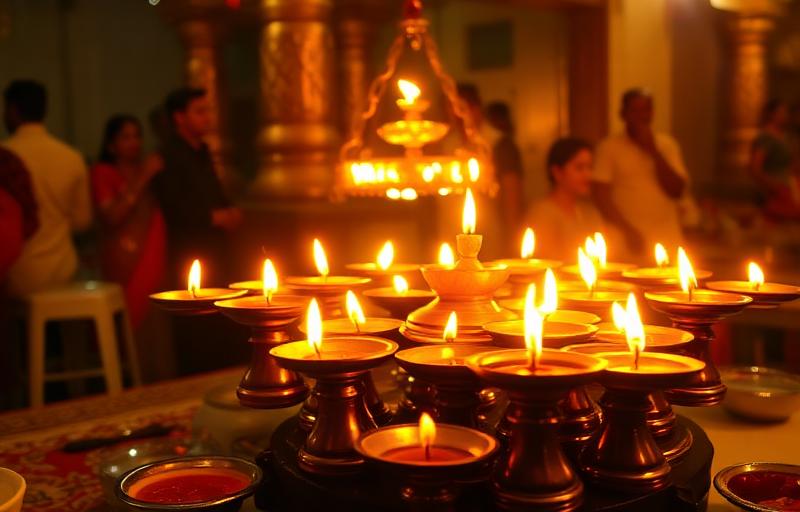
Running parallel to the Somwar vrat is a separate, equally significant observance kept on Sawan's Tuesdays: Mangala Gauri Vrat, dedicated to Goddess Gauri, the unmarried form of Parvati and Shiva's eternal consort. In 2026, the four Mangala Gauri Tuesdays fall on:
- 4 August 2026
- 11 August 2026
- 18 August 2026
- 25 August 2026
While Somwar vrat is kept by devotees of every gender for Shiva, Mangala Gauri vrat is observed primarily by married women, praying for their husband's long life and a harmonious marriage, and by unmarried women seeking a suitable life partner. The ritual centres on a puja to Goddess Gauri using 16 items in sets of 16 - 16 types of flowers, 16 lamps, 16 varieties of fruit or sweets where possible - a number tied to the Solah Shringar (sixteen adornments) tradition of married Hindu women.
Newly married women, in particular, are encouraged to keep this vrat for the first five years after their wedding, often at their maternal home in the earliest years, as part of a broader tradition of seeking blessings for the new household.
Because Mangala Gauri Tuesdays and Sawan Somwar Mondays fall on consecutive days throughout the month, many households effectively observe a fast on back-to-back days for four straight weeks - and this year, the 11 August Tuesday also happens to be Sawan Shivratri, making that particular week the most demanding of the month. If that pace feels demanding, it is entirely acceptable to keep one of the two consistently rather than both - our dedicated Mangala Gauri guide covers the full katha and puja vidhi in detail.
Shravan Purnima and Raksha Bandhan: The Closing Day
Sawan 2026 closes on Friday, 28 August, which is both Shravan Purnima (the full moon of the month) and Raksha Bandhan, the festival celebrating the bond between brothers and sisters. This overlap is not a coincidence of the 2026 calendar specifically - Raksha Bandhan is fixed to fall on Shravan Purnima every year, which is precisely why the festival's other name is Rakhi Purnima.
For devotees who have observed the month with vrats, abhishek or a daily Shiv puja, this final day carries extra weight. Many perform a closing puja or udyapan on this date if they have not already done so on the 4th Somwar, offering a final abhishek before formally closing the month's sankalp (vow). Priests at major Shiva temples typically conduct a special Purnima aarti, and in coastal and riverside towns, this day also coincides with Nariyal Purnima in some regional traditions, where fishing communities offer coconuts to the sea.
On the household side, the day naturally splits attention between two devotional strands - a morning or midday puja closing out Sawan, and an afternoon rakhi ceremony between siblings. There is no conflict between the two; in fact, many families treat the shared date as an added blessing, tying the protective spirit of Raksha Bandhan to the spiritual discipline of the month that is ending.
If you plan to keep a fast on this closing day, treat it as you would any Sawan Somwar in terms of puja and falahar, but note that most households break their fast a little earlier than usual to accommodate the rakhi ceremony with family.
How to Plan Your Sawan 2026 Around This Calendar
With eleven ritual observances landing on just nine distinct dates this year - Sawan Shivratri coincides with the 2nd Mangala Gauri Tuesday, and Nag Panchami coincides with the 3rd Sawan Somwar - the biggest practical risk during Sawan is not forgetting to be devoted, it is losing track of which date is which. A simple approach that works for most households:
- Mark the 4 Mondays first (3, 10, 17, 24 August) - these anchor your month and need the least separate planning since they repeat weekly.
- Flag 11 and 17 August (Sawan Shivratri and Nag Panchami) as the two dates needing extra preparation - special samagri, possibly a temple visit, and adjusted work plans, especially since 17 August is also the 3rd Sawan Somwar.
- Note the 4 Tuesdays (4, 11, 18, 25 August) if Mangala Gauri applies to your household.
- Block 28 August for both the month's closing puja and Raksha Bandhan.
If you are travelling for Kanwar Yatra or expect a family member to, remember that road and rail traffic around Shiva pilgrimage routes peaks in the days immediately before Shivratri (roughly 6-11 August), so plan errands and appointments around that window rather than during it.
Finally, resist the temptation to treat this as a checklist to complete perfectly. Tradition is consistent on one point: a single Sawan Somwar observed with full sincerity outweighs four kept half-heartedly. Use this calendar to prepare, not to pressure yourself.
📅 The Vandnaa App has every one of these 2026 Sawan dates pre-loaded with puja reminders, so you get a nudge the evening before each vrat instead of checking a calendar mid-month.
Reader Questions Answered
When does Sawan 2026 start and end?+
Sawan 2026 begins on Thursday, 30 July and ends on Friday, 28 August, which is also Shravan Purnima and Raksha Bandhan - a total window of 30 days.
What are the 4 Sawan Somwar dates in 2026?+
The four Sawan Somwar in 2026 fall on 3 August, 10 August, 17 August and 24 August.
When is Sawan Shivratri in 2026?+
Sawan Shivratri 2026 falls on Tuesday, 11 August, observed with a four-prahar night puja and abhishek.
When is Nag Panchami 2026?+
Nag Panchami 2026 falls on Monday, 17 August, the same day as the 3rd Sawan Somwar and six days after Sawan Shivratri.
When are the Mangala Gauri Vrat Tuesdays in 2026?+
The four Mangala Gauri Vrat Tuesdays in 2026 are 4 August, 11 August, 18 August and 25 August.
Does Sawan 2026 really end on the same day as Raksha Bandhan?+
Yes. Sawan always ends on Shravan Purnima, and Raksha Bandhan is fixed to that same full moon every year, so both fall on 28 August 2026.
About the author
Pandit Mahesh Trivedi · Festival Traditions & Panchang
Pandit Mahesh leads the festival-date and Panchang content on Vandnaa. He cross-references multiple regional panchangs (Drik, Vaishnava, Bengali, Marathi) for every festival date published on the site.
Meet the Vandnaa editorial team →Explore on Vandnaa
Related Articles
Sawan Somwar Vrat Udyapan: When and How to Perform It
7 min read
Sawan Somwar Vrat Parana: Correct Time & Rules to Break the Fast
7 min read
Sawan Somwar 2026: Dates, Vrat Vidhi, Shiv Mantras & Why Mondays in Sawan Are So Powerful
10 min read
Sawan Shivratri 2026: Date, Puja Vidhi, Significance & Mantras
9 min read