What Is Udyapan and Why It Closes the Vrat Properly
In Hindu ritual practice, a vrat (vow-fast) is understood to have two halves: the sankalp, the vow taken at the start, and the udyapan, the formal ceremony that closes it. Udyapan comes from the Sanskrit ud (up, completion) and yapan (to conclude) - literally, 'bringing to completion.' Without it, tradition holds that a vrat remains technically unfinished, like a sentence without a full stop.
For Sawan Somwar vrat specifically, udyapan matters because this fast is rarely a one-off gesture. Most devotees keep it either for a single Sawan month (4 Mondays) or as part of the longer Solah Somwar vrat (16 Mondays spread across several months, often continuing beyond Sawan into the next cycle). In either case, the udyapan is the ritual that formally tells the universe, and yourself, that the vow has been honoured in full - not abandoned, not merely paused.
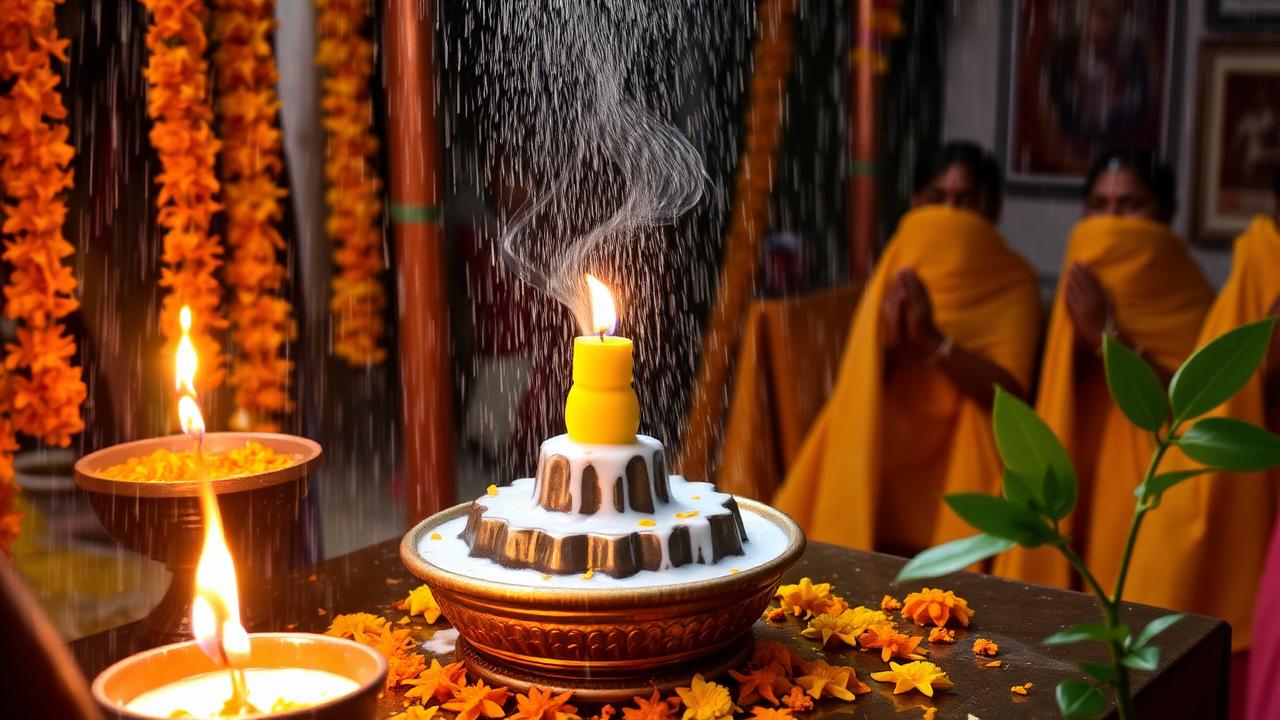
The ceremony typically involves a final, more elaborate puja than the regular weekly one: a havan (fire ritual) or at minimum a special abhishek, a reading of the Shiv vrat katha, feeding of Brahmins or those in need, and distribution of prasad. It is as much a thanksgiving as it is a closing - an acknowledgement that the fast was completed with Shiva and Parvati's grace, not through willpower alone.
One important clarification: udyapan is not mandatory to gain the benefit of the weeks you already fasted. Missing it does not erase the merit of the Mondays you observed. But performing it properly is considered to seal that merit and mark a clean, deliberate end - which is why so many devotees plan for it in advance rather than treating it as an afterthought once Sawan is nearly over.
When to Perform Sawan Somwar Udyapan in 2026
Timing depends on which vrat cycle you are closing, and 2026 gives you two natural windows.
If you are closing just this Sawan's 4 Mondays: the udyapan is best performed either on the 4th and final Sawan Somwar, Monday 24 August 2026, or on Shravan Purnima, Friday 28 August 2026, which is the last day of the month itself. Of the two, the 4th Somwar is more traditional since it keeps the closing ceremony within the Monday-Shiva framework; Purnima works well if your household is combining it with other month-end rituals.
If you are closing a Solah Somwar vrat (16 Mondays): this cycle rarely finishes exactly at the end of Sawan, since 16 weeks stretch to roughly four months. If your 16th Monday happens to fall within or just after Sawan 2026, you can align the udyapan with Sawan's heightened energy even if the count technically finished a week or two earlier or later - many pandits consider a few days' flexibility acceptable for scheduling the ceremony itself, though the fasting days themselves should not be skipped or substituted.
A practical tip on weekday planning: because udyapan involves a havan, guest feeding and more elaborate cooking than a regular Somwar, it works better on a day you can dedicate substantial time to, typically a non-working day. If 24 August (a Monday) is difficult to manage around work, performing the ceremony on the preceding Sunday, 23 August, is a practical alternative; Purnima itself falls on a Friday this year, so it does not offer the same non-working-day convenience, but is still an acceptable choice if your household prefers it, as long as the final fasting Monday itself was observed on its correct date.
When in doubt, consulting a family priest for a muhurat specific to your city removes the guesswork entirely.
Udyapan Samagri: The Complete Checklist
Udyapan needs a fuller samagri list than a weekly Somwar puja because it typically includes a havan and a formal katha reading. Gather these in advance rather than the morning of, since a few items (like a priest's booking or fresh Bilva leaves) need lead time.
For the puja and abhishek:
- A Shivling (brass, stone or a temple visit), Parvati and Nandi idols or images if available
- Panchamrit ingredients - raw milk, curd, honey, ghee, sugar
- Gangajal, a copper or brass abhishek vessel (lota) with a small hole
- Bel patra (unbroken, three-leaf), white flowers, dhatura, bhang (optional per tradition)
- Chandan (sandalwood paste), vibhuti (sacred ash), akshat (unbroken rice)
- A new white or saffron cloth as vastra for the deity
For the havan (if performed):
- Havan kund or a small brass fire pot, mango wood or havan samidha sticks
- Ghee, til (sesame seeds), jau (barley), guggal and havan samagri mix
- Camphor and a matchbox
For the katha and closing rituals:
- A copy of the Sawan Somwar or Shiv vrat katha booklet
- Prasad ingredients - usually a kheer or halwa made without onion-garlic, kept sattvic
- Dakshina (an amount you can comfortably offer) for the priest or Brahmins fed
- Food for distribution if you are feeding guests or those in need
Most of this is reusable from your weekly Somwar puja except the havan materials and the extra quantity of prasad and dakshina, so the additional cost is modest even though the ceremony looks more elaborate.
🪔 The Vandnaa App keeps a saveable samagri checklist inside its Sawan puja guide, so you can tick off what you already have before udyapan day instead of scrambling at the last minute.
Step-by-Step Udyapan Vidhi
The udyapan ceremony follows a longer arc than a weekly puja, usually taking two to three hours if a havan is included. Here is the sequence most households and priests follow:
1. Sankalp renewal: Begin by sitting facing east or north, and restate the original vow you took at the start of your vrat, now declaring your intention to close it. This is usually done with a priest guiding the words, or from memory if performing it yourself.
2. Ganesh puja: As with any major ritual, a brief invocation of Lord Ganesha comes first, to remove obstacles before the main puja begins.
3. Shiv-Parvati abhishek: Perform a fuller abhishek than usual - water, then each panchamrit ingredient in sequence (milk, curd, honey, ghee, sugar), finishing with water again, while chanting Om Namah Shivaya or having the priest recite Rudram verses.
4. Havan: If included, the fire is lit and ghee, til and havan samagri are offered with each mantra, typically 108 offerings (ahutis) directed at Shiva, Parvati and Ganesha.
5. Katha path: The Sawan Somwar or Solah Somwar vrat katha is read aloud, recounting the story tied to the vow - this is considered essential, not optional, since it is the narrative through which the vrat's purpose is formally acknowledged.
6. Aarti: A full aarti is performed, often with more people present than a regular Monday, since family and neighbours are commonly invited for udyapan.
7. Bhoj and dakshina: Prasad is distributed, guests or Brahmins present are fed a sattvic meal, and dakshina is offered as a token of gratitude, not payment.
8. Closing pranam: The ceremony ends with a final pranam to Shiva and Parvati, formally marking the vrat as complete.
If a full havan is not feasible at home, an abhishek, katha and prasad distribution alone are considered a valid, simplified udyapan.
Who Should Perform Udyapan and Common Mistakes
Udyapan is performed by the same person who took the original vrat sankalp - it is not transferable in the way some rituals can be delegated to family members. If a married woman, an unmarried girl, a student or anyone else kept the vrat, the closing ceremony is theirs to perform or direct, even if a priest handles the Sanskrit portions.
A few common mistakes worth avoiding:
- Treating udyapan as optional decoration rather than closure. Some devotees skip the katha reading because it takes time, but tradition holds this recitation as the actual mechanism of closing the vow - skipping it while keeping the feast defeats the purpose.
- Not feeding anyone. The bhoj (feeding Brahmins, guests or those in need) is not a side event; it is considered an integral part of the merit transfer. An udyapan performed entirely in private, with no one fed or given prasad, is regarded as incomplete by most traditions.
- Rushing it into a single evening after work. Given the number of steps, attempting the full ceremony in 30-40 minutes usually means cutting the katha or the havan short. If time is genuinely limited, choose the simplified version (abhishek, short katha, prasad) properly rather than a rushed full version.
- Forgetting dakshina. Even a small, symbolic amount matters more than the number - the gesture of gratitude is the point, not the sum.
- Assuming it must involve a priest. A sincerely performed home udyapan, done correctly even without Sanskrit fluency, is accepted in tradition; intention matters more than pronunciation.
What Happens After Udyapan
Once udyapan is complete, a few practical questions tend to come up, and the answers are simpler than most devotees expect.
Can you fast again next Sawan? Yes. Udyapan closes this specific vow, not your relationship with the vrat itself. Most devotees who found the practice meaningful simply take a fresh sankalp the following Sawan and repeat the cycle - there is no rule against observing Sawan Somwar year after year.
Do you have to continue if you started Solah Somwar but Sawan ends first? No. Sawan udyapan and Solah Somwar udyapan are separate events. If your 16-Monday count is still running when Sawan closes, you simply continue the remaining Mondays into the following months and perform that vrat's own udyapan when the 16th Monday is complete.
What if personal circumstances (illness, travel, a family event) prevented a full udyapan? A simplified version - even just a final abhishek with a short prayer of gratitude - performed with genuine intent is considered sufficient. The scale of the ceremony matters far less than performing it at all.
Is there a 'right' feeling to aim for afterward? Many devotees describe udyapan less as relief that the fasting is over and more as a quiet sense of having kept a promise. That, more than the ritual mechanics, is generally considered the actual point of closing a vrat properly - a deliberate, grateful ending rather than the fast simply fading out unnoticed.
Common Questions From Devotees
Is Sawan Somwar vrat udyapan compulsory?+
No. Udyapan is not compulsory to receive the benefit of the Mondays you already fasted, but it is considered the proper, complete way to close the vow with a formal ceremony of gratitude.
When should I do Sawan Somwar udyapan in 2026?+
The best dates are the 4th and final Sawan Somwar, Monday 24 August 2026, or Shravan Purnima, Friday 28 August 2026, when the month closes.
Can udyapan be performed at home without a priest?+
Yes. A sincerely performed home udyapan with abhishek, katha reading and prasad distribution is accepted in tradition, though a priest can help with the havan and Sanskrit recitation if you want a fuller ceremony.
What is the minimum samagri needed for udyapan?+
At minimum you need panchamrit ingredients, bel patra, a copy of the vrat katha, and prasad to distribute. The havan and elaborate feeding are traditional additions but not the bare minimum.
What if I cannot complete udyapan this year due to circumstances?+
A simplified closing - even a brief final abhishek with a sincere prayer of gratitude - is considered sufficient, and you can plan a fuller udyapan the following year if needed.
Can men also perform Sawan Somwar vrat udyapan?+
Yes. Sawan Somwar vrat is kept by devotees of all genders, and the udyapan vidhi is the same regardless of who took the original sankalp.
About the author
Pandit Mahesh Trivedi · Festival Traditions & Panchang
Pandit Mahesh leads the festival-date and Panchang content on Vandnaa. He cross-references multiple regional panchangs (Drik, Vaishnava, Bengali, Marathi) for every festival date published on the site.
Meet the Vandnaa editorial team →