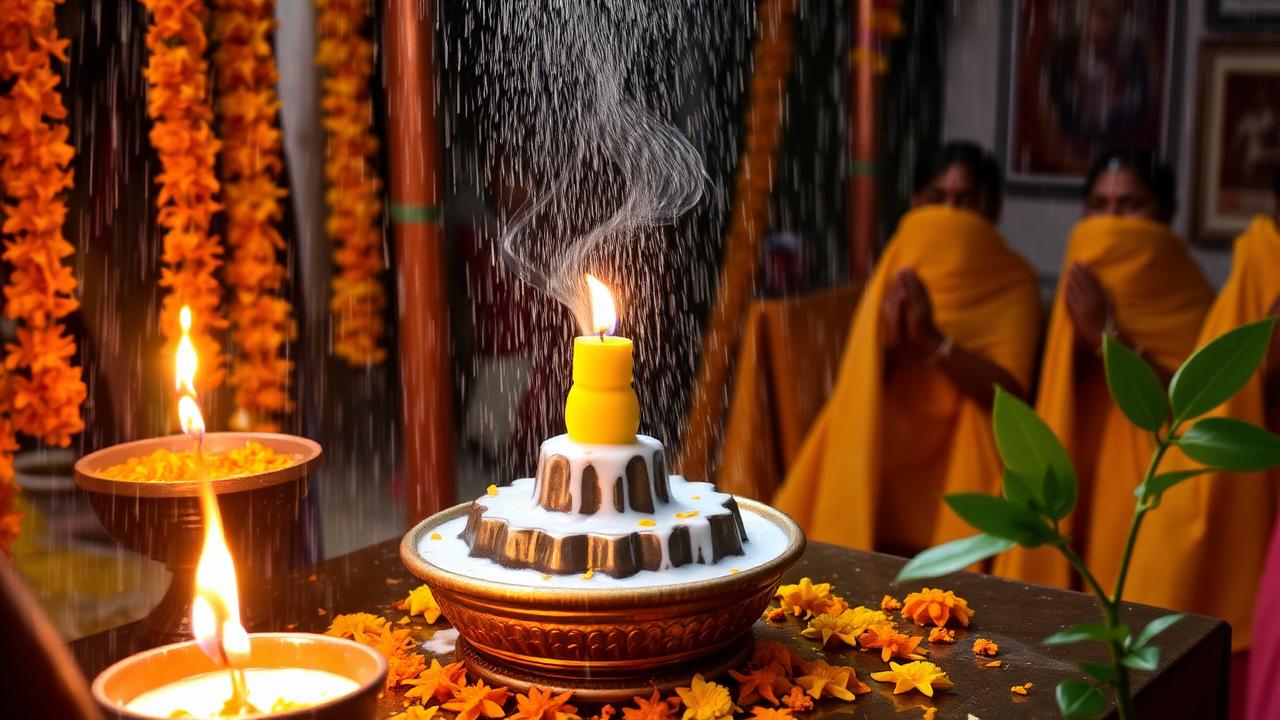
Why the Urge to Visit Hits Hardest in the Final Days
There is a particular, familiar feeling that sets in for many devotees somewhere in Sawan's final fortnight: a sudden, urgent pull to visit one of the twelve Jyotirlingas, the most powerful manifestations of Shiva in light form, before the month's window closes on 28 August. It rarely arrives in early Sawan, when the whole month still feels open-ended; it tends to surface precisely now, once the closing date is close enough to feel real but still just far enough away to seem possible.
This impulse deserves to be taken seriously rather than dismissed as impractical last-minute planning. Sawan carries genuine, heightened significance for Jyotirlinga darshan specifically, these twelve shrines, including Somnath, Mahakaleshwar, Kedarnath, Kashi Vishwanath and others, are considered the most concentrated points of Shiva's presence on earth, and undertaking a pilgrimage to one during his own holiest month is among the most complete expressions of Sawan devotion available to a devotee with the means and time to attempt it.
At the same time, this guide is written with a specific goal: honest, practical planning rather than encouragement to book the first available ticket without considering feasibility, monsoon travel risk, or realistic darshan wait times in an already crowded final week. Not every one of the twelve Jyotirlingas is equally reachable on short notice from every part of India, and knowing this distinction upfront saves devotees from either an exhausting, poorly planned trip or an unnecessary sense of failure if a full pilgrimage genuinely isn't feasible this year.
The sections that follow break down realistic feasibility by shrine, what final-week logistics actually look like, and what a devotee can do if even a short-notice trip proves impossible.
Which Jyotirlingas Are Realistically Reachable on Short Notice
For a devotee planning within Sawan's final week, a handful of Jyotirlingas stand out as genuinely manageable on short notice, typically doable as a long weekend trip from most major Indian cities:
- Mahakaleshwar (Ujjain, Madhya Pradesh): Well connected via Indore's airport (roughly an hour's drive) and Ujjain's own railway station on major lines, Mahakaleshwar has robust pilgrim infrastructure, hotels, dharamshalas, and a well-organized darshan system, making it one of the most realistic short-notice options from almost anywhere in India.
- Somnath and Nageshwar (Gujarat): Somnath, connected via Diu airport and a well-developed highway network from Ahmedabad and Rajkot, can often be combined with nearby Nageshwar in a single trip, both benefiting from Gujarat's strong tourism infrastructure.
- Kashi Vishwanath (Varanasi, Uttar Pradesh): Among the best-connected Jyotirlingas, with frequent flights into Varanasi from most metros and extensive rail links, though final-week Sawan crowds here are genuinely large given Kashi's standalone pilgrimage significance beyond just Jyotirlinga status.
- Trimbakeshwar, Bhimashankar and Grishneshwar (Maharashtra): All three are reachable from Nashik, Pune or Chhatrapati Sambhajinagar (Aurangabad) airports, with Grishneshwar conveniently near Ellora, allowing a devotee to combine two or even three of these shrines in a single well-planned four to five day trip.
- Vaidyanath Dham (Deoghar, Jharkhand): Improved air connectivity into Deoghar in recent years has made this shrine considerably more accessible than it was even a few years ago, worth checking current flight options directly.
Across all of these, booking accommodation and confirming darshan timing a few days ahead, rather than arriving unplanned, matters far more in the final week than it would earlier in Sawan, given how much footfall concentrates in these closing days.
Which Ones Need More Lead Time Than Sawan's Final Week Allows
Equally important is being honest about which Jyotirlingas are poor candidates for a genuinely last-minute trip this particular week, not because they are any less significant, but because attempting them without adequate lead time risks an exhausting, potentially unsafe journey rather than a meaningful pilgrimage.
- Kedarnath (Uttarakhand): The most significant caution of this list. Kedarnath sits at high altitude, reached only by a 16-18 km trek or helicopter from Gaurikund/Sonprayag, and late August remains squarely within monsoon season in the Himalayan region, meaning landslide risk, road closures on the approach routes, and weather-dependent helicopter operations are all genuine, current concerns, not hypothetical ones. Yatra registration is also mandatory and often booked out well in advance. This is not a shrine to attempt on a rushed, unregistered, monsoon-season whim.
- Rameswaram (Tamil Nadu): Simply a matter of distance for most of the country; even with a direct flight to Madurai and onward travel, a meaningful visit that includes the temple's full ritual circuit realistically needs three to four days minimum, difficult to compress into what remains of Sawan's final week from most parts of India.
- Mallikarjuna (Srisailam, Andhra Pradesh): Located deep within the Nallamala forest region, reached via ghat roads through a tiger reserve with limited direct flight connectivity, typically a three-hour plus drive even from Hyderabad, making it logistically demanding to fit into a short-notice weekend trip.
- Omkareshwar (Madhya Pradesh): Moderately more feasible than the above, being reasonably close to Indore and often combinable with Mahakaleshwar, but final-week crowd surges here, similar to Ujjain, mean a rushed same-day visit without any buffer time is risky.
For any of these four, the more sensible plan, if genuinely drawn to visit, is to treat this Sawan as the time to research and prepare, and to plan the actual trip for a less time-pressured window, whether next Sawan, Mahashivratri, or simply whenever proper lead time is available.
If a Jyotirlinga Trip Genuinely Isn't Possible This Year

For the many devotees who weigh this decision honestly and conclude that a trip, whether due to work, health, family responsibility or simply money and timing, genuinely isn't feasible this Sawan, tradition offers meaningful alternatives that carry full devotional weight rather than standing as consolation options.
- A focused abhishek at the nearest Shiva temple, performed with the same sincerity and attention a devotee would bring to a Jyotirlinga visit, is considered a complete act of Sawan devotion in its own right; the specific shrine's cosmic significance does not diminish the merit of heartfelt worship performed elsewhere.
- Virtual darshan, now offered by several major Jyotirlinga temple trusts, including live streams from Mahakaleshwar and others during Sawan's peak days, lets devotees witness the abhishek and aarti in real time, a genuinely valued option for those unable to travel, particularly elderly or health-restricted devotees.
- A dedicated home sankalp naming the specific Jyotirlinga, spoken with intention even without physical presence, drawing on the belief that sincere devotion directed toward a specific deity form carries real spiritual weight regardless of physical distance.
- Committing to next year's Sawan with proper lead time, treating this year's unfulfilled urge as useful information rather than a failure, using the coming months to plan accommodation, leave from work, and travel logistics well ahead rather than repeating the same last-minute scramble.
- Redirecting the energy toward this Sawan's remaining local rituals, the final Somwar on 24 August, Sawan Purnima on 28 August, ensuring these closer-to-home observances receive full attention rather than feeling overshadowed by an unfulfilled travel plan.
The devotional principle underlying all of this is consistent with everything else Sawan teaches: sincerity of intention outweighs the scale or difficulty of the act performed.
A Practical Checklist for a Short-Notice Trip
For devotees proceeding with a feasible short-notice Jyotirlinga trip, a focused checklist prevents the most common last-minute mistakes:
- Book accommodation before travel, not on arrival. Temple trust guesthouses and nearby dharamshalas fill up fastest precisely during Sawan's closing week; private hotels remain a reliable backup but also fill quickly in temple towns during this period.
- Check darshan timing and any special queue systems in advance. Major shrines like Mahakaleshwar and Kashi Vishwanath offer paid Shighra Darshan (expedited queue) options specifically designed for pilgrims with limited time, worth booking online ahead rather than discovering the option after already standing in a general queue for hours.
- Carry valid photo ID. Several major temples now require ID for entry or for VIP/expedited darshan passes, particularly during high-footfall periods like Sawan's final week.
- Dress according to each temple's specific guidelines. Some shrines have modest dress requirements or restrict certain items (leather belts or wallets at specific sanctums, for instance); checking the specific temple's current guidelines avoids an avoidable delay at entry.
- Plan routes around Kanwar Yatra traffic if driving through North India. Several Jyotirlinga routes, particularly toward Kashi Vishwanath, may intersect with heavy Kanwar pilgrim traffic in Sawan's final week; building in extra travel time for these stretches prevents a tight itinerary from collapsing entirely.
- Keep the itinerary genuinely light, one or two shrines done properly rather than an ambitious multi-shrine dash that leaves no time for actual darshan and devotion at any single one.
A well-prepared two-day trip to one accessible Jyotirlinga will almost always feel more meaningful than an exhausting attempt to cover three in the same window.
Making Peace With What's Realistically Possible
There is a particular kind of quiet disappointment devotees describe when a Jyotirlinga trip they hoped for doesn't materialize before Sawan closes, a sense of having somehow fallen short of the month's full potential. This feeling, while understandable, rests on a comparison that Hindu devotional tradition itself does not actually support.
Throughout this Sawan series, one theme has surfaced repeatedly across very different contexts, a shortened Kanwar Yatra, a travel-adapted vrat, a modest daan given without fanfare: sincerity of intention consistently outweighs the scale or difficulty of the act performed. A rushed, poorly planned Jyotirlinga trip attempted purely to avoid this feeling of falling short would, ironically, often serve a devotee's spiritual life less well than a calm, complete practice closer to home.
This does not mean the aspiration to visit these twelve sacred sites should be abandoned; if anything, the pull felt this Sawan is worth honoring by using it as motivation to plan properly for a future visit, rather than either forcing an unsafe rushed trip now or quietly dropping the aspiration altogether out of discouragement.
What matters most in these closing days, whether a devotee ends up at Mahakaleshwar, at a neighborhood Shiva temple, or simply in front of a home altar, is the same thing tradition has emphasized across every single practice covered this Sawan: showing up, with sincere attention, for whatever form of devotion is genuinely available. Sawan 2026 closes on 28 August either way; how completely a devotee honored it was never actually measured in kilometers travelled.
🙏 The Vandnaa App's temple directory and virtual darshan links make it possible to stay connected to a Jyotirlinga's daily rituals even when travel isn't possible this year.
Common Questions From Devotees
Which Jyotirlingas are most feasible to visit on short notice during Sawan's final week?+
Mahakaleshwar in Ujjain, Somnath and Nageshwar in Gujarat, Kashi Vishwanath in Varanasi, and the Maharashtra cluster of Trimbakeshwar, Bhimashankar and Grishneshwar are generally the most reachable options on short notice, given their strong transport and pilgrim infrastructure.
Why is Kedarnath not recommended for a last-minute Sawan trip?+
Kedarnath requires a high-altitude trek or helicopter access, mandatory advance yatra registration, and late August falls within Himalayan monsoon season, bringing genuine landslide and route-closure risk that makes rushed, unregistered travel unsafe.
What can I do if I cannot travel to a Jyotirlinga before Sawan ends this year?+
A sincere abhishek at your nearest Shiva temple, watching a temple's virtual darshan livestream, or a focused home sankalp naming the specific Jyotirlinga are all considered complete, meaningful forms of devotion in their own right.
What is Shighra Darshan and is it worth booking for a short trip?+
Shighra Darshan is a paid, expedited queue option offered at major temples like Mahakaleshwar and Kashi Vishwanath, generally worth booking in advance for a short-notice trip since it significantly reduces waiting time during Sawan's crowded final week.
Should I try to visit multiple Jyotirlingas in one short trip during Sawan's final week?+
It's generally better to visit one or two shrines properly, with time for genuine darshan and devotion, rather than attempting an ambitious multi-shrine dash that leaves little meaningful time at any single location.
About the author
Pandit Mahesh Trivedi · Festival Traditions & Panchang
Pandit Mahesh leads the festival-date and Panchang content on Vandnaa. He cross-references multiple regional panchangs (Drik, Vaishnava, Bengali, Marathi) for every festival date published on the site.
Meet the Vandnaa editorial team →