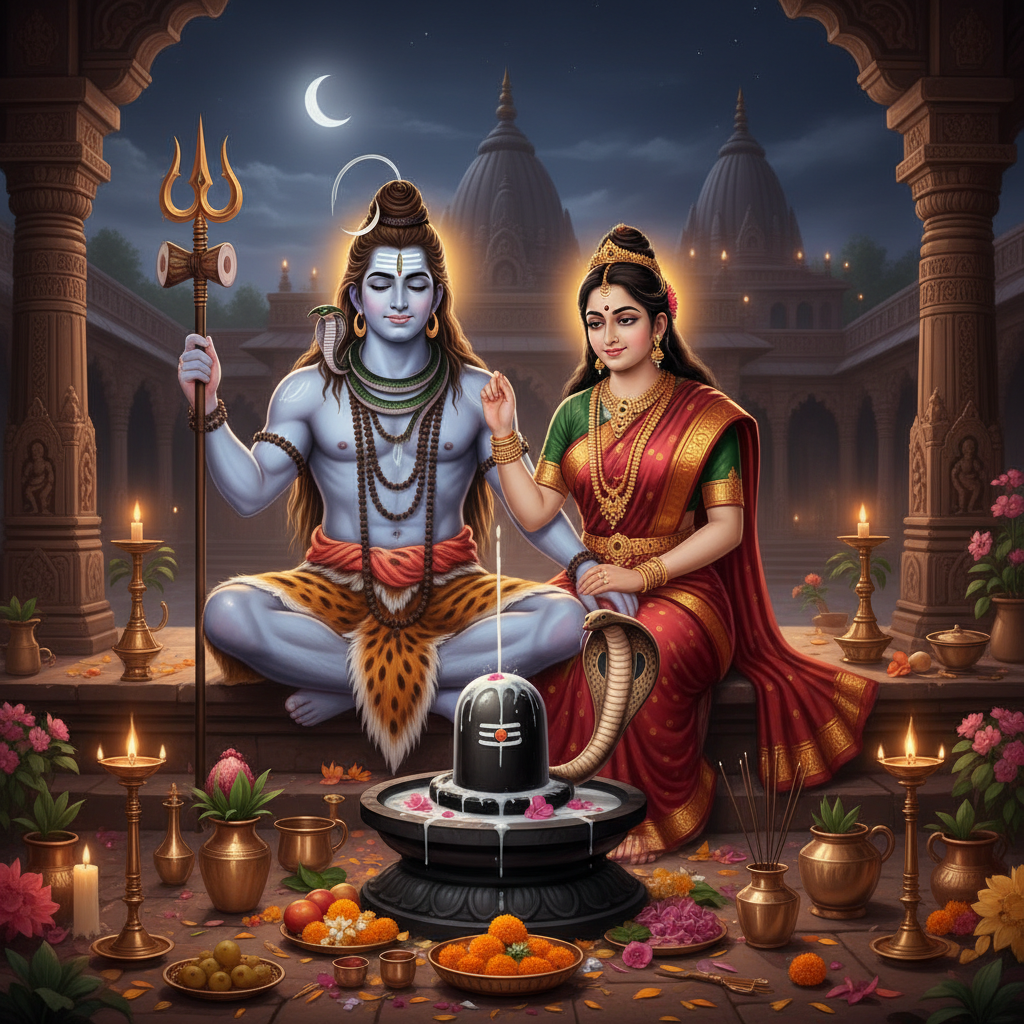
Why Devotion Often Drops Off After Sawan Ends
With Raksha Bandhan and Sawan Purnima closing out the month on 28 August this year, and only the final Somwar (24 August) still ahead, many devotees are already quietly aware of a familiar pattern about to repeat: the sharp drop in devotional intensity that tends to follow the end of Sawan almost every year, regardless of how sincerely the month itself was kept.
This drop isn't a failure of faith, it's largely structural. Sawan works because it comes with built-in scaffolding: specific dates everyone around you also observes, a calendar that removes the need to decide when to pray, family and community activity that reinforces individual practice, and a clear beginning and end that makes thirty days of effort feel achievable in a way an open-ended, indefinite commitment doesn't. The moment that scaffolding disappears on 29 August, the devotee is left to supply their own structure, motivation and reminders, which is a fundamentally harder task than showing up on a date everyone already has marked.
A second, quieter reason is that Sawan's intensity, four Mondays of fasting, a Shivratri vigil, temple visits, is genuinely not sustainable year-round, nor is it meant to be. Some devotees, having just come off a demanding month, mistakenly treat the choice as binary: either maintain Sawan-level intensity indefinitely (unsustainable, leading to eventual burnout and complete abandonment) or let the practice lapse entirely until next July (which wastes the momentum genuinely built over the past month).
The practices that follow are deliberately chosen to sit in between these two extremes, concrete, specific, and light enough to sustain across an ordinary week without needing Sawan's calendar-backed structure to justify them. None require anywhere near Sawan's intensity; all of them are things a devotee can genuinely keep doing on an ordinary Tuesday in November.
Practice One and Two: Weekly Monday Vrat and Daily Om Namah Shivaya Japa
Practice One: A monthly, not weekly, Monday vrat. The most direct way to carry Sawan's rhythm forward without its intensity is to keep just one Monday fast a month, rather than every week or none at all. Many devotees choose the first Monday of each Hindu month, or simply the Monday closest to a personal significant date, as a modest, sustainable anchor. This single monthly fast requires none of Sawan's elaborate falahar planning, even a simple sankalp-only version (avoiding non-vegetarian food and alcohol for the day, without a full dietary restriction) keeps the practice alive without demanding the same logistics as four consecutive weeks did.
Practice Two: Daily Om Namah Shivaya japa, five minutes, not fifty. The five-syllable mantra Om Namah Shivaya doesn't require a puja setup, a specific time of day, or even privacy, it can be recited silently during a commute, while cooking, or for five focused minutes before sleep. Traditional teaching holds that consistency in japa matters more than volume, 108 repetitions (one round of a rudraksha mala) done daily is considered more valuable over time than an occasional marathon session of a thousand repetitions once a month. Devotees who found the mantra recitation part of their Sawan puja particularly meaningful, a common finding for those who kept a vrat diary this year, are especially well-placed to continue just this one element without needing to reconstruct the entire ritual around it.
Both practices share a deliberate design principle: they ask for a small, fixed, repeatable unit of time and effort rather than a variable, open-ended commitment, which is precisely what makes them survivable across busy weeks the way Sawan's compressed, calendar-backed intensity never had to prove it could.
Practice Three: Pradosh Vrat, the Monthly Echo of Shivratri
Pradosh Vrat falls twice a month, on the Trayodashi (thirteenth lunar day) of both the waxing and waning lunar fortnights, and is observed during the Pradosh Kaal, the same twilight window, roughly spanning 45 minutes before and after sunset, that Sawan Somwar puja is traditionally recommended for. For a devotee who found Sawan Shivratri's night-vigil energy meaningful but can't realistically replicate an all-night observance regularly, Pradosh Vrat offers a scaled-down, twice-monthly version of that same concentrated, single-window devotion, without demanding a full night's commitment.
The observance traditionally involves a day-long fast (in whichever tier suits the devotee, nirjal, phalahar or a lighter sankalp-based version) broken only after the twilight puja, which typically includes a Shivling abhishek, bel patra offering, and recitation of the Pradosh Vrat katha or Shiva mantras. Because it falls on a specific tithi rather than a fixed weekday, the date shifts each month, checking a Hindu calendar or panchang app in advance is genuinely necessary, unlike Monday vrat, which never requires any lookup.
What makes Pradosh Vrat particularly well-suited as a year-round practice is its built-in rhythm: twice a month is frequent enough to maintain genuine continuity and familiarity with the ritual sequence, but infrequent enough to remain sustainable without the fatigue that weekly fasting can eventually produce for some devotees. Several traditions also hold specific Pradosh days, those falling on a Monday (Soma Pradosh) or Saturday (Shani Pradosh), as carrying additional significance, giving devotees who want to prioritise selectively a clear, traditionally grounded way to do so rather than needing to observe all 24 or so Pradosh days in a year.
🙏 The Vandnaa App's panchang calendar flags each month's Pradosh dates automatically, removing the lookup step that otherwise makes this practice harder to sustain than Monday vrat.
Practice Four and Five: Rudrabhishek on Occasion and a Simple Daily Puja Habit
Practice Four: An occasional, planned Rudrabhishek rather than only during Sawan. Rudrabhishek, the elaborate ritual bathing of the Shivling with a sequence of substances (water, milk, honey, curd, ghee, sugar, each with its own symbolic significance) accompanied by Vedic chanting, is often treated as exclusively a Sawan or Shivratri ritual, but there's no tradition-based restriction limiting it to those occasions. Scheduling a Rudrabhishek two or three times a year outside Sawan, around a birthday, an anniversary, a new undertaking, or simply a personally significant date, keeps the devotee's relationship with this specific, more elaborate ritual alive rather than letting an entire year pass between one Sawan's abhishek and the next.
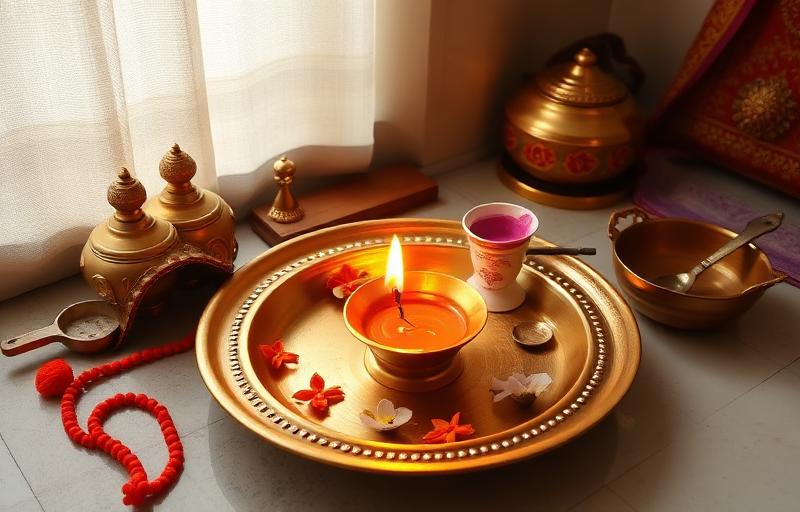
Practice Five: A genuinely minimal daily puja, five minutes, not fifty. This is less a specific ritual than a floor beneath which devotion doesn't drop: lighting a diya, a moment in front of a Shiva photo or Shivling, and a short prayer or a single round of japa, done daily regardless of how demanding the day has been. The specific content of this five-minute practice matters far less than its unconditional daily occurrence, most devotees who successfully maintain devotion year-round describe this minimal floor practice, not any particular elaborate ritual, as the actual load-bearing habit that keeps everything else, occasional Pradosh vrat, periodic Rudrabhishek, the next Sawan, connected rather than feeling like isolated, disconnected events.
Together, these two practices work at different scales, Rudrabhishek as an occasional deepening, daily puja as the constant baseline, mirroring almost exactly the relationship Sawan Shivratri and Sawan Somwar have with each other within the month itself: one occasional and intense, one frequent and steady, neither replacing the other.
Building a Realistic Year-Round Rhythm (Not a Sawan Copy)
The mistake worth actively avoiding is treating these five practices as a checklist to perform in full, every single one, every single week, essentially attempting to recreate Sawan's intensity on a permanent basis. That approach reliably fails within a few months for the same reason most overly ambitious habit changes fail: it front-loads more commitment than ordinary life can sustainably absorb once the initial motivation from finishing a meaningful month fades.
A more realistic year-round rhythm looks something like this:
- Daily: the five-minute minimal puja (Practice Five), non-negotiable, low enough effort that skipping it isn't really about time constraints
- Ongoing, flexible: Om Namah Shivaya japa (Practice Two) worked into existing dead time, commutes, chores, rather than scheduled as a separate task
- Monthly: one Monday vrat (Practice One), chosen in advance rather than decided spontaneously, which tends to increase follow-through significantly
- Twice monthly, calendar-permitting: Pradosh Vrat (Practice Three), treated as an addition when life allows, not a strict obligation
- A few times a year: Rudrabhishek (Practice Four), planned around personally meaningful dates rather than left to chance
Notice that this rhythm is front-loaded toward the cheap, frequent practices and back-loaded toward the expensive, rare ones, exactly inverted from how a devotee's enthusiasm typically wants to allocate effort right after Sawan, when the temptation is to commit to everything intensely while motivation is high. Priests who counsel devotees on sustaining practice consistently push back against this instinct, pointing out that a modest practice still being kept in March is worth considerably more than an ambitious one abandoned by October.
The goal isn't recreating Sawan's intensity in miniature throughout the year, it's building a floor that never quite disappears, one that Sawan 2027 will then rise from rather than starting again from zero.
What to Carry Forward From This Specific Sawan
With this year's Sawan closing on 28 August, roughly eleven days from now, this final section is less about the five general practices above and more about a specific, personal exercise worth doing before the month's momentum dissipates entirely: identifying exactly what about this particular Sawan worked.
This is a different question from "what should every devotee do year-round", it's specifically about this devotee, this year. Someone who found the third Somwar's puja, the one that coincided with Nag Panchami, unusually meaningful should ask why, was it the specific mantras, the family gathering, the sense of a double occasion, and try to identify which element is portable into an ordinary week rather than tied to that specific calendar coincidence. A devotee who kept a vrat diary this Sawan has a genuine advantage here, their own written record of which days felt meaningful versus obligatory is far more reliable than memory for making this call honestly.
A few honest questions worth sitting with before 28 August:
- Which single element of this Sawan, a specific mantra, a specific time of day, a specific person prayed with, do I most want to keep past this month?
- Which parts felt like genuine devotion versus social or family obligation, and is that distinction worth acting on?
- Is there one modification from this year (a couple's shared puja, a diary, a desk-based practice) worth becoming a permanent part of how I practice, not just a Sawan-specific adaptation?
Sawan's real function, beyond its own considerable spiritual weight, is as an annual reset that hands devotees fresh information about their own practice, what actually resonates this year, not last year's assumption of what should. Carrying forward one honest answer to those questions matters more than attempting all five practices above in full.
📅 The Vandnaa App's Sawan retrospective and the four remaining months' panchang calendar can help translate this year's Sawan insights into a plan for the year ahead.
What People Ask Most
Is it necessary to fast every Monday throughout the year after Sawan ends?+
No. A single Monday fast per month is a sustainable, widely practised way to maintain the habit without Sawan's intensity. Weekly fasting year-round is a personal choice some devotees make, not a requirement.
What is Pradosh Vrat and how often does it occur?+
Pradosh Vrat falls twice a month, on the Trayodashi of both lunar fortnights, observed during the twilight Pradosh Kaal. It offers a scaled-down, regular echo of Shivratri's concentrated devotion without requiring an all-night vigil.
Can Rudrabhishek be performed outside of Sawan and Shivratri?+
Yes. There is no tradition-based restriction limiting Rudrabhishek to Sawan or Shivratri. Many devotees schedule it two or three times a year around personally significant dates like birthdays or anniversaries.
What is the single most important habit for sustaining Shiva devotion year-round?+
Most devotees and priests point to a genuinely minimal daily puja, five minutes, not fifty, as the load-bearing habit. Its unconditional daily occurrence matters more than its specific content or elaborateness.
Why does devotion typically drop after Sawan ends?+
Sawan comes with built-in structure, fixed dates, community participation, a clear start and end, that makes consistent practice easier. Once that structure disappears, devotees must supply their own motivation and reminders, which is genuinely harder.
Should I try to keep all five of these practices going at once after Sawan?+
Not necessarily all at full intensity. A more sustainable approach front-loads the cheap, frequent practices, daily puja and japa, and treats the rarer ones, Pradosh vrat and Rudrabhishek, as flexible additions rather than strict obligations.
About the author
Pandit Mahesh Trivedi · Festival Traditions & Panchang
Pandit Mahesh leads the festival-date and Panchang content on Vandnaa. He cross-references multiple regional panchangs (Drik, Vaishnava, Bengali, Marathi) for every festival date published on the site.
Meet the Vandnaa editorial team →