From Sati to Parvati: A Soul's Second Chance at Love
To understand Parvati's tapasya, the katha must begin one lifetime earlier, with Sati, Shiva's first wife and the daughter of King Daksha. Daksha never approved of his daughter's choice of husband - to him, Shiva's ash-smeared body, matted hair, and cremation-ground dwelling made him an unfit match for a princess, however powerful he was. This disapproval came to a devastating head when Daksha held a grand yajna and deliberately excluded Shiva from the invitation, a calculated insult aimed squarely at his son-in-law.
Sati, unable to bear the humiliation directed at her husband and unable to convince her father to relent, gave up her own life in the sacrificial fire, an act that plunged Shiva into a grief so total that he withdrew from creation itself, carrying her body across the cosmos in inconsolable sorrow until Vishnu's discus finally dissolved it, and retreating into unbroken meditation, indifferent to the passage of time or the concerns of gods and mortals alike.
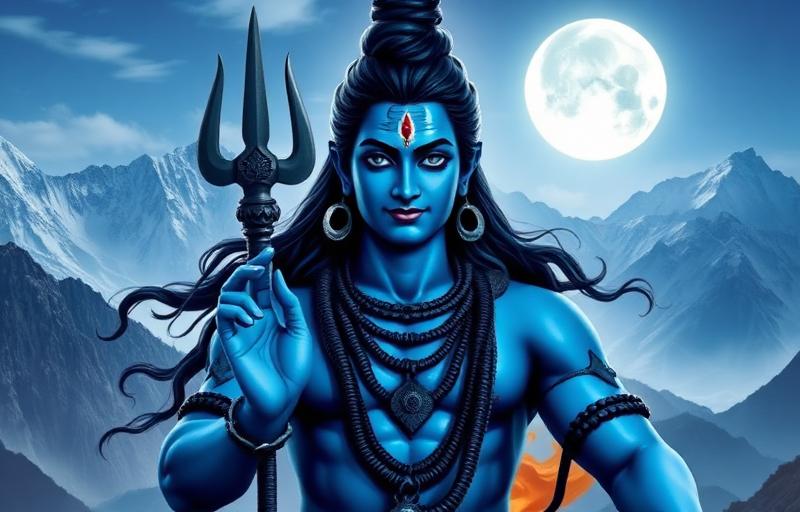
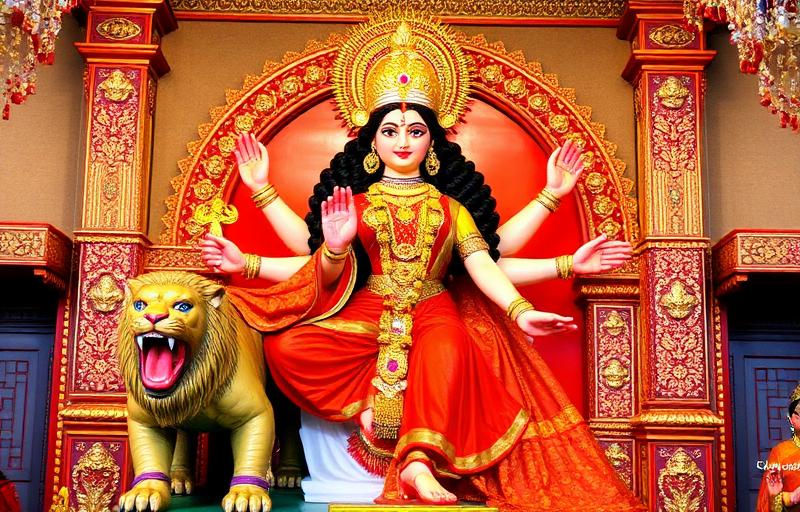
Sati's soul, however, was not lost. She was reborn as Parvati, daughter of Himavan, the king of mountains, and his queen Mena. From her earliest years, this child was unlike other daughters of her station - she showed no interest in ordinary comforts or arranged royal alliances, carrying instead a quiet, unshakeable certainty that she recognised even as a girl, though she could not always have explained it: that her heart belonged to Shiva, and had, in truth, belonged to him before this life even began.
What makes this opening chapter essential to the rest of the katha is the weight it gives to what follows. Parvati was not a young goddess chasing an infatuation; she was, in the tradition's own telling, a soul completing something interrupted, carrying a devotion older than her own memory of it.
A Child's Unshakable Resolve: I Will Marry Only Shiva
As Parvati grew, her resolve only sharpened. When Himavan and Mena, as loving and concerned parents naturally would, began considering suitable matches for their daughter, Parvati made her intention unambiguous - she would marry Shiva, and no one else, regardless of how impractical or even alarming this seemed to a royal household accustomed to political and dynastic marriage considerations.
To her parents, this must have seemed an almost impossible ambition. Shiva was not merely uninterested in marriage; he was, at that point in the story, still consumed by grief over Sati and deep in meditation so profound that he barely acknowledged the world around him. He possessed no palace, no kingdom, no conventional wealth - only Kailash's bare slopes, a tiger skin, and companionship with ghosts and ascetics. Mena, according to some tellings, wept and pleaded with her daughter to reconsider, unable to bear the thought of Parvati choosing what looked, from the outside, like a life of hardship over the comfort a princess could expect.
Parvati did not waver. She began, even before undertaking her later severe tapasya, by serving Shiva directly wherever possible - some versions of the katha describe her attending to small tasks near his meditation seat, arranging flowers, keeping the space around him clean, present and available should he ever open his eyes, without any expectation of immediate acknowledgment. This period of quiet service is often understood as her first, gentler stage of devotion, distinct from the harsher penance that would follow when service alone proved insufficient to draw Shiva's attention.
This part of the katha carries its own teaching, retold to young devotees to this day: that Parvati's certainty did not require Shiva's immediate response to remain unshaken. Her devotion was, from its very beginning, oriented toward him rather than toward a guaranteed outcome - a distinction the story returns to again and again as her path grows harder.
Why Kamadeva's Arrow Was Not Enough
Parvati's quiet service near Shiva's meditation seat coincided with a crisis affecting the entire cosmos. The demon Tarakasura had secured a boon that he could only be killed by a son born of Shiva, and since Shiva showed no sign of ever marrying or fathering a child, the devas grew desperate. Indra and the other gods conceived a plan - they would send Kamadeva, the god of love and desire, to shoot Shiva with an arrow of infatuation the moment Parvati was near him, hoping to spark the attraction that would lead to marriage.
Kamadeva, along with his wife Rati and companion Vasanta (spring itself), travelled to Kailash and, seizing a moment when Parvati approached Shiva with an offering, released his flower-tipped arrow toward the meditating god. For an instant, it seemed to work - Shiva's eyes opened, and something in his deep meditation was disturbed.
But Shiva recognised immediately what had happened, and his response was severe. Opening his third eye, he reduced Kamadeva to ash on the spot, an act so consequential that Kamadeva is, to this day, referred to as Ananga, the bodiless one, restored to form only much later through Vishnu's intervention and Rati's own devotion.
This episode carries a specific, deliberate lesson within the larger katha: Shiva's anger was not directed at Parvati, who had done nothing but approach him with sincere offering, but at the method - an external, engineered desire imposed upon him rather than something arising through genuine recognition. The devas' plan revealed something Parvati seems to have already understood instinctively: that Shiva, the great ascetic beyond ordinary sensory pull, could never be won through attraction alone, however divinely orchestrated. If he was to be reached at all, it would have to be through a devotion matching his own austerity - not desire, but tapasya. This realization is what sends Parvati toward the forest and the far harder path that follows.
The Tapasya: Standing Through Fire, Frost and Endless Rain
Understanding that Shiva could only be reached through austerity matching his own, Parvati left the comforts of her father's mountain kingdom and retreated into the wilderness to begin a tapasya of extraordinary severity - one the Puranas describe in vivid, almost unbearable detail.
The stages of her penance, as traditionally narrated:
- In the punishing heat of summer, she stood surrounded by Panchagni, five ritual fires burning around her while the sun blazed as a fifth flame overhead, maintaining unbroken concentration despite the heat
- Through winter, she stood for extended periods in freezing water or snow, exposed to cold intense enough to test any ordinary resolve, without seeking shelter or comfort
- During the monsoon - the very season tradition links most closely to Sawan - she remained exposed to relentless rain, refusing shelter even as storms continued around her, day after day
- Her diet, already minimal, grew stricter still - she moved from simple fruit to eating only fallen leaves, and eventually gave up even leaves entirely, earning her the name Aparna, she who eats not even a leaf
Throughout all of this, her focus never wavered. She held Shiva's name and form in her mind continuously, and the Puranas describe the natural world itself as being moved by her resolve - sages, celestial beings, and even her own worried family observed from a distance, unable to persuade her toward a gentler path, watching a young woman voluntarily endure what seasoned ascetics might struggle to complete.
Why this specific detail matters for Sawan's connection to her story: her endurance through the monsoon rains - refusing shelter through storm after storm - is the thread devotees point to most directly when explaining why her tapasya is remembered so intensely in this particular month. Just as Sawan asks devotees to sustain a vrat across four demanding Mondays, Parvati's katha asks them to imagine sustaining devotion across years of the harshest conditions nature could offer, without any guarantee of the outcome she sought.
The Old Brahmin Who Tested Her Devotion
Even after years of visible, extraordinary austerity, the katha includes one final test before Shiva reveals himself - a moment devotees often consider the emotional heart of the entire story. Shiva, wanting to be certain of the depth and unconditional nature of Parvati's resolve, appeared before her not in his true form, but disguised as an elderly Brahmin.
The old Brahmin began to question, and then openly criticise, her choice of husband. Why, he asked, would a princess as beautiful and accomplished as she subject herself to such suffering for a groom like Shiva - a being with no home, no wealth, ash smeared across his body, matted unkempt hair, a garland of skulls, snakes coiled around his neck, and a dwelling among ghosts in cremation grounds? Surely, he suggested, someone of her standing deserved a husband of comparable royal dignity, not this wandering ascetic with nothing conventional to offer.
Parvati's response is the katha's most quoted moment. Rather than being swayed or offended into doubt, she defended Shiva point by point with growing passion - his apparent poverty, she said, was the poverty of one who needs nothing because he already possesses everything; his ash was the reminder that all worldly glory ends in the same dust; his position beyond social convention was not a flaw but proof that he stood above every hierarchy a Brahmin's ordinary judgment could measure. She declared that her resolve was not for his appearance or his possessions but for what he was in essence, and that no description of his unconventional habits could shake a decision made by her soul, not her eyes.
Pleased beyond measure, Shiva dropped the disguise and revealed his true form. The test had confirmed what his own austerity had perhaps made him doubt was possible - that devotion could exist entirely independent of appearance, comfort, or convention, matching the very detachment he himself embodied. It is at this point, with both having proven the totality of their resolve, that Shiva accepts Parvati's tapasya as complete.
Why Sawan Devotees Still Draw Strength From This Story
Parvati and Shiva's marriage, following the completion of her tapasya, is celebrated in its own right elsewhere in the Hindu festival calendar, but the tapasya itself - the years of standing through fire, frost, rain, and doubt before any resolution arrived - is what Sawan draws on most directly, and it shapes several living traditions still observed today.
How this katha continues to shape Sawan practice:
- Mangala Gauri Vrat, observed on the Tuesdays of Sawan (4, 11, 18 and 25 August 2026), is kept largely by married and unmarried women invoking Parvati specifically, asking for marital happiness or a devoted partner, in direct emulation of the resolve she showed
- Young women beginning a Solah Somwar or similar long-term vrat often have this katha recited to them first, as a way of understanding that the tradition they are entering asks for patience measured in years, not days
- The story is frequently invoked whenever a devotee, mid-vrat, feels discouraged or tempted to give up - elders remind them that Parvati's answer did not arrive quickly or easily, and that her strength lay precisely in continuing without a guaranteed timeline
- The final test by the disguised Brahmin is often cited specifically when a devotee faces social doubt or criticism about their faith or choices, as a reminder that conviction tested by outside opinion, and still held firm, is where devotion proves itself most completely
The larger takeaway devotees draw from this katha is that Sawan is not only a month of remembering what Shiva endured, but of remembering what sustained, patient devotion is capable of achieving even when the outcome seems entirely out of reach. Parvati's tapasya reframes vrat not as a transaction for a quick blessing, but as a long, steady practice of showing up, season after season, exactly as she did through fire, frost, and endless rain.
📅 The Vandnaa App's Sawan calendar marks all four Mangala Gauri Vrat Tuesdays for 2026, alongside Parvati-focused prayers, so this katha's spirit stays part of your own month of devotion.
Frequently Asked Questions
Who was Goddess Parvati before she was born as Parvati?+
She was Sati, Shiva's first wife and the daughter of King Daksha, who gave up her life after her father publicly insulted Shiva. She was later reborn as Parvati, daughter of Himavan, carrying the same devotion to Shiva into her new life.
Why did Shiva burn Kamadeva to ash?+
The devas sent Kamadeva to disturb Shiva's meditation with an arrow of desire so he would be drawn to Parvati, hoping this would lead to a marriage and son capable of defeating the demon Tarakasura. Shiva, recognising the external, engineered nature of this attraction, opened his third eye and reduced Kamadeva to ash, showing that he could not be won through desire alone.
What does the name 'Aparna' mean and how does it relate to Parvati?+
Aparna means 'she who does not even eat leaves.' It became one of Parvati's names during her tapasya, when her already minimal diet of leaves gave way to complete abstention from even that, marking the extreme severity of her penance to win Shiva.
Did Parvati's tapasya happen entirely during the Sawan month?+
The Puranas describe her tapasya as spanning multiple seasons over an extended period, including summer heat, winter cold, and monsoon rains. Her endurance through the monsoon specifically is the thread devotees most closely associate with Sawan, though the tapasya as a whole was not confined to a single month.
Why do unmarried women specifically fast during Sawan because of this story?+
Parvati's tapasya is understood as the model for winning a devoted, worthy life partner through patience and sincere devotion rather than external means. Unmarried women observing Sawan fasts, particularly Mangala Gauri Vrat, do so invoking her resolve as inspiration for their own prayers.
What is the connection between this katha and Mangala Gauri Vrat?+
Mangala Gauri Vrat, observed on Sawan Tuesdays, is dedicated directly to Parvati (Gauri) and draws its devotional meaning from her tapasya. Women keeping this vrat are considered to be honouring and channelling the same steadfast resolve Parvati showed during her penance.
About the author
Pandit Mahesh Trivedi · Festival Traditions & Panchang
Pandit Mahesh leads the festival-date and Panchang content on Vandnaa. He cross-references multiple regional panchangs (Drik, Vaishnava, Bengali, Marathi) for every festival date published on the site.
Meet the Vandnaa editorial team →