The Calendar Logic Behind Shravan Purnima
Every year, without exception, Raksha Bandhan is celebrated on Shravan Purnima, the full moon day that closes the Hindu lunar month of Shravan (Sawan). In 2026, that date is Friday, 28 August, the same day Sawan itself ends. This is not a rare astronomical coincidence the way some other overlaps in the calendar are; it is simply what Raksha Bandhan is, by definition, tied permanently to this specific Purnima rather than falling on a movable date the way some festivals do.
The reason lies in how the Purnimant lunar calendar, followed across much of North India, structures its months. A Purnimant month runs from one full moon to the next, meaning the month itself is named for and closes on its Purnima. Shravan month therefore always ends on Shravan Purnima, and Raksha Bandhan has been fixed to precisely this date across most of the subcontinent for centuries, making the festival and the month's final day permanently linked rather than coincidentally aligned in any particular year.
This can be a genuine surprise to people who have always thought of Raksha Bandhan and "the end of Sawan" as two separate facts they happened to learn independently, a sibling festival on one hand, a Shiva-devotion month on the other, without registering that the calendar ties them to the identical date every single year.
Where 2026 does involve a more unusual overlap is elsewhere in the month: Nag Panchami falling on the same day as the third Sawan Somwar (17 August), which is a genuine coincidence of the lunar and weekday cycles, unlike the Purnima-Raksha Bandhan pairing, which is structural rather than occasional. Understanding this distinction helps devotees see 28 August correctly, not as a rare alignment, but as the reliable, expected close of the Sawan calendar.
Why This Particular Purnima Carries the Rakhi Tradition
Shravan Purnima carries more than one name and more than one tradition layered onto the same date, which helps explain why it became the fixed home for Raksha Bandhan rather than any other month's full moon.
For many Brahmin communities, this day is observed as Shravani Upakarma (also called Avani Avittam in South India), the day the sacred thread, the janeu, is ceremonially changed after a period of study and purification. The thread itself, worn as a mark of protection and discipline, shares its symbolism directly with the rakhi, also a protective thread tied around the wrist. Scholars of ritual tradition note that Raksha Bandhan likely grew alongside this thread-renewal custom, extending the idea of a sacred protective thread from a purely ritual context into the family and social sphere, tying brothers and sisters together the way the janeu ties a person to their spiritual discipline.
The day is also referred to in some regions as Kajari Purnima or Rakhi Purnima, names that reflect local harvest and monsoon-song traditions running alongside the thread-tying custom, particularly in parts of Madhya Pradesh, Uttar Pradesh and Bihar, where agricultural communities mark this Purnima with seed-sowing rituals for the coming season, connecting the festival to the monsoon's peak.
Historical memory adds another layer for many families: the story of Rani Karnavati sending a rakhi to Emperor Humayun seeking protection, retold often around this festival, reflects how the symbolic protective thread extended even into diplomacy and alliance in popular memory, regardless of how precisely historical that specific account is.
Together, these threads, ritual, agricultural and historical, explain why Shravan Purnima specifically, rather than any other month's full moon, became the anchor for a festival about protection and bonds.
What Sawan Purnima Itself Calls For
Set apart from Raksha Bandhan, Sawan Purnima has its own devotional practices that many households observe regardless of whether they also celebrate the sibling festival that day.
- Early morning holy bath: Traditionally a dip in a sacred river, or at home, a few drops of Ganga jal added to bathing water, followed by prayers to Bhagwan Vishnu and Bhagwan Shiva, since Purnima days are considered auspicious for both.
- Satyanarayan Puja: Many families observe a Satyanarayan Katha and puja on Purnima days through the year, and Sawan Purnima, closing out Shiva's month, is a particularly favoured date for it.
- Fasting: Some devotees keep a Purnima vrat, a fruit-based fast broken only after evening puja and moonrise, though this is optional and less universally observed than the Somwar vrats earlier in the month.
- Charity (daan): Grain, especially rice, along with clothes and money for those in need, is traditionally donated on this Purnima, tied to the day's association with the monsoon's growing season and abundance.
- Final Shivling abhishek of Sawan: Households that have kept a daily or Monday abhishek through the month often perform one last, slightly more elaborate abhishek on this date, treating it as bookending the month's practice that began on 30 July.
- Reciting the Vishnu Sahasranama or a simple Purnima prayer: Since Purnima is generally associated with Vishnu across the year, some households include a short Vishnu prayer alongside the month's Shiva-focused practice, acknowledging the day's dual character.
None of these require elaborate preparation, and in a year when Raksha Bandhan shares the date, most households naturally scale down the independent Purnima rituals to the morning hours, leaving the rest of the day for the Rakhi ceremony and family time.
What Raksha Bandhan Itself Calls For
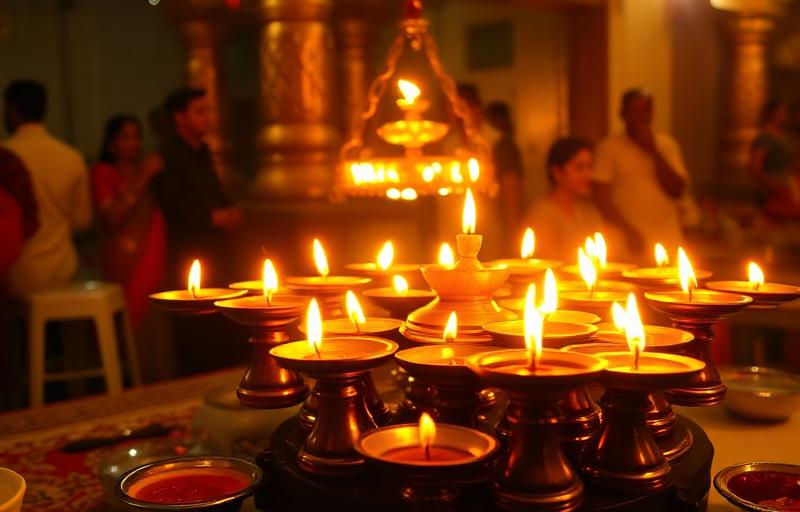
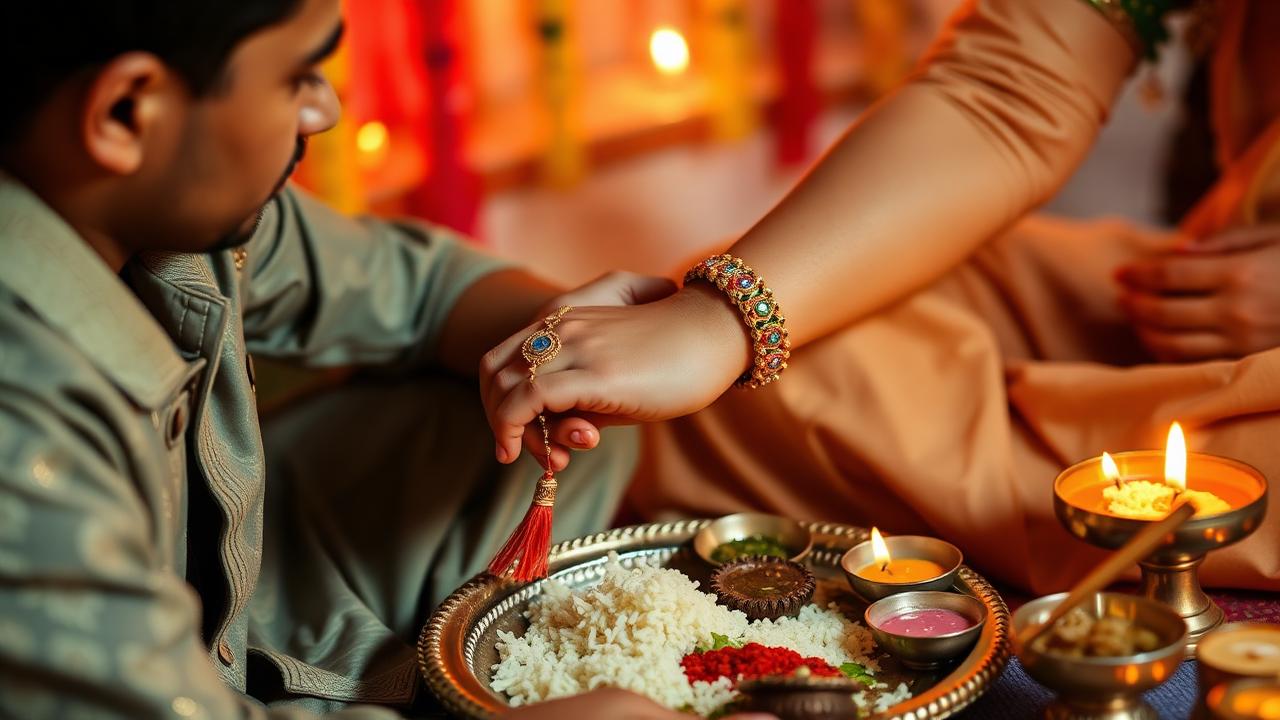
Raksha Bandhan's ritual core is simple and family-centred, built around the sister-brother bond rather than temple worship, though a puja thali gives it its structure.
- The puja thali: Prepared with roli (or kumkum), unbroken rice grains (akshat), a diya, sweets and the rakhi thread itself, arranged before the ceremony begins.
- Tilak and thread-tying: The sister applies a tilak on her brother's forehead, ties the rakhi on his right wrist, performs a small aarti with the diya, and offers him sweets, traditionally while he is seated facing east.
- The brother's role: In return, brothers offer gifts, historically a token of money or an item of the sister's choosing, and make a spoken or implicit promise of protection and support, the raksha the thread's name refers to.
- Avoiding Bhadra kaal: The rakhi thread is traditionally not tied during Bhadra, an inauspicious period calculated from the Panchang for each specific date; checking the exact Bhadra timing for 28 August 2026 in advance, through a temple, priest or a reliable Panchang source, avoids the ceremony falling in this window.
- For sisters without a brother nearby: Rakhi is commonly extended to cousins, close family friends treated as brothers, or tied symbolically at a temple deity's idol, particularly Bhagwan Krishna or Hanuman ji, keeping the spirit of the observance intact regardless of family structure.
- Shared food: The day typically closes with a meal the family eats together, often featuring the sister's or mother's specially prepared dishes, treated as part of the celebration rather than a separate event.
The emphasis throughout stays relational rather than ritually complex: the thread and the promise it represents matter more than any elaborate puja procedure surrounding it.
How to Structure One Day for Both Observances
With both Sawan Purnima and Raksha Bandhan falling on 28 August 2026, a loosely sequenced day works better than treating the two as competing priorities. A structure many households find workable:
- Early morning (before 8 am): Holy bath, brief Purnima prayers to Vishnu and Shiva, and, for those keeping one, the start of a Purnima fast.
- Mid-morning: A short, final Sawan abhishek at the home Shivling or a temple visit if the family's custom includes one, kept brief given the fuller day ahead.
- Checking Bhadra kaal timing: Before fixing the Rakhi ceremony's time, confirm when Bhadra kaal ends for 28 August 2026 through a Panchang or local temple, since this determines the earliest auspicious window for tying the thread.
- Late morning to afternoon: The Raksha Bandhan ceremony itself, once Bhadra kaal has passed, tilak, rakhi, aarti and the gift exchange, followed by the family meal.
- Afternoon to evening: For those keeping a Purnima fast, this is typically when it concludes, often timed around moonrise, which can be folded into the same evening as the Raksha Bandhan festivities rather than treated as a separate event.
- Evening: A closing diya at the Shivling, marking both the day's Purnima observance and the symbolic end of Sawan itself, since this is the month's final evening.
Families with siblings travelling in for Raksha Bandhan may find it simpler to keep the personal Purnima rituals minimal and private, in the early morning hours before guests arrive, reserving the more visible parts of the day for the shared family celebration. Neither observance requires the other to be reduced; sequencing them thoughtfully avoids the sense of a rushed or crowded day.
Muhurat Considerations for 28 August 2026
The most important timing consideration for 28 August 2026 is Bhadra kaal for the Rakhi-tying ceremony, since this period is traditionally avoided for the ritual regardless of how the rest of the day is planned. Bhadra timings shift each year based on the Panchang and are not fixed to a particular clock hour, which is why checking a current Panchang or a temple's published timing close to the date matters more than relying on a previous year's schedule.
Beyond Bhadra, a few other timing notes are worth keeping in mind:
- Aparahna kaal (the afternoon period, roughly between noon and sunset) is traditionally considered a generally favourable window for tying rakhi once Bhadra has passed, if no more specific muhurat is being followed.
- Pradosh kaal, the period around sunset, remains a good window for the day's closing Shiva prayers, particularly for households treating this evening as Sawan's final formal puja.
- Moonrise timing matters for those observing a Purnima fast strictly, since the fast traditionally concludes after the moon is visible, and this shifts the parana slightly later than a sunset-based fast would.
- Temple crowd timing: Given the overlap of Sawan's close, the fourth Somwar just having passed on 24 August, and Purnima itself, temples are likely to be busier than usual through the day; an early morning visit avoids the heaviest crowds if darshan is planned.
As with most Hindu festival timings, a local Panchang, priest or trusted temple source gives the most accurate reading for the specific date and location, since Bhadra and other calculations can vary slightly by region.
📿 The Vandnaa App's daily Panchang shows Bhadra kaal, Rahu kaal and puja muhurat for any date, including 28 August 2026, useful for confirming exact timings before the ceremony.
Quick Answers
Does Raksha Bandhan always fall on Sawan Purnima?+
Yes, every year, without exception. Raksha Bandhan is fixed to Shravan Purnima across most of the subcontinent, so it always coincides with the final day of the Sawan month in the Purnimant calendar.
What time should rakhi be tied on 28 August 2026?+
Avoid Bhadra kaal, which should be checked against a current Panchang closer to the date. Once Bhadra ends, the afternoon (aparahna kaal) is generally considered a favourable window.
Can I keep a Sawan Purnima fast and also celebrate Raksha Bandhan the same day?+
Yes, the two are not in conflict. Complete the morning Purnima rituals, keep the fast if observing one, and hold the Rakhi ceremony once Bhadra kaal passes, with the fast's parana following moonrise later in the day.
Is the Purnima-Raksha Bandhan overlap a rare event in 2026?+
No. This overlap happens every year by definition, since Raksha Bandhan is always observed on Shravan Purnima. What is genuinely unusual in 2026 is Nag Panchami falling on the same day as the third Sawan Somwar.
What if a sister doesn't have a brother to tie rakhi to?+
Rakhi is commonly extended to cousins or close family friends treated as brothers, or tied symbolically before a temple deity such as Bhagwan Krishna or Hanuman ji, keeping the observance's spirit intact.
About the author
Pandit Mahesh Trivedi · Festival Traditions & Panchang
Pandit Mahesh leads the festival-date and Panchang content on Vandnaa. He cross-references multiple regional panchangs (Drik, Vaishnava, Bengali, Marathi) for every festival date published on the site.
Meet the Vandnaa editorial team →Explore on Vandnaa
Related Articles
The Last Week of Sawan 2026: What to Prioritize Before the Month Ends
7 min read

As Sawan Ends: Transitioning Into Bhadrapada Month
7 min read
Raksha Bandhan 2026: Date, Shubh Muhurat, Puja Vidhi, Rakhi Mantras & Bhadra Timing
9 min read
Sawan 2026 Complete Calendar: Every Important Date You Need
7 min read