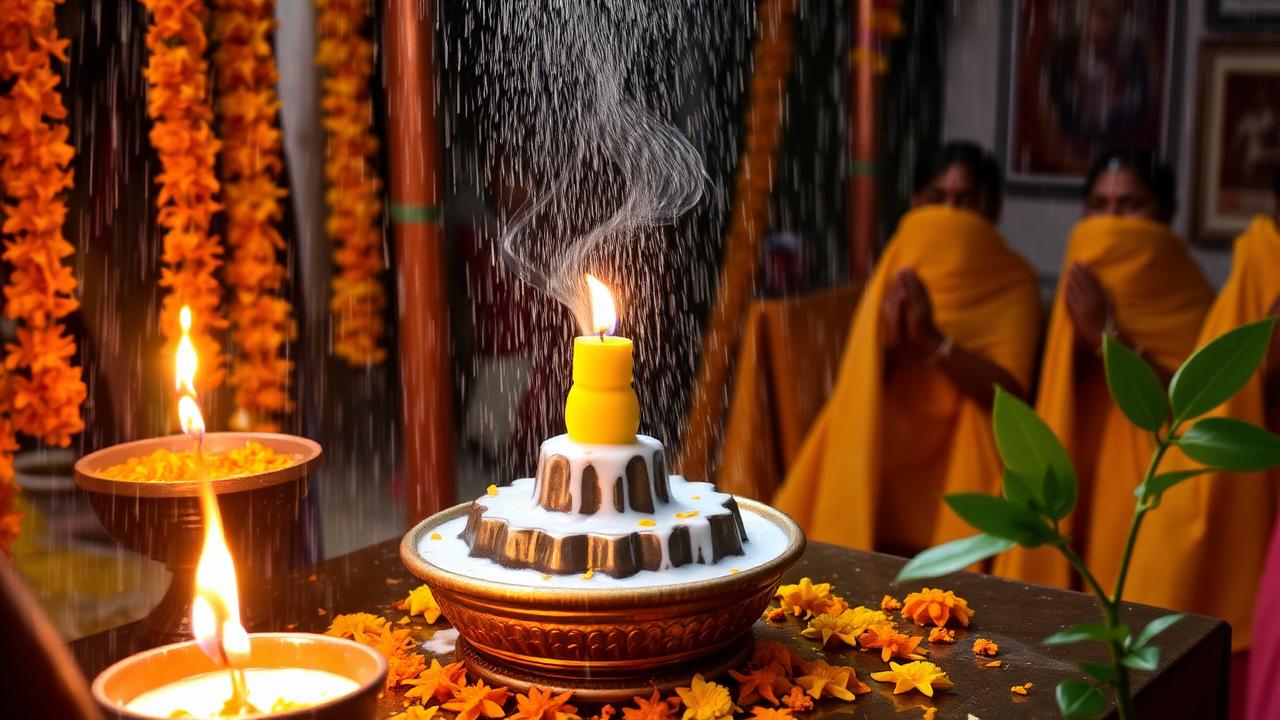
Why Sawan Is So Sacred
Sawan (Shravan) is the fifth month of the Hindu lunar calendar and the holiest month of Lord Shiva. Through these weeks of monsoon, devotees worship Shiva with special love, keep fasts, and offer water and bilva (bel) leaves on the Shivling.
Tradition holds that during the Samudra Manthan (churning of the ocean), Lord Shiva drank the deadly halahala poison to save creation, and to cool him the gods poured water and offered bel leaves. Because this happened in Shravan, devotees offer water and bel patra to Shiva all month to honour his sacrifice. Sawan is therefore a time of deep devotion, restraint and prayer, when Shiva's grace is believed to flow most freely.
Sawan Do's - What to Do
These practices invite Shiva's blessings through the month:
- Offer jalabhishek: Offer water (and on special days milk, honey or panchamrit) on the Shivling daily, ideally in the morning after bathing.
- Offer bel patra: Place bilva (bel) leaves on the Shivling - this is the most beloved offering to Shiva. Bhang, datura, white flowers and akshat are also offered.
- Chant Shiva mantras: Recite 'Om Namah Shivaya', the Mahamrityunjaya Mantra and the Shiv Chalisa or Rudrashtakam.
- Keep the Sawan Somwar vrat: Fast on Mondays for Shiva, and unmarried girls may keep the Solah Somvar or Mangala Gauri vrat.
- Wear rudraksha and offer a lamp: Light a ghee or oil lamp before Shiva and wear rudraksha as a mark of devotion.
- Practise charity and kindness: Donate food, feed cows, help the needy, and keep the mind calm, truthful and content.
- Visit a Shiva temple: Especially on Mondays and during the Sawan Shivratri, offer your prayers at a Shiva mandir.
Sawan Don'ts - What to Avoid
During this month of restraint and purity, devotees traditionally avoid:
- Non-vegetarian food and alcohol: Meat, fish, eggs and intoxicants are strictly avoided as the month is one of satvik living and purity.
- Onion and garlic: Many devotees avoid tamasic foods like onion and garlic to keep the body and mind calm and satvik.
- Green leafy vegetables: Tradition advises avoiding many green leafy vegetables in Shravan. The practical reason is that the monsoon makes them prone to insects and harder to digest.
- Milk on certain offerings / brinjal in Bhadrapada: Some avoid drinking milk in Sawan since it is offered to Shiva; brinjal (baingan) is avoided more in the following month, but many keep light satvik food.
- Anger, harsh words and quarrels: The month calls for peace, so avoid anger, gossip, lies and conflict.
- Cutting hair/nails or shaving (by some traditions): Some families avoid these and other worldly indulgences as a mark of discipline; this varies by region and custom.
- Disrespecting the Shivling or rituals: Never offer tulsi, ketaki flowers or haldi on the Shivling, and never offer broken bel leaves.
The Monday Vrat & Benefits of Following the Rules

The Sawan Somwar vrat: Monday is Lord Shiva's day, so the Mondays of Sawan are the heart of the month. On Sawan Somwar, devotees:
- Bathe early, take a sankalp and offer jalabhishek with bel patra on the Shivling.
- Keep a fast - some take only fruit and water (phalahar), others eat one satvik meal after the evening puja.
- Chant 'Om Namah Shivaya' and read the Sawan Somwar vrat katha.
- Unmarried girls often keep this vrat to pray for a good life partner, and married women for the well-being of their family.
Benefits of following the Sawan rules:
- The grace and blessings of Lord Shiva and Mata Parvati
- Peace of mind, purity and self-discipline
- Removal of obstacles and inner negativity
- Health benefits from the satvik, light monsoon-friendly diet
- Strength of will and a heart turned toward devotion
The true spirit of Sawan is not rigid rule-following but loving discipline - a month to simplify life, purify the heart, and draw close to Lord Shiva.
Common Questions From Devotees
Why are certain foods avoided in Sawan?+
Sawan is a month of satvik living, so non-vegetarian food, alcohol, onion and garlic are avoided to keep the body and mind pure. Green leafy vegetables are also avoided, partly because the monsoon makes them prone to insects and harder to digest.
What is the Sawan Somwar vrat?+
The Sawan Somwar vrat is the Monday fast for Lord Shiva kept on the Mondays of Shravan. Devotees offer jalabhishek with bel patra, chant 'Om Namah Shivaya', read the vrat katha and keep a fast. Unmarried girls often keep it to pray for a good life partner.
What should never be offered on the Shivling in Sawan?+
Tulsi leaves, ketaki flowers and haldi (turmeric) should never be offered on the Shivling, and bel leaves should not be broken or torn. The most beloved offerings to Shiva are water, bel patra, white flowers, datura and bhang.
What are the main do's of the Sawan month?+
Offer daily jalabhishek and bel patra on the Shivling, chant 'Om Namah Shivaya' and the Mahamrityunjaya Mantra, keep the Sawan Somwar vrat, light a lamp, practise charity and kindness, eat satvik food, and visit a Shiva temple - especially on Mondays.
About the author
Pandit Ravindra Sharma · Vedic Rituals & Bhakti, 22+ years
Pandit Ravindra is the Vandnaa editorial team's resident specialist on aarti, chalisa, and daily devotion. He has performed home and temple pujas across Varanasi and Delhi for over two decades and contributes the bhakti-focused articles on this site.
Meet the Vandnaa editorial team →