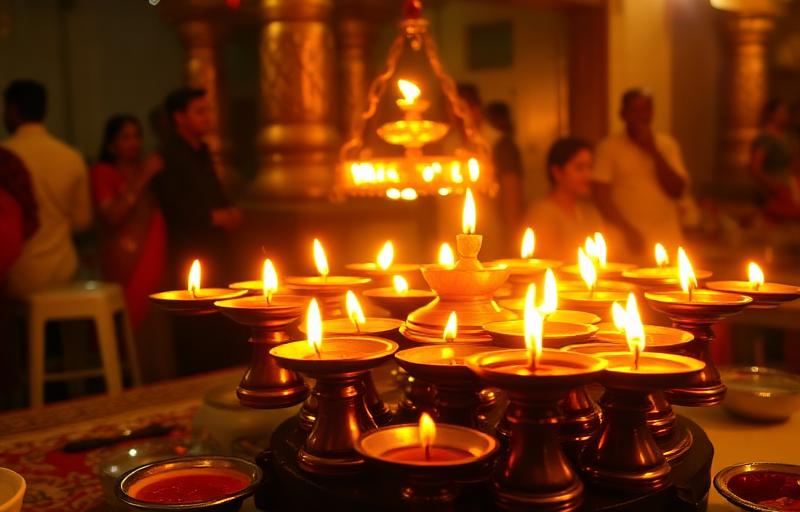
Why Couples Choose to Fast Sawan Somwar Together
Sawan Somwar vrat is, by most traditional accounts, an individual observance, a personal vow (sankalp) made between a devotee and Shiva, not a joint contract that requires two people. And yet, across a huge number of Indian households, couples end up fasting on the same Mondays anyway, and the reasons turn out to be more practical than doctrinal.
The most common driver is simply logistics. If one partner is cooking falahar meals and avoiding regular grains for the day, it is genuinely easier to prepare one kitchen's worth of vrat food than to cook two separate meals, one restricted and one normal, especially on a working weekday. Couples who have tried both report that the shared-kitchen version is far less friction, no one is tempted by the smell of the other person's regular dinner while trying to keep a fast.
The second driver is accountability. Fasting alone across four consecutive Mondays (3, 10, 17 and 24 August 2026 this year) takes discipline that is measurably easier to sustain with a partner also observing it, the same effect seen in any shared habit, from exercise to diet change. Neither partner wants to be the one who breaks the pattern first.
The third, and the one couples describe most often when asked what actually changed, is that praying together adds a relational dimension that solo vrat doesn't have. Sitting through the same evening aarti, reciting the same Om Namah Shivaya together, and breaking the fast at the same table turns an individual religious act into a small daily ritual of the relationship itself, independent of whether either partner is newly married or has been fasting together for twenty years.
None of this makes joint fasting more spiritually potent than fasting alone, tradition doesn't rank it that way, it simply makes the month more sustainable and, for many couples, more meaningful.
Must Both Partners Follow Identical Rules?
This is the single most common practical question couples ask, and the honest tradition-grounded answer is no, there is no scriptural requirement that both partners in a household keep vrat with identical strictness, and treating it as if there were often creates unnecessary friction.
Vrat has always had levels, recognised explicitly in most texts and by most priests: a full nirjal (waterless) fast, a phalahar (fruit and permitted food) fast, a single-meal fast, or simply avoiding grains and non-vegetarian food while eating normally otherwise. These are not a hierarchy where stricter automatically means more devout, they are options suited to different bodies, workloads and health conditions, and a couple can legitimately choose different levels for the same Monday.
Common real-world combinations that work:
- One partner keeps a full falahar fast while the other eats normal satvik food (no onion, garlic or non-veg) but doesn't restrict meals
- Both keep falahar but only one skips water for part of the day
- One partner fasts all four Mondays while the other, due to a health condition or heavy work travel, fasts only one or two
- A pregnant or breastfeeding partner keeps a modified, single-meal version while the other keeps the standard fast
What matters more than matching intensity is matching intention, both partners showing up for the parts of the practice that don't depend on stomach content: the puja itself, the temple visit, the evening diya, the mantra recitation. A couple where one person fasts strictly and the other prays sincerely without fasting is, by most traditional interpretation, both engaged in genuine vrat, just expressed through different physical commitments.
The friction usually isn't religious at all, it's about one partner feeling judged by the other's stricter choice, or guilty about their own less strict one. Naming that directly, rather than silently comparing, tends to resolve it faster than any scriptural argument would.
Supporting a Partner Who Is Struggling Mid-Vrat
Even among devotees who fast every Sawan by choice, some Mondays are genuinely harder than others, low blood sugar hitting by 4 pm, a bad headache, an unusually demanding workday on top of a restricted diet. How a partner responds in that moment matters more than most couples plan for in advance.
What actually helps, according to people who fast regularly:
- Not making the struggling partner feel guilty or weak for finding it hard, difficulty on a given day says nothing about sincerity of faith
- Having sendha namak, fruit, coconut water or milk ready and visibly available, rather than making the fasting partner get up and prepare it themselves when they're already low on energy
- Recognising the difference between ordinary vrat fatigue and warning signs, persistent dizziness, confusion, a racing heartbeat, that mean the fast should be broken, not pushed through
- Not pressuring a partner to continue a strict fast out of pride or comparison ("I did it, so can you") when their body is clearly signalling otherwise
- Simply sitting with them for ten minutes rather than problem-solving, sometimes the support needed is company, not a fix
On breaking a fast for health reasons: most priests and traditional teaching agree that breaking a vrat because the body genuinely cannot continue is not a spiritual failure, and a supportive partner's job in that moment is to make breaking the fast feel like the responsible choice it is, not a defeat. Sipping water, eating a small piece of fruit or having a cup of milk to stabilise blood sugar, then resting, is a completely acceptable way to end a difficult fasting day.
Couples who fast together for years describe this kind of support, showing up on the hard Mondays, not just the easy ones, as the actual substance of what makes joint vrat meaningful, more than any shared mantra or matching puja thali ever could be.
A Practical Shared Vidhi for the Evening Puja

A joint Sawan Somwar puja doesn't need to be more elaborate than a solo one, it needs a simple structure both partners can follow without one person leading while the other passively watches, which is where most couples' shared puja quietly breaks down within the first week or two.
A workable 15 to 20 minute shared vidhi:
- Clean the puja space together first, even wiping down the shivling or photo and lighting the diya as a two-person task rather than one
- Offer jal (water) or milk abhishek jointly, both hands on the lota if using a Shivling, pouring slowly while reciting Om Namah Shivaya together rather than one chanting and one silent
- Offer bel patra one at a time, alternating, each placing a leaf and saying a short personal prayer, out loud or silently, rather than one person offering all of them
- Read one chapter or a section of the Shiv Chalisa together, splitting verses between the two of you rather than one reading the whole thing while the other listens
- Sit for two to three minutes of silent japa side by side, using a rudraksha mala each if available, before closing with aarti
- Close with aarti together, one holding the thali while the other rings the bell, and switch roles across the four Mondays rather than always assigning the same task to the same person
The specific sequence matters less than the underlying principle: alternating who leads each element keeps the puja from becoming one partner's responsibility and the other's spectator activity. Couples who report their shared Sawan practice actually strengthening the relationship, rather than just being two people fasting in the same house, consistently describe this kind of deliberate role-switching as the difference.
📿 The Vandnaa App's Shiv Chalisa audio and puja vidhi guide can be played aloud during a joint puja, useful when neither partner has the full sequence memorised yet.
When One Partner Is More Devout Than the Other
Not every couple enters Sawan with matched enthusiasm, and this is arguably the more common real-world situation than the one where both partners are equally devout: one person wants to observe all four Mondays with full ritual, the other is willing to participate but wouldn't have initiated it alone, or worse, sees it as an obligation rather than a choice.
This mismatch, left unaddressed, tends to produce one of two unhelpful patterns: the less devout partner going through the motions resentfully, which both people can usually sense and which drains the practice of meaning, or the more devout partner scaling back their own observance to avoid feeling like they're imposing it, which leaves them quietly unsatisfied.
A better approach most couples eventually find:
- The more devout partner keeps their full practice without requiring matching participation, tradition never required a spouse's involvement for vrat to count
- The less devout partner is invited, specifically invited, to join only the parts they find meaningful, perhaps the evening diya or a Sunday dinner conversation about what the month means, rather than the full puja
- Neither partner treats the other's different relationship with faith as something to fix or convert, differing devotion levels within one household are extremely common and not, by themselves, a problem
- Curiosity is a better opener than pressure, "would you want to light the diya with me tonight" invites participation in a way that "you should be doing this too" does not
Some of the most enduring shared Sawan practices Vandnaa has heard about from readers didn't start with two equally devout partners, they started with one person's consistent, unpressured practice that the other partner gradually found themselves drawn to join, often years into the marriage, not the first Sawan. Devotion, like most things in a long relationship, tends to travel better as invitation than as expectation.
What Carries Over Once Sawan Ends
With Sawan closing on 28 August this year, the same day as Raksha Bandhan, couples who have spent four Mondays building a shared practice often face a quieter question than the one they started with: does any of this continue, or was it specific to the season?
Most couples who sustain a devotional habit beyond Sawan describe scaling down rather than stopping entirely. Full falahar fasting on every Monday of the year is rare and not expected by tradition, but the smaller, relational parts of what worked, praying together at the same time each week, alternating who leads the puja, checking in about how the practice felt, tend to survive far better because they never depended on the restrictive eating in the first place.
What couples most often keep going:
- A weekly ten-minute joint puja on Mondays, without the fasting attached
- Occasional full-vrat Mondays tied to other occasions, Pradosh, a personal anniversary, rather than needing Sawan's calendar to justify it
- The habit of discussing, briefly, what the week's practice meant to each of them, a conversation many couples say they wouldn't have started without Sawan prompting it
- Keeping the shared puja corner set up rather than dismantling it once the month ends
What rarely survives, and probably shouldn't be forced to, is the full intensity of four consecutive weeks of dietary restriction. That specific rigour belongs to Sawan's particular religious calendar and doesn't need to be replicated year-round for a couple's shared devotion to remain genuine.
The honest measure of whether joint Sawan vrat "worked" for a couple isn't whether they kept every rule identically for thirty days, it's whether they're still praying together, in whatever smaller form, once the reason to do so stops being a fixed date on the calendar.
Frequently Asked Questions
Do both husband and wife need to fast on the same Sawan Mondays?+
No, there is no requirement for both partners to fast on identical days. Many couples choose to align schedules for convenience, but vrat is traditionally an individual vow, and one partner can fast while the other participates only in the puja.
Can a couple keep different levels of fasting on the same day?+
Yes. One partner can keep a strict falahar or nirjal fast while the other observes a lighter version, such as avoiding grains and non-vegetarian food without skipping meals entirely. Both are considered valid forms of vrat.
What should we do if one partner cannot continue the fast mid-day?+
Break it. Offer water, fruit, coconut water or milk to stabilise them, and treat it as a responsible decision, not a failure. Persistent dizziness, a racing heartbeat or confusion are clear signs to stop immediately.
Is joint puja considered more spiritually beneficial than praying separately?+
Tradition does not rank joint puja above individual prayer in spiritual merit. What joint practice offers is relational value and mutual accountability, which many couples find helps them sustain the month more consistently.
What if my partner isn't interested in observing Sawan at all?+
Continue your own practice without expecting matching participation, and invite them only to the parts they might find meaningful, such as the evening diya, rather than pressuring full involvement. Differing devotion levels within a household are common.
Can newly married and long-married couples both benefit from fasting together?+
Yes, the practical and relational benefits, shared meals, accountability, a joint ritual, apply regardless of how long a couple has been married. It is not a practice specific to newlyweds.
About the author
Pandit Mahesh Trivedi · Festival Traditions & Panchang
Pandit Mahesh leads the festival-date and Panchang content on Vandnaa. He cross-references multiple regional panchangs (Drik, Vaishnava, Bengali, Marathi) for every festival date published on the site.
Meet the Vandnaa editorial team →Explore on Vandnaa
Related Articles

Keeping a Sawan Vrat Diary: Why Some Devotees Track Their Month
7 min read

Sawan Somwar Vrat When You're Unwell: What Tradition Permits
7 min read
Sawan Somwar 2026: Dates, Vrat Vidhi, Shiv Mantras & Why Mondays in Sawan Are So Powerful
10 min read
Mangala Gauri Vrat - Shravan Tuesdays Puja Vidhi, Katha & Benefits
9 min read