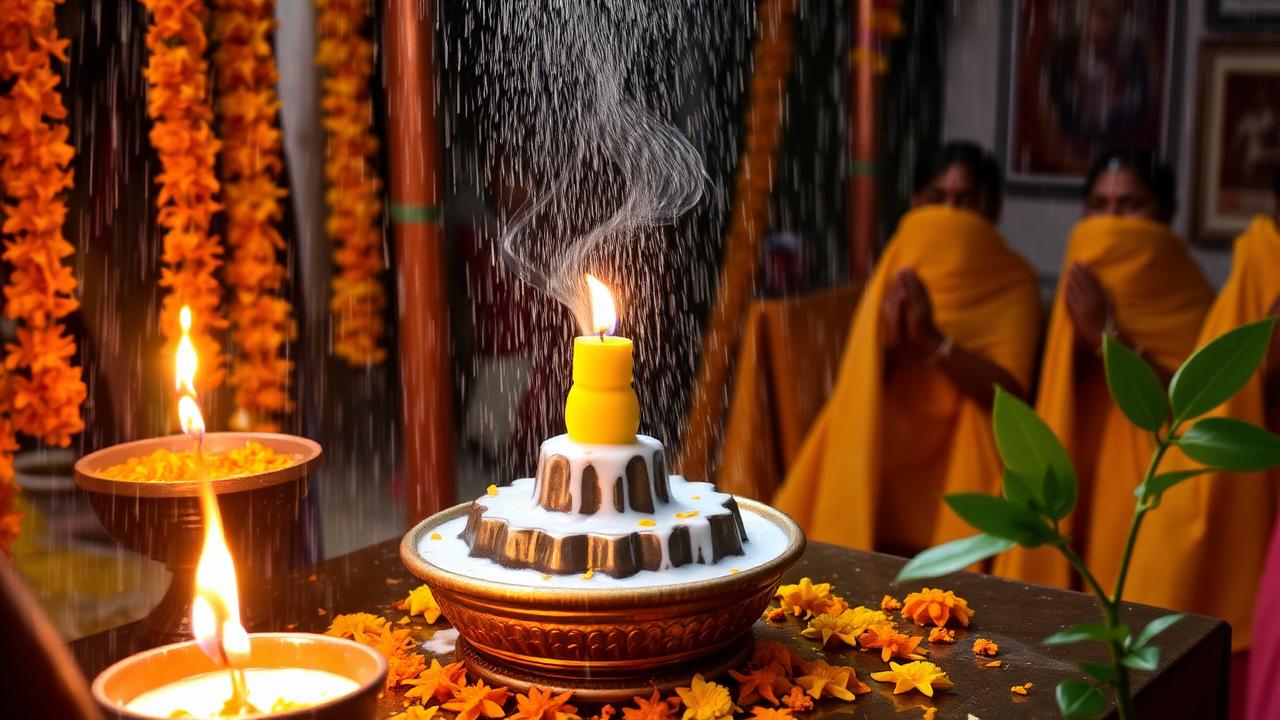
The Real Challenge: Balancing Career and Vrat
For a working woman, the traditional image of Sawan Somwar - unhurried predawn bathing, an hour-long abhishek, a leisurely katha reading, all before a single evening meal - rarely survives contact with an 8 AM commute and a 9:30 stand-up meeting. The real question most working women bring to this vrat is not 'should I observe it' but 'how do I observe it without falling apart by 11 AM.'
The good news, repeated by priests and experienced devotees alike, is that Sawan Somwar vrat has never required a fixed time-length to be valid. What matters is the sequence and sincerity of the ritual - a brief but complete puja carries the same spiritual weight as an elaborate one performed at leisure. The vrat was never designed exclusively for a life with unlimited morning hours; it has simply been passed down mostly through households where someone had that time to give it.
What actually derails working women is not lack of devotion but poor logistics: samagri scattered and hard to find in a rush, no falahar prepped the night before, and an energy crash by midday from skipping the midday meal a body used to eating needs. Every one of these is a planning problem, not a faith problem, and every one of them is fixable with about fifteen minutes of preparation the night before.
This guide is built around a single premise: you do not need more time than you have. You need a routine sized to the time you actually have, repeated consistently across all four Mondays of Sawan 2026 - 3, 10, 17 and 24 August.
A 20-Minute Morning Puja Before Office
A complete, unhurried-feeling puja is achievable in 20 minutes if the samagri is ready the night before. Here is a routine built specifically around an office morning:
The night before (5 minutes): Lay out your Shivling or Shiv photo, a small abhishek vessel, milk (measured into a small container so you are not opening the fridge half-asleep), bel patra if you have access to a plant nearby, and a diya with oil or ghee already filled.
Morning, 20-minute sequence: 1. 0-5 min: Quick bath, clean clothes (even simple, not necessarily new). 2. 5-10 min: Water abhishek followed by milk abhishek over the Shivling, chanting Om Namah Shivaya continuously rather than counting a fixed number - let the chant fill the time rather than watching a clock. 3. 10-15 min: Offer bel patra, light the diya and incense, and do a short aarti - even four lines of the Shiv Chalisa's opening verses works if the full text is too long. 4. 15-20 min: A minute of silent prayer stating your intention for the day, then a quick pranam to close.
This structure deliberately skips a lengthy katha reading on weekday mornings - save that for the evening or the weekend Somwar if one falls conveniently, and do not feel this shortens the vrat's merit. A focused 20 minutes with full attention outperforms 45 distracted minutes every time, according to how most priests frame the value of puja.
📅 The Vandnaa App can send a puja reminder timed to your usual wake-up hour on every 2026 Sawan Somwar, so the morning routine starts on schedule without you tracking dates manually.
Desk-Friendly Falahar Ideas
The biggest practical failure point for working women on Sawan Somwar is not the puja - it is reaching 1 PM with nothing appropriate to eat and either breaking the vrat improperly or going hungry until an exhausted evening.
Carry-to-office falahar that travels well:
- Roasted makhana (fox nuts) - lightly salted with sendha namak, keeps for hours in a small box, genuinely filling.
- Fruit - banana, apple, or pomegranate are low-mess options that need no cutlery at a desk.
- Sabudana or kuttu chivda - a dry, roasted mix that travels like regular namkeen and does not need reheating.
- Dry fruits and soaked almonds - a small pouch of these covers a mid-morning or afternoon dip in energy without any prep at the office.
- Coconut water or buttermilk in a flask - covers hydration alongside food, particularly useful in Sawan's humid weather.
What to prep the night before: if your workplace has a fridge or pantry, a small tiffin of sabudana khichdi or kuttu paratha (made with sendha namak, no onion-garlic) can be eaten cold or reheated for a proper midday meal rather than snacking through the day on nuts alone.
A realistic accommodation: if your office canteen or the people you eat with do not make falahar practical at lunch, it is acceptable within most interpretations of the vrat to shift your one proper meal to right after you reach home, treating the office hours as the 'fasting window' and eating a fuller falahar meal in the evening before or after puja - just keep grains out of it until the vrat formally closes for the day.
Managing Energy Levels During Work Hours

Sawan falls in India's monsoon season, which brings its own energy challenges - humidity, lower natural light on overcast days, and a general sluggishness that combines poorly with a reduced-calorie fasting day at a desk job.
Practical energy management through the workday:
- Front-load hydration. Drink a full glass of water or coconut water before you even reach the office, since a fasting day with dehydration on top is what typically causes headaches and fatigue by late morning, not the fasting itself.
- Keep blood sugar stable, not spiked. A handful of nuts or makhana every 2-3 hours works better than one large falahar meal followed by a long gap, especially for anyone prone to concentration dips.
- Avoid back-to-back caffeine. Tea and coffee on a lighter-calorie day can cause jitteriness or an afternoon crash harder than usual - one cup in the morning is generally fine, but avoid your usual 3-4 cups.
- Step away from the screen briefly if foggy. A five-minute walk, even indoors, tends to help more than pushing through a concentration dip at your desk.
- Plan demanding meetings earlier in the day where possible, since energy for most people fasting on falahar tends to dip more noticeably after 3 PM.
If you notice genuine weakness - not just tiredness but dizziness, cold sweats, or difficulty focusing that does not lift with food and water - that is a signal to eat a fuller meal immediately rather than push through for the sake of ritual strictness. No vrat tradition asks a devotee to risk fainting at their desk; adjusting is not failure.
The Evening Catch-Up Ritual After Work
For most working women, the evening after office hours is when the vrat's more elaborate elements - a longer aarti, the katha reading skipped in the morning rush, and the main falahar meal - actually happen. Building this into a predictable slot makes it far more sustainable across all four Mondays than trying to squeeze everything into the morning.
A realistic evening sequence, roughly 30-40 minutes: 1. Change out of office clothes and wash up before returning to the puja space - this small reset matters more than it seems for shifting out of 'work mode.' 2. A second, brief abhishek if your morning one was rushed - even a small top-up with water and a few drops of milk while re-chanting Om Namah Shivaya. 3. Read or listen to the katha you skipped in the morning - an audio version playing while you cook or prep dinner counts, since listening with attention is considered as valid as reading aloud. 4. The main falahar meal - this is when a fuller sabudana khichdi, kuttu paratha, or fruit-and-milk spread makes sense, since you have time to actually cook and eat without rushing. 5. A short gratitude prayer closing the day's vrat, acknowledging that the fast is now formally over for the day.
This two-part structure - a focused morning puja and a fuller evening close - is, if anything, closer to how many traditional households have always practised Sawan Somwar, since a full day of ritual observance naturally has a morning and evening rhythm even without a 9-to-6 job shaping it.
Weekend, Work-From-Home and Office-Day Variations
Not every Sawan Somwar in 2026 will look the same for a working woman, and it helps to plan each of the four Mondays (3, 10, 17, 24 August) with its actual context in mind rather than one rigid template.
If a Somwar falls on a work-from-home day: this is your easiest version of the vrat. Use the extra time saved from commuting for a longer morning puja, and consider reading the full katha rather than deferring it to evening, since your schedule has more natural breaks through the day.
If it falls on a heavy office day (client meetings, travel, back-to-back calls): lean fully on the 20-minute morning structure and the evening catch-up described above. It is also entirely acceptable to do a shorter aarti with just the core mantra repeated a few times rather than a full recitation if even 20 minutes feels tight - a two-minute sincere prayer said while genuinely present outperforms a rushed 20-minute one said while mentally elsewhere.
If work travel makes home puja impossible: carrying a small travel puja kit - a compact idol or picture, a few grains of akshat, a tiny bottle for water - lets you do a token abhishek even in a hotel room. Many devotees simply visit any nearby Shiva temple instead when travelling, which fulfils the same intention.
A closing thought for the month: across all four Mondays, the version of the vrat that survives an entire working month is rarely the most elaborate one - it is the one flexible enough to bend around a real calendar without breaking.
Quick Answers
How can working women manage Sawan Somwar vrat with office hours?+
By splitting the ritual into a focused 20-minute morning puja before office and a fuller evening session after work, with falahar prepped the night before so nothing is rushed on the day itself.
Is a 20-minute puja enough for Sawan Somwar?+
Yes. Tradition places more weight on sincerity and correct sequence than on duration. A focused 20-minute abhishek and prayer carries full spiritual value, especially on a workday.
What falahar can I carry to office on Sawan Somwar?+
Roasted makhana, fruit, sabudana or kuttu chivda, dry fruits and a flask of coconut water or buttermilk all travel well and need no reheating or cutlery at a desk.
How do I avoid energy crashes while fasting at work?+
Front-load hydration before reaching office, eat small amounts every 2-3 hours instead of one large meal, limit caffeine, and eat a fuller meal immediately if you feel genuinely weak or dizzy.
What if I cannot do a full puja on a busy work day?+
A short, sincere prayer with the core Om Namah Shivaya mantra repeated a few times is considered more valuable than a rushed, distracted full ritual. You can complete the fuller katha and aarti in the evening instead.
About the author
Pandit Mahesh Trivedi · Festival Traditions & Panchang
Pandit Mahesh leads the festival-date and Panchang content on Vandnaa. He cross-references multiple regional panchangs (Drik, Vaishnava, Bengali, Marathi) for every festival date published on the site.
Meet the Vandnaa editorial team →