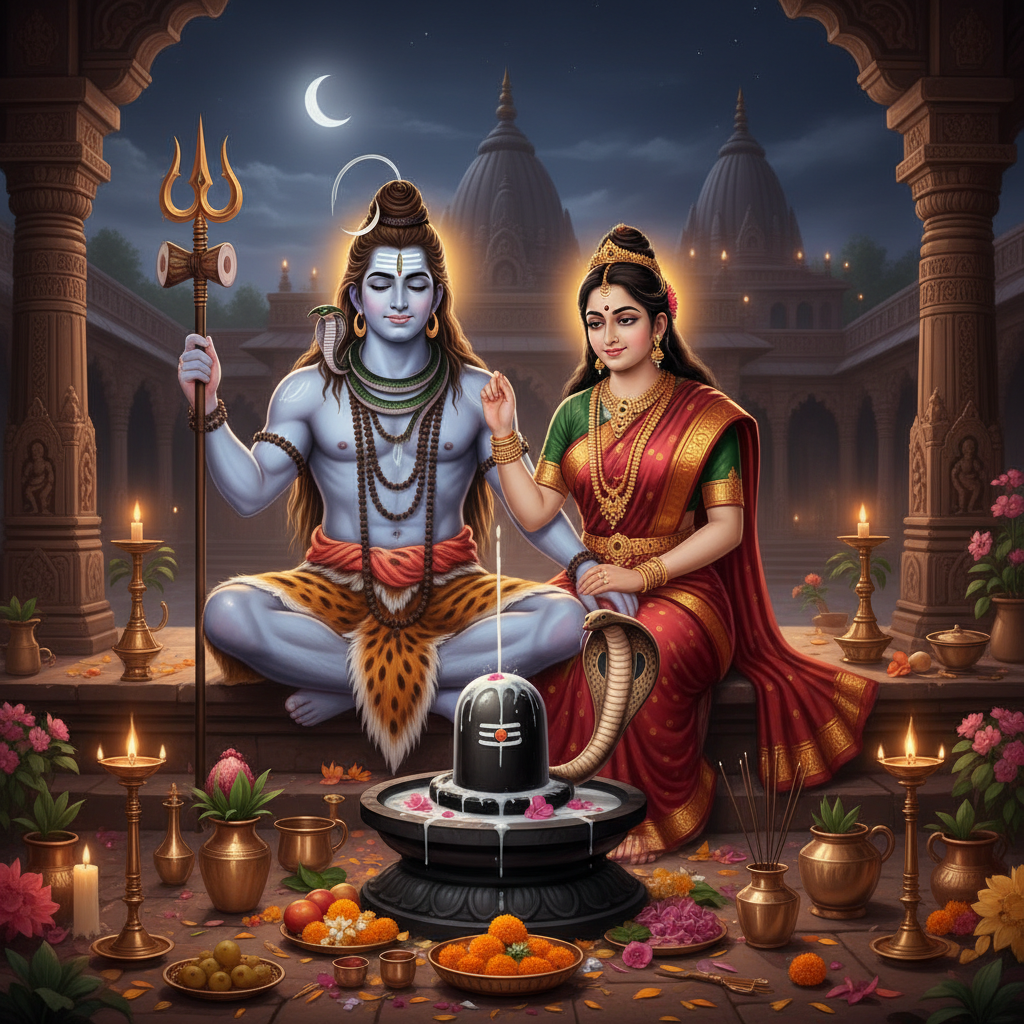
What Is the Shiv Tandav Stotram?
The Shiv Tandav Stotram is a magnificent hymn to Lord Shiva, describing his tandava - the cosmic dance of creation and dissolution. It is famed for its thundering rhythm and vivid imagery of Shiva with the Ganga in his matted locks, the crescent moon, the serpent garland and the damaru.
By tradition it was composed by Ravana, the mighty king of Lanka and a supreme devotee of Shiva. The hymn is among the most powerful and beloved Shiva stotras, chanted especially on Mondays, Shivaratri and Pradosh.
The Story Behind It - Ravana & Mount Kailash
The story tells that Ravana, proud of his strength, once tried to lift Mount Kailash, the abode of Shiva. With a gentle press of his toe, Lord Shiva pinned the mountain down, trapping Ravana's arm beneath it.
In unbearable pain yet overflowing with devotion, Ravana sang this spontaneous hymn in praise of Shiva. So moved was the Lord by its beauty and bhakti that he freed Ravana, blessed him, and gave him the sword Chandrahasa. The stotra is therefore a hymn born of pure surrender, where even pride dissolved into devotion before Mahadeva.
Lyrics with Meaning (Opening Verses)
Verse 1: Jatatavi galajjala pravaha pavitasthale Gale avalambya lambitam bhujangatungamalikam Damad damad damaddama ninnadavadamarvayam Chakara chandtandavam tanotu nah shivah shivam
Meaning: From his matted hair flows the sacred Ganga, purifying the ground; a garland of mighty serpents hangs on his neck; his damaru sounds damat-damat - may that Shiva, performing the fierce tandava, grant us auspiciousness.
Verse 4 (refrain of devotion): Jata bhujanga pingala sphurat phana mani prabha Kadamba kunkuma drava pralipta digvadhumukhe Mada andha sindhura sphuratvaguttariya medure Mano vinodam adbhutam bibhartu bhuta bhartari
Meaning: With the glow of the gem on the hood of the coiled serpent reddening the faces of the directions, clad in the skin of a wild elephant - may my mind find wondrous delight in Shiva, the sustainer of all beings.
The full stotram has fourteen to seventeen verses, each building the same surging rhythm. Reciting even a few verses daily with devotion is considered highly auspicious.
Benefits & How to Chant

Benefits:
- Removes fear, negativity and obstacles
- Builds confidence, focus and inner strength
- Deepens Shiva bhakti and calms the restless mind
- Believed to bring Shiva's grace, courage and protection
How to chant: 1. Best chanted on Mondays, Pradosh, Shivaratri or daily in the morning or evening. 2. Bathe, sit before a Shivling or Shiva image, and light a ghee or oil lamp. 3. Offer bilva (bel) leaves and water to the Shivling. 4. Recite the stotram with steady rhythm and full attention - the power lies in its cadence. If you cannot do all verses, recite the opening verses sincerely. 5. End with 'Om Namah Shivaya' and a moment of silent meditation.
What People Ask Most
Who wrote the Shiv Tandav Stotram?+
By tradition, the Shiv Tandav Stotram was composed by Ravana, the king of Lanka and a great devotee of Shiva, while pinned under Mount Kailash. Moved by his devotion, Lord Shiva freed and blessed him.
What is the best time to chant Shiv Tandav Stotram?+
Mondays, Pradosh kaal, Shivaratri, and the Shravan month are especially auspicious. It can also be chanted daily in the morning or evening before a Shivling or Shiva image with a lamp lit.
Do I have to chant all the verses?+
No. While reciting the full stotram is most complete, chanting even the opening verses with devotion and correct rhythm is considered highly beneficial. Sincerity and attention matter most.
What are the benefits of the Shiv Tandav Stotram?+
It is believed to remove fear and obstacles, build confidence and inner strength, calm the mind, and bring Shiva's grace, courage and protection to the devotee.
About the author
Acharya Vinaya Kapoor · M.A. Sanskrit, Mantra & Stotra Studies
Acharya Vinaya holds an M.A. in Sanskrit from Banaras Hindu University and writes the mantra and stotra commentary on Vandnaa. Her focus is on accurate pronunciation, traditional context, and helping modern readers connect with classical texts.
Meet the Vandnaa editorial team →