What Is the Shiva Ashtakam?
An ashtakam is a devotional hymn of eight verses (ashta means eight). The Shiva Ashtakam is a beloved eight-verse praise of Lord Shiva, with each stanza ending in the refrain bhajami Shankaram - 'I worship Shankara'.
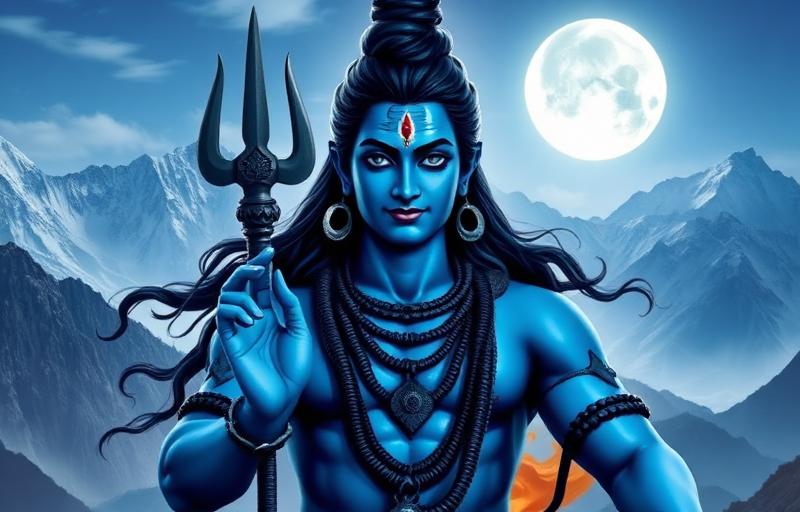
The hymn pictures Shiva in his full majesty: lord of all beings, master of the three worlds, adorned with serpents and the crescent moon, his throat blue from the cosmic poison, ever immersed in meditation on Mount Kailasa. It is short enough to learn by heart yet rich enough to carry the devotee into deep remembrance of the Lord.
The Opening Verse & Its Meaning
Sanskrit: प्रभुं प्राणनाथं विभुं विश्वनाथं जगन्नाथनाथं सदानन्दभाजम्। भवद्भव्यभूतेश्वरं भूतनाथं शिवं शङ्करं शम्भुमीशानमीडे॥
Transliteration: Prabhum prananatham vibhum vishwanatham Jagannathanatham sadanandabhajam Bhavadbhavyabhuteshwaram bhutanatham Shivam shankaram shambhumishanamide
Meaning: I praise that Lord who is the master of life, the all-pervading lord of the universe, the lord of the lords of the world, ever immersed in bliss. He is the lord of all that was, will be and exists, the lord of all beings - Shiva, Shankara, Shambhu, Ishana. Each grand name in this verse points to one truth: Shiva is the supreme refuge of every living being.
The Imagery of the Eight Verses
Through its eight stanzas the Ashtakam unfolds a complete vision of Shiva:
- The lord of the universe (Vishwanatha), beyond birth and death, ever blissful.
- The ascetic lord of Kailasa, smeared with sacred ash, lost in deep meditation.
- The one adorned with serpents, the crescent moon and matted locks, holding the Ganga in his hair.
- The blue-throated Neelkantha, who drank the halahala poison to save the worlds.
- The compassionate giver of liberation, refuge of sages, gods and humble devotees alike.
Each verse closes by returning to the same loving act - bhajami Shankaram, I worship Shankara - so the whole hymn becomes a steady, rhythmic offering of the heart.
Benefits of Reciting the Shiva Ashtakam

Reciting the Shiva Ashtakam with devotion is believed to bring:
- The grace and protection of Lord Shiva in daily life.
- A calm, focused mind, as the steady refrain settles the thoughts.
- Removal of fear and obstacles, and courage to face hardship.
- Spiritual progress, drawing the heart toward detachment and inner peace.
How to recite: After a bath, sit before a Shivling or image of Shiva, light a lamp, offer bilva (bel) leaves and water, and chant the eight verses with feeling. It is especially recited on Mondays, Pradosh, Maha Shivratri and during Shravan, and is gentle enough to make part of a daily routine.
Reader Questions Answered
What does 'ashtakam' mean?+
Ashtakam means a hymn of eight verses, from the Sanskrit word ashta (eight). The Shiva Ashtakam is therefore an eight-verse praise of Lord Shiva, each verse ending with the refrain 'bhajami Shankaram'.
What does the opening verse 'Prabhum Prananatham' mean?+
It praises Shiva as the master of life (Prananatha), the all-pervading lord of the universe (Vishwanatha), the lord of all worldly lords, ever blissful, and the lord of all beings - Shiva, Shankara, Shambhu and Ishana.
How is the Shiva Ashtakam different from the Mahimna Stotram?+
The Shiva Ashtakam is a short eight-verse hymn easy to learn and recite daily, while the Shiva Mahimna Stotram is a longer poem of around forty verses by Pushpadanta dwelling at length on the Lord's boundless glory. Both praise Shiva with deep devotion.
When should the Shiva Ashtakam be recited?+
It can be recited daily, and is especially auspicious on Mondays, Pradosh, Maha Shivratri and through Shravan. Reciting it after a bath before a Shivling with bilva leaves and a lamp is the traditional way.
About the author
Acharya Vinaya Kapoor · M.A. Sanskrit, Mantra & Stotra Studies
Acharya Vinaya holds an M.A. in Sanskrit from Banaras Hindu University and writes the mantra and stotra commentary on Vandnaa. Her focus is on accurate pronunciation, traditional context, and helping modern readers connect with classical texts.
Meet the Vandnaa editorial team →