The Katha, Simply Told
When King Bhagiratha performed intense tapasya to bring the celestial river Ganga down to earth, to purify the ashes of his ancestors, the gods knew that Ganga's powerful descent, if unchecked, could flood and devastate the entire earth. So Shiva agreed to receive Ganga in his own matted locks, breaking her fall and releasing her gently in gentle streams onto the earth below.
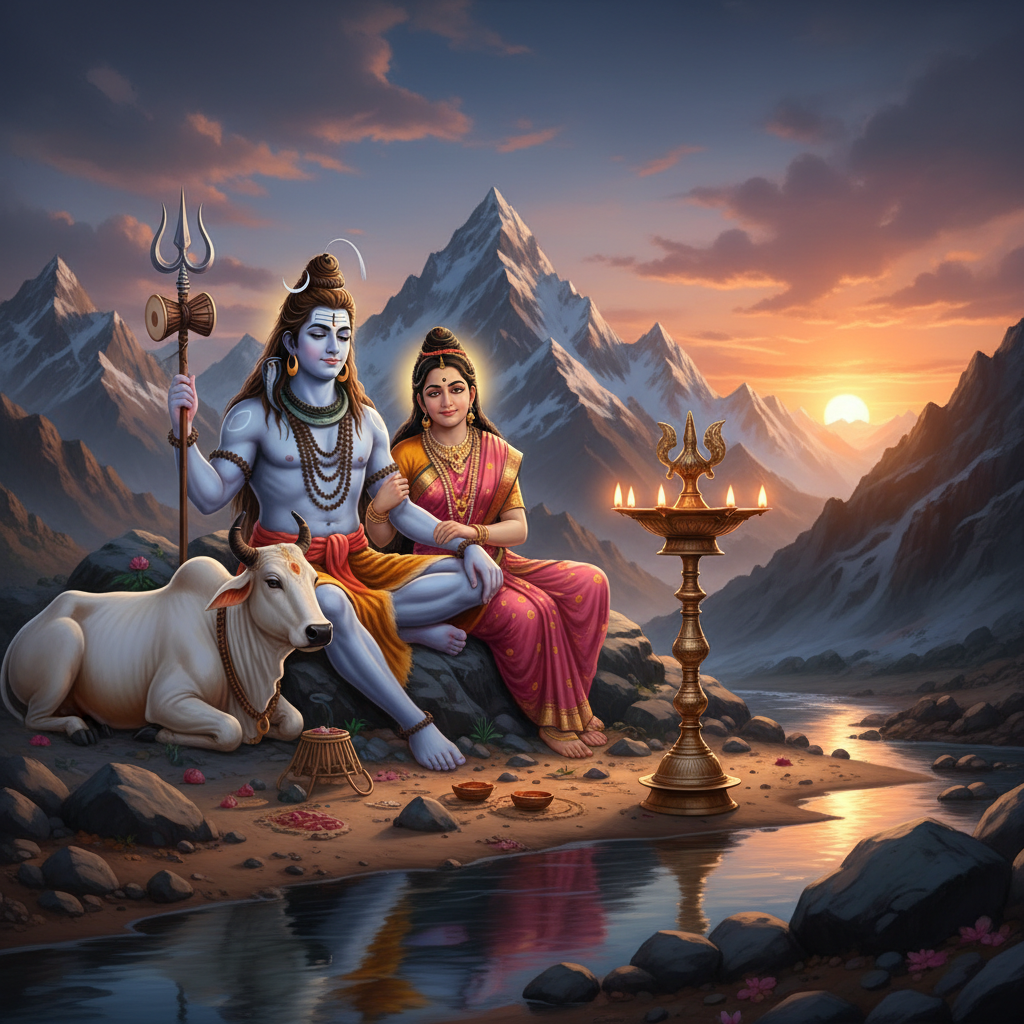
In several regional and folk tellings, this event caused a moment of very human tension at home. Parvati, seeing another goddess so intimately settled in her husband's hair, close to him at all times, is said to have felt a flash of jealousy and displeasure. Some versions describe her expressing her feelings openly to Shiva, while others describe a more playful, teasing complaint rather than genuine anger.
Shiva, in these tellings, is said to have gently reassured Parvati, explaining that Ganga's place in his hair was necessary to save the earth from destruction, not a matter of the heart, and that Parvati's place beside him, as his eternal consort, Shakti herself, remained unchanged and unthreatened.
Scriptural Context
The main event, Ganga's descent and Shiva receiving her in his hair, is recorded in the Ramayana's Bala Kanda and in several Puranas, including the Shiva Purana, as part of the larger Bhagiratha and Ganga Avataran narrative. The domestic episode of Parvati's reaction, however, belongs more to regional folk retellings and oral storytelling traditions rather than the principal Sanskrit texts.
These folk additions are common in Shiva-Parvati mythology and are valued precisely because they humanise the divine couple, offering devotees relatable emotional moments layered onto the grander cosmic events described in the core scriptures.
Symbolic Meaning
This katha, though gentle and almost playful in tone, carries a meaningful message about trust within relationships. Ganga's presence in Shiva's hair is functional and protective, not romantic, a reminder that closeness in one context does not threaten a deeper, established bond in another.
Parvati's momentary jealousy, far from being portrayed as a flaw, is shown with warmth and understanding, an honest human emotion even divine figures are shown experiencing, before it gives way to trust and reassurance. The story suggests that insecurity, when met with patient honesty rather than dismissal, can dissolve naturally within a loving relationship.
What It Teaches Devotees

- Honest communication resolves insecurity: Shiva's gentle explanation, rather than dismissal, is what reassures Parvati in the story.
- Closeness in one role does not threaten a deeper bond: Ganga's place is practical, while Parvati's place as Shakti remains foundational and unique.
- Even divine figures are shown with relatable emotions: the story does not shy away from showing a very human moment of jealousy, treating it with gentleness rather than judgment.
- Trust grows through patience, not suppression: the resolution comes through open acknowledgment of feelings, not by ignoring them.
How It Is Remembered Today
This katha is often shared in folk storytelling traditions, particularly in parts of North India where Ganga worship and Shiva-Parvati devotion overlap closely, such as around Haridwar and other Ganga pilgrimage towns. It is retold with warmth rather than seriousness, often bringing a smile to listeners even during otherwise solemn devotional gatherings.
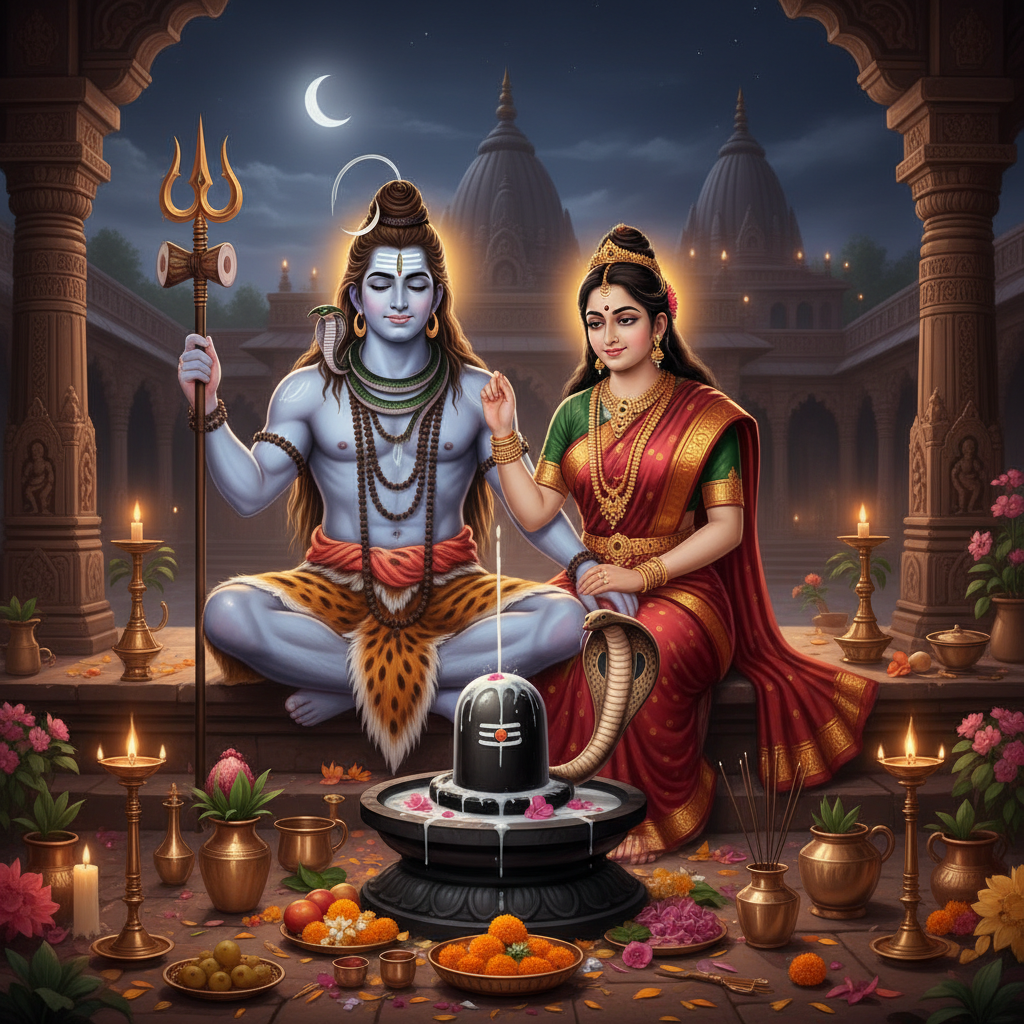
The episode also gently reinforces why both Ganga and Parvati are honoured together in Shiva iconography, with temple depictions sometimes showing Ganga as a small figure within Shiva's hair alongside Parvati at his side, symbolising their respective, non-competing places in his form.
Takeaway
This gentle katha of Parvati's reaction to Ganga endures because it makes the divine relatable, showing that even the most secure bonds can hold small, human moments of doubt that dissolve through honesty and trust. Devotees find comfort in seeing their own feelings reflected in the stories of gods they love. Worship of Shiva, Parvati and Ganga together is an act of faith and love, not a transaction.
Common Questions From Devotees
Why did Parvati feel jealous of Ganga?+
In folk retellings, Parvati felt a moment of jealousy seeing Ganga settled closely in Shiva's hair, though Shiva reassured her that Ganga's place there was practical and protective, not a matter of the heart.
Why did Ganga need to descend through Shiva's hair?+
Ganga's powerful descent from the heavens would have devastated the earth if unchecked, so Shiva received her in his matted locks to soften her flow before releasing her gently onto the ground.
What does this katha teach about relationships?+
It teaches that honest communication and patience can resolve insecurity, and that closeness in one role does not have to threaten a deeper, established bond.
About the author
Anjali Mehta · Editor, M.A. Religious Studies
Anjali is the managing editor for Vandnaa and oversees the festival and vrat coverage. She holds an M.A. in Religious Studies and reviews every published article for accuracy, accessibility, and tradition-fidelity.
Meet the Vandnaa editorial team →