The Katha, Simply Told
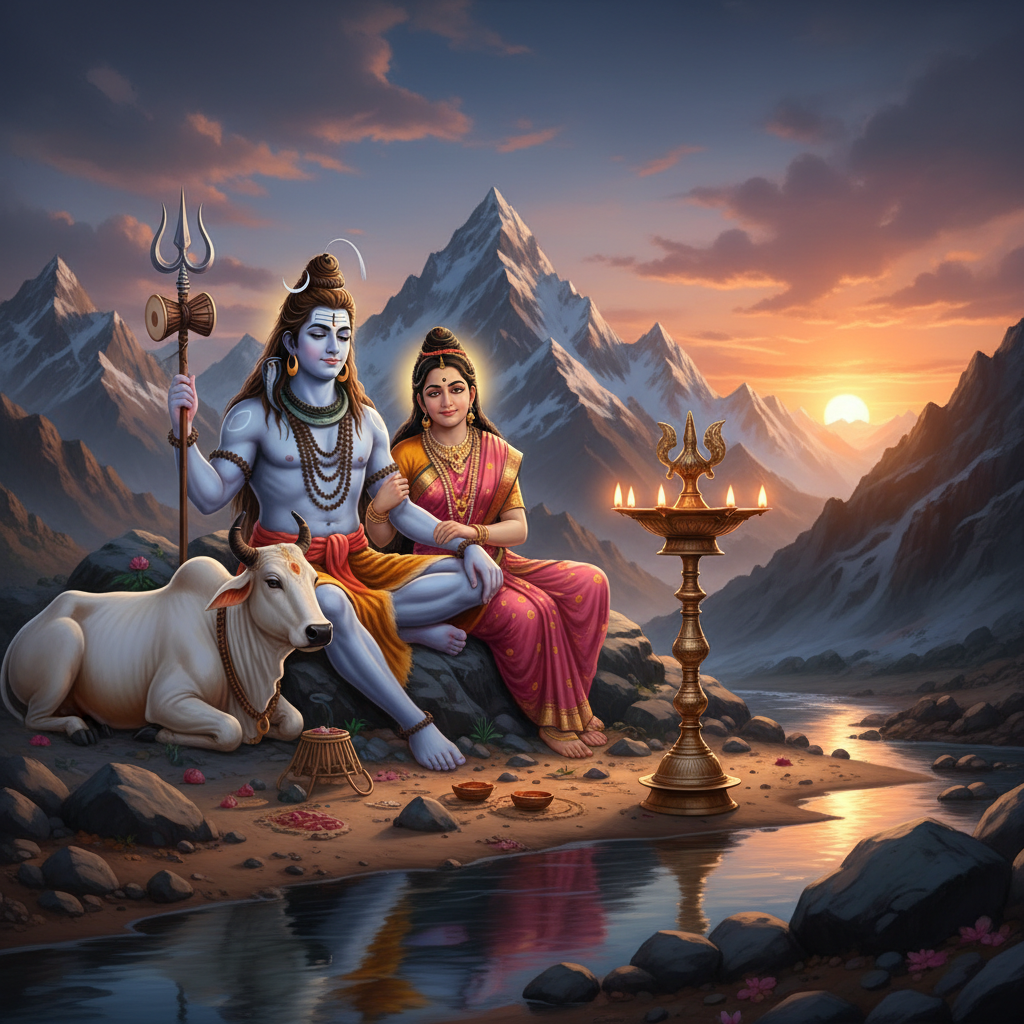
Parvati, daughter of the mountain king Himavan, was born with a single wish in her heart: to win Shiva as her husband. According to tradition, she was Sati reborn, the same devoted wife who had once given up her life at her father Daksha's yagna out of love for Shiva.
To reach him, Parvati left the comforts of the palace and went into the forest to perform severe tapasya, standing for long periods in silence and, in the later stages of her penance, living on little more than air and fallen leaves. Shiva, deep in his own meditation on Kailash, remained unmoved for a long time, testing the sincerity of her resolve.
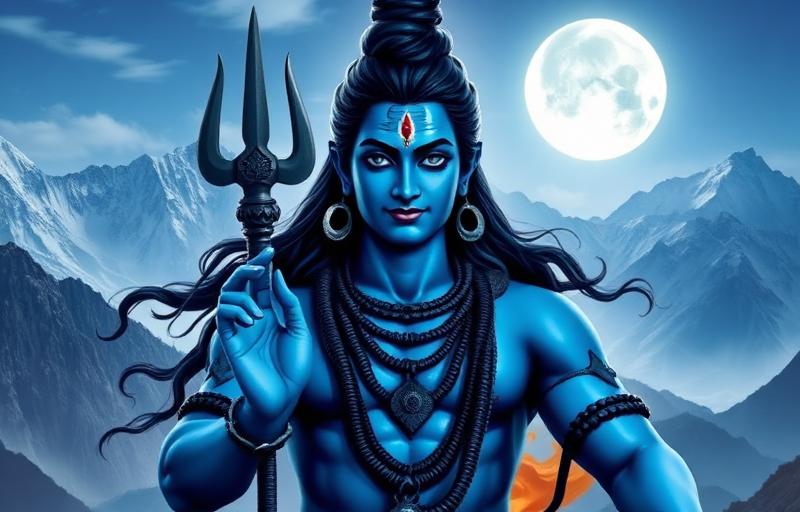
When he was finally convinced of her devotion, Shiva appeared before Parvati, first in disguise to test her further, and then in his true form, accepting her as his bride. The wedding that followed was unlike any other, a grand and wild celestial procession in which gods, sages, and Shiva's own unusual companions, the ganas, ghosts and spirits, all walked together to Himavan's palace.
Scriptural Context
The story of Shiva and Parvati's wedding is told across several Puranas, including the Shiva Purana and the Skanda Purana, and it also inspired one of the most celebrated works of Sanskrit poetry, Kalidasa's Kumarasambhavam, which describes Parvati's tapasya and the divine wedding in rich detail.
While the exact retellings differ slightly from text to text, the core elements remain consistent: Parvati's penance, the gods' anxiety over Shiva's continued detachment from worldly life, and the eventual union that is said to have set the stage for the birth of Kartikeya, needed to defeat a demon that troubled the heavens.
These scriptures do not present the wedding as a simple romantic tale but as a cosmic necessity, the coming together of two principles that creation itself was waiting for.
Symbolic Meaning
At its heart, the wedding of Shiva and Parvati represents the union of pure consciousness and dynamic energy, what tradition calls Shiva and Shakti. Shiva alone, in his meditative stillness, is complete but inactive. Parvati, as Shakti, brings movement, creation, and engagement with the world.
This is why the two are so often depicted together as Ardhanarishvara, a single form that is half male and half female, showing that neither principle is truly complete without the other. Their marriage is not a story of dependence but of wholeness, the idea that stillness and energy, detachment and love, must exist together for creation to continue.
Devotees often see in this story a gentle reminder that even the greatest renunciate can be moved by sincere, patient devotion, and that householder life, when lived with awareness, is not lesser than a life of asceticism.
What It Teaches Devotees
- Devotion rewards patience: Parvati's years of tapasya show that sincere devotion is never wasted, even if the answer does not come quickly.
- Inner worth matters more than outer appearance: when Shiva tested Parvati in disguise, she remained firm in her choice, valuing character over circumstance.
- Marriage is a sacred partnership: the Shiva-Parvati union is held up as an ideal of mutual respect between householders, not one partner's dominance over the other.
- Even the divine honours devotion sincerely offered: Shiva's eventual acceptance is a reminder that grace responds to genuine effort, not performance.
How It Is Remembered Today
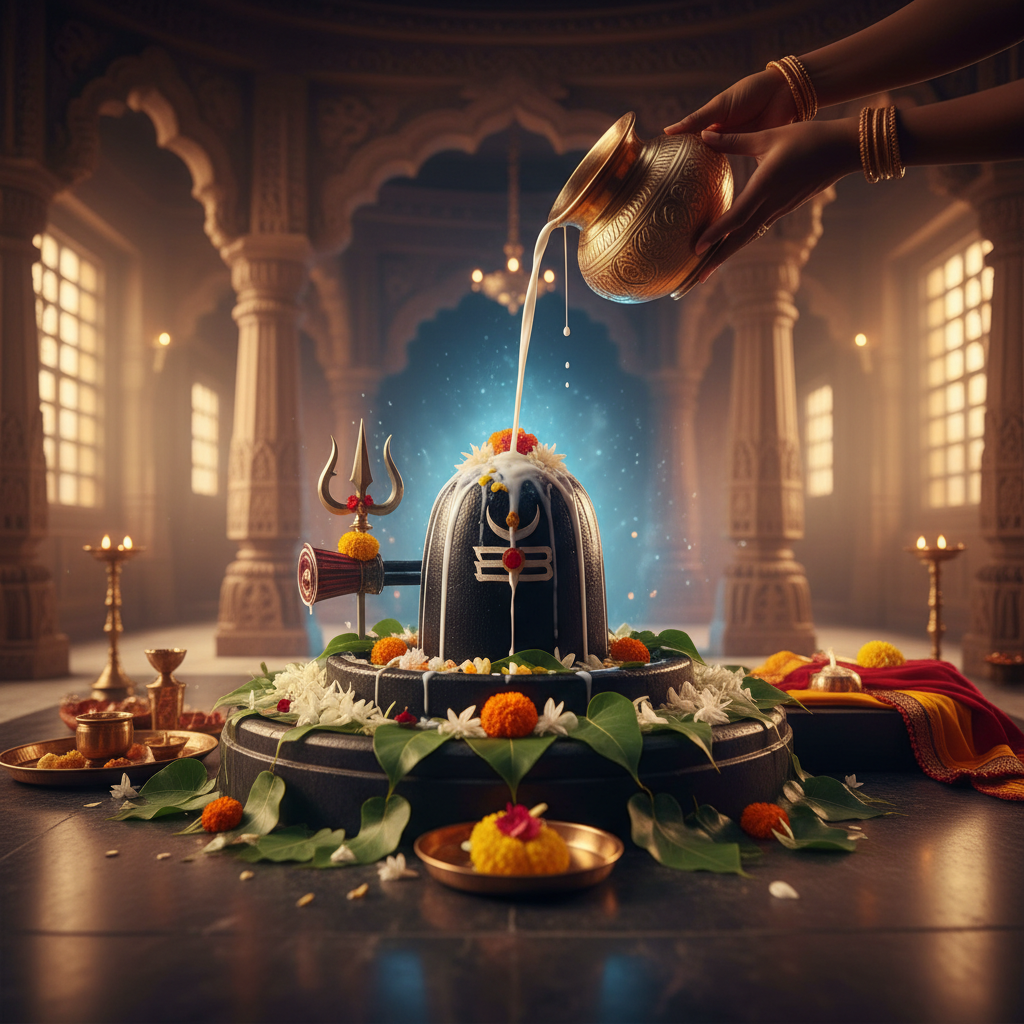
The wedding of Shiva and Parvati is remembered most vividly during Mahashivratri, when many devotees see the night as a symbolic celebration of this divine union, staying awake in prayer and chanting. In several temples, especially in the Himalayan region and parts of South India, ritual reenactments of the wedding are still performed with great devotion.
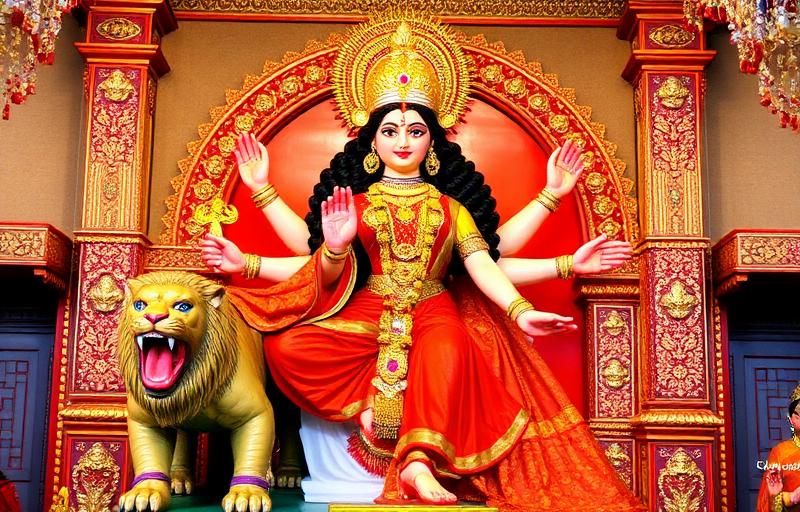
The festival of Teej, observed by married women in North India, also draws directly from Parvati's tapasya, with fasting and prayer offered in her honour for marital happiness and family wellbeing. Even ordinary Hindu weddings often invoke Shiva and Parvati as the ideal couple, with blessings sought in their name for a harmonious married life.
Takeaway
The story of Shiva and Parvati's wedding endures because it speaks to something devotees return to again and again, the belief that love rooted in devotion and patience can move even the most detached heart. It is remembered not as a distant myth but as a living example of how faith, respect, and steadfastness shape a sacred bond. Worship of this divine couple is an act of faith and love, not a transaction.
Frequently Asked Questions
When is Shiva and Parvati's wedding traditionally celebrated?+
Devotees primarily associate Mahashivratri with the celebration of Shiva and Parvati's union, marking it with night-long prayer, fasting and chanting.
Why did Parvati have to perform tapasya to marry Shiva?+
Tradition holds that Shiva was deeply immersed in meditation and detached from worldly life, so Parvati's sustained tapasya was needed to prove the sincerity of her devotion before he accepted her.
What is the deeper meaning behind the Shiva-Parvati wedding story?+
The wedding symbolizes the union of consciousness and energy, Shiva and Shakti, representing the belief that stillness and dynamic devotion together create wholeness and sustain creation.
About the author
Anjali Mehta · Editor, M.A. Religious Studies
Anjali is the managing editor for Vandnaa and oversees the festival and vrat coverage. She holds an M.A. in Religious Studies and reviews every published article for accuracy, accessibility, and tradition-fidelity.
Meet the Vandnaa editorial team →