The Katha, Simply Told
Three powerful asura brothers, sons of Tarakasura, performed intense tapasya and were granted three magnificent flying cities of gold, silver and iron, known together as Tripura. Protected by a boon that they could only be destroyed by a single arrow fired when all three cities aligned in the sky, a moment that came only once in many years, the asuras grew arrogant, using their near-invincible fortresses to trouble the three worlds.
The gods, unable to defeat them through ordinary means, appealed to Shiva. For this task, the entire universe seemed to prepare itself: it is said that Brahma became the charioteer, the earth the chariot, the sun and moon its wheels, and the Vedas themselves the horses, while Vishnu became the arrow.
When the rare moment finally came and the three cities aligned as one, Shiva, smiling, drew his bow and released a single arrow, reducing the three cities to ash in an instant. From this act, he came to be known as Tripurantaka, the destroyer of the three cities.
Scriptural Context
The Tripurantaka katha appears in the Shiva Purana and the Matsya Purana, among other texts, and is regarded as one of the great episodes celebrating Shiva's supremacy over cosmic evil. Different tellings vary in small details, such as the exact composition of the divine chariot, but the essential structure, arrogance born of a powerful boon met by a single decisive act of Shiva, remains constant.
The episode is often cited as an example of how boons in Hindu tradition are rarely permanent shields; they carry conditions, and true safety lies not in power alone but in how it is used. Tripura's downfall came from misuse of strength rather than any weakness in the boon itself.
Symbolic Meaning
Tripurantaka is rich with symbolism read at many levels. The three cities are often understood to represent the three gunas, or the three states of mind, ego, attachment, and ignorance, that must be burned away for true clarity to dawn. The single arrow that destroys all three at once suggests that spiritual liberation, when it comes, can dissolve deep-rooted obstacles in a single act of grace.
That the entire universe, earth, sun, moon and Vedas, becomes part of Shiva's chariot also suggests that when dharma is truly threatened, all of creation aligns to support the restoration of balance. It is not Shiva alone who acts, but the cosmos acting through him.
What It Teaches Devotees
- Power without humility invites downfall: the Tripura asuras' arrogance, not their strength, led to their destruction.
- Even the rarest boon has limits: their protection depended on a precise, rare alignment, a reminder that no advantage is entirely unconditional.
- Dharma finds its moment: the story teaches patience, that the right response to injustice sometimes requires waiting for the right moment rather than rushing prematurely.
- Unity accomplishes what isolation cannot: the gods, sages and elements of nature all played a part, showing that even Shiva's decisive victory was a collective effort.
How It Is Remembered Today
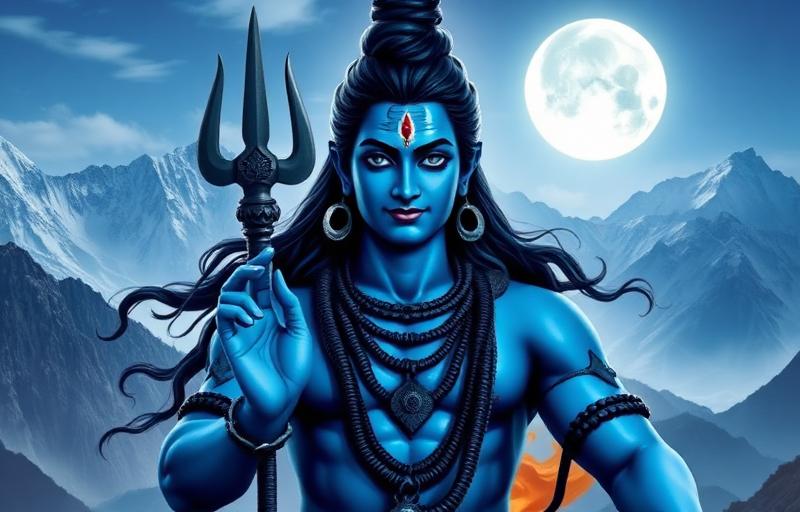
Shiva as Tripurantaka is depicted in some of the most striking temple sculptures and bronzes found across India, showing him poised with his great bow, calm even at the moment of cosmic destruction. Several Shiva temples, particularly in South India, feature this form in their iconography and festival processions.
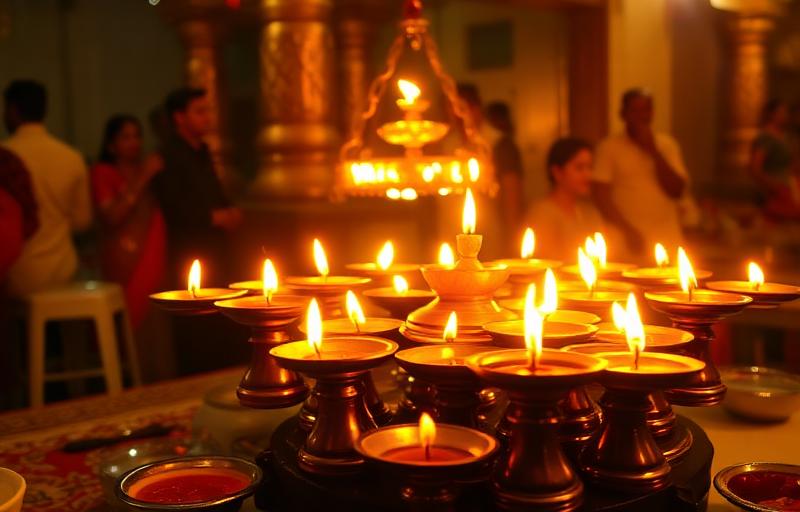
The story is often recited during Kartik Purnima, sometimes called Tripurari Purnima, when many temples light rows of lamps in remembrance of Shiva's victory over the three cities, a festival of light echoing the fire that consumed Tripura.
Takeaway
Tripurantaka is remembered not simply as a tale of destruction but of restoration, the burning away of arrogance so that balance could return to creation. Devotees find in it the assurance that no matter how invincible wrongdoing may appear, it eventually meets its moment of reckoning. Worship of Shiva in this form is an act of faith and love, not a transaction.
Reader Questions Answered
What is the Tripurantaka katha about?+
It tells of Shiva destroying the three flying cities, Tripura, built for arrogant asuras, using a single arrow at the rare moment the cities aligned in the sky.
Why could the three cities only be destroyed by one arrow?+
Tradition holds that the asuras' boon made the cities nearly invincible, destructible only by a single arrow fired at the rare moment all three aligned as one in the sky.
What does Tripurantaka symbolize?+
It symbolizes the burning away of ego, attachment and ignorance, and the belief that when dharma is threatened, all of creation aligns to restore balance.
About the author
Anjali Mehta · Editor, M.A. Religious Studies
Anjali is the managing editor for Vandnaa and oversees the festival and vrat coverage. She holds an M.A. in Religious Studies and reviews every published article for accuracy, accessibility, and tradition-fidelity.
Meet the Vandnaa editorial team →