The Katha, Simply Told
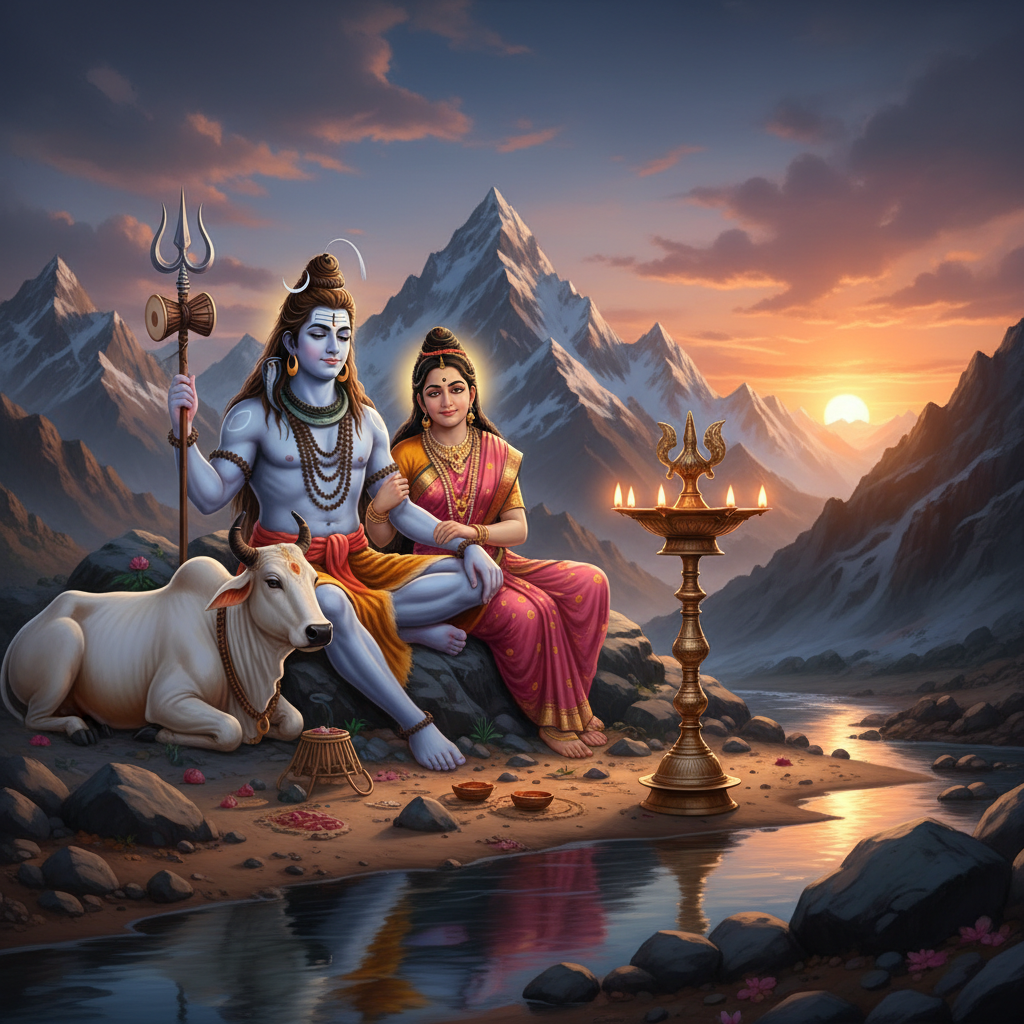
After Sati's passing, Shiva withdrew into deep, unbroken meditation on Mount Kailash, turning entirely away from the world. Yet the gods desperately needed him to remarry, for it was foretold that only a son born of Shiva could defeat the powerful demon Tarakasura, who had grown almost unstoppable through a boon.
Parvati's own tapasya alone was not enough to break Shiva's meditation, so the gods, in their urgency, turned to Kamadeva, the god of love and desire, asking him to awaken longing in Shiva's heart. Kamadeva, though aware of the risk, agreed to help and, along with his wife Rati and companion Vasanta, the season of spring, approached Kailash and released an arrow of desire toward the meditating Shiva.
Shiva's meditation was disturbed for the briefest moment, and in anger at the intrusion, he opened his third eye. A fierce fire emerged and, in an instant, reduced Kamadeva to ashes. When Rati, Kamadeva's grieving wife, pleaded and performed penance, Shiva, moved by her devotion, granted that Kamadeva would live on, though without physical form, as Ananga, the bodiless one, present everywhere as an unseen force of attraction and desire.
Scriptural Context
The Kama Dahan episode is found in the Shiva Purana and the Matsya Purana, and is closely tied to the larger narrative of Parvati's tapasya and the eventual Shiva-Parvati wedding, since Kamadeva's sacrifice is what ultimately paves the way for their union. In several tellings, it is only after this episode that Shiva begins to notice and appreciate Parvati's own long penance.
The story is also connected to the festival season in some regional traditions, particularly in parts of South India, where Kama Dahan is remembered around spring as a reminder of both desire's power and its ultimate transformation.
Symbolic Meaning
Kama Dahan is one of the richest symbolic stories in Shiva mythology. Kamadeva represents desire in its most basic, instinctual form, and his destruction by Shiva's third eye represents the burning away of unchecked, impulsive craving through higher awareness and discipline.
But the story does not end with simple destruction. Kamadeva's transformation into Ananga, the bodiless one, suggests that desire itself is not evil and cannot be permanently eliminated; rather, when purified through wisdom, it continues to exist in a subtler, more refined form, present everywhere but no longer crude or overpowering. This nuance is significant: Hindu tradition does not ask devotees to hate desire, but to master and transform it.
What It Teaches Devotees
- Discipline governs desire, not its denial: the story shows mastery over instinct rather than the pretence that desire does not exist.
- Sacrifice for a greater purpose is honoured: Kamadeva knowingly risked himself for the good of the three worlds, and his devotion was ultimately rewarded.
- Compassion follows even righteous anger: Shiva's grace toward Rati shows that justice and mercy can coexist, softening even a moment of fierce reaction.
- Higher awareness transforms rather than merely destroys: Kamadeva's continued existence as Ananga teaches that spiritual growth refines our nature rather than erasing essential parts of it.
How It Is Remembered Today
Kamadeva is still invoked, especially in classical poetry and temple art, though he is rarely worshipped as a standalone deity given his story's association with restraint and transformation. Some regional spring festivals, and certain South Indian temple traditions, recall Kama Dahan around the season associated with Vasanta, spring, honouring the idea of desire's power being ultimately guided by wisdom.
The story is frequently retold in devotional discourses on self-control and meditation, often cited by spiritual teachers as an example of how even the strongest inner disturbances, when met with awareness, can be transformed rather than simply suppressed.
Takeaway
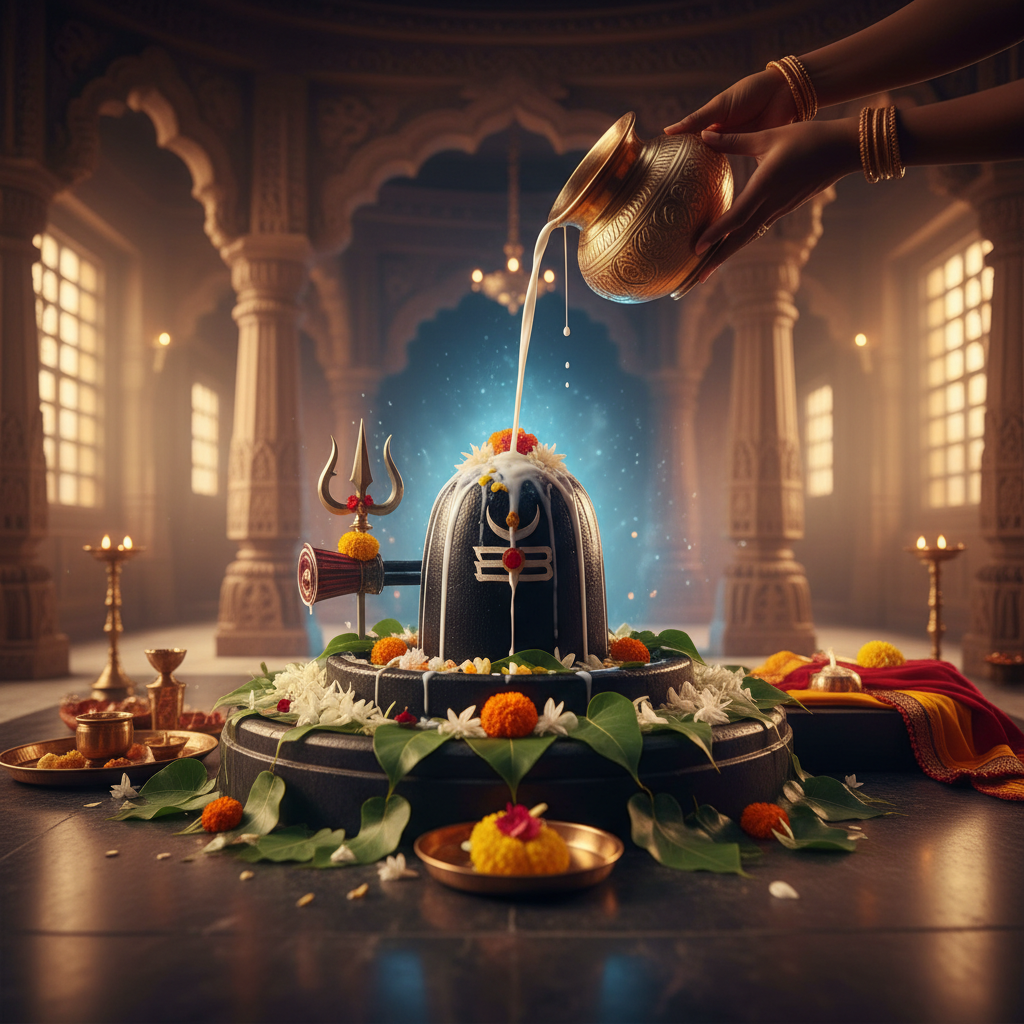
Kama Dahan endures as a story because it captures a struggle every devotee understands, the pull between disciplined awareness and instinctive desire. It teaches that the answer is not hatred of desire but its transformation through wisdom and grace. Worship connected to this story, in temples devoted to Shiva's meditative form, is an act of faith and love, not a transaction.
Frequently Asked Questions
Why did Shiva burn Kamadeva?+
Shiva burned Kamadeva with his third eye after his deep meditation was disturbed by an arrow of desire, sent to awaken Shiva's heart so he would marry Parvati.
What happened to Kamadeva after he was burned?+
Moved by the devotion and grief of Kamadeva's wife Rati, Shiva granted that Kamadeva would continue to exist without physical form, known as Ananga, present everywhere as an unseen force of desire.
What is the deeper meaning of the Kama Dahan katha?+
It symbolizes the mastery of desire through higher awareness rather than its denial, teaching that desire, once purified through wisdom, continues to exist in a refined, transformed form.
About the author
Pandit Ravindra Sharma · Vedic Rituals & Bhakti, 22+ years
Pandit Ravindra is the Vandnaa editorial team's resident specialist on aarti, chalisa, and daily devotion. He has performed home and temple pujas across Varanasi and Delhi for over two decades and contributes the bhakti-focused articles on this site.
Meet the Vandnaa editorial team →