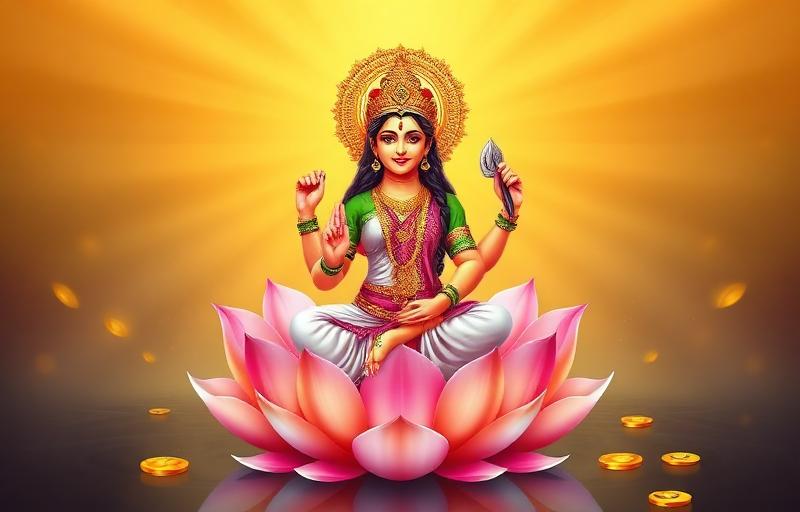
Why a New Vyapar Begins with Ganesh, Lakshmi and Kuber
In the Hindu tradition, a business is not merely a source of income but a dharmic responsibility, a means of serving customers honestly and supporting one's family. So a new vyapar begins by invoking three divine presences. Lord Ganesha is worshipped first, as in every undertaking, so that the path ahead is cleared of obstacles, vighnas, before the first customer walks in. Mata Lakshmi is the goddess of wealth and shubh, auspiciousness, and her blessing is sought not just for profit but for prosperity that stays, grows and is used well. Kuber, the celestial treasurer of the devas, guards accumulated wealth, and his worship is a prayer that earnings are protected and the cash box never runs empty. Together this trinity expresses the complete prayer of a businessperson, a smooth beginning, flowing prosperity and protected savings, all earned through honest work.
Choosing the Muhurat for Shop Opening
Tradition gives careful attention to the opening day, for the first moment is believed to colour all that follows. Days widely held auspicious for beginning a vyapar include Akshaya Tritiya, whose gains are said never to diminish, Dhanteras and Diwali, beloved of Lakshmi, Vijayadashami, the day of assured victory, Basant Panchami, and Gudi Padwa or Chaitra Navratri for new beginnings. Among weekdays, Thursday and Friday are commonly preferred for trade, while shubh tithis like Dwitiya, Tritiya, Panchami, Dashami and Ekadashi are favoured. The tradition also advises avoiding certain periods, most notably Kharmas, the roughly month-long period when the Sun transits Sagittarius or Pisces and new ventures are traditionally paused, as well as Pitru Paksha and eclipse days. Rather than worrying over calculations, simply check the Vandnaa Panchang for the auspicious dates and muhurat timings of the season, and let your purohit confirm the final hour if you wish a formal muhurat.
Shop Opening Puja Vidhi - Step by Step
Clean the shop thoroughly a day before, and gather flowers, kalash, mango leaves, coconut, haldi-kumkum, akshat, diya, dhoop, sweets and the murtis or framed images of Ganesha and Lakshmi. 1. Purification - Sprinkle Ganga jal through the premises and light dhoop in every corner. 2. Swastik on the entrance - Draw a swastik with kumkum or sindoor on both sides of the main door, and a Shubh-Labh pair if your tradition follows it, inviting auspiciousness and gain. 3. Kalash sthapana - Place a kalash filled with water, a coin, supari and mango leaves, topped with a coconut, near the entrance or puja place, symbolising fullness and welcome to the divine. 4. Ganesh-Lakshmi-Kuber puja - Offer flowers, akshat, haldi-kumkum and sweets while chanting ॐ गं गणपतये नमः (Om Gam Ganapataye Namah), ॐ श्रीं महालक्ष्म्यै नमः (Om Shreem Mahalakshmyai Namah) and ॐ कुबेराय नमः (Om Kuberaya Namah). 5. Worship the tools of trade - Apply tilak to the cash box, weighing scale, account books or billing computer, the modern bahi-khata. 6. Dhoop-deep and aarti - Perform the aarti of Ganesha and Lakshmi with the whole family and staff present. 7. Distribute prasad - Share sweets with everyone present and with neighbouring shopkeepers, beginning relationships with sweetness.
The First Bohni - A Sacred Beginning
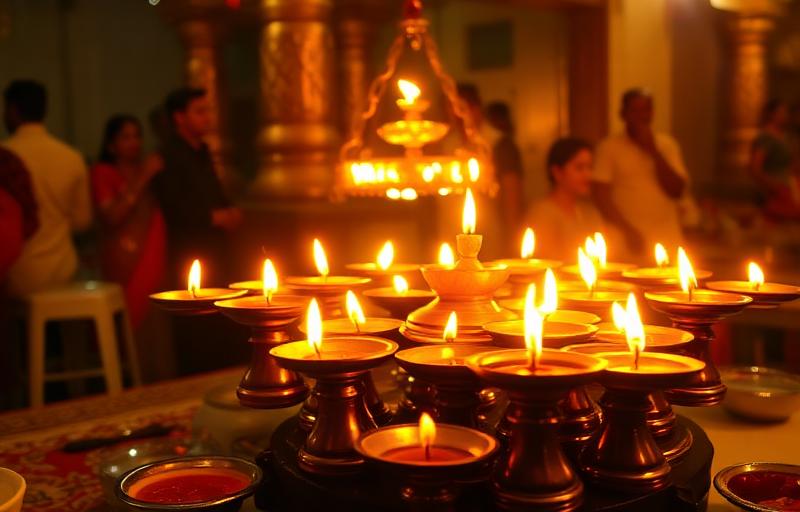
Among India's most cherished trade customs is the bohni, the first sale of the day, and above all the first bohni of a new shop. The first transaction is received as Lakshmi's own arrival, so shopkeepers traditionally touch the first earnings to their forehead and the cash box with a murmured prayer. For a new shop, many families invite a well-wisher, an elder or a first customer considered shubh to make the opening purchase, and the amount is often kept aside permanently in the cash box as Lakshmi ka vaas, the seat of Lakshmi, never to be spent. Some traditions round the first payment to an auspicious figure ending in one, like 101 or 501. The deeper teaching of bohni is graciousness, the first customer is never turned away, never bargained with harshly, and is sent off with a smile, for how the day begins is how it flows.
Placing the Mandir in Your Shop
A small mandir gives the shop its spiritual heart, and tradition offers gentle guidance on its placement. The most favoured location is the north-east corner, the ishan kon, regarded as the direction of the divine, with the deities facing west or south so that the person praying faces east or north. Keep the mandir at a respectful height, never on the floor, and away from the washroom, storage clutter or directly above the cash box. Ganesh-Lakshmi together are the natural choice for a vyapar mandir, and many traders add their kuldevta, Hanuman ji or a Shri Yantra. Keep the space clean, refresh the flowers, and avoid letting the mandir become a shelf for bills and keys. Light a diya and dhoop every morning and evening. The mandir need not be large, even a single shelf maintained with daily love carries the full presence of the divine into the workplace.
A Simple Daily Shop Puja Routine
The opening puja sanctifies the beginning, but it is the daily routine that keeps Lakshmi's presence alive. 1. Open with the right foot and touch the threshold with respect, many traders touch the doorstep and then their forehead. 2. Clean first - Sweep and wipe the shop before anything else, Lakshmi is drawn to cleanliness and order. 3. Light the diya and dhoop at the mandir, offer fresh flowers or at least fresh water, and chant a short prayer, ॐ श्रीं महालक्ष्म्यै नमः (Om Shreem Mahalakshmyai Namah), eleven times. 4. Tilak the cash box with the diya's flame shown briefly, and begin the day's accounts with Shubh Labh or Shri Ganeshaya Namah written at the top, as account books have begun for centuries. 5. Honour the bohni with gratitude, and keep evening diya at lamp-lighting time, deep jalana, which many shopkeepers consider as important as the morning ritual. Once a year on Diwali, the tradition of Chopda Pujan invites traders to worship their account books and begin the new financial ledger in Lakshmi's presence, a beautiful reminder that honest accounts are themselves a form of worship.
The Kuber Mantra for Prosperity in Business

For traders who wish to deepen their daily practice, the tradition offers the Kuber mantra: ॐ यक्षाय कुबेराय वैश्रवणाय धनधान्याधिपतये धनधान्यसमृद्धिं मे देहि दापय स्वाहा (Om Yakshaya Kuberaya Vaishravanaya Dhanadhanyadhipataye Dhanadhanya-samriddhim Me Dehi Dapaya Svaha). Its meaning is a humble petition: O Kubera, lord of yakshas, son of Vishrava, master of wealth and grains, grant me abundance of wealth and grain. It is traditionally chanted 11, 21 or 108 times, especially on Fridays, on Dhanteras and during Diwali, sitting before the shop mandir with a diya lit. The tradition pairs Kuber with Lakshmi deliberately, Lakshmi brings prosperity, Kuber teaches its protection and wise stewardship. Chanting with the intention of honest growth, fair dealing and generosity towards the needy aligns the vyapar with dharma, and that alignment, the elders say, is the true secret of a business that lasts generations.
What People Ask Most
Which deities should be worshipped at a shop opening?+
The traditional trinity for vyapar is Lord Ganesha for an obstacle-free beginning, Mata Lakshmi for flowing prosperity, and Kuber for the protection of wealth. Many families also invoke their kuldevta and Saraswati, especially for businesses connected with learning. Ganesh-Lakshmi murtis or framed images form the heart of the shop mandir thereafter.
Which days are best for opening a new shop?+
Akshaya Tritiya, Dhanteras, Diwali, Vijayadashami, Basant Panchami and Gudi Padwa are traditionally the most auspicious. Thursdays and Fridays are favoured weekdays, with shubh tithis like Dwitiya, Panchami and Dashami. Avoid Kharmas, Pitru Paksha and eclipse days as the tradition advises. Check the Vandnaa Panchang for this year's exact muhurat dates.
What is the bohni tradition and why is the first sale special?+
Bohni is the first sale of the day, received as Lakshmi's own arrival. Shopkeepers touch the first earnings to the forehead and cash box with a prayer. For a new shop, the first bohni amount is often kept permanently in the cash box as Lakshmi ka vaas. The custom teaches graciousness, the first customer is treated with special warmth and never turned away.
Where should the mandir be placed inside a shop?+
The north-east corner, the ishan kon, is the most favoured spot, with deities placed so that the person praying faces east or north. Keep the mandir at a respectful height, never on the floor, away from the washroom and clutter. Maintain it daily with a diya, dhoop and fresh flowers, and never let it become a storage shelf for bills or keys.
What is Chopda Pujan and when is it done?+
Chopda Pujan is the worship of account books performed by traders on Diwali, especially strong in the Gujarati and Marwari traditions. Old ledgers are closed with gratitude and new ones opened in Lakshmi's presence, marked with Shubh Labh and a swastik. In its modern form, businesses also place their laptops and billing systems in the puja. It sanctifies honest accounting as a form of worship.
Can I perform the shop opening puja without a pandit?+
Yes. The essential vidhi, purification with Ganga jal, swastik on the entrance, kalash sthapana, offering flowers and sweets to Ganesh-Lakshmi-Kuber with their mantras, aarti and prasad distribution, can be performed by the owner with full devotion. A pandit adds the formal sankalp and Vedic mantras for an elaborate ceremony, which many families prefer for a major establishment.
About the author
Pandit Mahesh Trivedi · Festival Traditions & Panchang
Pandit Mahesh leads the festival-date and Panchang content on Vandnaa. He cross-references multiple regional panchangs (Drik, Vaishnava, Bengali, Marathi) for every festival date published on the site.
Meet the Vandnaa editorial team →