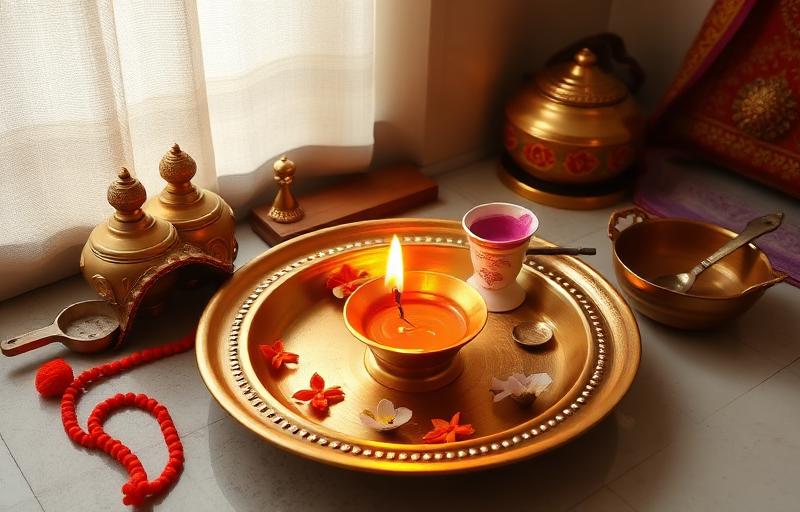
What the Sudarshan Chakra Is
The Sudarshan Chakra is the spinning, razor-edged discus that Lord Vishnu holds on his right index finger. Its name means 'auspicious vision' or 'good sight', from su (good) and darshan (vision). It is the most powerful of Vishnu's weapons, used to protect dharma and destroy evil. Vishnu also carries the shankha (conch), gada (mace) and padma (lotus), but the chakra is his unfailing weapon of justice.
The Origin of the Chakra
It is told that the divine architect Vishwakarma fashioned the Sudarshan Chakra from the dazzling dust of the sun, trimmed to give the world a weapon of protection. In another beloved account, Lord Shiva gave the chakra to Vishnu, pleased by his devotion when Vishnu offered his own eye in place of a missing lotus during worship. From then on, the chakra became Vishnu's eternal companion, ready at his will to defend the righteous.
The Discus of Dharma and Time
The chakra is the wheel of dharma and of time (kala), ever turning, sparing nothing that has outlived its purpose. When adharma, injustice and cruelty rise beyond limit, Vishnu releases the chakra to cut down evil and restore balance. It famously protected the devotee Ambarisha and beheaded tyrants who oppressed the innocent. The spinning wheel reminds us that time itself moves forward, dissolving what is unjust and renewing what is good.
Symbolism - The Mind's Discrimination

Beyond the battlefield, the chakra is the symbol of viveka, the power of discrimination within the mind. Just as the discus cuts adharma, the sharp, awakened mind cuts through ignorance, doubt and the ego's false stories. Its constant spinning is the alert, focused awareness that does not let negativity settle. The seeker is taught to keep the inner chakra turning, swiftly separating truth from untruth and the lasting from the fleeting.
How Devotees Relate to the Chakra
Devotees of Vishnu and his avatars, especially Krishna and Narasimha, revere the Sudarshan Chakra as a protector and destroyer of negativity. The Sudarshan Homa and special prayers are performed to remove obstacles, fear and harmful influences. Many keep a Sudarshan yantra or image at home for protection. To meditate on the spinning chakra is to ask Vishnu for a clear, decisive mind and the courage to stand for dharma.
A Mantra for the Sudarshan Chakra
Devotees invoke the protective power of the chakra with this mantra:
Om Sahasrara Hum Phat
The universal Vishnu mantra is also chanted for his grace:
Om Namo Bhagavate Vasudevaya
Chant with steady focus, picturing the bright chakra spinning away all fear and negativity. This is said to grant protection, clarity of mind and the inner strength to live by dharma.
Quick Answers
What is the Sudarshan Chakra?+
The Sudarshan Chakra is the spinning, razor-edged discus held on Lord Vishnu's finger. It is his supreme weapon of dharma, used to protect the righteous and destroy evil. Its name means 'auspicious vision'.
Where did the Sudarshan Chakra come from?+
In one account the divine architect Vishwakarma fashioned it from the sun's dust. In another, Shiva gave it to Vishnu, pleased when Vishnu offered his own eye in worship in place of a missing lotus.
What does the chakra symbolise?+
The chakra is the wheel of dharma and time that destroys adharma. Within the mind, it symbolises viveka, the power of discrimination that cuts through ignorance and separates truth from untruth.
Why is the chakra always spinning?+
The spinning represents the ever-moving wheel of time and the alert, focused awareness that never lets negativity settle. It reminds us that time dissolves the unjust and renews what is good.
How do devotees worship the Sudarshan Chakra?+
Devotees perform the Sudarshan Homa and special prayers to remove obstacles, fear and harmful influences. Many keep a Sudarshan yantra at home and meditate on the spinning chakra for protection.
Which mantra is chanted for the Sudarshan Chakra?+
Devotees chant 'Om Sahasrara Hum Phat' for the chakra's protective power, and 'Om Namo Bhagavate Vasudevaya' for Vishnu's grace, praying for protection, clarity and the strength to live by dharma.
About the author
Anjali Mehta · Editor, M.A. Religious Studies
Anjali is the managing editor for Vandnaa and oversees the festival and vrat coverage. She holds an M.A. in Religious Studies and reviews every published article for accuracy, accessibility, and tradition-fidelity.
Meet the Vandnaa editorial team →Explore on Vandnaa
Related Articles
Significance of Krishna's Flute (Bansuri) - Meaning
9 min read
Significance of Krishna's Peacock Feather (Mor Pankh)
9 min read
Vishnu Aarti Lyrics - Om Jai Jagdish Hare in Hindi & English
8 min read
Vishnu Sahasranama: The 1000 Names of Vishnu - Meaning, Benefits & Daily Recitation Vidhi
12 min read
Dashavatar - 10 Avatars of Lord Vishnu: Names, Order, Meaning, Significance
11 min read
Significance of Ganga on Shiva's Head - Story and Meaning
9 min read