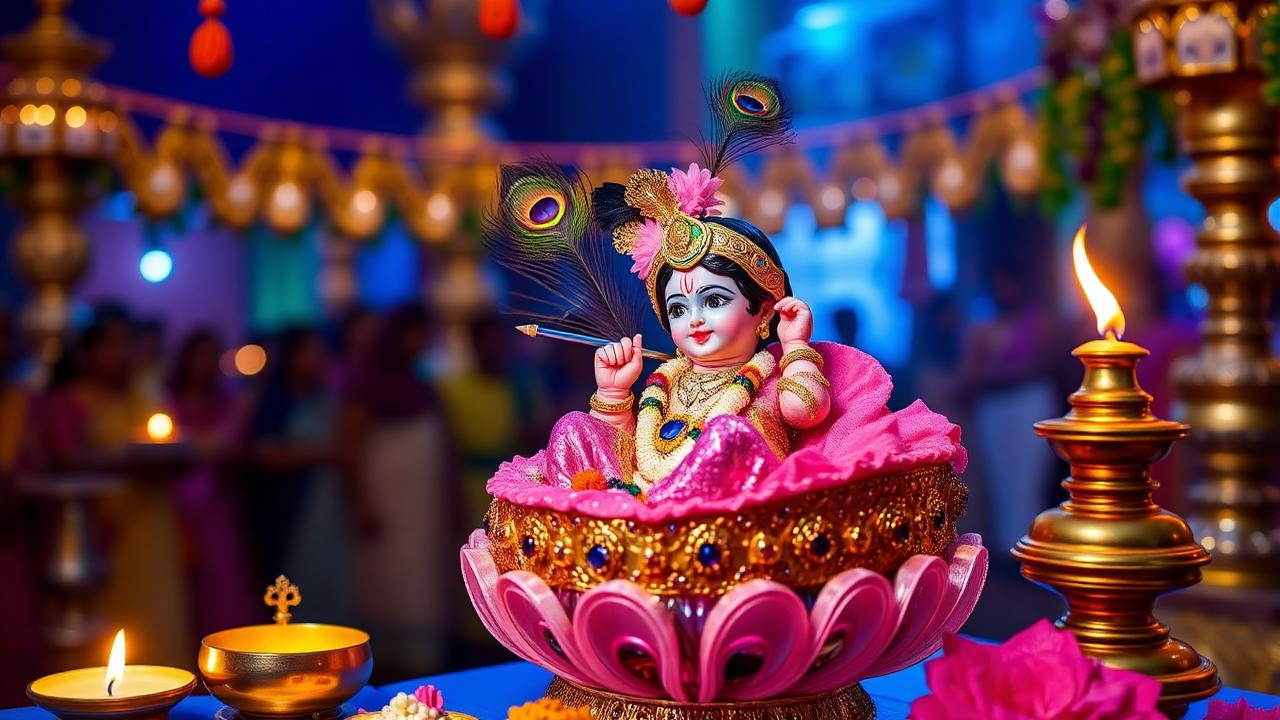
What Is Snana Yatra?
Snana Yatra is the grand bathing festival of Lord Jagannath, celebrated at the Shri Jagannath Temple in Puri, Odisha. On this day, the wooden deities of Jagannath, his elder brother Balabhadra, sister Subhadra, along with Sudarshana, are carried in a ceremonial procession (pahandi) from the sanctum to the open Snana Mandap, a bathing platform near the temple's outer wall. There, in full public view, the deities receive a majestic bath with 108 pitchers of sacred water. Tradition holds that Snana Yatra has been observed since the time King Indradyumna first installed the deities, making it one of the oldest festivals of the Jagannath tradition. It is also considered the birthday (janma divas) of Lord Jagannath, and lakhs of devotees gather for this rare open-air darshan, since on most days the Lord is seen only inside the sanctum.
When Is Snana Yatra 2026? Tithi and Timing
Snana Yatra is celebrated every year on Jyeshtha Purnima, the full moon day of the Jyeshtha month, which falls in the June period in 2026. This purnima is also called Deva Snana Purnima in Odisha. Because the festival follows the lunar tithi rather than a fixed Gregorian date, the exact day shifts each year - confirm the precise date and purnima timings on the Vandnaa Panchang before planning a Puri visit. The day's schedule is elaborate: the pahandi procession begins in the early hours, the bathing ceremony unfolds through the morning, the Gajanana vesha is adorned in the afternoon, and by evening the deities retire from public view for the Anavasara period. Snana Yatra falls roughly a fortnight before Rath Yatra, and the two festivals are deeply linked - one cannot be understood without the other.
The Ritual of 108 Pitchers
The heart of Snana Yatra is the bath itself. Water is drawn from the Suna Kua (golden well) inside the temple complex, a well used only for this single day each year. The water is purified with turmeric, sandalwood, flowers, and fragrant herbs, then filled into 108 copper and gold pitchers. Specific groups of temple sevayats (hereditary servitors) perform each step - drawing the water, carrying it in procession, and pouring it over the deities while priests chant Vedic mantras and the Jagannath Ashtakam. The number 108 is itself sacred, echoing the 108 names of the Lord and the 108 beads of the japa mala. As pitcher after pitcher streams over the great wooden forms, conch shells blow, hulahuli cries rise from thousands of women, and the air fills with kirtan - a darshan so powerful that devotees believe witnessing it washes away lifetimes of accumulated karma.
The Gajanana Vesha - When Jagannath Becomes Ganesha
After the grand bath, the deities are adorned in the unique Gajanana vesha (also called Hati vesha), in which Jagannath and Balabhadra are dressed as Lord Ganesha, with elephant-head attire crafted from cloth, sola pith and flowers. A cherished story explains why: a great Ganesha devotee and scholar once visited Puri, and the king brought him for Jagannath's darshan. The scholar hesitated, saying he worshipped only Gajanana. When he looked up at the deity, the Lord granted him darshan in the form of Ganesha himself - and the vesha commemorates that grace ever since. The deeper teaching is unmistakable: the Lord is one, appearing in whichever form his devotee loves. On no other day of the year is this vesha seen, which makes the afternoon darshan of Snana Yatra especially treasured by devotees who throng the Snana Mandap.
What Devotees Do on Snana Yatra
If you are in Puri, reach the Bada Danda (Grand Road) area early to witness the pahandi and find a place with a view of the Snana Mandap, which is built high precisely so that everyone outside can see the bath. Devotees observe the day with fasting or a simple sattvik diet, chant "Jai Jagannath" and the Jagannath Ashtakam, and many take a purifying dip in the sea at Puri beach beforehand. If you cannot travel, the festival is telecast live, and you can keep the same bhav at home: 1. Bathe a small Jagannath or Krishna murti with clean water mixed with sandalwood 2. Offer fruits, tulsi and a simple bhog 3. Chant Om Namo Bhagavate Vasudevaya 108 times 4. Read or listen to the story of Jagannath's compassion The essence is the same everywhere: serving the Lord as lovingly as one's own family.
From Snana Yatra to Rath Yatra - The Sacred Sequence
Snana Yatra is the gateway to Rath Yatra. The sequence flows like a story: the Lord bathes on Jyeshtha Purnima, falls ill, and rests through the Anavasara fortnight, hidden from his devotees. Then, on the day before Rath Yatra, comes Netrotsava or Nava Yauvana darshan - the Lord reappears, freshly painted, in renewed youthful form. And the very next day, on Ashadha Shukla Dwitiya, he sets out on the grand chariots to the Gundicha Temple, as if saying: I rested away from you, now I come out to meet you all. The fortnight of separation makes the reunion of Rath Yatra overwhelming - this rhythm of viraha (separation) and milana (union) is the emotional core of Jagannath culture. To prepare for the chariot festival that follows, read our detailed guide on the Jagannath Rath Yatra 2026, and confirm both festival dates on the Vandnaa Panchang.
Common Questions From Devotees
When is Snana Yatra 2026?+
Snana Yatra falls on Jyeshtha Purnima (Deva Snana Purnima), the full moon of the Jyeshtha month, which arrives in the June period of 2026. Since the festival follows the lunar tithi, confirm the exact date and purnima timings on the Vandnaa Panchang.
Why is Lord Jagannath bathed with 108 pitchers?+
The number 108 is deeply sacred, echoing the 108 names of the Lord and the 108 beads of the japa mala. The water is drawn from the Suna Kua, a golden well used only on this day, purified with turmeric, sandalwood and herbs, and poured by hereditary sevayats amid Vedic chanting. Witnessing this bath is believed to wash away accumulated karma.
What is the Gajanana vesha on Snana Yatra?+
After the bath, Jagannath and Balabhadra are dressed as Lord Ganesha in elephant-head attire of cloth, sola pith and flowers. The vesha commemorates the day the Lord gave darshan in Ganesha's form to a scholar who worshipped only Gajanana, teaching that God appears in whichever form his devotee loves. It is seen on no other day of the year.
What is Anavasara and why is there no darshan?+
After the grand bath, the deities are believed to develop fever and retire to the Anasara Ghara for about fifteen days. The Daitapati sevayats nurse them in seclusion with oil massages, herbal decoctions, fruits and light bhog, and the deities are freshly painted. Public darshan resumes with the Nava Yauvana darshan just before Rath Yatra; meanwhile devotees visit the Alarnatha Temple.
How is Snana Yatra connected to Rath Yatra?+
Snana Yatra begins the sacred sequence that culminates in Rath Yatra. The Lord bathes on Jyeshtha Purnima, rests through the Anavasara fortnight, reappears in the Nava Yauvana darshan, and the next day, on Ashadha Shukla Dwitiya, rides the grand chariots to the Gundicha Temple. The fortnight of separation makes the reunion of Rath Yatra deeply moving.
Can I observe Snana Yatra at home if I cannot visit Puri?+
Yes. Watch the live telecast, bathe a small Jagannath or Krishna murti with clean sandalwood water, offer fruits, tulsi and simple bhog, and chant Om Namo Bhagavate Vasudevaya 108 times. Keep a sattvik diet for the day. The essence of Snana Yatra is serving the Lord with the tenderness of family, and that bhav travels anywhere.
About the author
Pandit Mahesh Trivedi · Festival Traditions & Panchang
Pandit Mahesh leads the festival-date and Panchang content on Vandnaa. He cross-references multiple regional panchangs (Drik, Vaishnava, Bengali, Marathi) for every festival date published on the site.
Meet the Vandnaa editorial team →