What Is the Subrahmanya Bhujangam?
The Subrahmanya Bhujangam is a devotional hymn composed by Adi Shankaracharya in praise of Lord Subrahmanya - the second son of Shiva and Parvati, worshipped across India as Kartikeya, Skanda and Murugan, the commander of the divine armies.
The word bhujangam refers to the bhujanga-prayata metre in which it is written, a graceful, serpent-like flowing rhythm. Tradition holds that Shankaracharya composed this hymn at the sacred hill shrine of Tiruchendur, one of the six holy abodes (Arupadai Veedu) of Murugan.
A beautiful story tells that Shankaracharya, suffering illness, poured out this hymn to Murugan, and by the Lord's grace was healed. Because of this, the Subrahmanya Bhujangam is cherished as a hymn of surrender that brings healing, protection and grace.
The Meaning: Surrender to Murugan's Grace
The verses move from praise to deep, tender surrender:
- Praise of the Lord's form - the hymn describes Murugan's radiant face, his spear (Vel), his peacock mount and the twin goddesses Valli and Devasena at his side.
- Complete surrender - the poet declares he knows no other refuge and places himself wholly at the feet of Subrahmanya, asking only for the Lord's grace.
- A cry for protection - like a child, he asks Murugan to guard him from illness, fear, enemies and the dangers of life.
- The power of the Vel - the Lord's spear, a symbol of divine knowledge that pierces ignorance and evil, is invoked as protection.
- Longing for the Lord's feet - the closing verses express the wish to always remember and serve Murugan, and to be freed from worldly suffering.
Throughout, the mood is one of a devotee who, feeling helpless, finds strength and healing simply by holding onto the Lord.
Benefits & How to Recite
Devotees recite the Subrahmanya Bhujangam for protection, healing and courage. It is traditionally held to bring these blessings:
- Protection and courage - Murugan, the divine commander, is invoked to guard against fear, obstacles and negativity.
- Healing and well-being - because of its story, the hymn is dear to those who pray for health and recovery. This is faith and devotion; please also consult a qualified doctor, as this is not medical advice.
- Grace and inner strength - the surrender in the verses brings comfort, focus and confidence in facing life's battles.
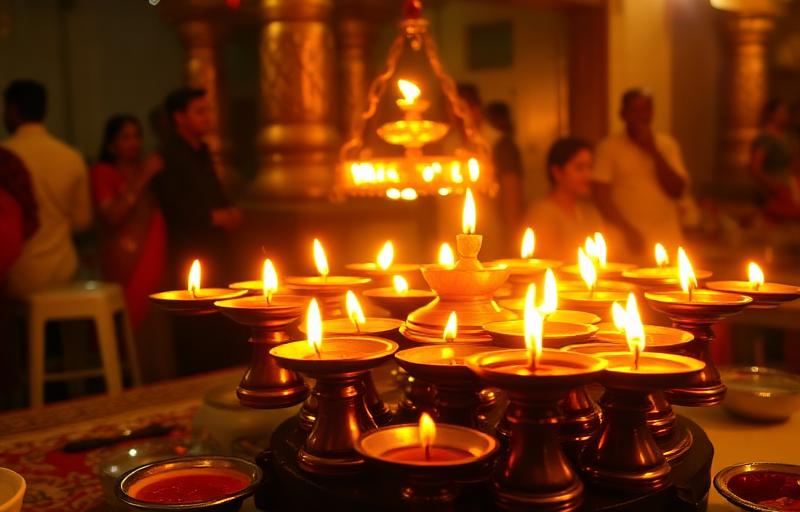
How to recite: Shashti (the sixth lunar day), Skanda Shashti, and Tuesdays are considered especially dear to Murugan. Sit before an image of Subrahmanya, light a lamp, and recite the hymn slowly with devotion. Even reciting a few verses daily with sincere love is a beautiful practice, keeping the Lord's protection close.
Quick Answers
Who is Lord Subrahmanya in the Subrahmanya Bhujangam?+
Subrahmanya is the second son of Shiva and Parvati, worshipped as Kartikeya, Skanda and Murugan, the commander of the divine armies. He carries the Vel (spear) and rides a peacock, and is especially beloved in South India.
Why is the Subrahmanya Bhujangam associated with healing?+
Tradition holds that Adi Shankaracharya composed this hymn at Tiruchendur while suffering illness, and was healed by Murugan's grace. Because of this, devotees who pray for health cherish it. This is faith; a qualified doctor should also be consulted, as it is not medical advice.
When should the Subrahmanya Bhujangam be recited?+
Shashti (the sixth lunar day), Skanda Shashti and Tuesdays are considered especially dear to Lord Murugan. Devotees light a lamp before his image and recite the hymn with devotion, and many recite a few verses daily for his continued protection.
About the author
Acharya Vinaya Kapoor · M.A. Sanskrit, Mantra & Stotra Studies
Acharya Vinaya holds an M.A. in Sanskrit from Banaras Hindu University and writes the mantra and stotra commentary on Vandnaa. Her focus is on accurate pronunciation, traditional context, and helping modern readers connect with classical texts.
Meet the Vandnaa editorial team →