Who Swami Samarth Is
Swami Samarth, also called Akkalkot Swami and Swami Maharaj, is one of the most widely worshipped figures in Maharashtra, and his following extends into Karnataka, Goa, Gujarat and every city where Marathi families have settled.
He appeared publicly in the nineteenth century and spent his best known years at Akkalkot, in what is now Solapur district, until his samadhi in 1878. He is worshipped as an incarnation of Dattatreya, the deity in whom Brahma, Vishnu and Shiva are held to be present together, and the Datta tradition regards him as a continuation of the line that includes Sripad Srivallabh and Narasimha Saraswati.
What sets his devotion apart is how ordinary and immediate it is:
- He is addressed as a living guru rather than as a historical saint
- Devotees speak to him about specific problems in plain Marathi
- His image is kept in shops, homes, vehicles and offices, not only in temples
- The relationship is one of refuge, and that word appears constantly in how devotees describe him
In a state with an enormous devotional inheritance, Vitthal for the Warkaris, Ganpati for the festival, the Devi for the kuldevi tradition, Swami Samarth occupies a distinct place. He is the one people turn to when they are frightened.
Bhiu Nakos, Mi Tuzya Pathishi Aahe
One sentence carries this devotion more than any text: Bhiu nakos, mi tuzya pathishi aahe, which in Marathi means do not be afraid, I am behind you.
It is the assurance attributed to Swami Samarth, and it functions in Maharashtra the way a mantra functions elsewhere. You will find it:
- Printed on stickers on autorickshaws and trucks
- On calendars and framed pictures in shops and homes
- Spoken by families to each other during difficult periods
- Repeated by devotees the way a japa is repeated, in moments of anxiety
Why this particular sentence took hold is worth thinking about. It does not promise wealth, success or the removal of a problem. It promises presence, and specifically presence from behind, which is the position of someone supporting you rather than leading you.
Devotees describe using it in situations where nothing can be fixed immediately: a medical diagnosis, a court date, an exam, a business under strain, a family member who has gone quiet. The sentence does not claim the difficulty will end. It claims the person is not facing it alone.
That emphasis places Swami Samarth's devotion close to the wider guru tradition of India, where the guru's role is not to remove the road but to walk it with the disciple. It is also why his following includes a very large number of people who are not otherwise ritually observant.
The Datta Sampradaya He Belongs To
Swami Samarth cannot be understood outside the Datta sampradaya, one of the most influential devotional traditions of Maharashtra and northern Karnataka.
Dattatreya is worshipped as the combined form of Brahma, Vishnu and Mahesh, usually depicted with three heads and six arms, accompanied by four dogs and a cow, and regarded as the adi guru, the original teacher. The tradition holds that Datta continues to appear in successive human forms.
The lineage as devotees recite it:
- Sripad Srivallabh, at Pithapuram in Andhra Pradesh
- Narasimha Saraswati, associated with Narsobawadi and Gangapur
- Swami Samarth of Akkalkot, regarded in the tradition as the continuation of Narasimha Saraswati
- Contemporaries and successors including Manik Prabhu, Tembe Swami and Gajanan Maharaj of Shegaon, each with their own following
The two texts that anchor the tradition are the Guru Charitra, read as a parayan over seven days by many households, and the Datta Bavani. Thursday is Datta's day, and Datta temples across Maharashtra fill on Thursdays in the way Hanuman temples fill on Tuesdays elsewhere.
For a family in Maharashtra, keeping Swami Samarth usually means keeping the whole tradition. The Guru Charitra parayan, the Thursday lamp, a visit to Gangapur or Narsobawadi and a trip to Akkalkot form one continuous devotional practice rather than separate observances.
Akkalkot: The Banyan Tree and the Kitchen
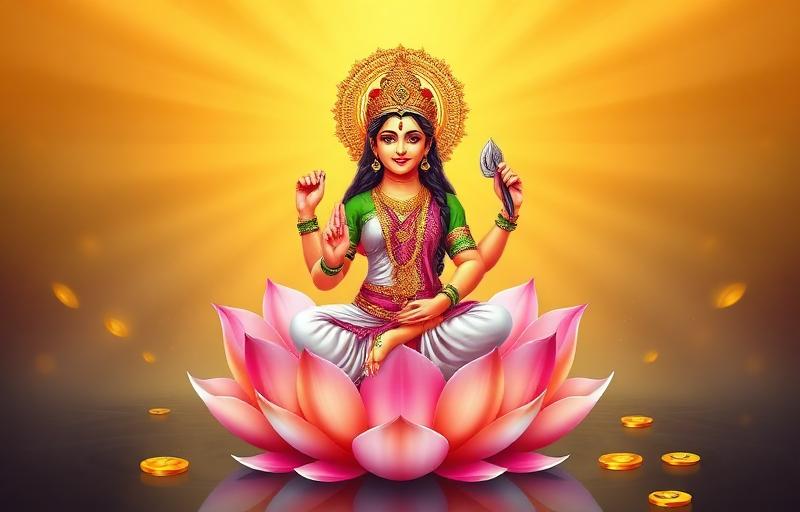
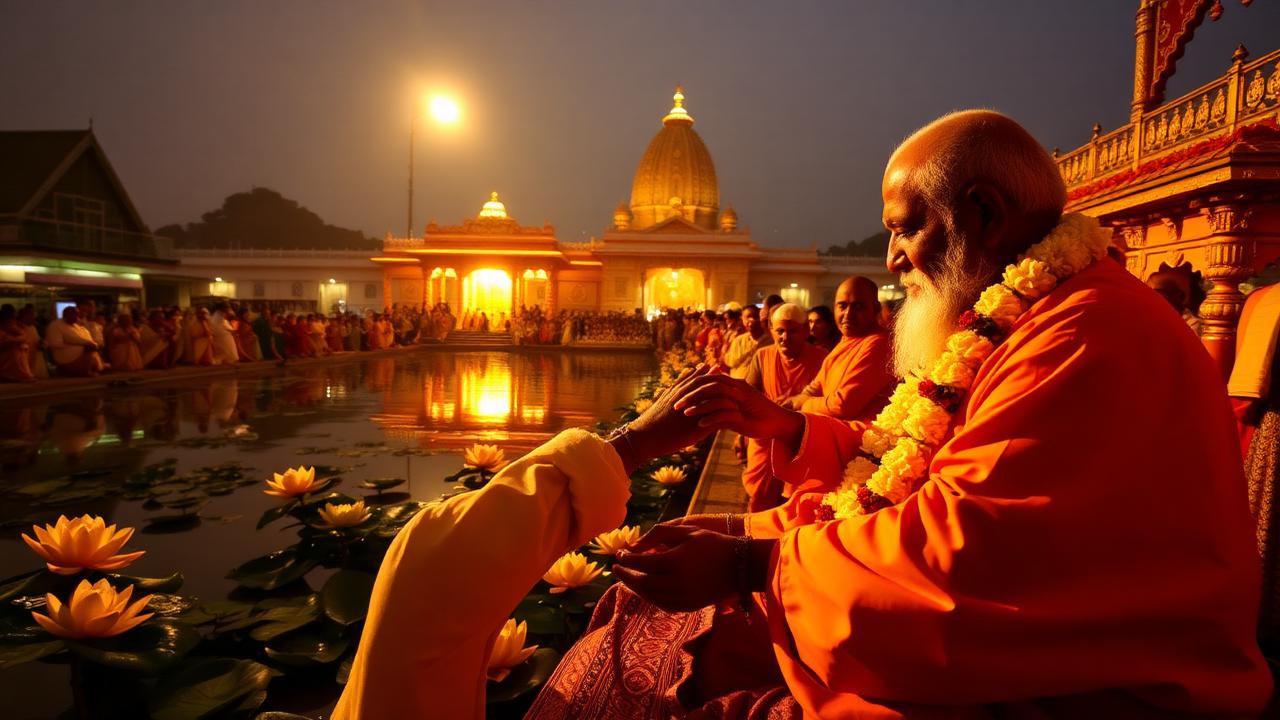
Akkalkot in Solapur district is where Swami Samarth spent his known years, and the town's devotional life is organised around two principal centres.
- Vatavruksha Swami Math - built around the banyan tree under which Swami Samarth is said to have sat. The tree is the centre of the shrine, and devotees circumambulate it and sit beneath it for long periods.
- Shri Swami Samarth Annachhatra Mandal - the institution that runs continuous free feeding for pilgrims, one of the largest such kitchens in the region
The combination is characteristic. A tree and a kitchen, rather than a large sculpted temple, are what the town is known for, which fits a guru remembered for accessibility rather than grandeur.
What devotees do at Akkalkot:
- Sit under the vatavruksha, often for hours, which is treated as the darshan itself
- Take prasad and bhojan at the annachhatra, and many sponsor a day of feeding
- Perform Guru Charitra parayan during their stay
- Complete vows made in difficult periods, offering cloth, coconut and a lamp
- Attend Thursday worship, when the town is busiest
The major annual observances are his Punyatithi in Chaitra and Datta Jayanti in Margashirsha, along with Guru Purnima in Ashadh, when guru worship across traditions reaches its peak.
How Devotees Keep His Practice
Household practice around Swami Samarth is simple and mostly daily rather than occasional.
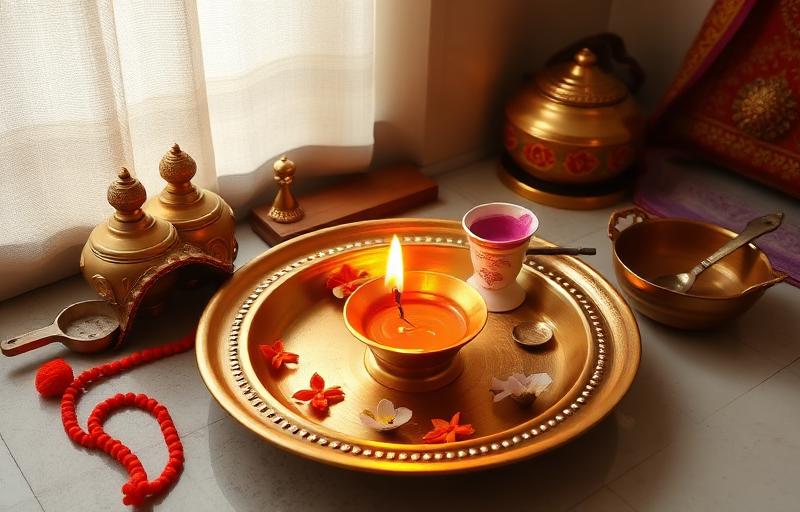
- A photograph or murti in the puja place, often with Dattatreya alongside
- A lamp lit on Thursday, the Datta day, and many families keep a lamp daily
- Guru Charitra parayan, read over seven days according to the prescribed rules, undertaken during difficulty or as an annual practice
- Datta Bavani recited, particularly by families with Gujarati or Marathi Datta devotion
- Naivedya offered on Thursdays, with families keeping their own customary dish
- The assurance repeated as japa, which is what most devotees describe doing most often
His devotees also maintain a strong culture of seva. Feeding people is the most common way a vow is completed, in keeping with the Akkalkot annachhatra, and many devotee groups run food distribution in their own towns under his name.
A point worth noting for those new to this tradition: Swami Samarth devotion does not require initiation, membership or a formal guru diksha. Devotees describe simply taking his name and keeping his picture, and the tradition treats that as sufficient. That accessibility is a large part of why the following is as broad as it is.
Visiting Akkalkot and the Datta Circuit
Akkalkot is straightforward to reach and is usually visited as part of a wider Datta circuit.
- Location - Solapur district, Maharashtra, about forty kilometres from Solapur city, which is the nearest rail hub
- Best time - October to March. Thursdays are the busiest day of the week, and Punyatithi in Chaitra and Datta Jayanti in Margashirsha bring the largest crowds.
- Stay - dharamshalas and math accommodation are available, and many devotees stay a few days rather than making a day trip
- Food - the annachhatra serves pilgrims continuously, and sponsoring a meal is a common offering
- Etiquette - remove footwear, keep phones silent at the math, and do not disturb devotees sitting under the banyan, since long sitting is part of the practice here
The wider Datta circuit usually includes:
- Gangapur, in Kalaburagi district of Karnataka, associated with Narasimha Saraswati
- Narsobawadi, at the confluence of the Krishna and Panchganga in Kolhapur district
- Audumbar, on the Krishna, another Datta seat
- Pithapuram in Andhra Pradesh, associated with Sripad Srivallabh
- Shegaon, for Gajanan Maharaj, often added by Maharashtrian devotees
A week is enough to cover the Maharashtra and north Karnataka sites at a comfortable pace, and devotees generally follow the lineage order rather than the shortest route, since the sequence itself is part of the devotion.
Frequently Asked Questions
Who is Swami Samarth of Akkalkot?+
Swami Samarth is a nineteenth century guru worshipped as an incarnation of Dattatreya. He spent his best known years at Akkalkot in Solapur district, Maharashtra, where he took samadhi in 1878, and the Datta tradition regards him as a continuation of Narasimha Saraswati.
What does Bhiu Nakos Mi Tuzya Pathishi Aahe mean?+
It is Marathi for do not be afraid, I am behind you, the assurance attributed to Swami Samarth. Devotees repeat it as japa during anxiety, and it appears on vehicles, shop counters and framed pictures across Maharashtra.
What is the Datta sampradaya lineage?+
Devotees recite the line as Sripad Srivallabh at Pithapuram, then Narasimha Saraswati associated with Narsobawadi and Gangapur, then Swami Samarth of Akkalkot, along with figures such as Manik Prabhu, Tembe Swami and Gajanan Maharaj of Shegaon.
Which day is important for Swami Samarth worship?+
Thursday, the Datta day, when Datta temples across Maharashtra fill up. His Punyatithi in Chaitra, Datta Jayanti in Margashirsha and Guru Purnima in Ashadh are the main annual occasions.
What is the Vatavruksha math at Akkalkot?+
It is the shrine built around the banyan tree under which Swami Samarth is said to have sat. The tree is the centre of worship, and devotees circumambulate it and sit beneath it for long periods, which is treated as the darshan itself.
Is initiation needed to worship Swami Samarth?+
No. The tradition requires no initiation, membership or formal guru diksha. Devotees describe simply taking his name, keeping his picture, lighting a lamp on Thursday and reading the Guru Charitra when they can.
About the author
Anjali Mehta · Editor, M.A. Religious Studies
Anjali is the managing editor for Vandnaa and oversees the festival and vrat coverage. She holds an M.A. in Religious Studies and reviews every published article for accuracy, accessibility, and tradition-fidelity.
Meet the Vandnaa editorial team →