Entering the House of the Divine
A temple (mandir) is regarded as the dwelling place of the deity, a space charged with sanctity where one comes for darshan - the sacred sight of the Lord. Entering is not like stepping into any building; it is a conscious crossing from the world of worry and ego into a space of stillness and grace. The prayers and small acts at the entrance prepare the heart, so that one arrives before the deity humble, clean and ready to receive.
Leaving the Ego at the Threshold
Before entering, pause at the *threshold (dehari) and bow. Tradition teaches that one should leave the ego, anger and worldly worries at the door, just as footwear is removed outside. Touch the step or the threshold and then your forehead, a gesture of surrender and respect. Step in with the right foot first*, carrying nothing but devotion. This simple pause is the inner heart of temple entry, more important than any single mantra.
Temple Entry Prayer and Mantra
At the entrance, fold your hands and offer a humble prayer such as:
Anayasena maranam, vina dainyena jivanam. Dehi me kripaya Shambho, tvayi bhaktim achanchalam.
Meaning: Grant me, O Lord, a life without indignity, a peaceful end, and unwavering devotion to you. Most simply, one chants 'Om' or the deity's mool mantra - for example Om Namah Shivaya for Shiva, Om Namo Bhagavate Vasudevaya for Vishnu, or Om Shri Ganeshaya Namah for Ganesha - while bowing at the door.
Ringing the Temple Bell
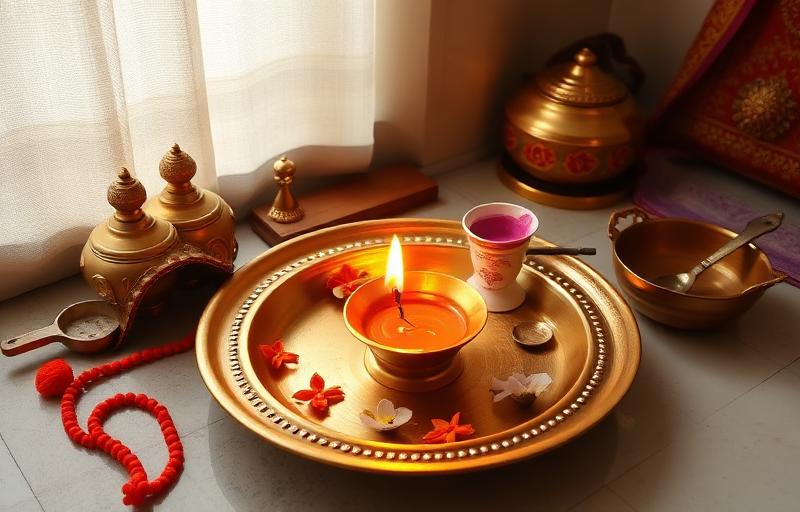
On entering, gently *ring the temple bell (ghanta) once. The bell's sound is believed to announce one's arrival to the deity, awaken devotion, and drive away negative thoughts as its resonant Om-like tone fills the space. It marks the shift from the noisy outer world into focused prayer. Ring it with reverence, not casually, and let the sound settle the mind before you move toward the garbhagriha* (sanctum) for darshan.
Temple Darshan Vidhi - Step by Step
1. Bathe and wear clean, modest clothes; remove footwear and leather items outside. 2. Pause at the threshold, leave the ego behind, touch the step and step in with the right foot. 3. Ring the bell once with reverence. 4. Stand before the deity, fold your hands, close your eyes briefly and chant 'Om' or the mool mantra. 5. Offer your prayer, flowers or prasad as the temple permits, then bow fully. 6. Do pradakshina (circumambulate the sanctum clockwise), receive charanamrit or prasad, and leave quietly without turning your back abruptly on the deity. Move gently, keep the phone away, and maintain silence and inner stillness throughout.
Significance and Benefits
Approaching the temple with the right prayer and conduct is believed to deepen bhakti, calm the mind and make the darshan truly fruitful, so one returns home carrying the deity's blessing and peace. The acts of bowing, leaving ego at the door and ringing the bell train humility, mindfulness and reverence. Beyond ritual, a temple visit done with sincerity is a reset for the heart, a few minutes of stillness that steady the whole week.
Common Questions From Devotees
What prayer should you say when entering a temple?+
Fold your hands and chant 'Om' or the deity's mool mantra, such as 'Om Namah Shivaya' or 'Om Namo Bhagavate Vasudevaya'. A short humble prayer for devotion and a peaceful life is also offered.
Why pause at the temple threshold?+
The threshold marks the crossing from the worldly to the sacred. One pauses to leave ego, anger and worries behind, touches the step in respect, and enters with the right foot in pure devotion.
Why is the temple bell rung at entry?+
The bell's Om-like sound announces your arrival to the deity, awakens devotion and drives away negative thoughts, marking the shift from the noisy world into focused prayer.
Which foot should you step in with?+
Step into the temple with the right foot first, as a sign of auspicious and respectful entry, after pausing at the threshold to bow and leave the ego behind.
What is the correct way to do darshan?+
Stand before the deity with folded hands, chant Om or the mool mantra, offer your prayer and prasad, bow fully, then do clockwise pradakshina and receive charanamrit or prasad calmly.
What should you avoid inside a temple?+
Avoid footwear, leather items, loud talk and phone use. Do not point your feet at the deity or turn your back abruptly. Keep silence, move gently and maintain inner stillness and respect.
About the author
Acharya Vinaya Kapoor · M.A. Sanskrit, Mantra & Stotra Studies
Acharya Vinaya holds an M.A. in Sanskrit from Banaras Hindu University and writes the mantra and stotra commentary on Vandnaa. Her focus is on accurate pronunciation, traditional context, and helping modern readers connect with classical texts.
Meet the Vandnaa editorial team →Explore on Vandnaa
Related Articles

Diya Jalane Ka Mantra (Deep Prajwalan) & Vidhi
8 min read
Morning Wake-Up Mantra (Karagre Vasate) & Vidhi
8 min read
Snan Mantra While Bathing - Lyrics & Significance
8 min read
Bhojan Mantra Before Eating - Lyrics & Significance
8 min read
Home Mandir Setup - Direction, Vastu Rules, Dos and Don'ts
9 min read

Om Namah Shivaya Mantra Benefits & Meaning (ॐ नमः शिवाय)
9 min read