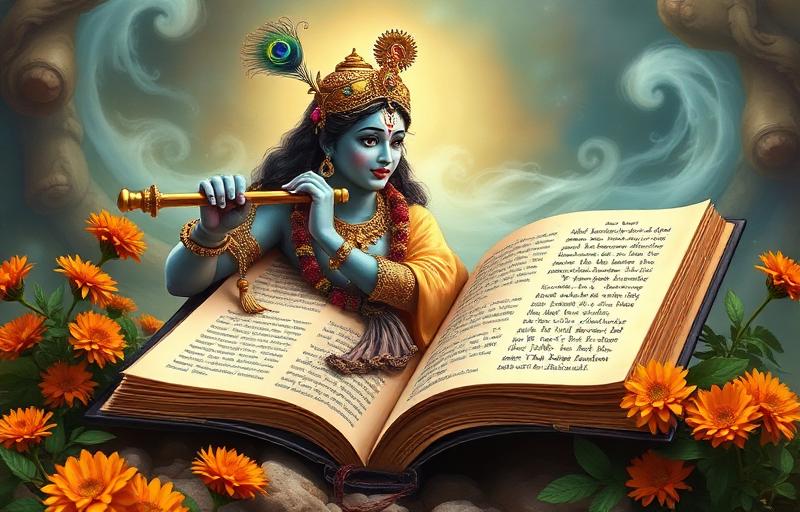
Trinavarta: The Whirlwind That Carried Baby Krishna Into the Sky
Mythology

Trinavarta: The Whirlwind That Carried Baby Krishna Into the Sky

7 min readPublished October 1, 2026
AM

By Anjali Mehta · Editor, M.A. Religious Studies

Reviewed by Pandit Ravindra Sharma · Vedic Rituals & Bhakti, 22+ years

The Storm With Nothing Behind It

Trinavarta is the third of the demons Kamsa sends against the infant Krishna, after Putana's poisoned milk and the cart-demon Shakatasura, and he is the strangest of the early three because he has almost no visible body at all.

The Bhagavata Purana describes him arriving in Gokul as a whirlwind - not a demon who summons wind, but a demon whose actual form is a whirlwind, a column of spinning dust and debris violent enough to darken the sky, tear thatch off roofs, and send the entire settlement running for cover. Yashoda had set the infant Krishna down for a moment, and in the chaos of the storm, Trinavarta swept low, lifted the child, and rose into the sky carrying him.

What follows is one of the more visually striking images in the whole Krishna cycle: the whirlwind climbing higher and higher with the infant inside it, Yashoda below screaming and unable to reach him, and Krishna, rather than being carried passively, beginning to weigh on the demon. The text says the child grew heavier as they rose, until the strain became more than Trinavarta could sustain in flight, and the demon's speed slowed and his form began to falter.

Krishna then took hold of the demon's throat. Trinavarta, unable to break free and unable to keep flying, fell from a great height, and the fall itself - the demon's own body slamming into the ground with the weight of a child he could no longer carry - is what killed him, his form shattering back into whatever a whirlwind-demon's true shape actually was. Krishna, the text says, was found sitting calmly on the corpse, entirely unhurt, playing.

Where the Story Is Placed

Trinavarta belongs to a specific run of episodes the Bhagavata places within Krishna's first year - Putana on his infancy's first days, Shakatasura shortly after, Trinavarta not long after that. Traditional commentators, including Sridhara Swami and Vishwanatha Chakravarti, read this cluster as establishing Krishna's protection over Gokul before he is even old enough to walk, which matters for how the later, more famous childhood episodes (Kaliya, the Govardhan lift) get read - by the time those happen, the community has already, without quite understanding it, been kept safe by this child multiple times.

A town in modern Uttar Pradesh, Trinavarta or Batesvar in some local traditions, is sometimes associated with this episode in regional pilgrimage lore, though this attribution is folk geography layered onto the text rather than something the Bhagavata itself specifies.

The demon's name itself, from trina (grass or straw) and avarta (a whirling or a vortex), is descriptive rather than personal - he is named for what he does, a whirlwind that catches up loose straw and dust, which is a naming pattern the Bhagavata uses for several of these early demons and worth noticing as a small window into how the text thinks about them: less as individuals with histories of their own, more as forces given just enough form to be defeated and released.

Frequently Asked Questions

How did Krishna kill Trinavarta?+

As the whirlwind demon carried him higher into the sky, the infant Krishna grew too heavy for Trinavarta to sustain, then seized his throat. Unable to fly on or free himself, the demon fell to his death from a great height.

Where was Krishna when the whirlwind took him?+

Yashoda had set him down for a moment in Gokul when Trinavarta swept through as a violent dust storm and lifted him. The villagers, including Yashoda, searched frantically until Krishna was found sitting unharmed on the demon's fallen body.

Did anyone in Gokul realise Krishna had saved himself?+

No - the Bhagavata says the villagers assumed some unseen sage or deity had intervened, since an infant surviving that fall made no sense to them. Krishna's true nature stays unrecognised by his own community for years across these early episodes.

AM

About the author

Anjali Mehta · Editor, M.A. Religious Studies

Anjali is the managing editor for Vandnaa and oversees the festival and vrat coverage. She holds an M.A. in Religious Studies and reviews every published article for accuracy, accessibility, and tradition-fidelity.

Meet the Vandnaa editorial team →

Listen all aartis, mantras & bhajans in one place.

Download Vandnaa App.

Download Now

Explore on Vandnaa

Related Articles