Why Tulsi Is Sacred
Tulsi (holy basil) is revered as a living form of the goddess Tulsi or Vrinda, considered a manifestation of Goddess Lakshmi and the most beloved plant of Lord Vishnu. No offering to Vishnu or Krishna is complete without a Tulsi leaf. A home with a healthy, worshipped Tulsi is believed to be filled with positive energy, health and the blessings of prosperity. She is not merely a plant but a sacred presence to be cared for with daily devotion.
Right Direction and Placement
The best place for Tulsi is the north, north-east or east of the home, ideally in an open courtyard or balcony that receives morning sunlight. Many homes keep her in a raised Tulsi vrindavan (a small pedestal pot) so she stays clean and elevated. Avoid placing Tulsi in the south, near a drain, or on the ground where she can be stepped over or kept in shade and neglect.
Niyam for Daily Care
Caring for Tulsi follows gentle, time-honoured rules: 1. Offer fresh water every morning after a bath, but do not water her on Sunday or during an eclipse. 2. Keep the pot and the area around it clean and free of withered leaves. 3. Light a ghee or oil lamp before Tulsi every evening at dusk. 4. Women traditionally water and worship Tulsi after bathing, with a clean mind and body. 5. Keep the soil healthy and re-pot when needed so she stays green and thriving. A wilting Tulsi is treated as a sign to increase care and devotion, not to discard her.
Rules for Plucking Tulsi Leaves

Tulsi leaves are offered to Vishnu and Krishna and used in charanamrit and prasad, but they must be plucked with respect: 1. Never pluck leaves on Sunday, Ekadashi, or after sunset. 2. Avoid plucking on Dwadashi, during an eclipse, and on Tuesdays as per many traditions. 3. Always pluck with clean hands after a bath, gently and with a prayer, never tearing whole branches. 4. Do not pluck leaves with nails roughly; take only what is needed. On days when plucking is not allowed, already-fallen or previously offered leaves may be used.
Tulsi Vivah - The Sacred Wedding
Tulsi Vivah is the ceremonial wedding of Tulsi (as Vrinda) to Lord Vishnu in his Shaligram form, observed on Kartik Shukla Dwadashi, the day after Devuthani Ekadashi. It marks the start of the Hindu wedding season after Chaturmas. Devotees decorate the Tulsi plant like a bride with cloth, bangles and a chunari, light lamps, and perform the marriage ritual. Conducting Tulsi Vivah is believed to bring marital happiness and is considered as meritorious as giving away one's own daughter in marriage (kanyadaan).
Benefits of Keeping Tulsi
A worshipped Tulsi is believed to attract Lakshmi's blessings, purify the home's air and energy, and protect the family from illness and negativity. In Ayurveda, Tulsi is a powerful medicinal herb that boosts immunity and soothes coughs and colds. Spiritually, offering Tulsi to Vishnu is said to grant great merit, while daily lamp and water rituals bring discipline, peace and a sense of sacred routine to family life.
Common Mistakes to Avoid
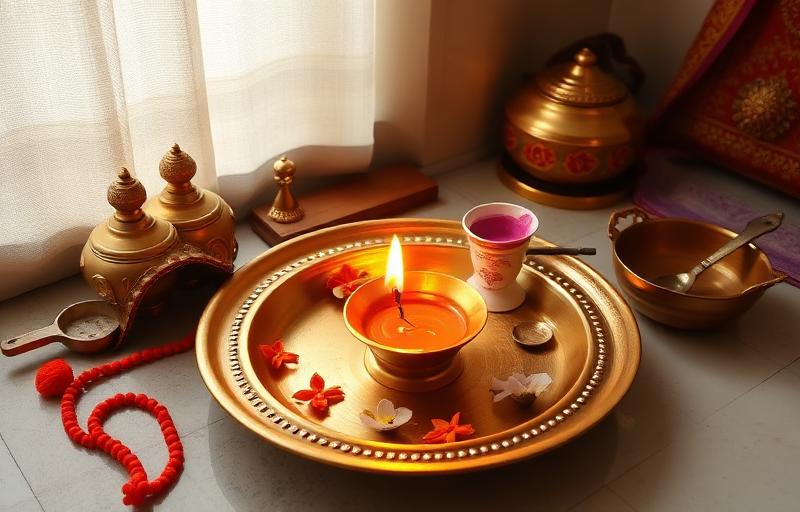
Avoid keeping Tulsi in a dark corner, near the bathroom, or on the bare ground. Never let her dry out from neglect, and do not keep thorny plants or cacti beside her. Do not pluck leaves with dirty hands or on forbidden days, and never throw a dried Tulsi plant in the dustbin - immerse her respectfully in flowing water or place her at the root of a tree. Treating Tulsi as ordinary greenery, rather than a sacred form, is the biggest mistake.
Reader Questions Answered
Can we water Tulsi on Sunday?+
No. By tradition, Tulsi is not given water on Sunday, on Ekadashi, or during an eclipse, as she is believed to observe a fast for Lord Vishnu on these days. Water her every other morning.
On which days should Tulsi leaves not be plucked?+
Tulsi leaves should not be plucked on Sunday, Ekadashi, Dwadashi, during an eclipse, or after sunset. Always pluck with clean hands after a bath and with a respectful prayer.
Which direction is best for the Tulsi plant?+
The north, north-east or east is best, in an open, sunlit, clean spot. Keep Tulsi raised on a vrindavan pedestal and avoid the south, drains or dark, neglected corners.
What is Tulsi Vivah and when is it celebrated?+
Tulsi Vivah is the sacred wedding of Tulsi to Lord Vishnu (Shaligram), observed on Kartik Shukla Dwadashi after Devuthani Ekadashi. It marks the start of the Hindu wedding season.
Why should a lamp be lit before Tulsi in the evening?+
Lighting a ghee or oil lamp before Tulsi at dusk is believed to invite Lakshmi's blessings, purify the home's energy, and bring peace and prosperity to the family.
What should be done with a dried Tulsi plant?+
A dried Tulsi should never be thrown in the dustbin. Immerse her respectfully in flowing water or place her at the root of a tree, treating her as a sacred form even after she withers.
About the author
Pandit Mahesh Trivedi · Festival Traditions & Panchang
Pandit Mahesh leads the festival-date and Panchang content on Vandnaa. He cross-references multiple regional panchangs (Drik, Vaishnava, Bengali, Marathi) for every festival date published on the site.
Meet the Vandnaa editorial team →Explore on Vandnaa
Related Articles

Panchamrit - Meaning, 5 Ingredients, Significance & Puja Vidhi
8 min read
Home Mandir Setup - Direction, Vastu Rules, Dos and Don'ts
9 min read
Gangajal - Benefits, Uses, Rules & Significance
8 min read

Vishnu Aarti Lyrics - Om Jai Jagdish Hare in Hindi & English
8 min read
Krishna Aarti Lyrics in Hindi & English - Aarti Kunj Bihari Ki
9 min read
Lakshmi Aarti Lyrics – Om Jai Lakshmi Mata (लक्ष्मी आरती)
8 min read