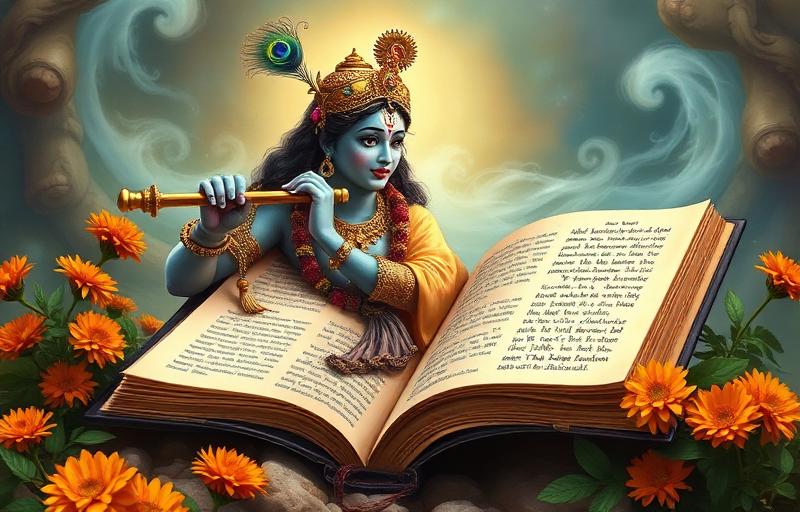
What Is the Tvameva Mata Cha Pita Prayer
Tvameva Mata Cha Pita Tvameva is among the most widely recited Sanskrit prayers in Hindu homes, often the very first shloka a child learns after the opening om. In four lines, the devotee tells the Divine: You alone are my mother, you alone my father, you alone my kinsman and my friend, you alone my knowledge and my wealth - you are my everything, O God of gods. The verse is found in the Pandava Gita, also called the Prapanna Gita, a celebrated anthology of verses of surrender spoken by the Pandavas, Kunti, Gandhari and other figures of the Mahabharata tradition. It is traditionally counted as verse 28 of that collection. What gives the prayer its enduring power is the single repeated word tvameva - you alone. Each repetition removes one more worldly support, until nothing remains between the devotee and the Divine. This complete handing over of oneself is called sharanagati, total surrender.
Full Shloka in Sanskrit with Transliteration
Here is the complete shloka as traditionally recited:
त्वमेव माता च पिता त्वमेव । त्वमेव बन्धुश्च सखा त्वमेव । त्वमेव विद्या द्रविणं त्वमेव । त्वमेव सर्वं मम देवदेव ॥
IAST transliteration: tvam eva mātā ca pitā tvam eva | tvam eva bandhuś ca sakhā tvam eva | tvam eva vidyā draviṇaṁ tvam eva | tvam eva sarvaṁ mama deva-deva ||
Overall meaning: You alone are my mother, and you alone are my father. You alone are my kinsman, and you alone are my friend. You alone are my knowledge, and you alone are my wealth. You alone are my everything, O God of gods. The word tvameva appears seven times in four lines, and the verse ends with the most complete statement possible - sarvaṁ mama, my everything. There is nothing left to add after it, which is why the shloka traditionally closes prayers and aartis.
Word-by-Word Meaning of Tvameva Mata Cha Pita
Here is the word-by-word meaning of the shloka: 1. tvam - you 2. eva - alone, only, indeed 3. mātā - mother 4. ca - and 5. pitā - father 6. bandhuḥ - kinsman, relative 7. sakhā - friend, companion 8. vidyā - knowledge, learning 9. draviṇam - wealth, property 10. sarvam - everything, all 11. mama - my, mine 12. deva-deva - God of gods, Lord of all deities The six relationships named are carefully chosen. Mātā and pitā cover the love that protects us, bandhuḥ and sakhā the bonds that accompany us, vidyā the inner wealth that guides us, and draviṇam the outer wealth that sustains us. Together they map everything a human being depends on - and the shloka places the Divine at the source of each one.
The Deeper Meaning - Sharanagati, Total Surrender

On the surface, the shloka can sound like renouncing one's family - it is not. The devotee who chants it does not abandon mother, father, friends or work. Rather, the prayer recognises that behind every reliable support in life stands one ultimate support. Parents age, friends move away, knowledge has limits, wealth fluctuates - but the Divine source from which all of these flow does not change. Sharanagati means consciously shifting one's deepest reliance to that unchanging ground. The Bhakti traditions consider this the highest stage of devotion, beyond ritual and even beyond knowledge, because it dissolves the last claim of the ego: the claim of being self-sufficient. Notice also the intimacy of the prayer - the Divine is not addressed as a distant ruler but as mother, father and friend at once. Surrender here is not fearful submission; it is the relief of a child who finally rests in arms that will never let go.
When and How to Use This Shloka
Tvameva Mata is one of the most flexible prayers in daily practice: 1. After aarti - in most homes and temples it is chanted immediately after the aarti, with folded hands, as the formal close of worship. 2. Children's first prayer - its simple repeating structure makes it ideal as a child's first Sanskrit shloka, recited before sleep or before school. 3. School prayer - many schools include it in assembly as a prayer of humility and trust. 4. In difficulty - when feeling alone, betrayed or financially anxious, recalling the specific line that fits the moment - tvameva bandhuś ca sakhā tvameva in loneliness, tvameva vidyā draviṇaṁ in uncertainty - brings the teaching directly into the wound. 5. Daily japa - some devotees repeat the full shloka 11 times each morning as a renewal of surrender. Chant slowly with folded hands, and on the final line, tvameva sarvaṁ mama deva-deva, pause for one breath before ending.
Benefits of Reciting Tvameva Mata Daily
Daily recitation of this surrender shloka brings benefits that devotees describe across generations: 1. Emotional security - naming the Divine as mother, father and friend builds a felt sense of never being truly alone. 2. Relief from over-responsibility - those who carry every burden themselves find rest in handing the ultimate weight to a higher power. 3. Steadiness in loss - when a relationship, job or possession is lost, the shloka reminds the devotee that the source of all support remains. 4. Humility - acknowledging that even our knowledge and wealth come from beyond us keeps success from hardening into arrogance. 5. Deepened bhakti - repeating tvameva turns abstract faith into a personal relationship, the heart of all devotional practice. The shloka asks for nothing - no protection, no boon, no result. It simply declares trust, and in that declaration, the restless search for security finally comes to rest.
The Pandava Gita Context - Who Spoke This Verse

The Pandava Gita, also known as the Prapanna Gita (the song of the surrendered), is a traditional anthology that gathers verses of surrender attributed to great figures of the Mahabharata world - Yudhishthira, Bhima, Arjuna, Draupadi, Kunti, Gandhari, Bhishma and others - each verse expressing refuge in Lord Krishna or Vishnu. In many traditional readings, this particular verse is associated with Gandhari, the mother of the Kauravas, which gives it extraordinary poignancy. A queen who lost all hundred of her sons in the war still turns to Krishna and calls him her mother, father, kin, friend, knowledge, wealth - her everything. Whoever its original speaker, the verse survived because it gives perfect words to a universal moment: the point at which a human being, having seen the limits of every earthly support, places everything in divine hands. That is why it closes prayers to any deity, in any tradition, to this day.
What People Ask Most
What is the meaning of Tvameva Mata Cha Pita Tvameva in one line?+
It means: You alone are my mother, father, kinsman, friend, knowledge and wealth - You alone are my everything, O God of gods. It is a declaration of total surrender to the Divine.
Which scripture is Tvameva Mata from?+
It is found in the Pandava Gita, also called the Prapanna Gita, a traditional anthology of surrender verses linked to figures of the Mahabharata. It is commonly counted as verse 28 of that collection.
Does chanting this shloka mean rejecting one's parents and family?+
No. The shloka does not reject anyone. It recognises the Divine as the ultimate source behind every human relationship and support. Devotees continue to love and serve their families while resting their deepest trust in God.
Can this shloka be addressed to any deity?+
Yes. Though it appears in a Krishna-centred text, the address deva-deva (God of gods) lets devotees offer it to their own ishta devata - Shiva, Devi, Rama, Hanuman or any form of the Divine they worship.
When is Tvameva Mata usually chanted?+
Most commonly right after aarti as the closing prayer of puja. It is also chanted before sleep, in school assemblies, and any time one seeks comfort and reassurance in the Divine.
Why does the word tvameva repeat so many times?+
Tvameva (you alone) appears seven times in four lines. Each repetition deliberately transfers one more support - parent, friend, knowledge, wealth - to the Divine, and the rhythm of repetition itself deepens the feeling of surrender as you chant.
About the author
Acharya Vinaya Kapoor · M.A. Sanskrit, Mantra & Stotra Studies
Acharya Vinaya holds an M.A. in Sanskrit from Banaras Hindu University and writes the mantra and stotra commentary on Vandnaa. Her focus is on accurate pronunciation, traditional context, and helping modern readers connect with classical texts.
Meet the Vandnaa editorial team →