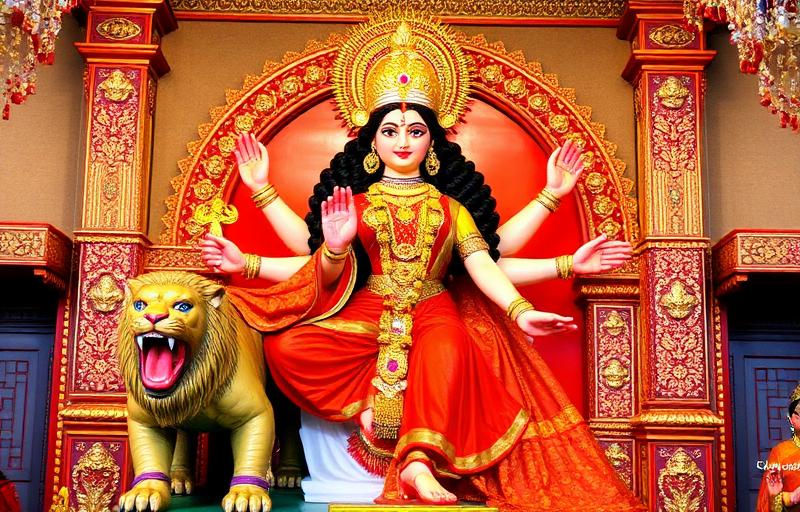
Who Is Worshipped at Vaishno Devi
High in the Trikuta Hills near the town of Katra in Jammu and Kashmir, the Vaishno Devi shrine draws one of the largest annual pilgrim gatherings anywhere in India. Devotees know the goddess here affectionately as Mata Rani or Vaishnavi, understood as a combined manifestation of the three principal goddess forms, Maha Kali, Maha Lakshmi and Maha Saraswati, representing power, prosperity and wisdom together in a single divine presence.
Unlike temples with sculpted idols, the object of worship inside the sacred cave, known as the Bhawan or the Holy Cave, consists of three natural rock formations called pindis, each associated with one of these three goddess forms. Pilgrims file past the pindis for a brief but deeply anticipated darshan, often after hours of trekking and waiting, making the moment of actually standing before the pindis feel like the culmination of a genuinely demanding devotional journey rather than an easily accessed stop.
The legend associated with the shrine tells of Vaishnavi as an incarnation of the Divine Mother who took human-like form to combat evil, ultimately pursued to this mountain cave by the demon Bhairavnath, whom she defeated near the site, a story still marked today by the tradition of visiting the nearby Bhairavnath temple as part of a complete pilgrimage.
This layered, syncretic nature of the deity, at once three goddesses in one, at once a warrior figure and a nurturing mother, gives the Vaishno Devi yatra a distinct devotional character compared to many single-form goddess shrines elsewhere in India, and is part of why the pilgrimage draws such an enormous, diverse cross-section of devotees from across the country every single year.
Registering for the Yatra: The Yatra Parchi
Before setting out on the trek, every pilgrim is required to obtain a Yatra Parchi, a free registration slip issued by the Shri Mata Vaishno Devi Shrine Board, which manages the entire pilgrimage. This registration serves both a safety and crowd-management function, helping authorities track pilgrim movement along the route, particularly important given the sheer volume of devotees the yatra attracts throughout the year.
The Yatra Parchi can be obtained in advance online through the official Shrine Board website or mobile application, which allows pilgrims to select a preferred date and time slot before travel, considerably reducing waiting time upon arrival. Alternatively, physical registration counters are available near the Katra bus stand and the beginning of the trek itself for pilgrims who have not booked ahead, though these counters can involve longer queues, especially during peak season and major festivals.
Carrying a valid photo identification document is necessary at the time of registration, and the slip itself must be retained through the trek, since it is checked at various checkpoints along the route to Bhawan. Registration is typically valid only for a specified period, so pilgrims are advised to begin their trek within the window indicated on their slip rather than delaying significantly after collection.
Families traveling with young children, elderly members, or pilgrims with mobility considerations should factor in this registration step early in their planning, since it also affects eligibility windows for certain services like battery car bookings or helicopter slots, which often need to be arranged as a connected sequence of bookings rather than independently on arrival.
The Trek From Katra to Bhawan
The pilgrimage proper begins at Katra, the base town that serves as the starting point for the trek up to the Bhawan, a distance covered by a well-maintained, paved track that winds through the Trikuta Hills. The journey is a genuine physical undertaking, and pilgrims should approach it with realistic expectations about the effort involved, particularly those not used to extended uphill walking.
- Distance: The main track from Katra to the Bhawan runs approximately 12 to 13 kilometers, climbing steadily in elevation through the hills
- Extension to Bhairavnath: Pilgrims wishing to complete the traditional full pilgrimage typically continue an additional stretch beyond the Bhawan to the Bhairavnath temple, adding meaningfully to the day's total walking distance
- Path conditions: The track is paved and well-lit, with railings along steeper sections, rest points, drinking water stations and langar seva stalls offering free food along the route
- Alternative routes: A newer, somewhat longer track option exists alongside the traditional path, occasionally used to manage pilgrim flow during high-traffic periods
- Pace: Most pilgrims complete the ascent over several hours, with the descent typically faster; taking regular breaks is advisable rather than attempting the climb without pause
For those unable or unwilling to walk the entire distance, options along the route include hired ponies, pithoo carriers for children or those needing to be carried, and palanquins, all available for hire at marked points near the base and at intervals along the track. Battery-operated vehicles also cover a portion of the route for a stretch of the journey, offering a partial alternative to walking the entire distance on foot.
Helicopter vs Walking: Choosing Your Route

For pilgrims short on time or with physical limitations that make the full trek difficult, helicopter services offer a considerably faster alternative, flying from helipads near Katra directly to Sanjichhat, a point close to the Bhawan that leaves only a relatively short final walk to complete before reaching the shrine itself. This option has become increasingly popular, particularly among families with elderly members or young children, and among pilgrims visiting on tighter schedules.
Helicopter seats are limited and in high demand, especially during peak season and major festival periods, so advance booking through the official Shrine Board booking channels is strongly recommended rather than expecting to arrange it upon arrival in Katra. Weather conditions in the hills can also affect helicopter operations, with services occasionally suspended during poor visibility or heavy rain, so pilgrims relying on this option should ideally build some flexibility into their travel plans.
Walking the full route, by contrast, remains the choice of the majority of pilgrims and is often described by devotees as an integral part of the spiritual experience itself, the physical effort of the climb understood as a form of devotion and discipline offered to Mata Rani rather than merely a logistical hurdle to be minimized. Many first-time pilgrims report that the atmosphere along the walking track, filled with fellow devotees, chanting, and the camaraderie of a shared uphill journey, becomes one of the most memorable parts of the entire yatra.
Ultimately, the choice between walking and flying often comes down to the time available, physical capability of the group, and how each pilgrim personally weighs the devotional value of the trek itself against the practicality of a faster ascent.
What to Pack and the Best Time to Visit
Sensible packing makes a significant difference to comfort during the Vaishno Devi trek, given the combination of physical exertion, variable mountain weather and long hours away from the base town. A few essentials go a long way toward a smoother pilgrimage experience.
- Footwear: Comfortable, well broken-in walking shoes or sports shoes are essential; sandals or new, untested footwear can cause blisters over the distance involved
- Layers: Even in warmer months, temperatures in the hills can turn cool, especially early morning and at night, so a light jacket or shawl is worth carrying regardless of season
- Rain gear: During the monsoon months, waterproof clothing or a compact umbrella is highly recommended, and pilgrims should be prepared for a slippery path in wet weather
- Water and snacks: While water and food stalls are available along the route, carrying a personal water bottle and some light snacks helps avoid unnecessary stops
- Documents: Valid photo identification is required for registration and periodic checks, so keep it easily accessible rather than packed away
- Light luggage: Cloak rooms are available in Katra to store heavier luggage during the trek, since carrying anything beyond a small backpack is impractical on the climb
On timing, the shrine remains open through the year, and pilgrims visit in every season, though the routes can be particularly crowded around Navratri, both the Chaitra and Sharad observances, when devotion to the Goddess peaks nationally. Many pilgrims find the months outside of peak monsoon and the coldest winter weeks, roughly spanning spring and autumn, to offer the most comfortable combination of weather and manageable crowds, though the yatra is undertaken faithfully in every season by devotees for whom timing is secondary to devotion.
🪔 Vandnaa's Navratri and festival reminders can help you time a Vaishno Devi trip around auspicious dates that matter most to you.
Bhairavnath Temple and Completing the Pilgrimage
According to long-standing tradition, a Vaishno Devi pilgrimage is considered incomplete without also visiting the Bhairavnath temple, located a further distance beyond the Bhawan. The belief connects directly to the shrine's founding legend, in which the demon Bhairavnath, though ultimately defeated by the Goddess, was also granted liberation and blessed by her, with the understanding that any devotee's darshan of Mata Rani remains incomplete without also paying respects at Bhairavnath's shrine.
Most pilgrims undertake this extension either on foot, adding a further uphill stretch to an already demanding day, or via a cable car service available for the Bhairavnath leg, which considerably shortens this final segment for those already fatigued from the main trek. Many devotees choose to visit Bhairavnath either shortly after their main darshan or the following day, depending on their energy levels and time available.
After completing darshan at both the Bhawan and Bhairavnath, the return journey to Katra follows the same track downhill, generally faster than the ascent, though pilgrims are advised not to rush this stretch given the incline and the fatigue accumulated over the day. Battery car and pony services are available for the descent as well for those who need them.
For first-time pilgrims, understanding this fuller structure of the yatra, registration, ascent, Bhawan darshan, the Bhairavnath extension and the return, helps in planning a realistic schedule rather than underestimating the full day, or in some cases two days, that a complete and unhurried pilgrimage genuinely requires. Pilgrims travelling with elderly family members or young children benefit in particular from building this extra buffer into their itinerary rather than rushing the final stretch.
Reader Questions Answered
How do I register for the Vaishno Devi yatra?+
Pilgrims need a free Yatra Parchi, available online through the Shrine Board's website or app in advance, or at registration counters near Katra. A valid photo ID is required at the time of registration.
How long is the trek from Katra to the Bhawan?+
The main paved track runs approximately 12 to 13 kilometers from Katra to the Bhawan, with an additional stretch beyond that for pilgrims continuing to the Bhairavnath temple.
Should I choose the helicopter or walk the full route?+
Helicopters fly from Katra to Sanjichhat, shortening the walk considerably, and suit those short on time or with physical limitations. Many pilgrims still prefer walking the full track, valuing the trek as part of the devotional experience.
What should I pack for the Vaishno Devi trek?+
Comfortable walking shoes, a light jacket for cool mountain temperatures, rain gear during monsoon, a water bottle, snacks and easily accessible identification are the key essentials for the trek.
What is the best time of year for the Vaishno Devi yatra?+
The shrine is open year-round. Spring and autumn months generally offer comfortable weather with manageable crowds, while Navratri periods draw the heaviest footfall due to their special devotional significance.
Is visiting Bhairavnath temple necessary after Vaishno Devi darshan?+
Tradition holds the pilgrimage is considered incomplete without it, connected to the legend of Bhairavnath's liberation by the Goddess. Most pilgrims visit via a short additional walk or a cable car option.
About the author
Pandit Ravindra Sharma · Vedic Rituals & Bhakti, 22+ years
Pandit Ravindra is the Vandnaa editorial team's resident specialist on aarti, chalisa, and daily devotion. He has performed home and temple pujas across Varanasi and Delhi for over two decades and contributes the bhakti-focused articles on this site.
Meet the Vandnaa editorial team →