What Is the Vishnu Gayatri Mantra?
The Gayatri is the most revered Vedic metre, and each deity has a Gayatri mantra in this form - a prayer of meditation (dhyana) that asks the deity to illumine the mind. The Vishnu Gayatri is the Gayatri-form prayer to Lord Vishnu, the preserver of the universe.
Where the simple name-mantras (like Om Namo Narayanaya) are calls of surrender, the Vishnu Gayatri is a meditation - we 'know' Narayana, 'meditate upon' Vasudeva, and pray that Vishnu inspire and guide our intellect. It is chanted for protection, peace and clarity of mind.
The Mantra & Line-by-Line Meaning
The mantra: ॐ नारायणाय विद्महे वासुदेवाय धीमहि । तन्नो विष्णुः प्रचोदयात् ॥
Om Narayanaya Vidmahe Vasudevaya Dhimahi. Tanno Vishnuh Prachodayat.
Line-by-line meaning:
- Om Narayanaya Vidmahe - We know (let us realise) Narayana, the supreme refuge who rests on the cosmic waters.
- Vasudevaya Dhimahi - We meditate upon Vasudeva, the all-pervading Lord who dwells in every being.
- Tanno Vishnuh Prachodayat - May that Vishnu inspire, illumine and guide our intellect.
In short: 'We contemplate Narayana and meditate on Vasudeva; may Lord Vishnu enlighten our minds.' It is a prayer not merely for boons but for right understanding and divine guidance.
Benefits of the Vishnu Gayatri
- Protection and stability: Vishnu is the preserver, so his Gayatri is chanted for safety, steadiness and removal of obstacles.
- Clarity of mind: Like all Gayatri mantras, it prays for the awakening of the intellect and right discernment.
- Peace and positivity: The slow, measured chant calms anxiety and fills the mind with sattvic, peaceful energy.
- Spiritual growth: It deepens devotion to Vishnu-Narayana and supports a steady sadhana.
- Auspicious beginnings: Often chanted at the start of work, study or worship to invite Vishnu's blessing.
These are devotional beliefs that nurture faith and inner steadiness, not material guarantees.
Jaap Vidhi & Best Time to Chant
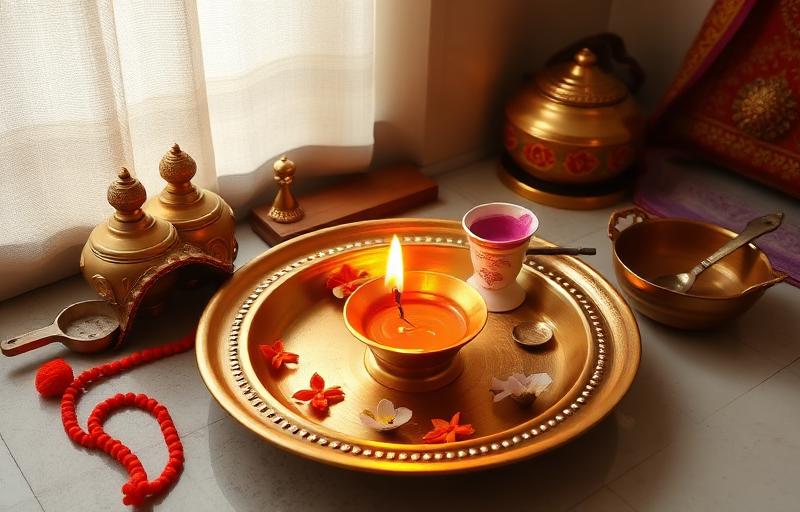
1. Bathe and sit in a clean place before an image of Vishnu or Krishna, facing east or north. 2. Light a ghee lamp, offer tulsi, yellow flowers and incense. 3. Use a tulsi mala of 108 beads and chant the mantra one full round (108 times). 3 or 9 rounds is a fuller practice. 4. Chant slowly and clearly, holding each line in the mind, breathing evenly. 5. Best time: Brahma muhurat (pre-dawn) and the sunrise hour are ideal; evening sandhya is also good. Thursdays, Ekadashi, and Vishnu festivals (such as Vaikuntha Ekadashi and Janmashtami) are especially auspicious. 6. End with Om Namo Bhagavate Vasudevaya and a moment of silent gratitude.
Reader Questions Answered
What is the meaning of the Vishnu Gayatri Mantra?+
It means: 'We contemplate Narayana and meditate on Vasudeva; may Lord Vishnu inspire and illumine our intellect.' It is a meditation prayer asking Vishnu for guidance, protection and clarity of mind.
How is the Vishnu Gayatri different from Om Namo Narayanaya?+
Om Namo Narayanaya is a short name-mantra of surrender. The Vishnu Gayatri is a longer meditation prayer in the Gayatri metre that asks Vishnu to awaken and guide the intellect. Both invoke the same Lord Vishnu.
How many times should I chant the Vishnu Gayatri?+
One full mala of 108 daily is a good practice; 3 or 9 malas is fuller. Chant slowly and clearly with a tulsi mala, ideally in the early morning or at sunrise.
When is the best time to chant the Vishnu Gayatri?+
Brahma muhurat (pre-dawn) and the sunrise hour are ideal, with evening sandhya also good. Thursdays, Ekadashi, and Vishnu festivals like Vaikuntha Ekadashi and Janmashtami are especially auspicious.
About the author
Acharya Vinaya Kapoor · M.A. Sanskrit, Mantra & Stotra Studies
Acharya Vinaya holds an M.A. in Sanskrit from Banaras Hindu University and writes the mantra and stotra commentary on Vandnaa. Her focus is on accurate pronunciation, traditional context, and helping modern readers connect with classical texts.
Meet the Vandnaa editorial team →