Who is Vishwakarma and What is His Chalisa
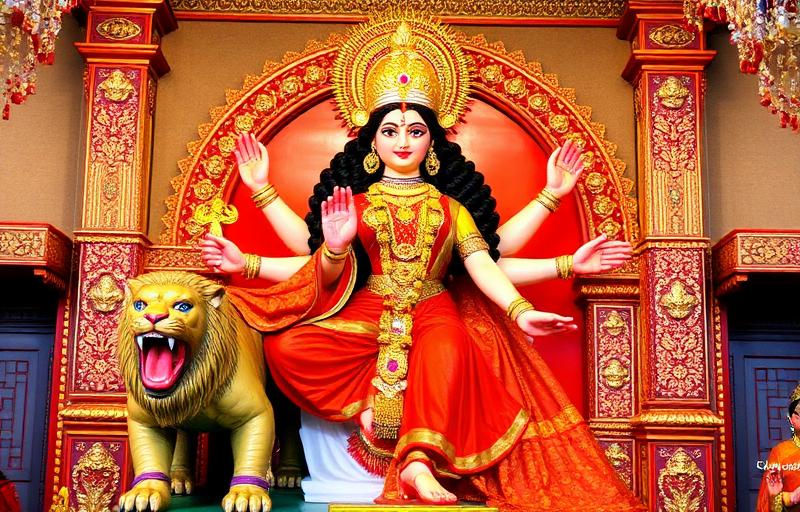
Vishwakarma is honoured in Hindu tradition as the divine architect and engineer of the gods, the celestial craftsman whose skill gave form to the universe's structures. The Rigveda speaks of Vishwakarma as the shaper of creation itself, and later tradition credits him with building Dwarka, Indra's heavenly abode, and the weapons and flying chariots (vimanas) used by the devas.
Every artisan, engineer, mechanic and craftsperson looks to Vishwakarma as their guiding deity. Vishwakarma Puja, observed widely across eastern and northeastern India around mid-September (Kanya Sankranti), is the day when tools, machines and workshops are cleaned, decorated and formally worshipped.
The Vishwakarma Chalisa is a devotional hymn composed in his honour, sung to invite precision, safety and divine sanction over one's work. It reminds devotees that true craftsmanship begins with humility, not ego.
Vishwakarma Chalisa - Representative Verses (Hindi)
Chalisa texts for regional and craft deities like Vishwakarma often circulate in more than one version across different communities. Here are representative opening and central verses in the traditional doha-chaupai style:
दोहा: जय जय जय विश्वकर्मा प्रभु, सृष्टि के शिल्पकार। जगत रचयिता बुद्धि दो, करूं तुम्हें नमस्कार॥
चौपाई: जय विश्वकर्मा जगत रचैया। सब देवन के तुम शिल्पैया॥ ब्रह्मा विष्णु शिव के कारज। तुमहीं रचौ यंत्र अरु अस्त्र॥ दिव्य विमान वज्र तुम बनायो। इंद्रपुरी को स्वर्ग सजायो॥ द्वारका नगरी रची तुम्हारी। कृष्ण बसे तेहि पुरी प्यारी॥ शिल्प कला के तुम आधारा। कारीगर सब करत पुकारा॥ जहां यंत्र और औज़ार की पूजा। तहां तुम्हारी कृपा न दूजा॥
दोहा: विश्वकर्मा चालीसा पढ़े, मन क्रम वचन लगाय। शिल्प कर्म में सिद्धि मिले, सुख समृद्धि पाय॥
Meaning and Devotional Significance
The opening doha calls Vishwakarma 'srishti ke shilpakar' - the architect of creation - and asks him for the wisdom (buddhi) to match his skill. This is the heart of the chalisa: it does not merely ask for material success, but for the discernment to build and craft responsibly.
The verses describing Dwarka, Indra's abode and the divine vimanas are not meant as engineering history but as devotional imagery - they express the belief that no act of creation, however small, is separate from divine intelligence. When a mechanic repairs an engine or an engineer designs a bridge, tradition holds that the same creative force that shaped the universe flows through skilled hands offered in humility.
The closing doha promises siddhi (accomplishment) in one's craft to whoever recites with sincere attention - a reminder that discipline and devotion together, not shortcuts, are what tradition considers the true path to good work.
Benefits of Reciting Vishwakarma Chalisa
As per tradition, devotees who recite the Vishwakarma Chalisa with sincerity believe it brings:
- Greater precision and fewer errors in technical or creative work
- Protection of tools, machines and the workplace from accidents
- Blessings for the launch of a new business, workshop or factory
- Support and clarity for students of engineering, architecture and design
- Steady recognition and income for artisans and craftspeople
- Patience and discipline in learning any hands-on skill
These are held as matters of faith and devotion, not guarantees - the chalisa is a way of anchoring one's work in gratitude and humility rather than a substitute for skill or effort.
How and When to Recite
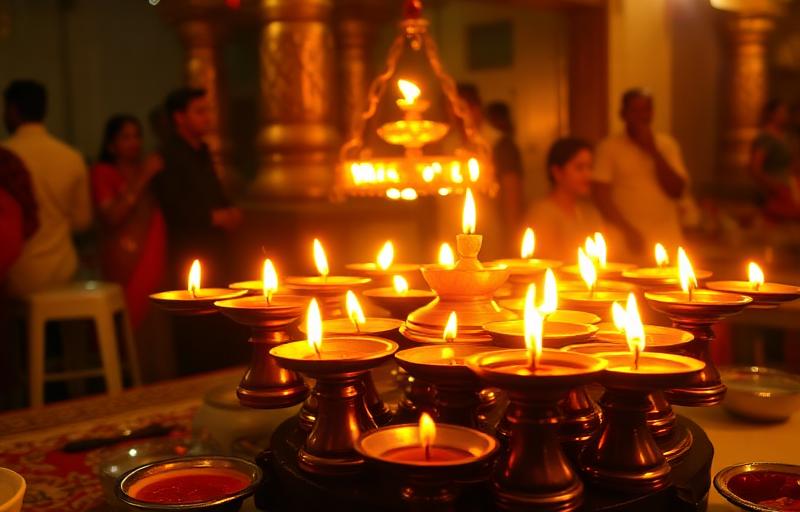
The most significant day is Vishwakarma Puja, observed around mid-September (Kanya Sankranti), when tools and machines are cleaned, arranged before a picture or idol of Vishwakarma, and worshipped with flowers, akshat and a lit diya before the chalisa is recited.
Beyond this day, many craftspeople recite it before starting any new work, project or business venture. A simple practice: clean the workspace, place your tools or instruments nearby, light a diya, offer a flower, and recite the chalisa with attention before beginning work.
As with all devotional practice, worship is an act of faith and love, not a transaction - the chalisa is offered to invite blessing and mindfulness, and the real work still calls for one's own honest effort.
Common Questions From Devotees
When is Vishwakarma Puja celebrated?+
Vishwakarma Puja is most widely observed around mid-September, on Kanya Sankranti, especially across eastern and northeastern India, when craftspeople, engineers and factory workers clean and worship their tools and machines.
Can anyone recite Vishwakarma Chalisa, not just craftsmen?+
Yes. Anyone whose work involves building, designing, repairing or creating anything, from a student to a business owner, can recite it with devotion to invoke clarity and diligence in their efforts.
What is Vishwakarma traditionally believed to have built?+
Tradition and legend credit Vishwakarma with building the city of Dwarka, Indra's celestial abode, and the divine weapons and flying vimanas of the gods. These are held as devotional tradition rather than verified history.
About the author
Acharya Vinaya Kapoor · M.A. Sanskrit, Mantra & Stotra Studies
Acharya Vinaya holds an M.A. in Sanskrit from Banaras Hindu University and writes the mantra and stotra commentary on Vandnaa. Her focus is on accurate pronunciation, traditional context, and helping modern readers connect with classical texts.
Meet the Vandnaa editorial team →