
What Is a Beej Mantra
A beej mantra, literally a 'seed' mantra, is a short, often single-syllable sound in Sanskrit that Hindu tradition holds to carry the concentrated essence of a particular deity or divine quality. Unlike ordinary words, beej mantras are not translated in the usual sense, sounds such as Gam, Shreem or Aim are understood to work through vibration and devotion rather than literal dictionary meaning.
Just as a tiny seed contains, in potential, everything a full tree will become, tradition holds that a beej mantra contains the full presence of a deity within a single compact sound, ready to unfold when chanted with sincerity and attention.
Where These Sounds Come From
The roots of beej mantras lie in the Vedic understanding of shabda, sound, as a fundamental creative force, expressed in the belief that the universe itself began with a sound, most often described as Om. Later tantric and Puranic traditions developed this idea further, associating specific syllables with specific deities and their attributes, systematised across texts on mantra shastra over many centuries.
A beej mantra is rarely chanted entirely alone, it is usually placed before a deity's name inside a longer mantra, such as Gam within Om Gam Ganapataye Namah, functioning almost like a key that opens the fuller invocation that follows.
How Beej Mantras Are Understood to Work
Tradition holds that each beej combines a few essential elements: a root consonant tied to the deity's essence, a vowel that shapes the sound's particular energy, and a closing bindu or anuswara, the nasal hum representing the formless, boundless aspect of the divine. Chanted together, these elements are believed to form a complete, resonant invocation.
- Ganesha's Gam is tied to buddhi, wisdom and the removal of obstacles
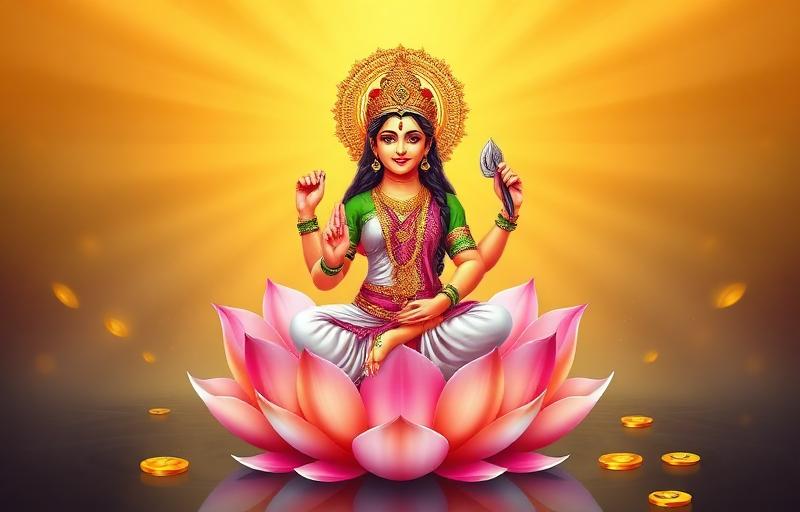
- Lakshmi's Shreem and Kubera's shared use of it centre on abundance and grace
- Saraswati's Aim centres on speech, memory and learning
- Kali's Krim and Shiva's Hraum carry more forceful, transformative energy
- Hanuman's Hum and Surya's Hraam are linked to protection, strength and vitality
How to Approach Chanting Respectfully
Beej mantras are generally chanted after bathing, in a clean and quiet space, seated comfortably with a steady, unhurried breath. Many devotees use a mala, most often of rudraksha, tulsi or the seed associated with a particular deity, to keep count, traditionally in cycles of 108.
While many beej mantras, especially those for Ganesha, Lakshmi and Saraswati, are chanted freely by any sincere devotee, tradition advises that the more intense beejas linked to fierce forms of the Goddess or Shiva are best learned from someone experienced in mantra practice, so the sound and intent are held with proper respect.
Why Devotees Value This Practice
As per tradition, regular and sincere chanting of a beej mantra is believed to steady the mind, deepen one's connection to a chosen deity, and bring the specific quality that beej represents, wisdom, courage, abundance or peace, more fully into daily life. Devotees often describe the practice as less about asking for outcomes and more about aligning oneself with a particular divine quality.
Because a beej is so short, it fits naturally into even the busiest life, a few quiet repetitions before work, study or sleep considered enough to keep the connection alive.
The Simple Heart of the Practice
Across every deity and every beej, tradition returns to the same essential truth: what matters most is not perfect pronunciation but sincere devotion. A beginner chanting slowly and thoughtfully is understood to receive the same grace as someone who has practised for decades.
As with all mantra practice, chanting a beej mantra is an act of faith and love, not a transaction, a small seed of devotion planted daily, trusted to grow in its own time and its own way.
Quick Answers
What exactly does a beej mantra mean in translation?+
Beej mantras are not meant to be translated word for word like ordinary language. Tradition understands them as sound forms carrying a deity's essence, meant to be experienced through devoted chanting rather than decoded like a sentence.
Can anyone chant any beej mantra?+
Gentler beejas such as Gam, Shreem and Aim are widely chanted by any sincere devotee. More intense beejas connected to fierce forms of the Goddess or Shiva are traditionally best learned with guidance from someone experienced in mantra practice.
Why is the final humming sound present in most beej mantras?+
That closing nasal sound, called the bindu or anuswara, represents the formless, all-pervading aspect of the divine in tradition, the point where the specific form invoked is understood to merge back into the infinite.
About the author
Acharya Vinaya Kapoor · M.A. Sanskrit, Mantra & Stotra Studies
Acharya Vinaya holds an M.A. in Sanskrit from Banaras Hindu University and writes the mantra and stotra commentary on Vandnaa. Her focus is on accurate pronunciation, traditional context, and helping modern readers connect with classical texts.
Meet the Vandnaa editorial team →