A Pause Before Every Departure
Before leaving home for a long journey, a new job, an important exam, a wedding, or any significant new beginning, it is common in Hindu families for the person departing to seek the blessings of parents, grandparents or other elders. This usually involves touching their feet, and the elder responding with a gentle hand on the head and a few words of good wishes.
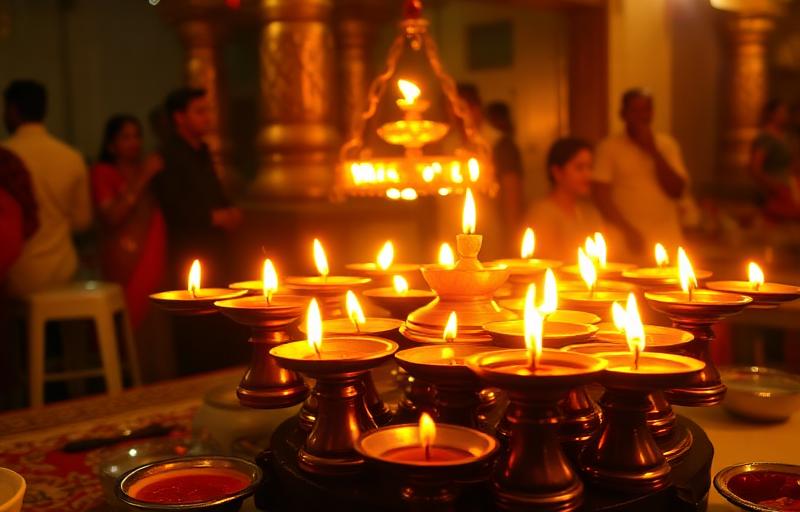
Sometimes this moment is paired with a small prayer at the home temple, a tilak applied to the forehead, or a spoon of curd and sugar offered before stepping out, small rituals that turn an ordinary departure into a moment held briefly, and meaningfully, apart from the rush of travel.
Why This Moment Matters in Tradition
Elders are traditionally seen as holding a lifetime of experience and a closeness to the divine within the family structure, similar to how gurus and parents are regarded in Hindu thought. Their ashirwad, blessing, is believed to carry real protective and supportive power, something that travels with a person through an uncertain journey or an important test ahead.
The custom also reflects an old understanding that no significant step should be taken lightly or alone. Seeking blessings is a way of formally acknowledging the size of the moment, and of drawing the whole family's goodwill into an undertaking that might otherwise feel like it belongs to one person alone.
What Seeking Blessings Symbolizes
The custom carries more than one layer of meaning for those who observe it.
- It expresses humility, an acknowledgment that success ahead is not achieved by one's own effort alone
- It symbolizes carrying family and faith along on a journey, rather than travelling in complete isolation
- It is believed to invite protection and good fortune for what lies ahead
- It strengthens family bonds at exactly the moments when distance is about to increase, even temporarily
How the Custom Is Kept Alive Today
The tradition continues widely, from students leaving for studies in another city or country, to newly married couples departing on a wedding journey, to someone simply leaving for their first day at a new job. Where in-person blessings aren't possible, many now seek them over a phone call, keeping the custom alive across distance.
At weddings, this moment is especially visible, with the bride and groom touching the feet of parents and elders before departing for a new household, a ritual that is often one of the most emotional parts of the entire ceremony.
Carrying More Than Luggage
A journey undertaken with an elder's blessing carries something no suitcase can hold, the quiet reassurance of family, faith and love travelling alongside. It is a small custom that reflects a larger truth in Hindu tradition, that no beginning is ever truly made alone.
Quick Answers
Can blessings be sought over a phone call if elders are far away?+
Yes, many families now do this when meeting in person isn't possible. The gesture's meaning lies in the sincerity of seeking blessings, not strictly in physical presence.
What do elders usually say while giving their blessing?+
Common blessings include wishes for a safe journey, success, long life and happiness, often simple phrases like 'khush raho' or 'safal raho', spoken with a hand gently placed on the head.
Is seeking blessings before travel considered compulsory?+
No, it is a devotional custom rather than a strict rule. It is followed out of respect and love, and circumstances that prevent it do not carry any sense of fault or ill fortune.
About the author
Anjali Mehta · Editor, M.A. Religious Studies
Anjali is the managing editor for Vandnaa and oversees the festival and vrat coverage. She holds an M.A. in Religious Studies and reviews every published article for accuracy, accessibility, and tradition-fidelity.
Meet the Vandnaa editorial team →