The Puzzle of the Mouse and the Elephant-God
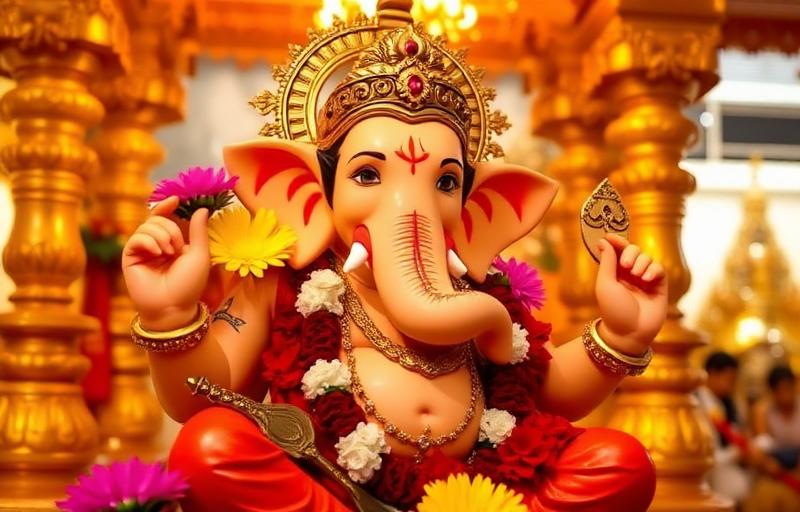
Lord Ganesha is large, heavy and elephant-headed - the remover of obstacles and lord of beginnings. Yet his vahana (mount) is a tiny mouse, called mushak or moshak. To many this seems like a contradiction: how can the smallest creature carry the greatest god?
In Hindu iconography nothing is accidental. Every deity's vahana is a symbol that completes the deity's meaning. The mouse is not chosen for its size but for what it represents - and once we understand it, the image becomes one of the most beautiful teachings in all of Sanatana Dharma.
The Katha Behind the Mushak
One well-known Puranic account tells that the mouse was originally a being named Mushakasura (or a celestial gandharva turned demon by a curse), who caused great disturbance. Lord Ganesha subdued him, and the humbled creature begged for mercy. Ganesha forgave him and made him his vahana, so that the once-troublesome being became forever devoted to the Lord's service.
Another tradition simply sees the mouse as the perfect symbol of what Ganesha conquers. The deeper point of every version is the same: what once ran wild and caused harm is tamed and turned toward the divine. Ganesha sitting upon the mouse shows that the higher self has mastered the restless lower nature.
What the Mouse Symbolises
The mouse carries several layers of meaning:
- Ego and desire: A mouse is small, quick and greedy, nibbling endlessly in the dark. It represents the restless ego and craving that gnaws at the mind. Ganesha sitting on it shows desire mastered, not destroyed - kept underfoot, made to serve.
- The wandering mind: Like a mouse darting in every direction, the mind runs after countless wants. Ganesha riding it means the wise person who has steadied and directed the mind.
- Penetrating any obstacle: A mouse can slip through the smallest gap and reach hidden places. As the remover of obstacles, Ganesha uses this very quality - his presence can reach into the tiniest crevice of a difficulty and clear it.
- The great resting on the small: That the vast Ganesha rests on a tiny creature teaches humility - greatness need not crush the small, and the divine dwells even in the lowliest form.
The Deeper Meaning for the Devotee
For the devotee, the image of Ganesha on the mouse is a daily lesson. We all carry an inner mushak - the restless, craving mind that nibbles at our peace and runs in every direction. The spiritual path is not to kill desire but, like Ganesha, to sit calmly upon it and give it direction.
There is also a quiet teaching in the offerings: Ganesha is shown with sweets (modak), yet the mouse waits patiently below, not stealing them. This shows the disciplined senses - desire present but obedient, hunger held in check by devotion.
When you worship Ganesha, you are praying to master your own inner mouse - to steady the mind, tame the ego, and let the higher self ride serenely over the lower nature.
Reader Questions Answered
Why does Ganesha ride a mouse instead of a large animal?+
The mouse is chosen for its symbolism, not its size. It represents the restless ego, desire and the wandering mind. Ganesha sitting calmly upon it shows the higher self mastering and directing the lower nature.
What is the name of Ganesha's mouse?+
Ganesha's mount is generally called Mushak or Mooshak (the Sanskrit word for mouse). In some Puranic stories the mouse was originally a being named Mushakasura, whom Ganesha subdued and made his devoted vahana.
Why doesn't the mouse eat Ganesha's modaks?+
The mouse waiting patiently below the sweets symbolises disciplined senses - desire that is present but obedient. It teaches that hunger and craving can be held in check by devotion and self-control.
What is the spiritual lesson of the mushak vahana?+
The lesson is to master, not destroy, the inner mouse - the restless mind and ego. Like Ganesha sitting serenely on the mouse, the devotee learns to steady the mind, tame desire and direct it toward the divine.
About the author
Anjali Mehta · Editor, M.A. Religious Studies
Anjali is the managing editor for Vandnaa and oversees the festival and vrat coverage. She holds an M.A. in Religious Studies and reviews every published article for accuracy, accessibility, and tradition-fidelity.
Meet the Vandnaa editorial team →