108 - The Number Woven Through Hindu Life
Walk through any corner of Hindu life and the number 108 keeps appearing. The japa mala in a devotee's hand carries 108 beads. Deities are praised through 108 names. The Upanishads are traditionally counted as 108. Pilgrim lists name 108 Divya Desams of Vishnu, dance treatises describe the 108 karanas of Nataraja, and temple stairways are often built with 108 steps. No other number is woven so deeply and so consistently into dharmic practice. But why this number, and not a tidy 100? The answer is layered. 108 sits at the meeting point of scripture, daily practice and traditional cosmology - a number that the rishis treated as a bridge between the human being and the universe. This article walks through each strand: the mala, the namavalis, the Upanishads, the traditional mathematics, and how you can bring 108 into your own daily japa.
Why a Japa Mala Has 108 Beads - And One Meru Bead
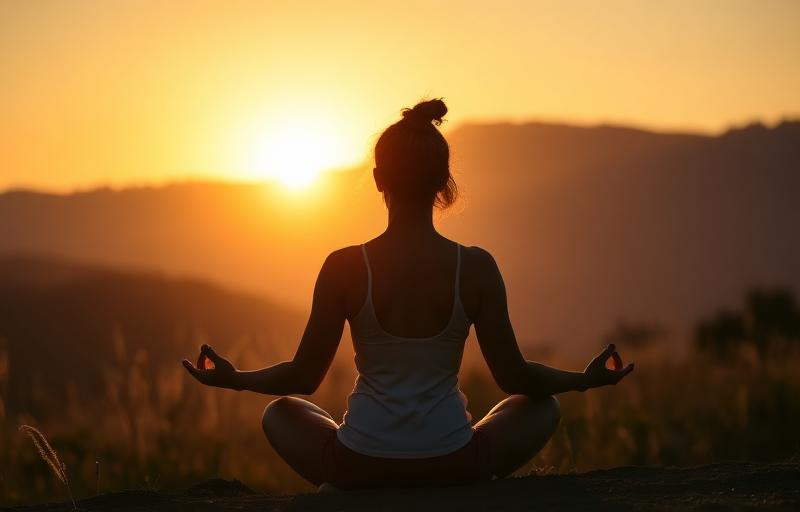
The most familiar home of 108 is the japa mala. A traditional mala strings together exactly 108 beads of rudraksha, tulsi or sandalwood, plus one larger 109th bead called the meru or sumeru, named after the cosmic mountain at the centre of creation. The meru is not counted in the japa. It marks the starting and ending point, like the summit of the climb. When a devotee completes one round of 108 repetitions and reaches the meru, tradition says the bead should not be crossed; instead, the mala is turned around and the next round begins in the reverse direction. The meru is also honoured as the seat of the guru, the one who stands at the threshold of practice. Counting on beads frees the mind from arithmetic, so attention can rest fully on the mantra - which is the entire purpose of japa.
Ashtottara Shatanamavali - 108 Names of the Divine
Hindu worship loves to praise the divine through names, and the classic format is the Ashtottara Shatanamavali - literally a garland of one hundred and eight names (ashta = eight, uttara = more, shata = hundred). Nearly every major deity has one: Ganesha, Shiva, Vishnu, Lakshmi, Durga, Hanuman, Rama and Krishna are all praised through their own 108 names, each recited with Om before and namah after, as in Om Ganadhipaya Namah. Why names instead of abstract praise? Tradition holds that each name captures one quality, one story, one face of the infinite - and that speaking 108 of them slowly turns the tongue's repetition into the heart's remembrance. During archana in temples, the priest offers a flower or a few grains of kumkum-touched rice with every name, so the count of 108 becomes a complete circle of devotion, neither hurried nor endless.
The 108 Upanishads - Knowledge in Sacred Count
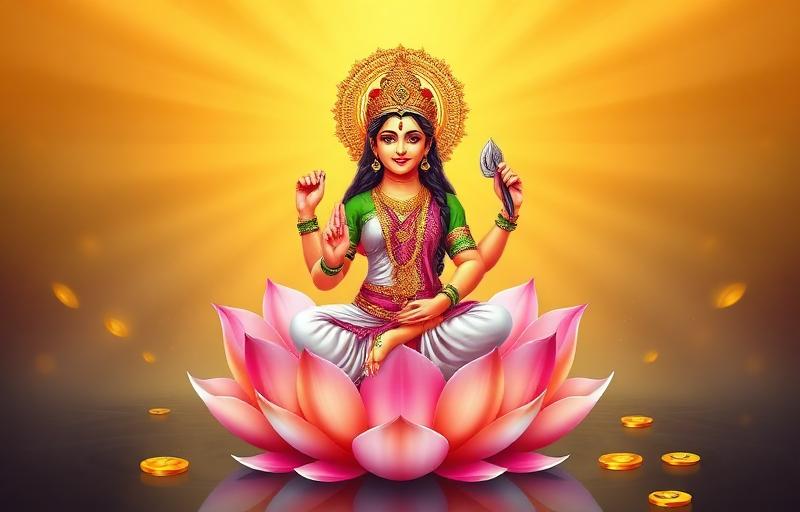
The number also crowns the highest shelf of Hindu philosophy. The Muktika Upanishad presents a canon of exactly 108 Upanishads, taught in the form of a dialogue where Lord Rama himself gives the list to Hanuman, telling him that studying these texts leads to liberation. Within the 108, ten are honoured as the mukhya or principal Upanishads - including the Isha, Kena, Katha, Mandukya and Chandogya - the very texts on which Adi Shankaracharya wrote his commentaries. The remaining ones span yoga, sannyasa, devotion to Shiva, Vishnu and Shakti, and the subtle sciences of sound and meditation. Scholars know that many more Upanishadic texts exist, yet tradition deliberately fixed the canon at 108, as if to say that complete knowledge, like a complete mala, has 108 beads. Even wisdom, in the Hindu imagination, is counted in this sacred measure.
The Traditional Mathematics of 108 - 12 x 9 and 27 x 4
Tradition delights in the arithmetic hidden inside 108. Two products are cited most often. First, 12 x 9 = 108: the twelve months of the year multiplied by nine, the number of completeness in Indian thought (digits of any multiple of 9 reduce back to 9, and 1 + 0 + 8 = 9). Second, 27 x 4 = 108: the twenty-seven nakshatras (lunar mansions) of the traditional sky, each divided into four padas or quarters, give exactly 108 segments. We mention this purely as the traditional counting behind the number, not as astrological advice - the point is that the ancients mapped the full cycle of time into 108 parts. A third reading treats the digits themselves as a teaching: 1 for the one truth, 0 for the emptiness of the ego, and 8 for the infinite. One number, and the whole of dharma folded inside it.
Sun, Moon and Earth - The Commonly Cited Ratios
One observation about 108 is shared so widely that it deserves an honest mention. It is commonly said that the distance between the earth and the sun is roughly 108 times the sun's diameter, that the distance between the earth and the moon is roughly 108 times the moon's diameter, and that the sun's diameter is about 108 times that of the earth. These figures are approximations - astronomy gives values that hover near these ratios rather than landing exactly on them - so treat this as devotional poetry of numbers, a traditional way of saying that the mala in your hand mirrors the heavens above you. Whether the rishis arrived at 108 through observation or revelation, tradition reads the lesson the same way: when you complete 108 repetitions of a mantra, you have symbolically traversed the distance between the human and the divine.
How to Use 108 in Daily Japa - And 108 Beyond Hinduism
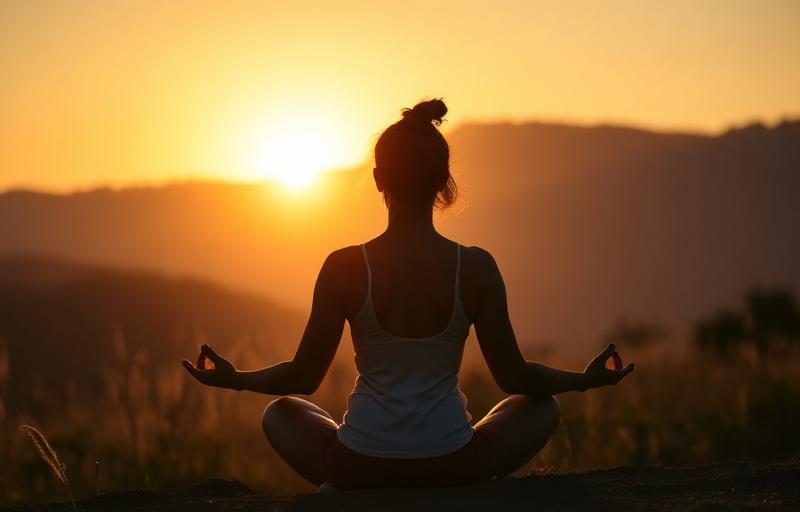
Bringing 108 into daily life is simple. 1. Choose one mantra that draws you - Om Namah Shivaya, Om Gam Ganapataye Namah, the Gayatri, or your guru-given mantra. 2. Sit facing east or north at a fixed time, hold the mala in the right hand, and move the beads with the thumb and middle finger. 3. Complete one full mala of 108; if time is short, tradition accepts 27 or 54 repetitions, both clean fractions of 108. 4. On reaching the meru, pause, bow inwardly, and turn the mala if continuing. The number travels beyond Hinduism too: Buddhist tradition counts 108 defilements to be overcome and rings temple bells 108 times at the new year, Jain tradition honours 108 virtues of the Pancha Parameshthi, and Tibetan malas carry 108 beads. Across the dharmic world, 108 remains the shared measure of a complete offering.
Frequently Asked Questions
Why does a japa mala have 109 beads if 108 is the sacred count?+
The 109th bead is the meru or sumeru, the guru bead. It is never counted in the japa - it only marks where a round begins and ends. On reaching it, the devotee does not cross it but turns the mala around and continues in the reverse direction, honouring the meru as the summit of the practice.
Can I chant a mantra fewer than 108 times?+
Yes. Tradition accepts 27 or 54 repetitions, which are clean fractions of 108, when time is short. What matters most is regularity and attention. A focused count of 27 every day is considered far better than an occasional distracted 108. Increase the count gradually as the habit settles.
What is an Ashtottara Shatanamavali?+
It is a litany of 108 names of a deity - ashta (eight) plus uttara (more than) shata (hundred). Each name is recited with Om before and namah after, such as Om Ganadhipaya Namah. Almost every major deity has one, and temple archana offers a flower or rice grains with each of the 108 names.
Is the sun-moon-earth ratio of 108 a scientific fact?+
The ratios are approximations, not exact figures. Astronomy gives values near 108 for these distance and diameter ratios, which is why tradition cites them so often. Treat them as a commonly cited traditional observation - devotional poetry of numbers - rather than precise astronomy or a scientific claim.
Is 108 sacred in Buddhism and Jainism too?+
Yes. Buddhist tradition counts 108 defilements to be overcome and rings temple bells 108 times at the new year; Tibetan prayer malas carry 108 beads. Jain tradition honours the 108 combined virtues of the Pancha Parameshthi. The number is a shared measure of completeness across the dharmic traditions.
How long does it take to chant one mala of 108?+
It depends on the mantra. A short mantra like Om Namah Shivaya takes about 10 to 15 minutes for a full mala at a calm pace, while the Gayatri mantra may take 25 to 30 minutes. Do not rush the count - the steady rhythm of the beads is itself part of the meditation.
About the author
Acharya Vinaya Kapoor · M.A. Sanskrit, Mantra & Stotra Studies
Acharya Vinaya holds an M.A. in Sanskrit from Banaras Hindu University and writes the mantra and stotra commentary on Vandnaa. Her focus is on accurate pronunciation, traditional context, and helping modern readers connect with classical texts.
Meet the Vandnaa editorial team →