Why Kailash Is Shiva's Abode
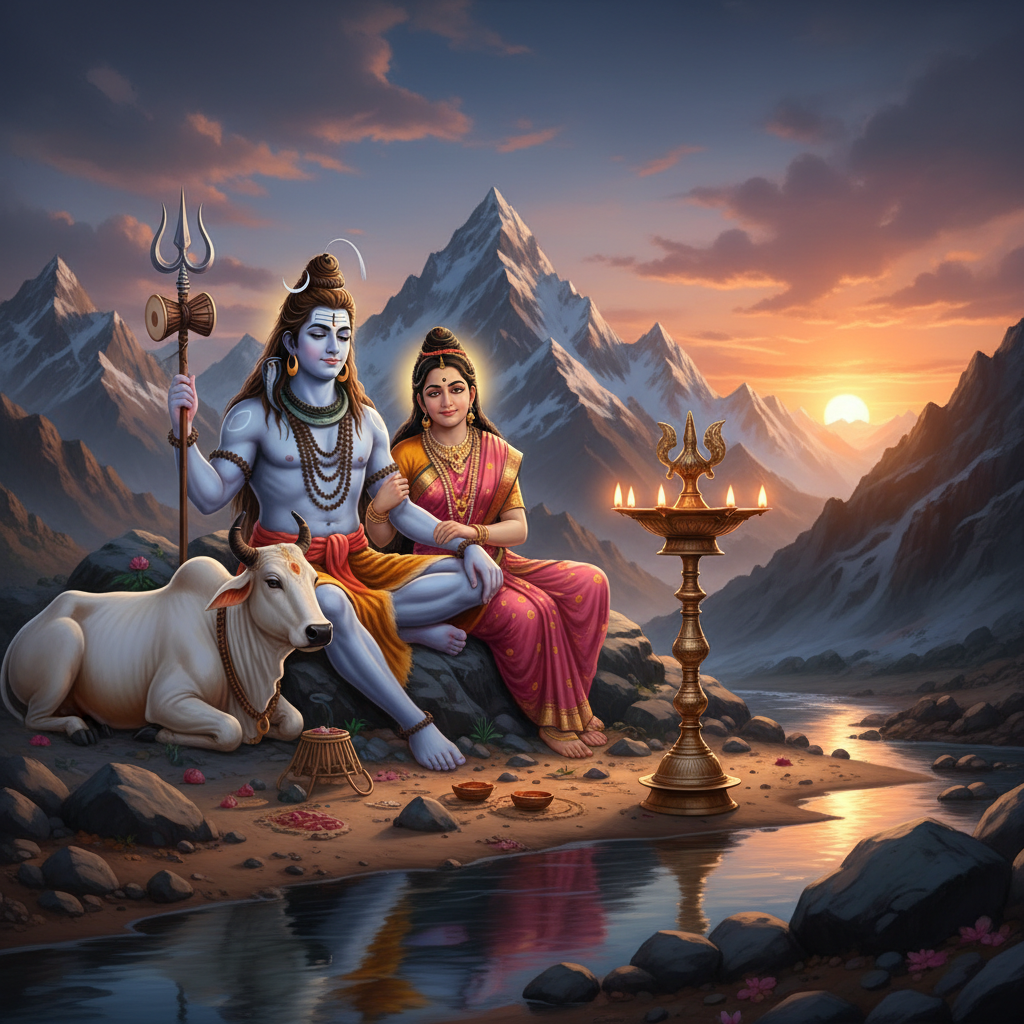
Mount Kailash, rising in the remote reaches of the Himalayas, is revered across Hindu tradition as the eternal abode of Lord Shiva. Devotees hold that this snow-capped peak, standing apart from the surrounding ranges in its striking, almost symmetrical form, is where Shiva resides in perpetual meditation alongside Goddess Parvati.
Unlike temples built by human hands, Kailash is regarded as a naturally sacred site, a mountain whose very presence is treated as a manifestation of the divine rather than merely a dwelling created for it.
The Symbolic Meaning of This Abode
Tradition holds that Kailash's remoteness and severe, untouched beauty mirror Shiva's own nature as the great ascetic, one who dwells beyond the reach of worldly comforts and desires. Its towering, ice-bound stillness is seen as an outer reflection of the deep inner stillness Shiva embodies as the supreme yogi.
Devotees also note with deep reverence that it is widely said the peak has never been climbed, a boundary regarded not as a challenge to be conquered but as a limit to be respected, keeping the mountain's sanctity undisturbed. This restraint itself is considered part of Kailash's significance, teaching that some things are meant to be honoured from a distance rather than claimed.
Shiva and Parvati's Life on Kailash
Puranic tradition describes Kailash as the site of Shiva and Parvati's divine household, where their sons Ganesha and Kartikeya are said to have been born and raised. Nandi, the bull, is depicted as the ever-watchful gatekeeper of this abode, while the mountain itself is imagined as a realm suspended between the earthly and the transcendent.
Many beloved stories, including the playful game of chausar between Shiva and Parvati, are set against this Himalayan backdrop, portraying Kailash not only as a place of severe asceticism but also of intimate divine family life.
How Devotees Honour Kailash

The Kailash Mansarovar Yatra, a pilgrimage to the mountain and the nearby sacred Lake Manasarovar, is considered one of the most demanding and revered journeys in Hindu tradition. Devotees who undertake it perform parikrama, a circumambulation around the base of the mountain, rather than attempting to climb it, treating the journey itself as an act of devotion.
Those unable to make the physical journey often chant Om Namah Shivaya while meditating on Kailash's image, seeking the same stillness and devotion associated with this sacred abode.
A Practical Takeaway
Kailash reminds devotees that some forms of reverence are expressed through distance and restraint rather than conquest. Just as the mountain remains untouched out of respect, devotees are encouraged to approach the divine with humility rather than a desire to possess or control.
Honouring Shiva's abode, whether through pilgrimage or quiet contemplation, is an act of faith and love, not a transaction.
Frequently Asked Questions
Why is Mount Kailash considered Shiva's home?+
Tradition holds that Shiva resides on Mount Kailash in eternal meditation with Parvati, its remote, untouched grandeur reflecting his nature as the supreme ascetic.
Has anyone climbed Mount Kailash?+
It is widely said that Kailash's summit has never been climbed, a boundary devotees see as an act of respect that preserves the mountain's sanctity.
What is the Kailash Mansarovar Yatra?+
The Kailash Mansarovar Yatra is a sacred pilgrimage to Mount Kailash and nearby Lake Manasarovar, where devotees perform parikrama around the mountain's base rather than climbing it.
About the author
Anjali Mehta · Editor, M.A. Religious Studies
Anjali is the managing editor for Vandnaa and oversees the festival and vrat coverage. She holds an M.A. in Religious Studies and reviews every published article for accuracy, accessibility, and tradition-fidelity.
Meet the Vandnaa editorial team →