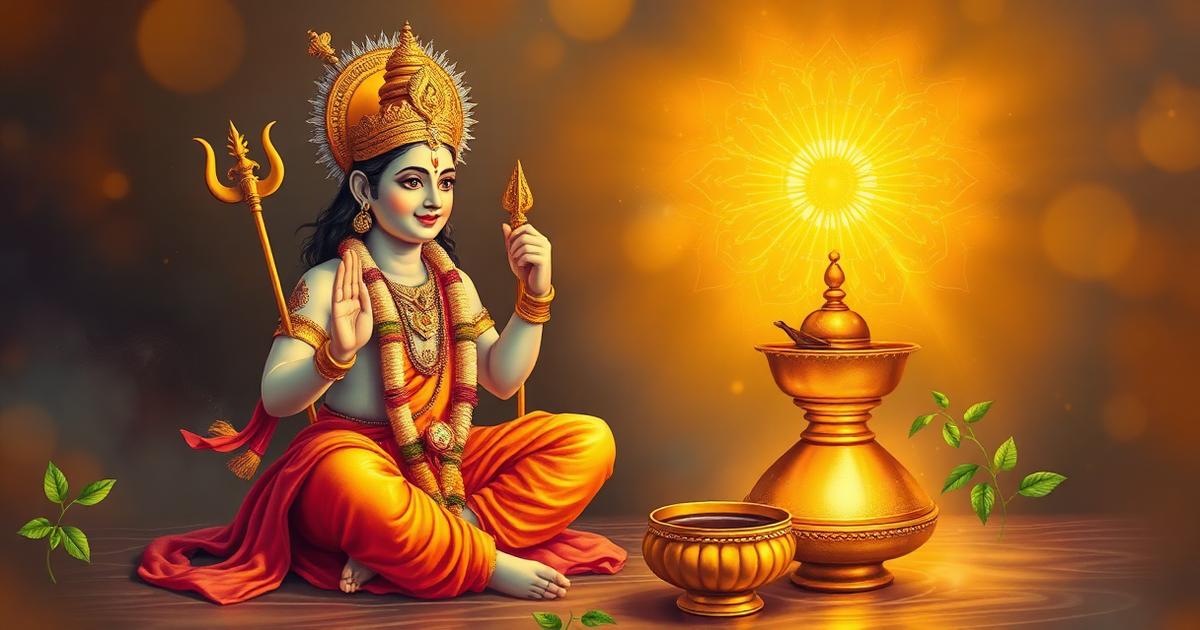
Who Is Adiyogi?
Adiyogi means "the first yogi," a title given to Shiva in tradition as the original source of yogic knowledge. Long before yoga became a physical discipline as widely known today, Shiva is described in scripture as having attained a state of complete inner stillness, from which he is said to have shared the science of self-realization with the world.
This aspect of Shiva is distinct from his form as a householder or as the cosmic dancer. As Adiyogi, he is depicted seated in deep meditation, often in the stillness of the Himalayas, embodying the discipline and detachment that yoga seeks to cultivate.
The Katha of the Sapta Rishis
Tradition holds that after remaining in silent meditation for a long span of time, Shiva is said to have transmitted his knowledge to seven disciples, known as the Sapta Rishis. According to this account, on a full moon day following the summer solstice, now observed by many as Guru Purnima, Shiva turned to face south and began to teach, becoming known as Dakshinamurthy, the teacher facing south.
The Sapta Rishis are said to have then carried this knowledge in different directions, spreading the science of yoga across various cultures and traditions, laying the foundation for what devotees today recognize as the yogic path.
Significance for Devotees
As Adiyogi, Shiva represents the possibility of transcending the restless mind through discipline, stillness and self-inquiry. Devotees regard this form as a reminder that spirituality is not only about external worship but also about inner transformation.
This aspect of Shiva is especially honoured by those who practice meditation and yoga as a spiritual discipline, connecting physical practice to a much older, sacred lineage rather than treating it as mere exercise.
How Devotees Honour This Aspect

Many devotees mark Guru Purnima with special reverence for Shiva as Adiyogi, offering gratitude for the transmission of spiritual knowledge. Sitting quietly in meditation, chanting Om Namah Shivaya, or simply observing silence for a period are common ways devotees connect with this aspect.
Some also visit Himalayan shrines associated with Shiva's meditative form, such as those near Kailash and Kedarnath, seeking the same stillness that tradition attributes to him.
A Practical Takeaway
Shiva as Adiyogi reminds devotees that true strength often comes from stillness, not constant activity. Taking even a few quiet moments each day for reflection can be a small way of honouring this ancient teaching.
Remembering Shiva in this form is an act of faith and love, not a transaction, inviting devotees toward a calmer, more centred way of living.
Common Questions From Devotees
Why is Shiva called Adiyogi?+
Shiva is called Adiyogi, meaning the first yogi, because tradition credits him as the original source who transmitted the science of yoga and self-realization to humanity.
Who were the Sapta Rishis in this tradition?+
The Sapta Rishis were the seven disciples said to have received yogic knowledge directly from Shiva as Adiyogi, later spreading it across regions and traditions.
What festival honours Shiva as Adiyogi?+
Guru Purnima is widely regarded as the occasion when Shiva as Adiyogi is said to have begun teaching the Sapta Rishis, and many devotees honour him especially on this day.
About the author
Anjali Mehta · Editor, M.A. Religious Studies
Anjali is the managing editor for Vandnaa and oversees the festival and vrat coverage. She holds an M.A. in Religious Studies and reviews every published article for accuracy, accessibility, and tradition-fidelity.
Meet the Vandnaa editorial team →