The Weapon Seen Atop Every Shiva Temple
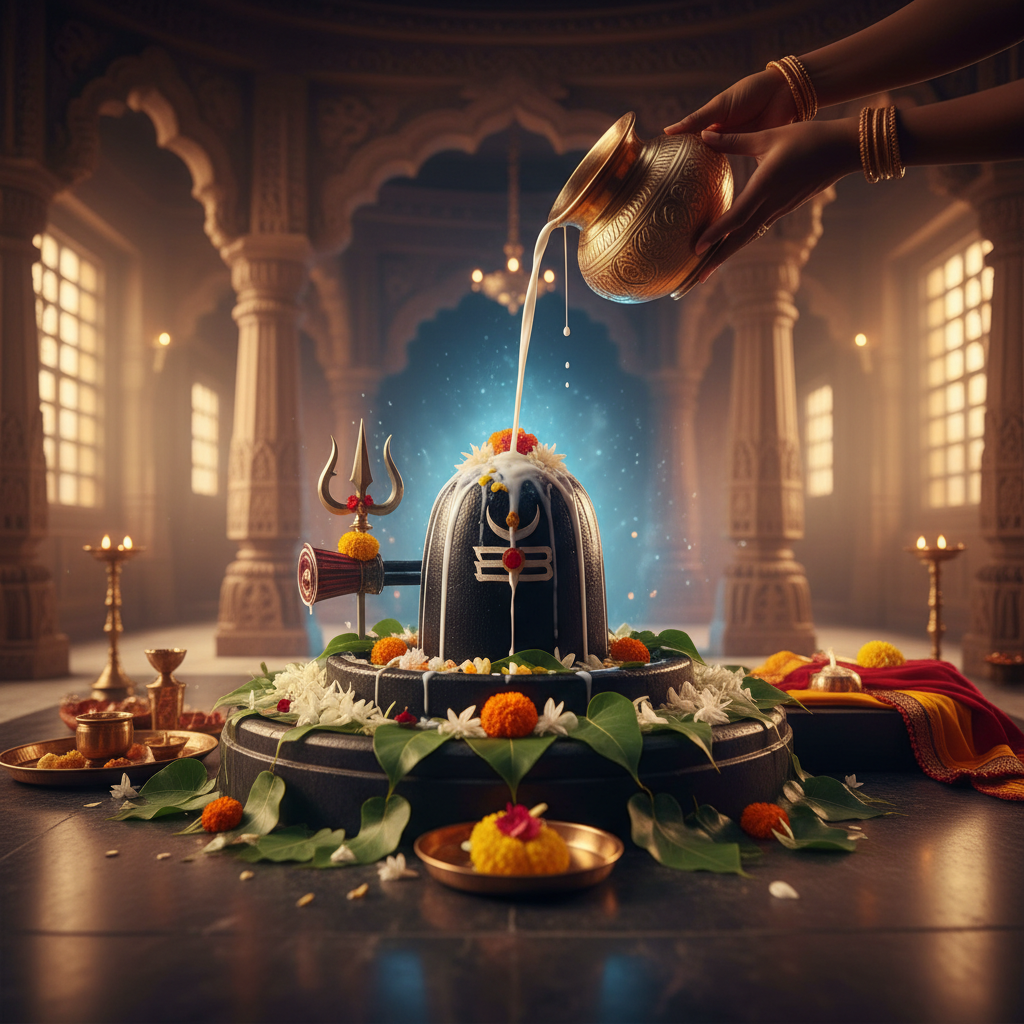
Look up at almost any Shiva temple and somewhere near its highest point, a trishul stands, a trident with three sharp prongs rising from a single handle. It is Shiva's most recognisable weapon, shown in his hand in paintings and idols, planted beside Shivlings, and carried by sadhus who follow his path.
The trishul is not merely decorative. Across Puranic tradition, it is described as Shiva's chosen weapon, powerful enough to destroy ignorance and evil, yet belonging to a deity more often shown in meditation than in battle.
Its Place in Puranic Tradition
In the Puranas, the trishul appears repeatedly as the weapon Shiva wields against forces of adharma, chaos and ego. It is also the weapon Shiva is said to have gifted a portion of to Goddess Durga, who carries a trishul among her many weapons when she battles evil on behalf of all the gods.
Because of this shared association, the trishul is understood in tradition not as a weapon of anger but of necessary destruction, the kind that clears the way for dharma to be restored. Its presence beside a Shivling is a reminder of this protective, corrective power held in reserve.
What the Three Prongs Stand For
The number three repeats meaningfully in Hindu thought, and the trishul's design draws on this. The three prongs are commonly read as representing the three gunas, sattva, rajas and tamas, the qualities of balance, activity and inertia that every being must navigate.
Other traditional readings connect the three points to creation, preservation and destruction, to the three states of time, past, present and future, or to the three afflictions, physical, mental and spiritual, that spiritual life seeks to overcome. All three prongs rise from a single staff, a reminder that however these forces appear to differ, they are held together by one unifying source.
Where the Trishul Is Seen Today
The trishul remains one of the most visible Shiva symbols in daily devotional life.
- Mounted atop the shikhara (spire) of Shiva temples
- Placed beside Shivlings in home shrines and temple sanctums
- Carried by sadhus and ascetics who follow Shaivite tradition
- Worn as a small pendant by many devotees
- Drawn or displayed during Mahashivratri and other Shiva-related festivals
Many devotees keep a small trishul at home, not as a weapon but as a symbol inviting protection and the courage to face difficulties with steadiness.
A Weapon That Teaches Balance
The trishul is a reminder that Shiva's power is never shown as destruction for its own sake. Its three prongs, however they are read, point to the same lesson, that the many opposing forces within a person and within the world are held together by one steady, unwavering source. Devotion, as with most symbols in this tradition, asks only sincerity in return, an act of faith and love, not a transaction.
Common Questions From Devotees
Why does the trishul have exactly three prongs?+
Tradition connects the three prongs to ideas that repeat in threes across Hindu thought, most commonly the three gunas, sattva, rajas and tamas, that shape all existence.
Do any other deities carry a trishul?+
Yes, Goddess Durga carries a trishul among her weapons, traditionally said to have been given to her by Shiva when the gods armed her to battle evil.
Is it appropriate for devotees to keep a trishul at home?+
Yes, many devotees keep a small trishul in their home shrine as a symbol of protection and steadiness, treated with the same respect as other sacred objects.
About the author
Anjali Mehta · Editor, M.A. Religious Studies
Anjali is the managing editor for Vandnaa and oversees the festival and vrat coverage. She holds an M.A. in Religious Studies and reviews every published article for accuracy, accessibility, and tradition-fidelity.
Meet the Vandnaa editorial team →